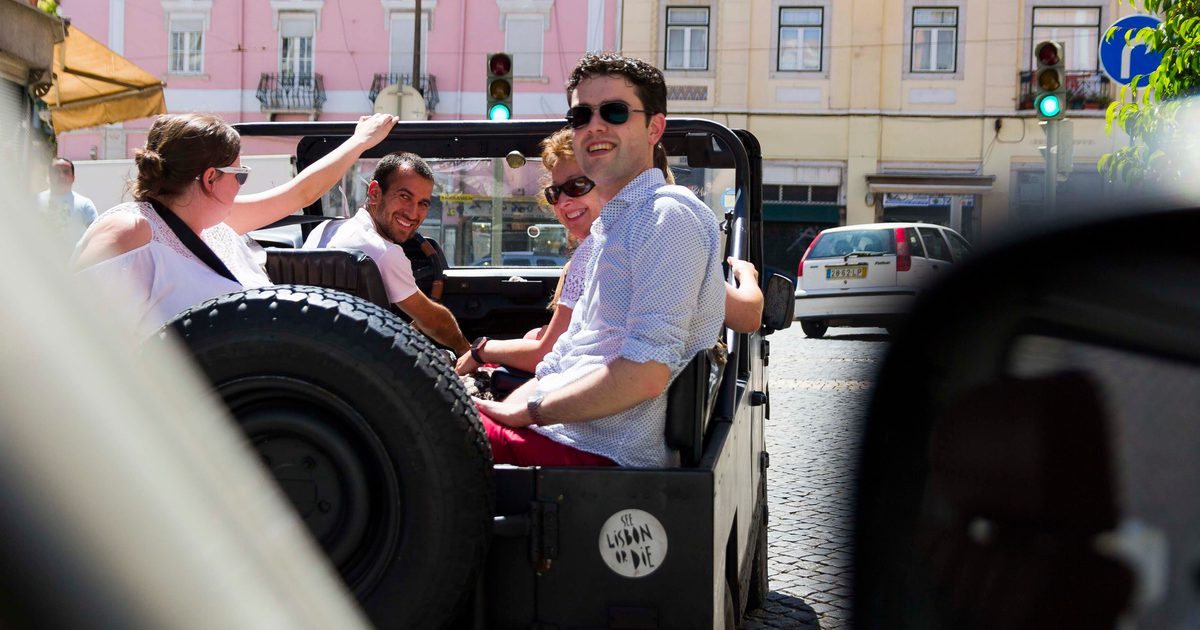

Manu joined We Hate Tourism a decade later, arriving through Lisbon’s skateboarding and street-art scene. He possesses the unnerving ability to answer almost any question about modern Portugal by beginning somewhere entirely different. Ask him about Airbnb and he’ll start with the dictatorship. Ask about house prices and he’ll talk about Angola. Mention digital nomads and, before long, you’re discussing the 1998 World Expo. Which, according to Manu, was Portugal’s moon landing. “I was 16,” he tells me. “I remember thinking: ‘We’ve made it.’”
For a country that had spent much of the 20th century looking inward under Salazar’s dictatorship, Expo ’98 was meant to announce Portugal’s arrival as a modern European nation. The derelict eastern docks became the gleaming Parque das Nações. The metro expanded. New bridges and stations appeared. For a while it felt as though the future had arrived all at once.
The feeling didn’t last. Portugal has a habit, Manu says with a shrug, of arriving just as the party is ending.
The 2008 financial crash hit particularly hard. Portugal needed an international bailout. Public spending collapsed and wages stagnated. And then, in a move so unbelievable that I had to find the tape on YouTube, the Portuguese prime minister, pressed on what young Portuguese should do if there was no work at home, suggested they leave and make use of free movement within the European Union.
Today, a country of around 10 million people has another 2.6 million citizens living abroad. Decades of emigration, much of it by younger, highly educated Portuguese, have altered the country’s demographic and political balance. Portugal is older than it might otherwise have been, and the frustrations that remained behind are varied: low wages, expensive housing, weak public services and a sense that the country’s brightest prospects are elsewhere. Average gross monthly pay is roughly €1,550 in Portugal, compared with €2,450 next door in Spain.
Into that discontent has stepped the far-right party Chega. For decades, Portugal appeared largely immune to the populist right advancing elsewhere in Europe. Then in 2024, exactly 50 years after the Carnation Revolution ended the dictatorship, Chega won 50 seats in parliament. A year later it won 60, overtook the Socialists and became the country’s official opposition.
You see their posters around all over the place – its leader and frontman André Ventura gazing handsomely off into the middle distance, with a caps lock call to arms: SALVAR PORTUGAL. More often than not, somebody has already added a small moustache in Sharpie.
Bruno often says that We Hate Tourism was founded by “the sons of the crisis”. Manu has another word for them: Malamados. The unloved. A generation who did everything they had been asked to do, only to discover their reward was an EasyJet flight out of the country.
“The talent left,” Bruno says simply. “We were just the fools and the artists who stayed.”
And just as Portugal was telling its brightest young people to leave, the rest of the world suddenly decided it wanted to come.