45
Today, the Airbus A320 is one of the most familiar aircraft in the British Airways fleet. Hundreds of Airbus narrowbodies have worn the airline’s colours over the years, operating everything from domestic shuttles to European business routes.
But when British Airways first introduced the Airbus A320 in 1988, it represented a major shift in direction.
At the time, BA was largely a Boeing operator for short-haul services, relying on Boeing 737s and 757s alongside surviving BAC One-Eleven aircraft inherited from its earlier history. The arrival of Airbus aircraft therefore marked a surprisingly modern and somewhat controversial step for the airline.
Even more unusually, British Airways ended up operating some of the rarest A320s ever built — the little-known Airbus A320-100.
British Airways Before Airbus
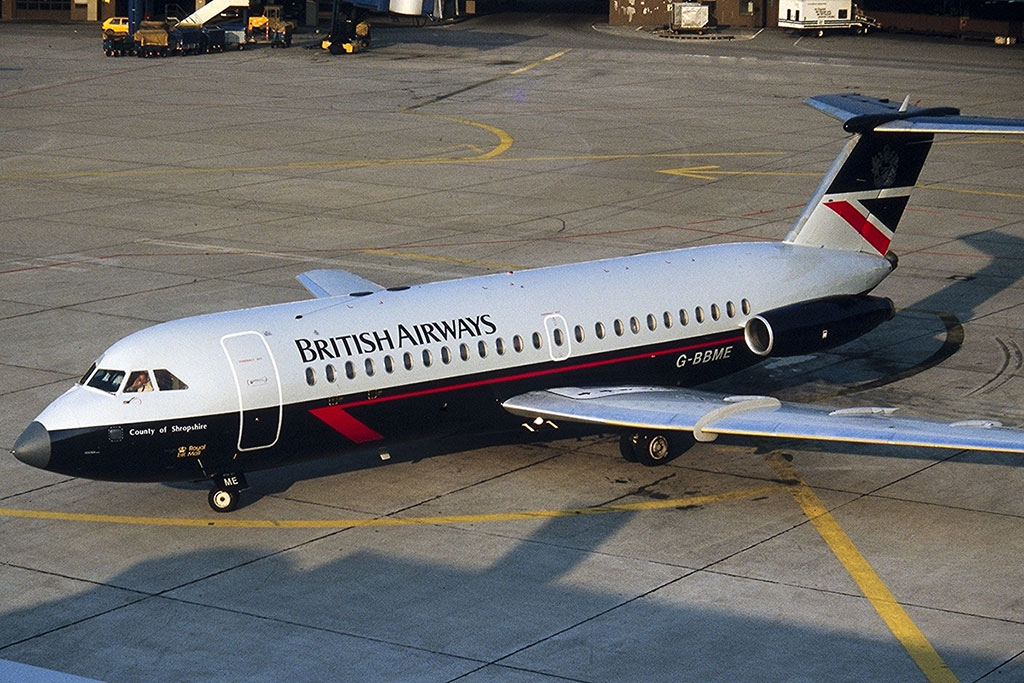
BAC 1-11-401AK G-BBME of British Airways at Dusseldorf Airport (Peter Bakema, distributed under a GFDL 1.2 Licence)
During the 1970s and early 1980s, British Airways’ short-haul fleet was dominated by British and American aircraft.
The airline operated:
- BAC One-Eleven
- Hawker Siddeley Trident
- Boeing 737-200
- Boeing 757-200
The Boeing 757 in particular became a flagship European aircraft for BA, offering impressive performance and capacity on dense routes around Europe and the Middle East.
At the time, Airbus itself was still relatively new. Although the consortium had launched successfully with the A300 and A310, Boeing remained dominant in many markets — particularly among established carriers like British Airways.
So how did BA end up flying Airbus narrowbodies?
The British Caledonian Merger

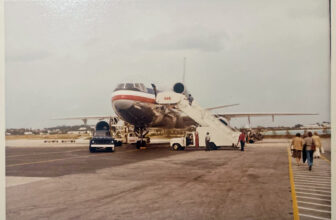
Photo (c) http://www.british-caledonian.com/
The answer lay in one of the most important mergers in British aviation history.
In 1987, British Airways acquired rival carrier British Caledonian. The deal significantly strengthened BA’s position at London Gatwick and added valuable routes, aircraft and infrastructure to the airline. (independent.co.uk)
But it also brought something unexpected: an order for Airbus A320s.
British Caledonian had been an early supporter of Airbus and had placed orders for the brand-new A320 — at the time one of the most technologically advanced airliners ever developed. When BA absorbed British Caledonian, it inherited these orders and ultimately took delivery of the aircraft itself.
This decision effectively introduced Airbus narrowbodies into the British Airways fleet for the first time.
What Was The Airbus A320-100?

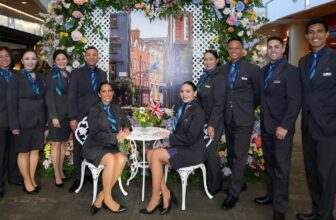
Laurent ERRERA from L’Union, France, CC BY-SA 2.0
The aircraft British Airways received were particularly unusual because they belonged to the original Airbus A320-100 variant.
Today, almost every A320 ever built is an A320-200, but the very first production aircraft were A320-100s.
Only 21 examples of the A320-100 were built in total. They were operated exclusively by:
- British Airways
- Air France
- Air Inter
The A320-100 was essentially an early production version of the aircraft developed before Airbus finalised improvements for the enhanced A320-200.
Key differences included:
- Reduced fuel capacity
- Lower maximum range
- Slightly different structural arrangements
- No wingtip fences initially on some aircraft
Almost immediately after entering service, Airbus introduced the improved A320-200, which featured greater fuel capacity and improved operational flexibility.
As a result, the A320-100 quickly became obsolete as a production model.
BA’s G-BUS Series Aircraft

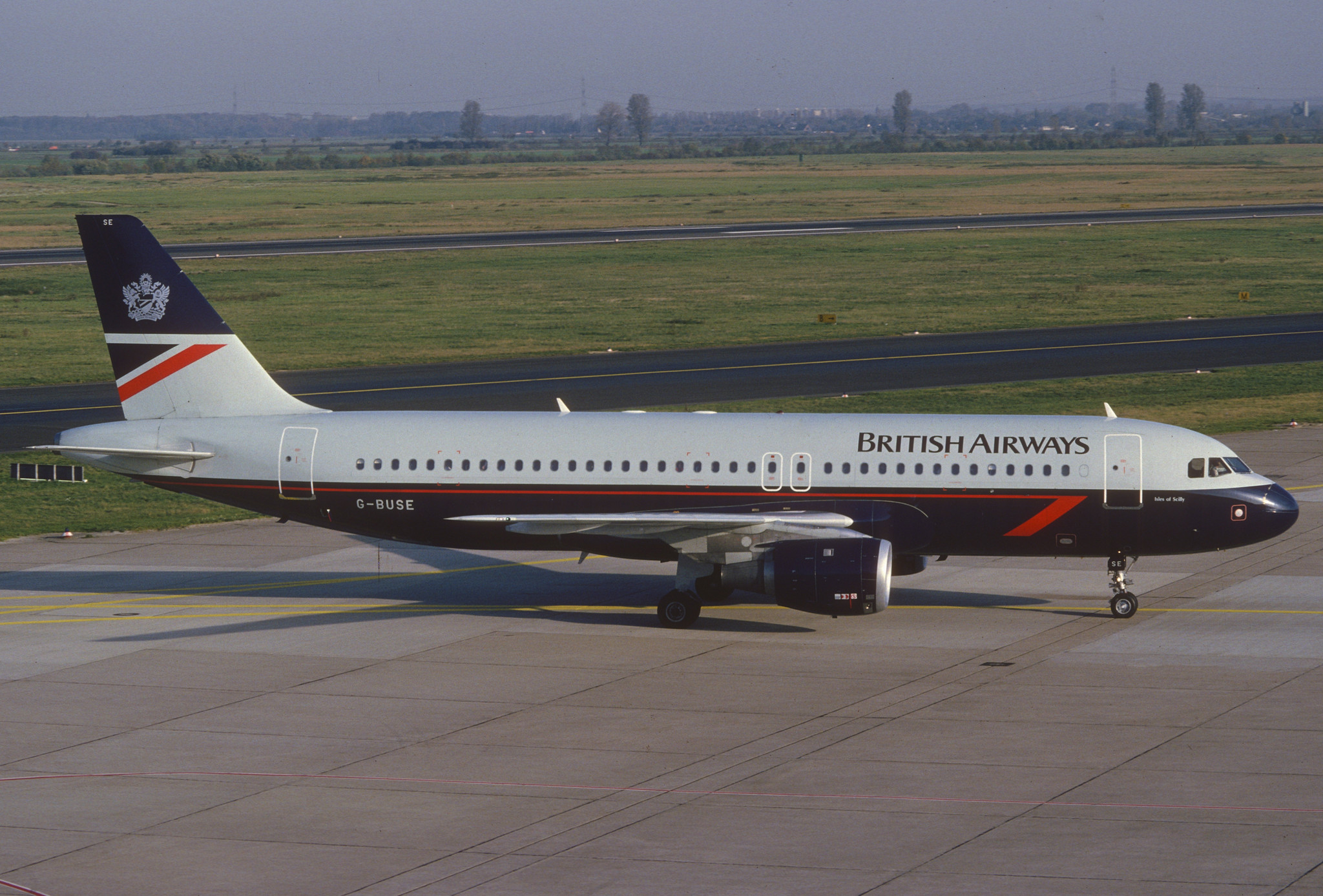
A320-100 G-BUSB. Photo: Aero Icarus
British Airways eventually received seven Airbus A320-100s between 1988 and 1989. These aircraft carried registrations in the now-famous G-BUSx sequence:
- G-BUSA
- G-BUSB
- G-BUSC
- G-BUSD
- G-BUSE
- G-BUSF
- G-BUSG
For many enthusiasts, these registrations became iconic during the 1990s and 2000s.
The aircraft initially wore the classic Landor Associates livery introduced during BA’s privatisation era — one of the airline’s most admired colour schemes.
A Technological Leap Forward
When the A320 entered service, it represented a huge leap in cockpit technology.
The aircraft introduced several innovations that were revolutionary for short-haul flying at the time:
- Full digital fly-by-wire controls
- Side-stick controllers
- Advanced EFIS glass cockpits
- Extensive computerised flight systems
For British Airways pilots accustomed to Boeing 737s and BAC One-Elevens, the Airbus cockpit philosophy was radically different.
The A320 also offered excellent economics, quieter cabins and strong passenger appeal — helping justify BA’s eventual move toward Airbus narrowbodies on a much larger scale.
Life In Service With British Airways

Photo: Aero Icarus
The Airbus A320-100s quickly became regular sights around the BA European network.
They operated from London Heathrow (and to a lesser extent London Gatwick and Manchester) to European business destinations and on Mediterranean leisure routes.
Over time, they became almost indistinguishable operationally from the newer A320-200 fleet that BA later acquired in much larger numbers.
The aircraft also survived several major eras of British Airways history, including:
- The Landor livery era
- The controversial “World Tails”
- The Chatham Dockyard Union Flag scheme
Remarkably, despite being among the earliest A320s ever built, BA continued operating the type until 2015 — giving some of the aircraft service lives of more than 26 years. (planespotters.net)
Why The Aircraft Lasted So Long
One reason the A320-100s survived for so long was that Airbus later modified the aircraft to a standard closer to the A320-200.
Although they retained their original build identity, operationally they became far more capable and compatible with the growing A320 fleet.
British Airways was also known for extracting long service lives from well-maintained short-haul aircraft, particularly when fleet commonality offered operational advantages.
As newer Airbus A319s, A320s and A321s arrived, the older G-BUS series aircraft gradually became less prominent — but they remained reliable workhorses for decades.
Retirement And Scrapping

By the 2010s, however, the aircraft were finally showing their age.
British Airways progressively withdrew the fleet between 2013 and 2015 as newer and more efficient Airbus aircraft took over short-haul operations. (planespotters.net)
Unlike some historic British airliners, none of the BA A320-100s were preserved.
All seven aircraft were eventually scrapped, bringing an end to one of the most unusual sub-fleets ever operated by the airline.
For aviation enthusiasts, this was particularly significant because the A320-100 represented the very beginning of the hugely successful A320 family — an aircraft line that would go on to become one of the best-selling commercial aircraft programmes in history.
Title image: Aero Icarus