Cities in North Carolina were the darling of relocation buyers during Covid. But the data is showing a new trend
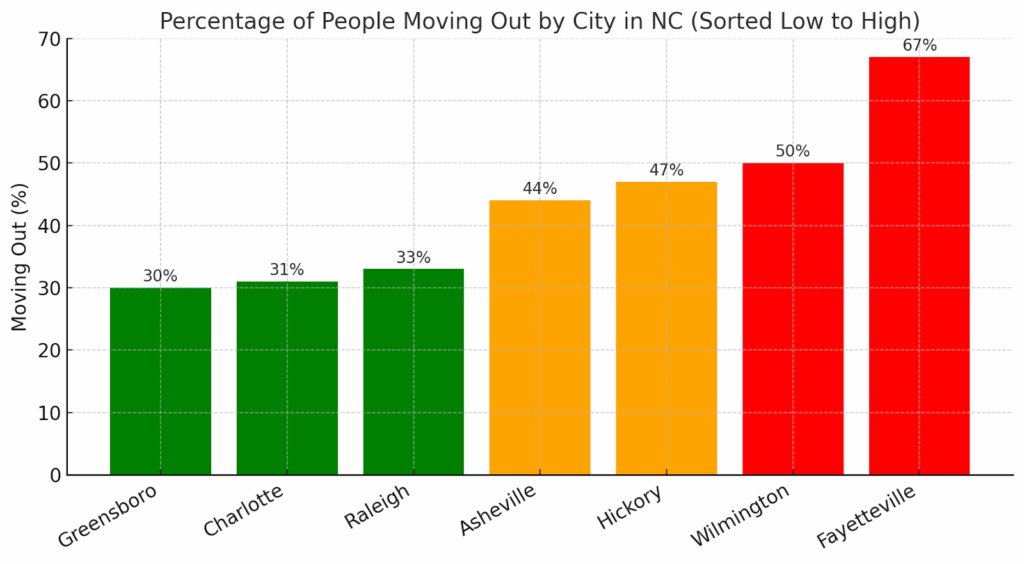
Redfin keeps track of how many of its 48 million monthly users are looking to move within their current city or to a totally new metro. This year, several North Carolina cities are in the dreaded fleeing list with more users looking to leave the town than to move into it.
Today I’m going to tell you which cities people are still moving to, which ones people are fleeing and where they are going instead.
Before we look at the new data, I want to put things into context. Nationally, relocation moves are still on the rise.
Before the pandemic, roughly 15-17% of people searching online were looking to move to different cities. During the pandemic from 2020 – 2022, people looking to relocate to a new city jumped to an average of about 31% of all searchers. In October of 2023, when interest rates skyrocketed to 8%, the share of Redfin users looking to move to a new metro ground to a relative halt of only 23.9% of online searchers. Not as low as prepandemic, but certainly a new low.
However, in 2025 relocations have come back up with 29% of homebuyers again searching to move to a different metro area. Today’s national relocation rate is up almost back to pandemic levels after that drop in 2023.
Now let’s look at the North Carolina cities and how they compare to those national averages. First let’s look at the ones everyone is leaving.
Fayetteville
The North Carolina city that is highest on our list of “move out” cities is Fayetteville. 67% of Fayetteville home searchers want to leave their city.
Fayetteville Lifestyle + Economy
A lot of people consider moving to Fayetteville because it’s very affordable, it has a beautiful downtown district with treelined streets, cafes, a children’s museum and a beautiful arts center, and an independent theatre.
On first look, it’s a really cool town. But still, most people looking to buy a home don’t want to buy it there. In fact, many families even choose to live as far away as Fuquay Varina here in the Triangle, to avoid living in Fayetteville.
Part of the story is the military base, and active duty soldiers being transferred in and out. But that doesn’t fully explain it.
Only 5% of the population is active duty military. The city is home to Fort Bragg, (formerly Fort Liberty and before that… Fort Bragg) — one of the largest military installations in the world — and the base drives everything from jobs to schools to the local economy.
Tens of thousands of active-duty soldiers, their families, civilian employees, and retirees make up the backbone of Fayetteville. Defense contracting, healthcare, and education, all government industries, are the core of the economy here.
In recent years, the city has been working to diversify beyond the base. Downtown Fayetteville has seen revitalization with restaurants, breweries, and cultural venues, and the city has invested in greenways, parks, and the Cape Fear Botanical Garden. But even with those efforts, the city still struggles with high crime rates and slower wage growth compared to the rest of the state.
Fayetteville Historical Trends of Relocations
So why are so many people leaving Fayetteville?
It would be easy to assume it’s mostly the military — families rotating out of Fort Bragg on their PCS orders. But the data tells a different story.
If military moves were the primary driver, you’d expect to see people heading to other base towns. Instead, Redfin data shows the top relocation destinations are Raleigh, Charlotte, and Myrtle Beach, South Carolina — not military hubs. That suggests many people are leaving for lifestyle, job opportunities, or a safer, more stable environment.
Other popular destinations include Greensboro, Asheville, Wilmington, and even farther-flung cities like Birmingham and Tulsa. So while the transient nature of the military plays a role, it’s clear that a significant portion of Fayetteville’s outflow is made up of people who simply want something different than what the city is currently offering.
You might not be surprised about Fayetteville making this list. It’s known for its high crime rate, but this next town is known for its high quality of life, and yet, it has the second highest rate of outward bound movers. Let’s look at why.
Wilmington
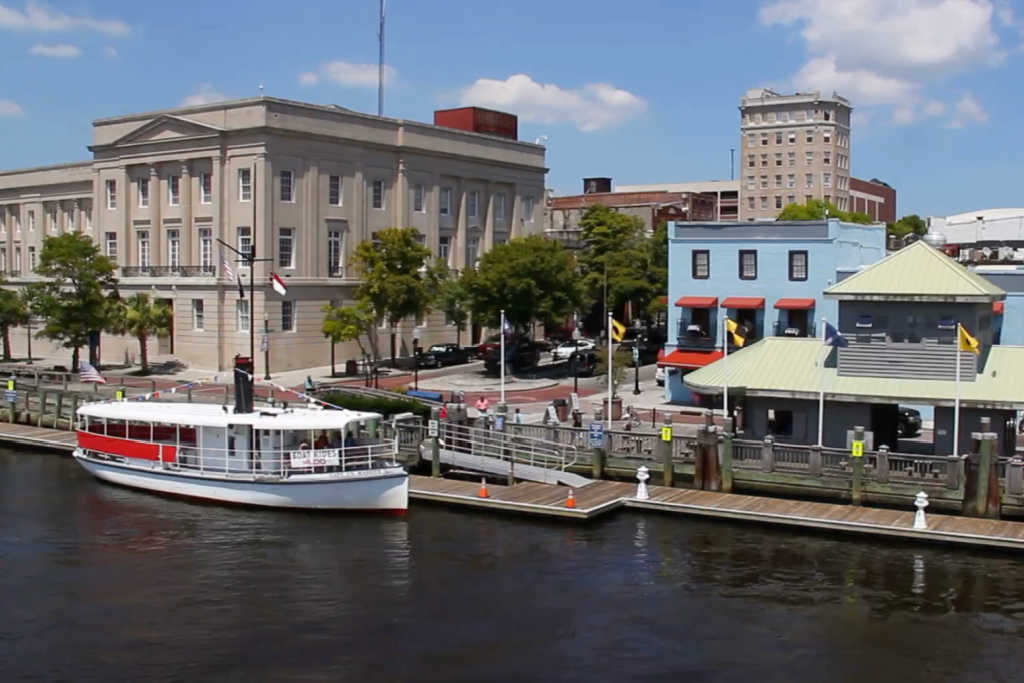
Of all the cities in North Carolina, Wilmington is North Carolina’s only real coastal city. You would think that people would be flocking to a coastal city like Wilmington. But, an astounding 50% of Wilmington home searchers want to leave their city.
Wilmington Lifestyle + Economy
On first look, this makes no sense. Wilmington is a coastal gem — beaches, riverfronts, historic districts, and a vibrant downtown make it a really desirable place to live.
The local economy leans heavily on tourism, healthcare, and education. The port and logistics sectors are growing too, with Wilmington acting as a trade and shipping node for eastern North Carolina. Names like Nucor Steel and Corning have operations in the region, and New Hanover Regional Medical Center is a major employer.
But despite its beauty, Wilmington has challenges.
In 2018, Hurricane Florence hit Wilmington directly, causing massive damage. UNC Wilmington had to delay their fall classes until October due to flooding. Some university housing was so badly damaged that it was closed indefinitely and students had to relocate.
Also, Wilmington was in essence an island for several weeks after the hurricane. Many major routes and highways were flooded or impassable, making access to the city incredibly difficult. Over 90% of homes lost electricity and it took weeks to recover. There was untreated sewage overflows, coal ash spills into waterways, and erosion of rivers and dams.
Just last week, another major hurricane caused significant damage. In the outer banks, 6 homes, built on stilts to allow for the ebbs and flows of the ocean, collapsed into the sea, a result of Humberto and Imelda, hurricanes that didn’t even make landfall. And while this isn’t Wilmington, it shows how delicate the entire NC coastal region is right now.
All this damage has had a significant impact on insurance rates in North Carolina, but more directly, at the coast.
Insurance challenges in Wilmington
All cities in North Carolina have suffered from increased insurance rates lately, but Wilmington more so than the rest. A recent insurance settlement with the NC Rate Bureau and the NC Department of Insurance agreed to a 16% rate increase in 2025 and a 15.9% increase in 2026 specifically for the Wilmington area. And those increases come after a 36% increase in the previous 5 years statewide.
I wasn’t able to find out how much the past 5 year increase was in specific locations, but based on the difference of the most recent increase to more western regions, it’s likely that the 36% was concentrated in coastal areas like Wilmington.
For example, the same settlement allows 7.5% increases in Raleigh, 8% in the Triad, and around 9% in Charlotte each year, roughly half as much as Wilmington and other coastal cities will see.
Employment Challenges in Wilmington
Another reason people look to leave Wilmington is simply a lack of jobs.
Unlike NC State, Duke and Chapel Hill students, who either find jobs locally after graduation or in many cases form their own startups, when students graduate from UNC Wilmington, even if they wanted to stay, the odds of finding jobs in the coastal region is much less likely than other parts of the state.
Even on it’s own jobs page, UNC Wilmington acknowledges the difficulty of remaining in Wilmington for graduates.
In a recent economic survey, Wilmington slid in rankings compared to other cities in North Carolina. Raleigh, for instance, scored higher in multi-year job growth and multi-year wage growth. Wilmington’s “housing affordability rank” is also weaker in that report.
In spite of all these struggles, housing prices in Wilmington remain remarkably high. At $464,000, the median home is more expensive than the median in Raleigh, Charlotte, Greensboro as well as Myrtle Beach… all areas that Redfin show are places people from Wilmington are moving to.
The next big surprise is a charming town with mountain views, a vibrant downtown, affordable housing… and yet, the percentage of people trying to move out of it is 18 points higher than the national average.
Hickory
One of my favorite cities in North Carolina is Hickory. So, it’s a little sad that 47% of searchers are looking to leave it.
Hickory Lifestyle + Economy
Hickory has a long history as a blue-collar manufacturing town.
For most of the 20th century, it was the Furniture Capital of the World, producing handcrafted pieces that furnished homes across America. But when much of that industry moved overseas, Hickory never fully recovered.
Manufacturing is still the backbone of the economy — but now it’s smaller, more specialized, and increasingly automated, meaning fewer workers and lower overall employment.
In recent years, the city has worked to reinvent itself with advanced manufacturing, logistics, and data centers, and it’s true that Hickory plays a major role in the global fiber optics industry — producing a large share of the world’s fiber cable. But those jobs are concentrated in a handful of companies and don’t necessarily translate into widespread prosperity.
Wages in Hickory remain well below the state average, and many residents commute to other cities for better-paying work.
Hickory’s lifestyle appeal is mixed. The cost of living is low, and its location at the foothills of the Blue Ridge Mountains gives it a naturally beautiful backdrop. But local amenities and cultural offerings are limited compared to larger cities, and downtown revitalization — while promising — hasn’t yet transformed the broader area.
For younger professionals or college graduates, the lack of diverse industries, nightlife, and career advancement can make the city feel stagnant.
Hickory Historical Trends of Relocations
So where are people from Hickory moving to?
Many movers are headed to Charlotte, Raleigh, and Greenville, SC — all cities with faster-growing economies, higher wages, and more opportunities in tech, healthcare, and finance. Others are relocating to smaller North Carolina cities like Winston-Salem and Concord, looking for a balance of affordability and better job options.
While Hickory remains affordable and friendly, affordability alone isn’t enough to keep people when wages stagnate and opportunities are limited.
Hickory’s economy remains rooted in its industrial past. While a few advanced manufacturing firms and automation efforts have modernized operations, there’s been little structural change to attract new corporate investment.
Catawba Valley Community College and Lenoir-Rhyne University provide solid technical and nursing programs, but they’re largely reactive—training workers for existing jobs rather than developing the kind of innovation pipeline that draws major employers.
With no research corridor, startup culture, or coordinated economic vision, Hickory lacks the momentum seen in the towns that aren’t bleeding residents. But before we get to those, let’s look at the last city that has a high rate of people leaving… the city in the mountains, Asheville.
Asheville
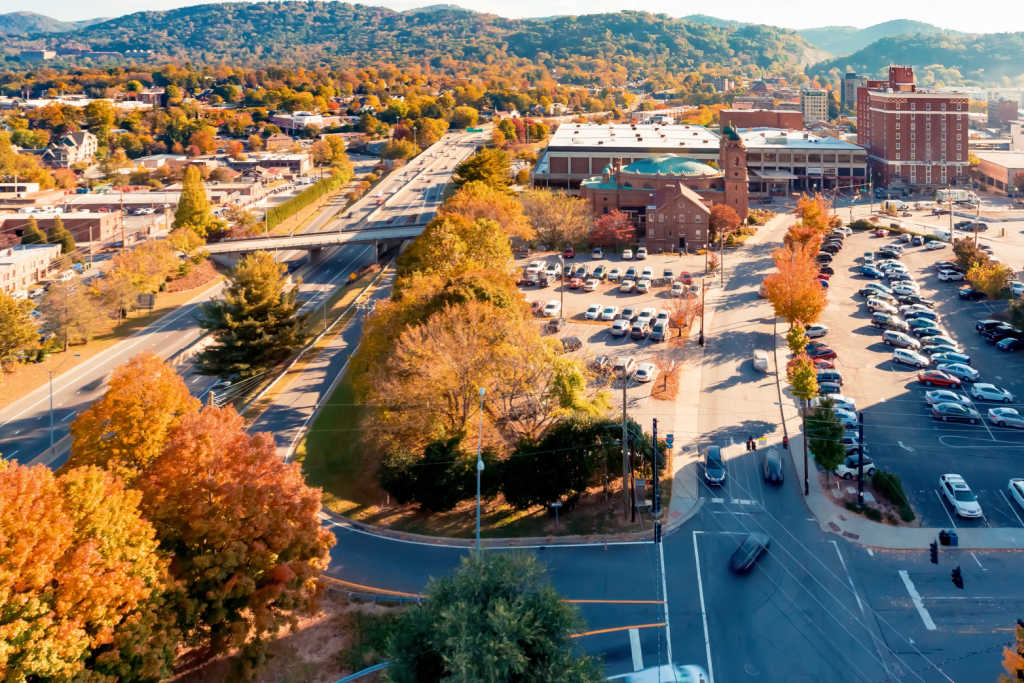
Asheville has long been known as a mountain escape — artsy, eclectic, full of breweries, galleries, and outdoor adventure. Once upon a time, Asheville was the one of those cities in North Carolina that everyone wanted to move to. But 42% of Asheville home searchers want to leave their city!
Asheville Lifestyle + Economy
Tourism has always been the backbone of the economy, along with healthcare and hospitality. The city has built its identity around creative culture, the River Arts District, and its “foodie” reputation. Asheville is also home to the famous Biltmore Estate, which draws more than a million visitors a year.
To some degree, the challenges in Asheville are similar to Wilmington, although a little bit different. Given its recreation and vacation focused lifestyle, it’s seen as a desirable place to live, however, it doesn’t have the economic stability of the cities in the middle of the state.
The region has few, if any, corporate headquarters or large-scale white-collar campuses. Corporate recruitment is slower because the area lacks the infrastructure that attracts major HQ relocations — things like interstate access, large office parks, and major airport connectivity.
On top of that, violent crime in Asheville has been climbing steadily over the last several years. In 2024, Asheville set a record with homicides — the highest in its history in a single year — and the overall violent crime rate is now among the highest for cities its size in the U.S. This has created real concerns about safety for both residents and would-be newcomers.
The city is still recovering from Hurricane Helene in September 2024. The storm dumped nearly 10 inches of rain in just two days, causing flooding, landslides, and widespread damage in downtown Asheville and the River Arts District. Entire neighborhoods were cut off, businesses were destroyed, and the city faced looting in the aftermath. Recovery has been slow, and the scars of that storm are still visible today.
Asheville Historical Trends of Relocations
So why are people leaving Asheville?
Most outbound movers are heading to Greenville, SC; Johnson City, TN; and Forest City, NC.
There are a few things about these cities that give us some clues about why people are actually leaving. All of these cities have similarly high crime rates. So it would appear that crime isn’t the primary reason people leave.
But the places they go to for one reason or another are better economically. Either they have much lower housing prices, like in the case of Forest City and Johnson City, or they have a more resilient economy with a broad field of economic industries, possibly making jobs easier to get.
It’s interesting that the residents of Asheville are not looking to move to places like Raleigh and Charlotte.
If Asheville is your vibe, you’re not likely packing up for Charlotte or Raleigh, which is what tells me that the lifestyle factor is the most important thing to this group of people. But due to the difficult economy of Asheville, it’s hard to make it happen.
Data from the Tourist Development Association showed back before Covid that purchases of second homes had doubled from the years 2009 – 2017. I wasn’t able to find more current data but I did find that surrounding counties have a second home rate of about 24%.
I think it’s fairly safe to say that if you want to live in Asheville, don’t expect to find a job there.
Okay, we’ve covered all the places people are leaving in large numbers, now let’s take a look at the places that are really popular that people don’t want to leave.
Raleigh
33% of Raleigh home searchers want to leave their city. Even though it’s one of the lowest in the state, it’s still slightly above the national average of 29% and shows there’s real churn even in Raleigh. And we’re gonna talk about why people want out but first let’s talk about Raleigh itself.
Raleigh Lifestyle + Economy
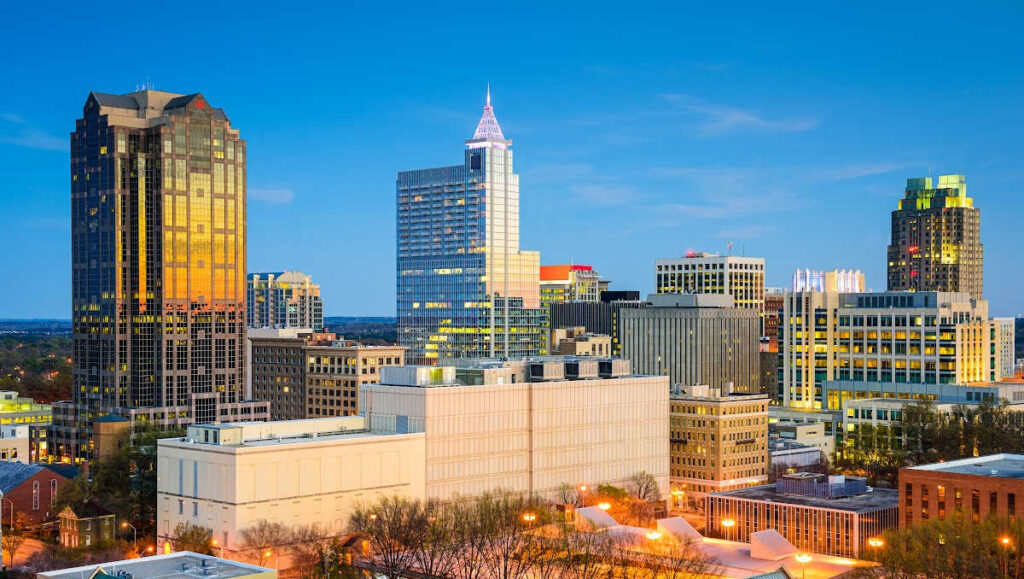
Raleigh is part of the Research Triangle—anchored by NC State, UNC Chapel Hill, and Duke. It’s known for tech, life sciences, and the state government resides here in the capitol city. Which is also weird because I don’t feel like Raleigh is an overly political place, which is nice, at least in my opinion.
The city has become a magnet for high-skilled professionals and fast-growing firms. In recent years, you’ve seen companies like Apple, Infosys, and Google expand in the region. The trend is toward innovation and knowledge economy sectors: biotech, software, data analytics, clean energy. Raleigh’s strength is its educated talent pool and institutional backing.
But Raleigh’s not just a brain hub. The city has a growing food, arts, and live-music scene; an incredible number of large parks and greenways.
If you went to a different park every single day throughout Wake County, it would take you six months before you experienced all the parks.
There are numerous craft breweries; a strong mix of urban and suburban neighborhoods. The downtown and midtown areas are seeing steady densification with walkable developments and higher end boutique shopping is really taking off in the North Hills district.
If Raleigh were an ice cream flavor, it would be a really high quality vanilla. It’s safe. It’s pleasant, it’s adaptable. Throw it on some peach cobbler, apple pie, or drizzle chocolate syrup on it. The crime is low, the jobs are here, the infrastructure is here.
Raleigh Historical Trends of Relocations
So why are people leaving Raleigh? When we look at where people are moving to, again, we get some pretty good clues about what’s missing in Raleigh. The number one place people consider relocating to, by a long shot, is San Diego, California
The San Diego Metro is about twice the population of the Raleigh Metro, and those who express their dislike of Raleigh on social forums generally say it’s just too small without much to do. It isn’t surprising that those who want out of Raleigh want something with a little more pizzazz.
Raleigh doesn’t have waterfront dining and shopping districts, or places like Seaworld, and honestly I’m glad we don’t trap those amazing creatures into tiny exhibits. Incidentally, our zoo here an hour from Raleigh is one of the most amazing natural habitat zoos in the world. It feels more like the people are in the cages and the animals are free. Anyway, Raleigh just doesn’t have amenities on the scale that larger cities have.
After San Diego, the most popular destinations are Myrtle Beach, New Bern, Ashville, and Wilmington.
Those looking for smaller towns are likely in the retirement stage. Raleigh is the type of place you definitely stay to raise your family, but it’s not unusual for empty nesters to make a move to the coast or mountains.
Affordability is another likely cause of the outbound migration. Raleigh’s initial growth spurt was driven in part because of how much you got in amenities for how little you had to pay in housing. Today you have to pay more to be in Raleigh. We think it’s still worth it, but some people may not.
Raleigh Inbound Relocation
At the same time, Raleigh continues to be a top target for inbound migration — from places like New York, Miami, San Francisco, and Washington, DC. Many newcomers are drawn by jobs, the quality of life, and the “sweet spot” of having city infrastructure without the extremes of big metros.
While Raleigh remains a powerful draw, the constant churn and outward moves reflect the tension of rapid growth. Some like the growth, some miss when it was small and some think it’s still too small.
But there are two more cities that are stickier than Raleigh, meaning even fewer people want to leave. Let’s look at the next most popular choice, Charlotte. And before I get there, I just want to tell you that Raleigh is the better city. But I’ll let you be the judge.
Charlotte
Of all the cities in North Carolina, Charlotte is the one that feels most like a real city.
Why people love Charlotte
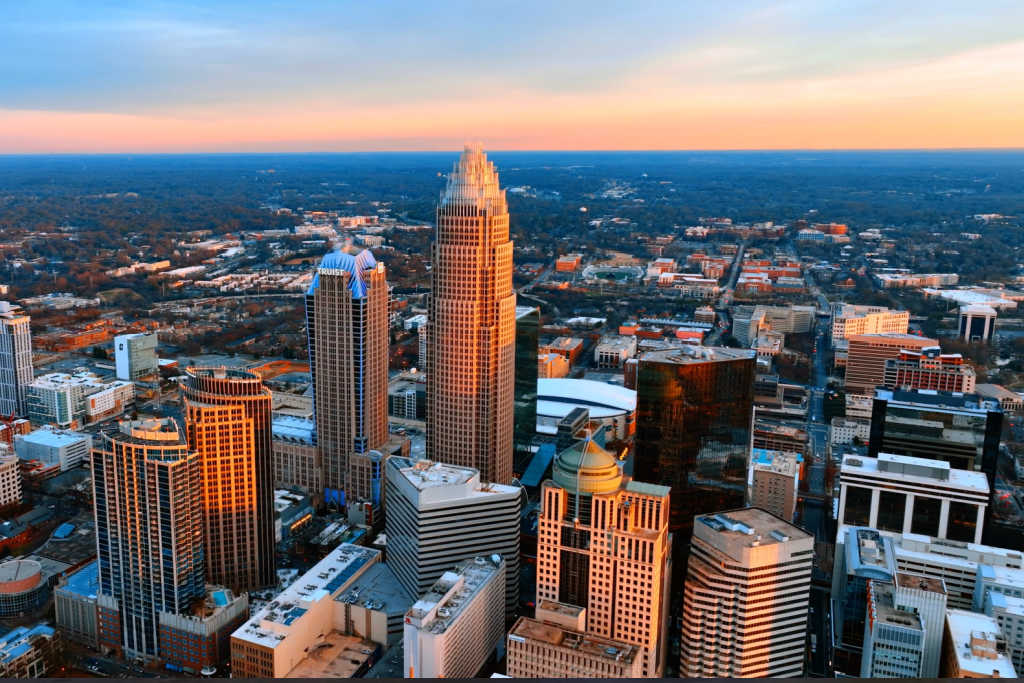
In Charlotte, only 31% of searchers were looking to move out of the metro and 69% were looking to stay. Charlotte is more than just North Carolina’s biggest city — it’s the second largest financial hub in the country after New York, home to Bank of America, Truist Financial, and the East Coast headquarters of Wells Fargo. So if you’re looking for a man in finance, you just might find it in Charlotte.
You’ll also find Fortune 500 giants here like Duke Energy, Honeywell, Lowe’s, Nucor, and Brighthouse Financial. It’s the only city in North Carolina with a true mass transit system, which makes it feel more like a national metro than a regional hub.
But Charlotte isn’t just business — it’s a fun, vibrant city with plenty to do. Families love Carowinds, Great Wolf Lodge, and the Sea Life Aquarium with North Carolina’s only ocean tunnel.
Sports fans get the Carolina Panthers, Charlotte Hornets, Charlotte Knights, and of course NASCAR at Charlotte Motor Speedway. And if any of those teams could actually win anything, who knows how far Charlotte could go!
Charlotte’s problems
Some of Charlotte’s drawbacks are: the traffic is the worst in the state, it’s also really lacking in parks and outdoor spaces. I actually did a really deep dive into the differences between Charlotte and Raleigh, because it really deserved its own post, so I won’t totally rehash it right now, but you can read it here if you’re interested.
The majority of people moving to Charlotte are coming from New York City, Washington DC and San Antonio Texas. The majority of people leaving Charlotte are moving to Myrtle Beach, Columbia SC and Asheville.
And just in case you haven’t seen the pattern, when people are moving away from popular North Carolina cities, they’re very often moving to retirement towns, not necessarily moving to find better work.
And next and final town we’re looking at is the Triad area, Greensboro and Winston Salem. These towns had the lowest outward migration of any city in the state. Let’s find out why.
The Triad
The Triad area had 30% outward traffic and 70% inward traffic. This wasn’t a surprise to me. Actually, the Triad is having something of a renaissance, even if the Renaissance Fair happens in Charlotte.
Greensboro’s rise
And the majority of the growth is happening in Greensboro. Greensboro’s economic development organization has been doing a bang up job of creating a name for itself in several different industries. JetZero, the Lenovo expansion, Indo Count Global and Toyota’s battery plant are just a few examples of big, multi-year, high-capital projects. In 2023, Greensboro reportedly had over $1B in construction activity, a ~37% increase year-over-year, a very strong signal of confidence in growth.
Greensboro reminds me a bit of Raleigh when we moved here 25 years ago.
It’s just about the same size as Raleigh was then. And it’s got a lot to recommend itself in the way of parks and museums and greenways. The Greensboro Science Center is amazing. We would drive out here when our kids were little to visit. It also has lots of beautiful places to walk like the Greensboro Arboretum and the Botanical Gardens.
I think Greensboro is a great option if you want to move to a place where home values are still relatively affordable and it’s in the beginning of its growth cycle. But there is one caveat to be made. If we’re looking at Greensboro as if it’s an early version of Raleigh, they do have a lot of similarities, but they also have some differences.
Challenges for Greensboro
The downside to Greensboro (that Raleigh has done a fairly good job with) is crime. The murder rate in Greensboro is significantly higher than in Raleigh. In 2023 there were 28 murders in Raleigh and 74 in Greensboro. Keep in mind that Raleigh is a much bigger city.
Crime in cities tends to get worse as the city gets bigger so this is a significant problem. And if they can get that under control, as well as improvement in their schools, Greensboro will be the golden child of NC in 15 years.
Greensboro Relocations
The majority of people who are moving to Greensboro are moving from Washington DC, New York and Los Angeles. The majority of people moving away from Greensboro are moving to Myrtle Beach South Carolina, Raleigh NC and Columbia South Carolina.
I think a lot of North Carolina’s story is one of people moving from much larger metros and it taking a little time to “right size” their city.
Moving from New York city to Greensboro might be too much of a shock, once you realize how small it is, so you decide to give Raleigh a try. Or maybe you move to a small town, like Pinehurst and realize you just can’t be that far from a Target, no matter how quaint the town.
We’ve seen quite a few examples of people relocating and then in a year or two deciding they didn’t make the right choice. This is why we spend a lot of time with our clients trying to help them find the right location, before we focus too much on housing.