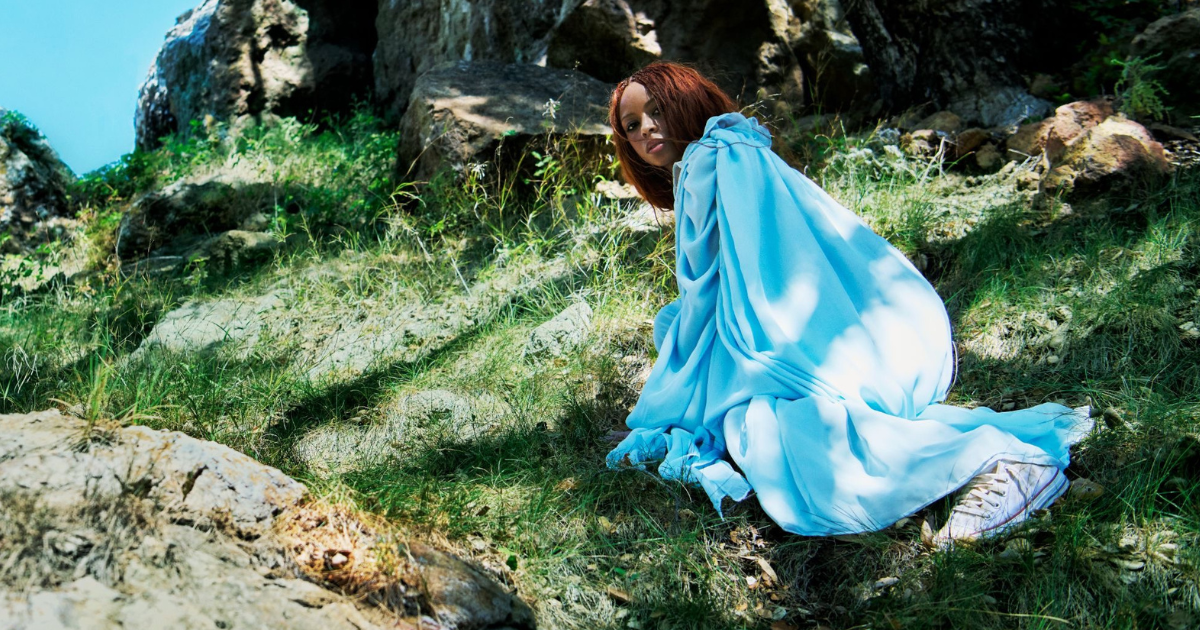
On her third album, Blue Island, singer Ravyn Lenae navigates the complexities of what it means to be a Black woman in pop music, interrogating the expectations of these identity politics by broadening her sonic scope and, in the process, her own self-awareness.
Taking inspiration from her personal journey over the past year, Lenae finds herself in a more playful mode of creativity on Blue Island. The result is a stylistically varied body of work that swings from slightly experimental synth-pop to beachy soft rock and ’90s-tinged R&B.
As genre-fluid as the project is, Lenae threads everything together by locating herself within a distinct era: the ’80s. The DNA of the decade is all over the album, from the gated reverb and New Wave-slanted chorus of opening track “Handle” to standout “Wish You Well”, a shimmering power-pop ballad that’s one part Cyndi Lauper with a generous dose of Wilson Phillips. It’s a direction that suits Lenae alarmingly well, making for some of the most engrossing and refreshing moments Blue Island has to offer.
These are contrasted by a handful of tracks that reach for vintage R&B, with varying results. “Babygirl”, featuring a brilliant guest verse from Doechii, and the touching cinéma vérité of “Never Let Me Go” are among the strongest of these, while songs like “Reputation”, featuring Dominic Fike, “Sew Me Back Together” and “Familiar Dreams” sound a little too familiar, feeling less impactful alongside heavy hitters like the New Jack Swing slow-burner “Find It One Day”. This track, in particular, sounds like an instant classic, striking the perfect balance between nostalgic, familiar melodies and a contemporary pop sensibility.
This is where Blue Island truly finds its stride. Running alongside Lenae’s ’80s New Wave influence is a modern, hyperpop-adjacent thread that feels both unexpected and exhilarating. It first emerges in the final act of “Potential”—which could easily have opened the album—as a propulsive, distorted, syncopated beat before arriving fully formed on the walloping closer, “Let Us In”.
Blue Island finds Lenae in an exciting space. She’s locked into her own voice, creating from a place of creative liberation. But the project occasionally buckles under the weight of its ambitions, with some songs struggling to carry its multitude of sonic threads from one moment to the next. There’s a solid album lurking beneath the excess—one that proposes a blueprint for Ravyn Lenae’s future that, if refined enough to match the scale of her ambitions, could make her a truly unstoppable force.