This is the Greek Moussaka recipe that I have been making for years. Layers of thinly sliced roasted (not fried) potatoes, tender eggplant, flavorful meat sauce, and creamy bechamel sauce. It has all the right components of a comfort food — meat, potatoes, and a cheesy creamy sauce, and includes a delicious spiced ground meat sauce that is just so rich and fragrant. You will love this recipe. I have written the recipe and all the details about each layer and ingredient to make it easy for you to make at home. Enjoy!
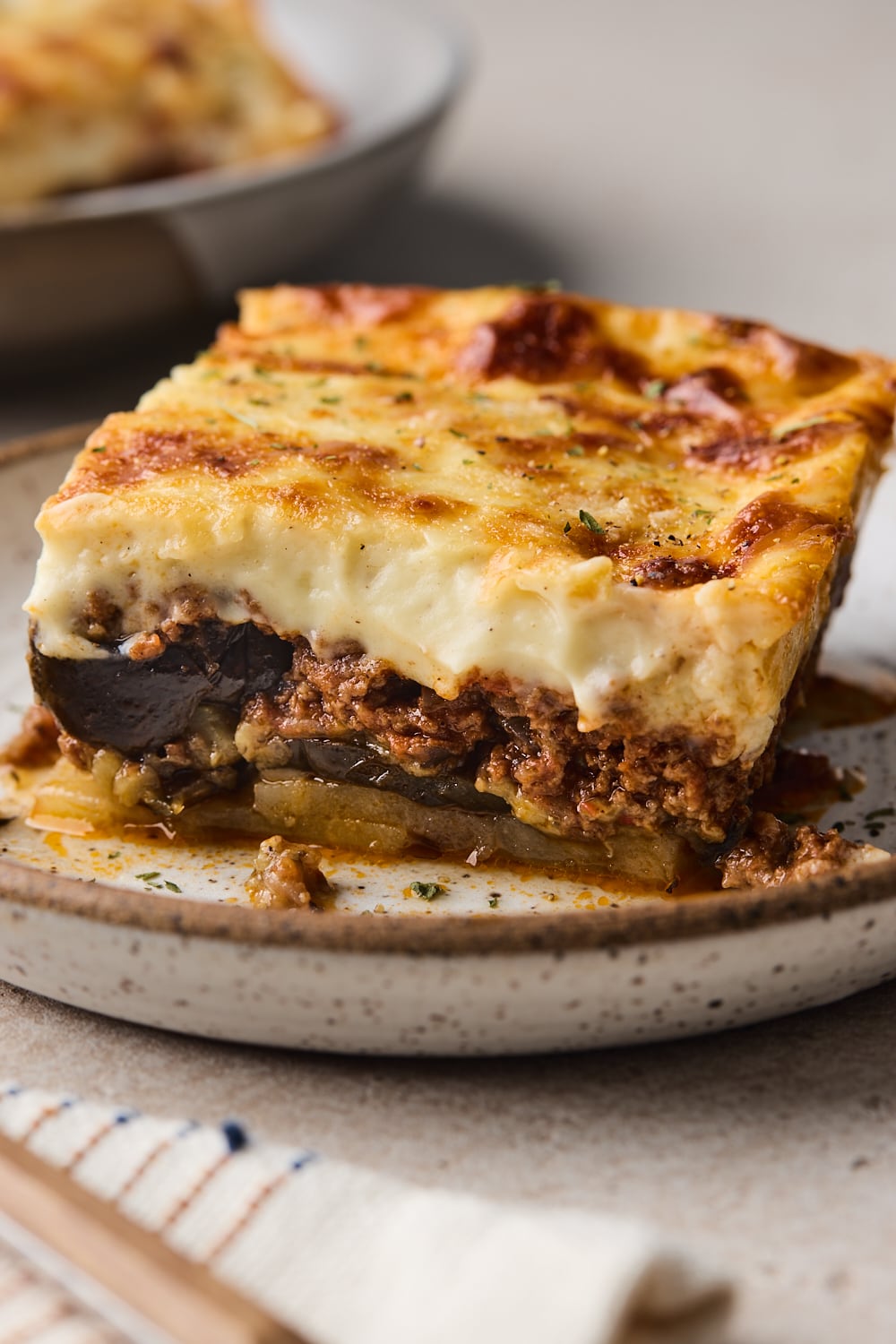
What is Moussaka?
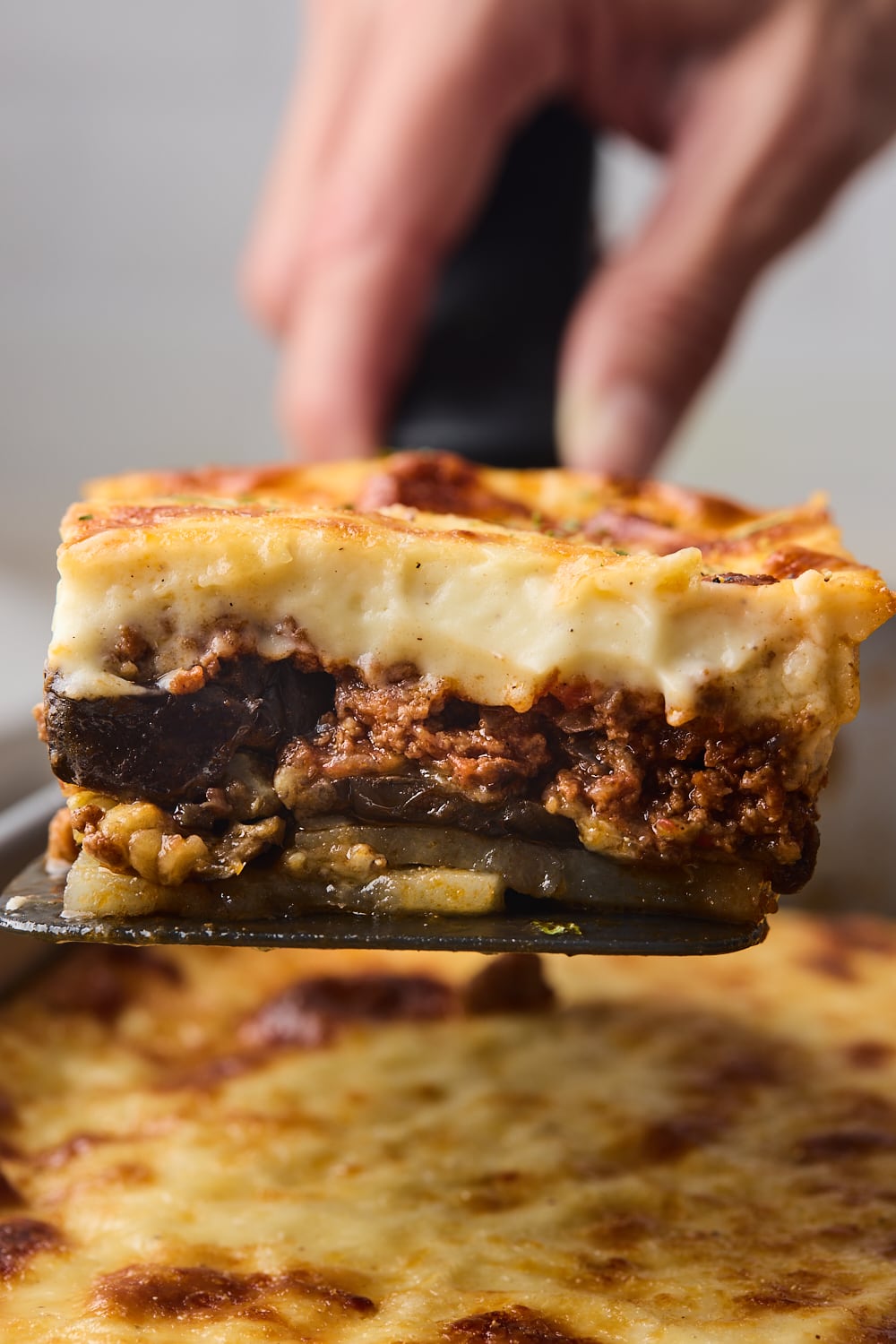
In case you have never had moussaka, Traditional Greek Moussaka is a layered casserole dish with layers of potatoes, sweet eggplant and topped with a layer of that meat sauce and finally a luscious layer of béchamel sauce. Like most ethnic dishes everyone has their own interpretation of it. Moussaka is no exception. The items mentioned earlier that make up a moussaka can have some variation within them. For example many fry the potatoes and the eggplant before layering but I prefer to roast them. It’s less messy and I find it’s a lot quicker because you roast them all at once, and the moussaka is less oily. But that is just my opinion and how I like to make mine. Some people put the meat sauce between each layer of the veggies but I just line the bottom with some sauce sometimes and use the rest on top of the veggies. I roast the veggies with onion and herbs and the veggies are very tasty on their own and I don’t think they need the sauce in between their layers. So you see, it’s really almost as versatile as a lasagna except the main components stay constant.
This is how my mom makes her moussaka and I tweaked and added my own little flair here and there from little tips I have picked up from making different ones over the years. There are a few steps involved in making this dish but it’s one of those dishes that once you get the ball rolling, it comes together pretty quickly. I have made it so many times that I actually have it down to a science now. I preheat the oven while I wash and peel the potatoes and slice them and the eggplant (and salt the eggplant and pat the eggplant dry) and toss in the oil and fresh herbs. By the time I have them on the baking sheet the oven is good to go, then I get the sauce going and once it’s simmering I start on the béchamel, and by the time the sauce is done the veggies are cooling and the béchamel is done and everything is ready to layer. You blink and it’s in the oven! Hee hee! It involves a little more effort than that but I’m just trying to say don’t be intimidated by the three separate components.
One thing I do all the time especially if I’m making this for a dinner party is that I roast the veggies and make the meat sauce in advance and layer them right in the baking dish I plan on using the night before or the morning of, and then I refrigerate it until I’m ready to make the béchamel and bake it. It’s a fabulous dish for making ahead. You can make the béchamel ahead of time too, just refrigerate in a separate bowl and place plastic wrap right over and onto it to prevent a milk skin from forming on it as it cools. I like making my béchamel right before I bake just because. But either way is fine. I find that doing the meat and the veggies in advance not only saves time but because they are cold and the meat sauce is kind of hard or firm — the béchamel stays more separate from the sauce, defining the layers more. You can do this with the tip I mention below as well by adding a little of the béchamel to the meat sauce to help it thicken or bind.

For The Vegetable Layer
Let’s talk veg! There are so many variations when it comes to what vegetables get layered in your moussaka. My go to layers are potatoes and eggplant. Many prefer to do 3 vegetables: potatoes zucchini and eggplant. I love them all – my only concern with the zucchini is that sometimes I find it could make the whole dish a little more wet so although I love zucchini I usually just do potatoes and eggplant. Variations are not limited to which vegetables you chose but also how you prefer and cook them. If you know me you know I hate frying things – like hate it. So that is why if there is an alternative way to cook the veggies I will always take it. I have heard people make the excuse that you will have to clean sheet pans if you roast your veggies or they don’t turn out as tender – the first excuse is true but I would rather clean sheet pans then clean an oil spattered stove and back splash and the second is simply not true – I get eggplant super tender baking it. One thing is a must for the eggplant and that is taking the time to salt your eggplant to release any bitter flavor and excess moisture. I usually do that while the potatoes are roasting then by the time they are out of the oven the eggplant is ready to go in. I also like to season my vegetable layers as well while they roast with salt and pepper and some fresh herbs. More details about the ingredients below.
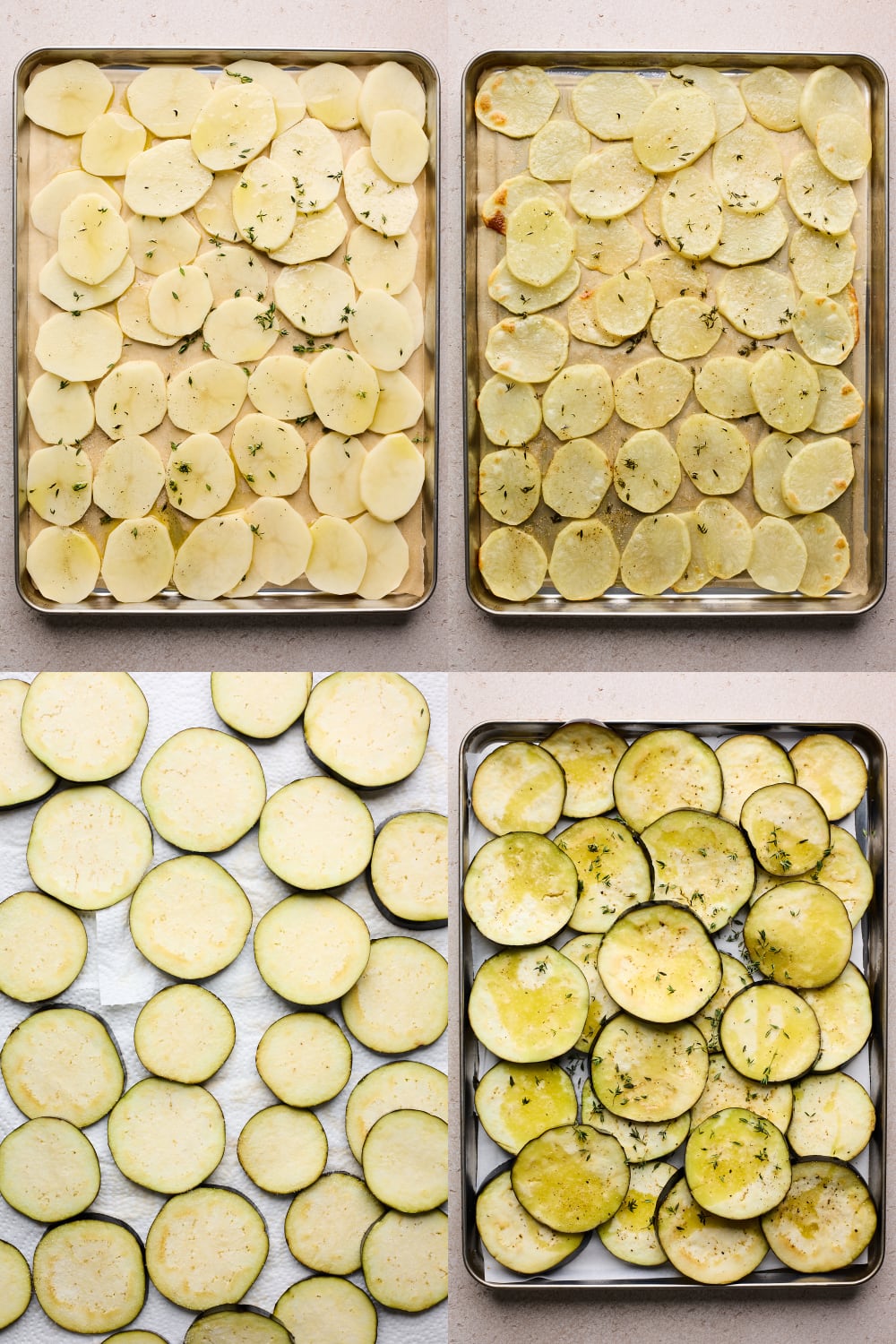
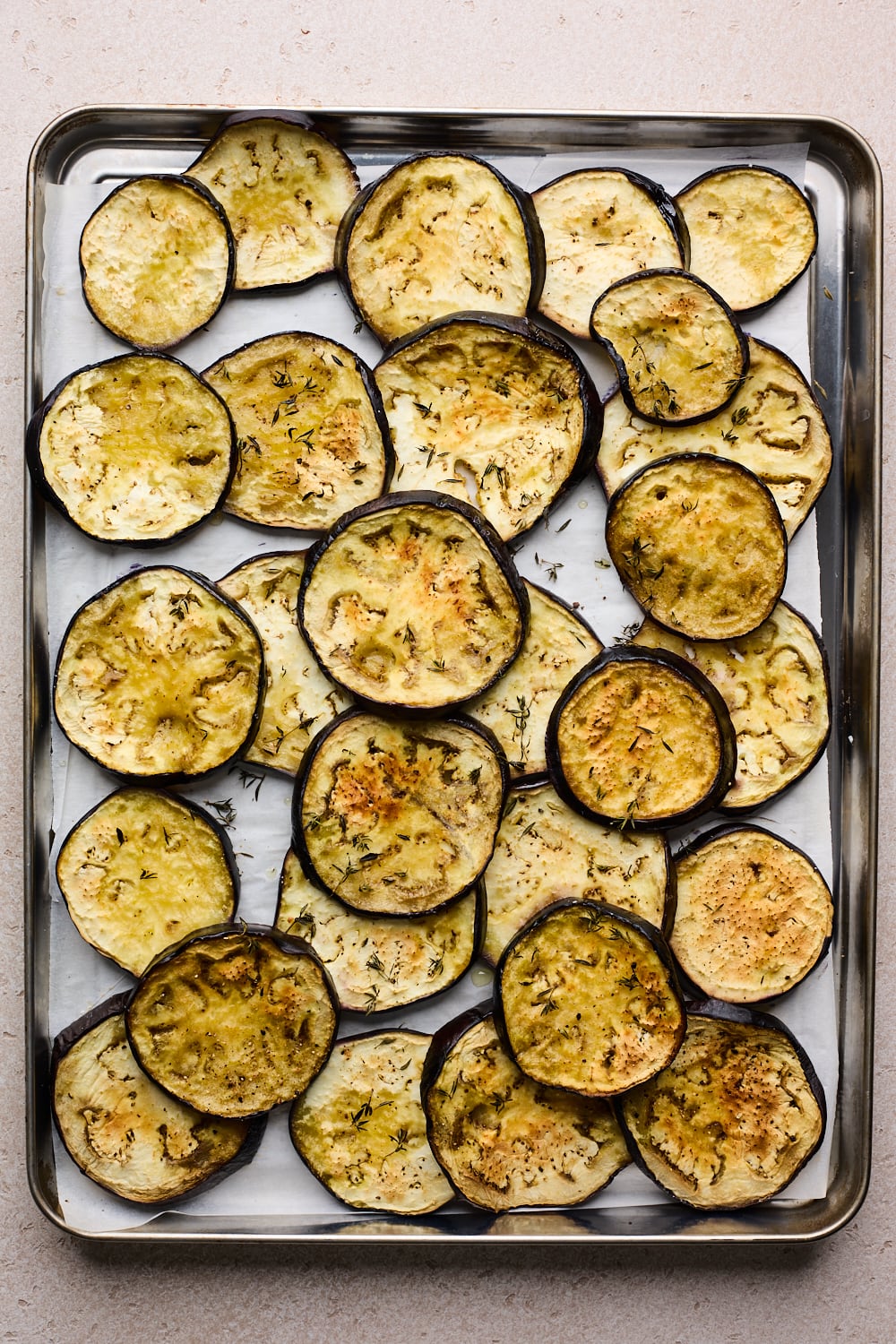
Ingredients for the Vegetables
- POTATOES: I always use russet potatoes or baking potatoes for the potato layer as they roast up nicely and have a soft texture in the moussaka.
- EGGPLANT: I use small to medium size eggplant and I do not peel them. The larger ones have more seeds which potentially have a bit more of a bitter flavor.
SALT: This is for seasoning and for salting the eggplant to remove excess moisture and bitter flavor - PEPPER: For seasoning. Use to taste
- THYME: I like to use fresh thyme to season the potatoes and the eggplant while they roast – feel free to use fresh or dried herbs and feel free to use any herb you like if you prefer it over thyme
- OLIVE OIL: This is for drizzling over the veggies before they get roasted – you could also use a brush to brush the oil over them too if you prefer to add it that way.
Vegetable Preparation Instructions:
EGGPLANT:
- Wash & Dry
- Slice into round
- Salt generously and allow to sit 30 min then pat dry
- Add slices to prepared sheet pan, drizzle with a little olive oil, sprinkle with thyme and black pepper and roast until softened and edges are golden brown
POTATOES:
- Wash, Dry & Peel potatoes
- Slice into rounds
- Add slices to prepared sheet pan, drizzle with a little olive oil, sprinkle with thyme, salt and black pepper and roast until softened and edges are gold
MAKE AHEAD:
- Yes you definitely can roast your vegetables the day before and once they are cooled I store them flat in a large airtight container in the fridge overnight. I do this all the time especially if I’m having guest over on the weekend and what to light my load a bit for that day.
- Remove from the fridge while you are prepping your moussaka them layer them as called for in the recipe.
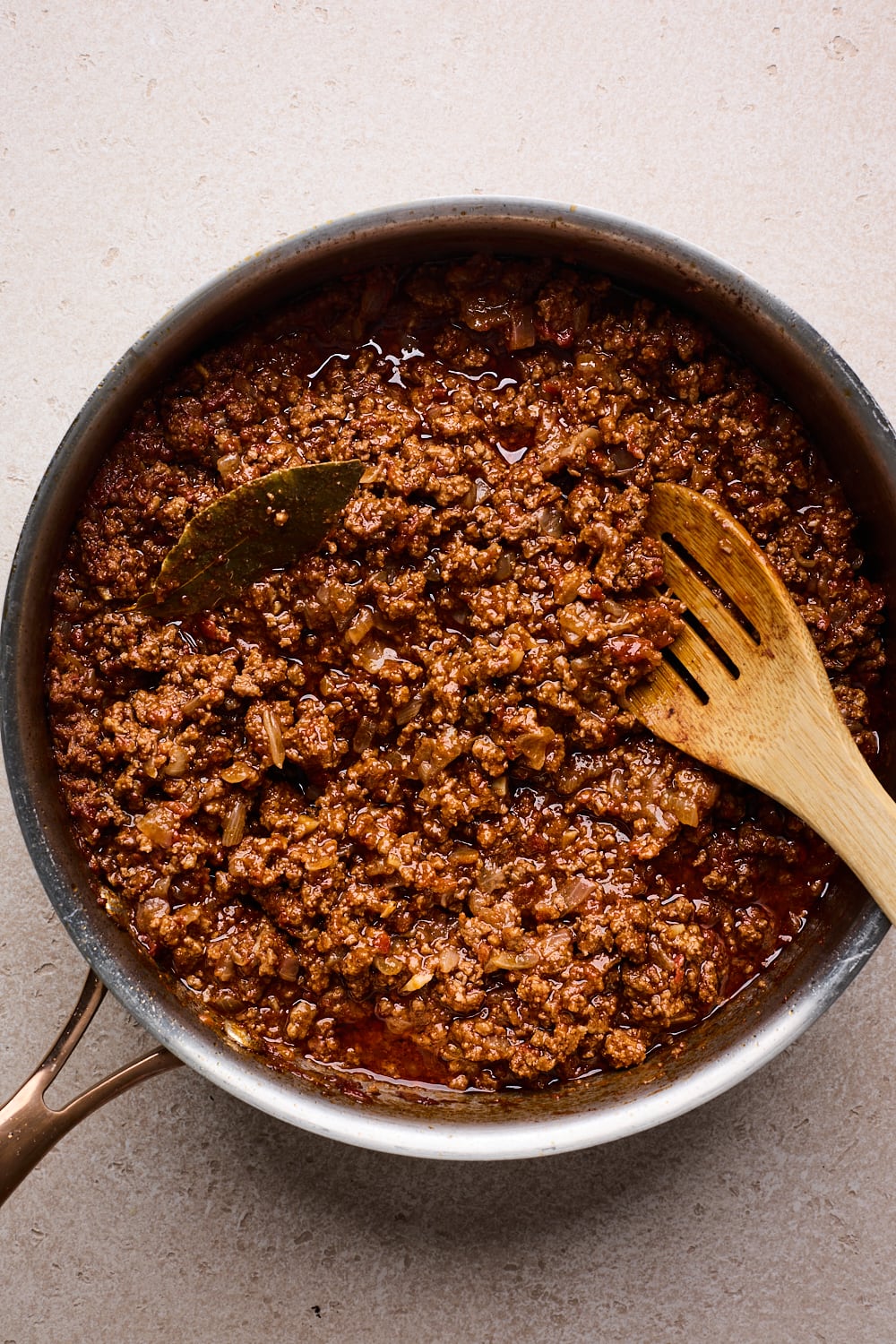
For The Meat Sauce (2nd layer)
The meat sauce for the moussaka is very similar to my meat sauce for Makaronia Me Kima – or my Greek pasta with meat sauce and my Pastitsio Recipe. The same flavours spices and herbs are used to give it that signature Greek meat sauce flavour. The sauce needs to be thick enough and not too wet or saucy so I let my sauce simmer for a good 30-45 minutes so that the flavours are richer and the sauce is thicker.
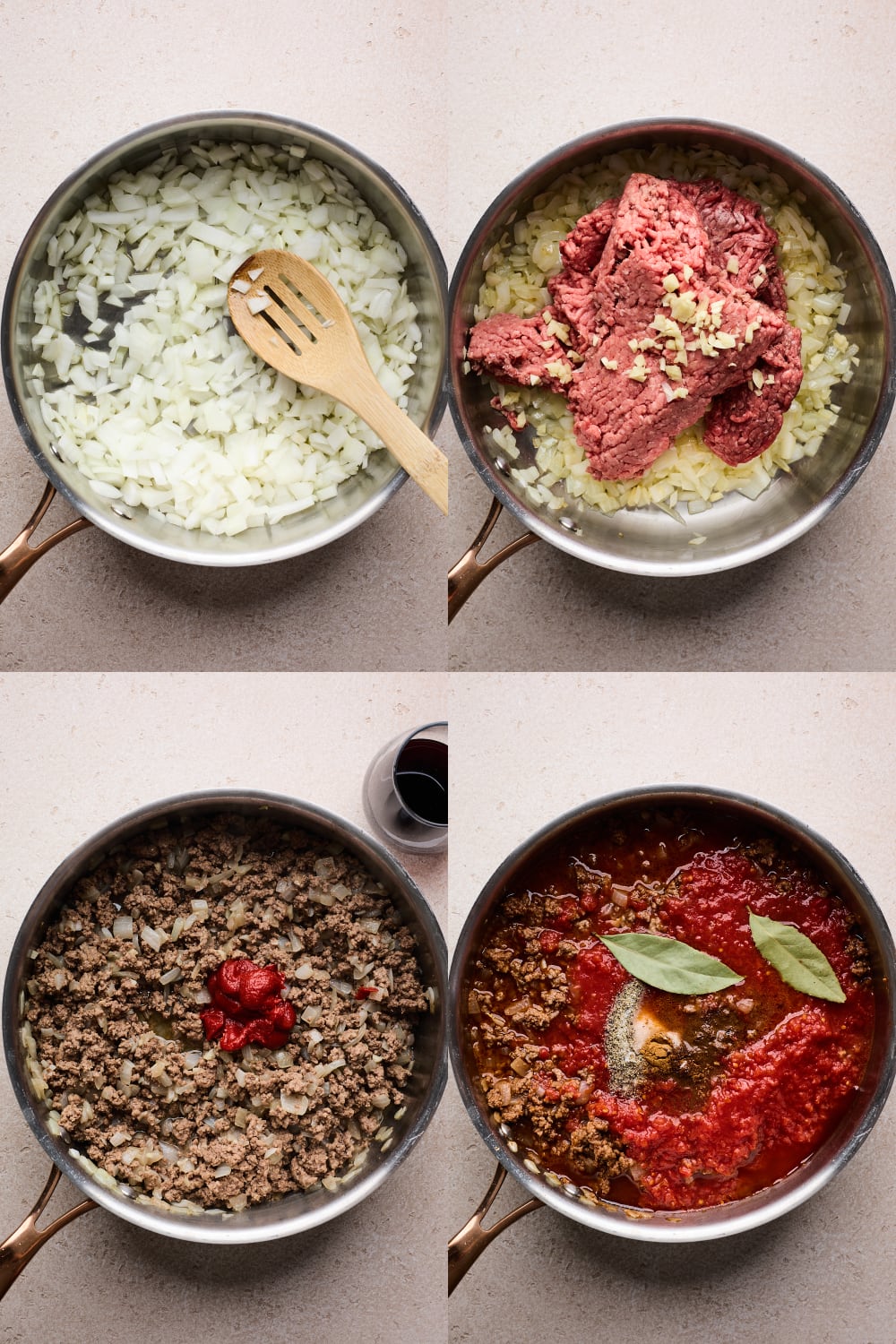
Ingredients for Meat Sauce
- OLIVE OIL: I use extra virgin olive oil to saute the onion, garlic and meat
- ONION & GARLIC: I usually use a yellow onion but white onion or red onion is fine to use as well. Use as much or as little garlic cloves as you prefer
- BEEF: I use lean ground beef for the meat sauce but you can also make this with any other ground meat including ground lamb or a combination of pork and beef.
- TOMATO PASTE & CRUSHED TOMATOES: Tomato paste adds richness to the tomato sauce and I usually use finely minced canned tomatoes usually Mutti because I love the texture it gives my sauce but any decent quality crushed tomatoes will work here
- WINE: I always love to add a splash or two of red wine in my meat sauce to help deglaze the pan and add flavour. This is optional and no need to replace it with anything if leaving it out – simply add in the crushed tomatoes and remaining ingredients.
- CHICKEN BROTH: This helps add flavor and liquid to the sauce to allow it to simmer. Beef broth or chicken broth or even vegetable broth can be used. You can even use water in its place.
- HERBS & SPICES: Apart from the salt and pepper used to season it to taste, the meat sauce is typically seasoned with dried oregano, ground cinnamon (signature spice in Greek Meat Sauce), ground clove and bay leaf. Feel free to adjust amounts to taste. And feel free to add some chili flakes or paprika for a hint of smokiness or extra flavour. I don’t always add the oregano so it is optional but feel free to add it for more flavor.
- CHEESE: Typically moussaka is made using Greek Cheese – Greek Kefalotiri/kefalotyri cheese, or Kaseri but if you cannot get this kind of cheese feel free to use Parmigiano Reggiano (Parmesan cheese) or Romano cheese. You will need 2 tablespoons or more if desired for for dusting the sauce with
- EXTRA ADD INS: Feel free to add more veggies to your meat sauce like minced carrots and celery for a mirepoix or add in some finely chopped red bell pepper for even more flavour. Simply sauté these veggies along with the onion and garlic until they start to soften. Feel free to add in other spices to the sauce according to taste or spice it up with chili flakes or cayenne pepper.
Meat Sauce Instructions
- Sauté the onion in a large skillet or medium saucepan over medium heat or medium high heat until onion is softened then add the beef and garlic to pan and sauté breaking it apart until well browned.
- Stir in tomato paste into meat mixture then deglaze pan with wine if using simmering until it’s reduced.
- Stir in remaining sauce ingredients and simmer sauce until thickened then remove from heat and allow to cool.
-
Meat Sauce TIPS: Cool meat sauce to room temp. A cool meat sauce will help keep layers more distinct and separate – the cheese in-between each layer helps too. A thick and room temperature sauce sits on top of the pasta instead of running through the vegetables – some of it still will but most of it will stay in a layer above them providing a great bed for the bechamel layer above it.
-
MAKE AHEAD: Meat sauce can be made up to 2 days ahead and stored in the fridge in an airtight container. Make sure to allow sauce to come to room temperature before chilling. The meat sauce can also be frozen for at least a month after it has been cooked and cooled and packed in airtight container. If you are freezing it just thaw completely in the fridge overnight then use as directed in the recipe.
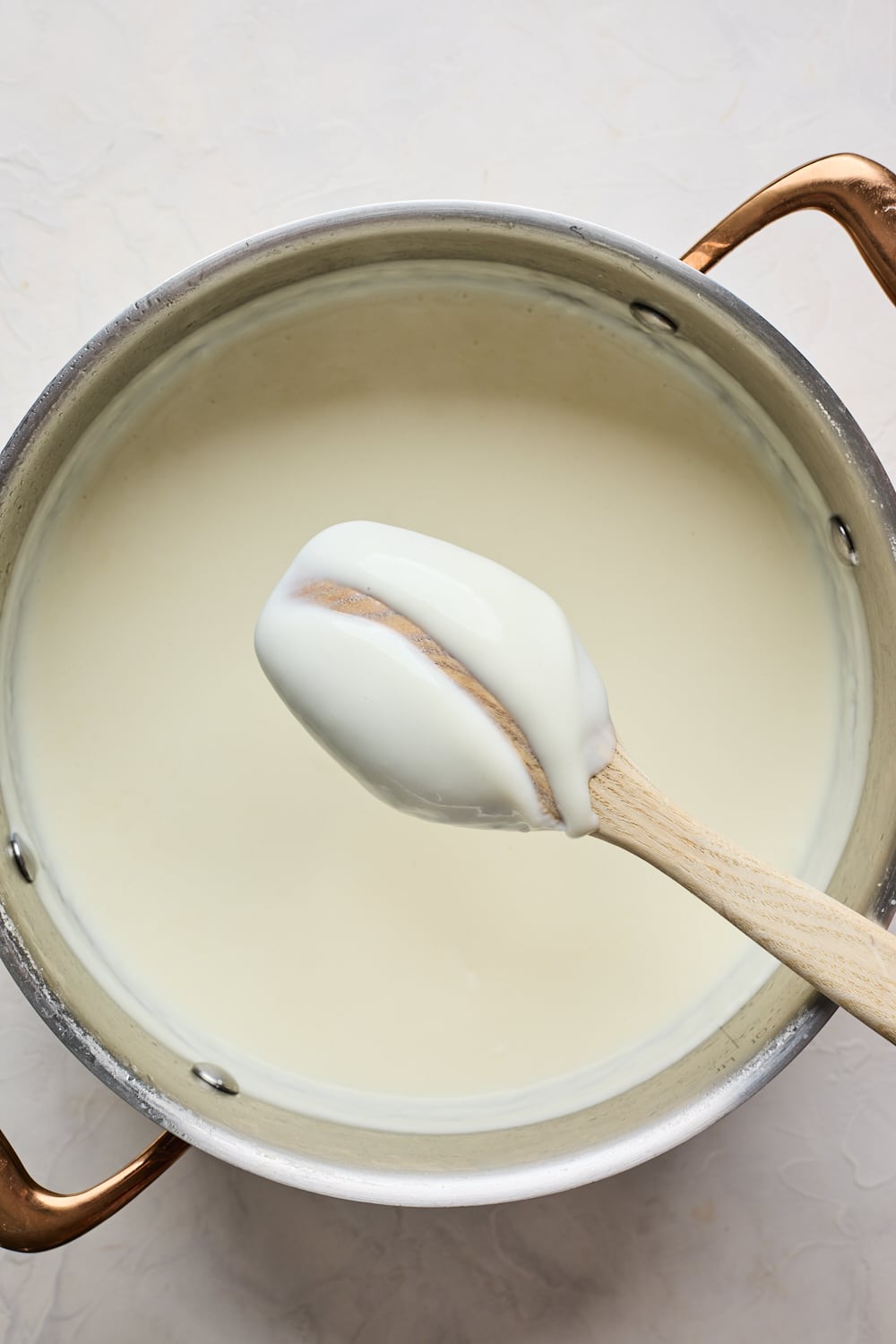
The Creamy Béchamel Sauce (3rd layer – top)
The creamy bechamel layer is basically the piece de resistance of the whole dish if you ask me or any Greek person. Whether you like yours runny or thicker it really is the best part. I like mine to be a nice thick layer over the meat layer so to be able to create that layer it important to get the right milk/flour ratio but its also important to let the moussaka rest for a little after it bakes so that its not a total mess when you go to slice it. No need to be intimidated to make bechamel sauce- it’s quite easy to make. All you need is a little patience and the will to whisk and that is all. There’s a not so secret ingredient I like to add – corn starch which helps with the setting process. It helps the bechamel sauce layer set nicely without being too stiff – the sauce sets but is still super creamy. The egg yolks add richness to the bechamel but also help it set. Some people like to add the eggs in whole to help it set but I find the egg whites can sometimes give your sauce a bit of an eggy flavor – so I stick with the yolks alone and the cornstarch. It makes for a perfect creamy bechamel layer. Here is what you will need:
Bechamel Sauce Ingredients
- BUTTER: Unsalted butter is what I use and it builds the flavours in the sauce.
- FLOUR: All purpose flour is what I use – a gluten free 1-1 flour will work but no guarantees that the texture will be the same as gluten-free flours are usually blended with other types of thickeners and additives that could affect the texture of the bechamel sauce
- CORNSTARCH: This helps thicken the sauce and helps its set well while keeping its super creamy texture
- MILK: I use whole milk and recommend it for best flavour and texture. It will give you a nice rich bechamel sauce which is what you want in a good moussaka
- EGG YOLKS: As I mentioned above I usually just use the yolks for the pastitsio because they add richness without the egg flavour. If you prefer to use the whole eggs that is fine but the flavour may be affected slightly and so will the texture as the whites tend to tighten up the mixture quite a bit.
- CHEESE: Typically pastitsio is made using Greek Cheese – Greek Kefalotiri, or Kaseri but if you cannot get this kind of cheese feel free to use Parmigiano Reggiano (Parmesan cheese) or pecorino Romano cheese. You will need 1 ¼ cups divided for the bechamel. 1 cup will get whisked in and the other dusted over the sauce in the pan
- NUTMEG: A little nutmeg adds just that hint of flavour that you expect in a bechamel sauce – if you are really not a fan just leave it out.
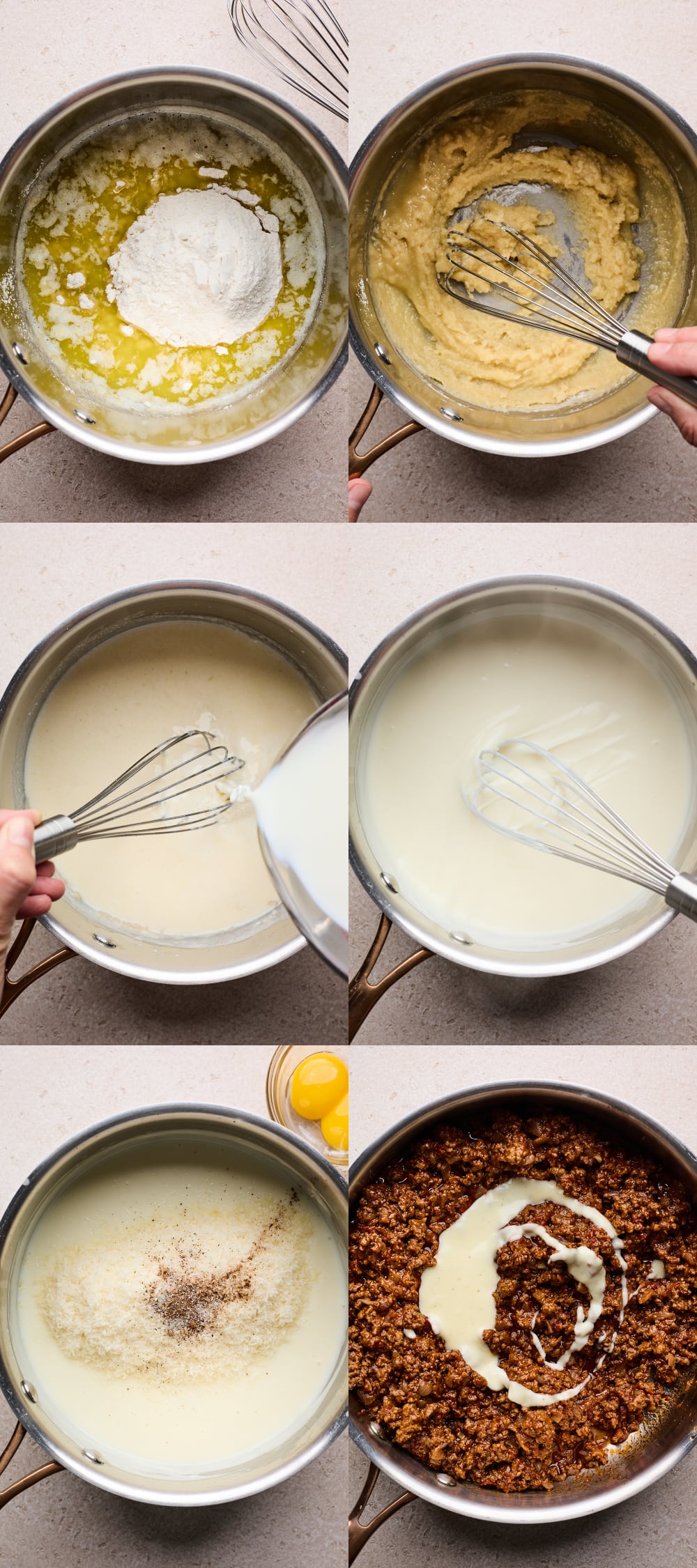
Bechamel Sauce Instructions
- Combine flour and cornstarch
- Melt butter then whisk in flour mixture and cook stirring 1 min
- Slowly drizzle in milk while whisking
- Cook mixture whisking until thickened
- Remove from heat and whisk in cheese, nutmeg and season with salt rotate
- Vigorously whisk in the egg yolks
Tips for Making Great Bechamel Sauce Every time
- Whisk continuously: Don’t walk away from the stove when you are cooking béchamel – the milk can stick to the bottom of the pan easily and burn affecting the flavour of the whole sauce
- Go easy on the Heat: Don’t be tempted to increase the temperature to cook the sauce faster – this will increase your chance of burning the sauce. Medium to medium high is quite enough to help simmer and cook the sauce
- Milk should be room temperature: Having it room temperature at the very least is recommended or you can even warm it up so that it really mixes in well with the roux – butter flour cornstarch mixture. I usually pop it in the microwave before pouring it in.
- Add the milk slowly: This will help the roux loosen up and become nice and smooth instead of clumping up
- Cook sauce long enough: Take your time with it – you want to make sure the sauce is nice and thick and coats a spoon really well when dipped into the sauce. This will ensure that the sauce will set well also. Once the spoon is coated you can make sure it’s ready by running your finger across the coated spoon. If your finger clears a path on the back of the spoon, the sauce is thick enough, but if it runs back in to the fill the space, it needs a little longer. Another sign that your bechamel sauce is thick enough is when you whisk it the whisk leaves marks behind in the sauce – yes you want it pretty thick
- MAKE AHEAD: Bechamel sauce will also keep in the fridge in an airtight container for up to five days, but I usually make it the day before. It can also be frozen for up to three months, (when thawed it may look grainy but reheat gently over low heat stove top and it will smooth out.)
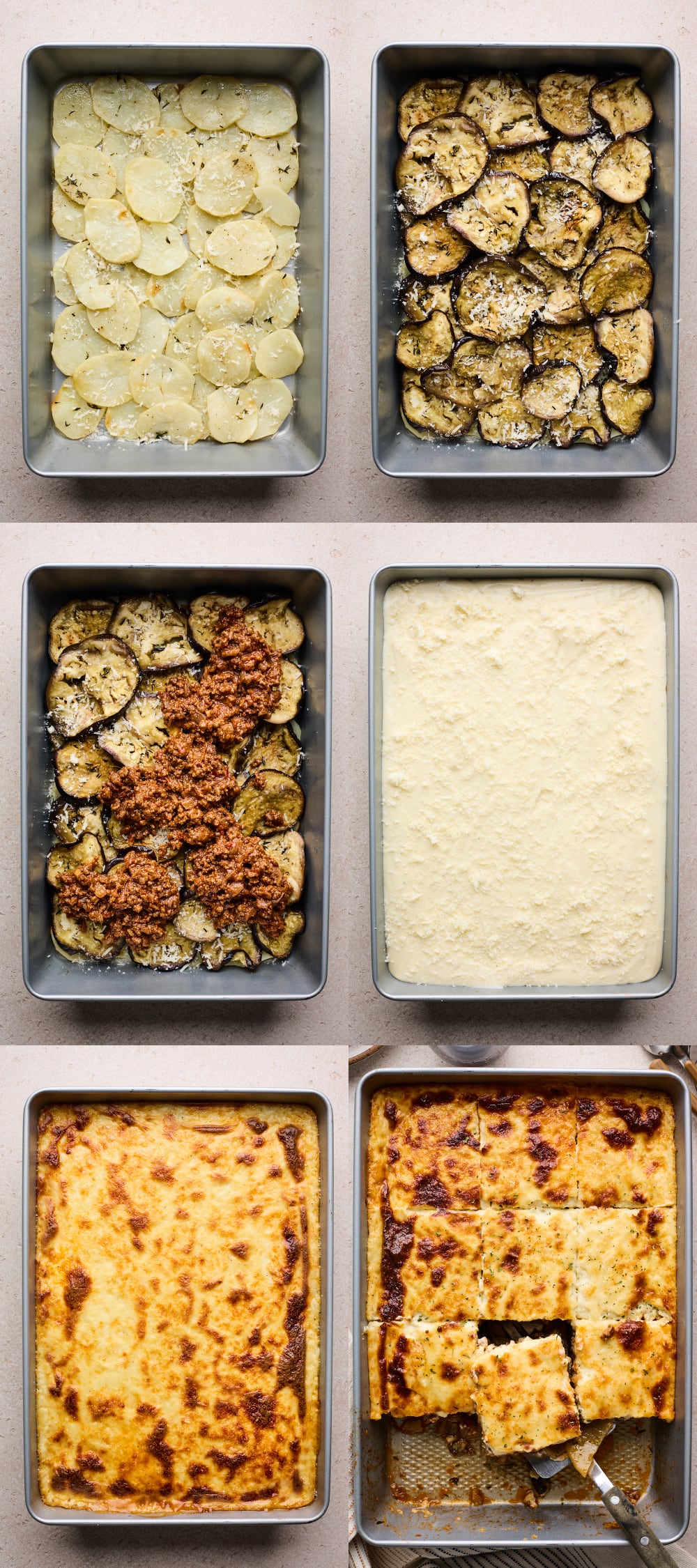
Assembling & Baking Your Moussaka
Now that you have made all three components of your Moussaka it’s time to assemble it. There are many variations on layering this dish for example some people like to have 2 laters of meat sauce between the veggies but this is how I have always made mine and what works best for the standard pan size we are working with:
- LAYER roasted potato slices into the bottom of a greased pan in an even layer – top with a sprinkling of cheese (if you would like to line the bottom of the pan with a thin layer of sauce that is optional)
- LAYER roasted eggplant slices overtop evenly – top with a sprinkling of cheese
- SPOON over all the meat sauce evenly over veggies – top with cheese
- POUR over béchamel sauce evenly over meat sauce – top with remaining cheese
- BAKE uncovered
- REST: Once out the oven allow time for moussaka and bechamel to set and rest so it’s less messy to slice (waiting is the hardest part but worth it). You will need to let it rest for 30-60 min
- SLICE & SERVE
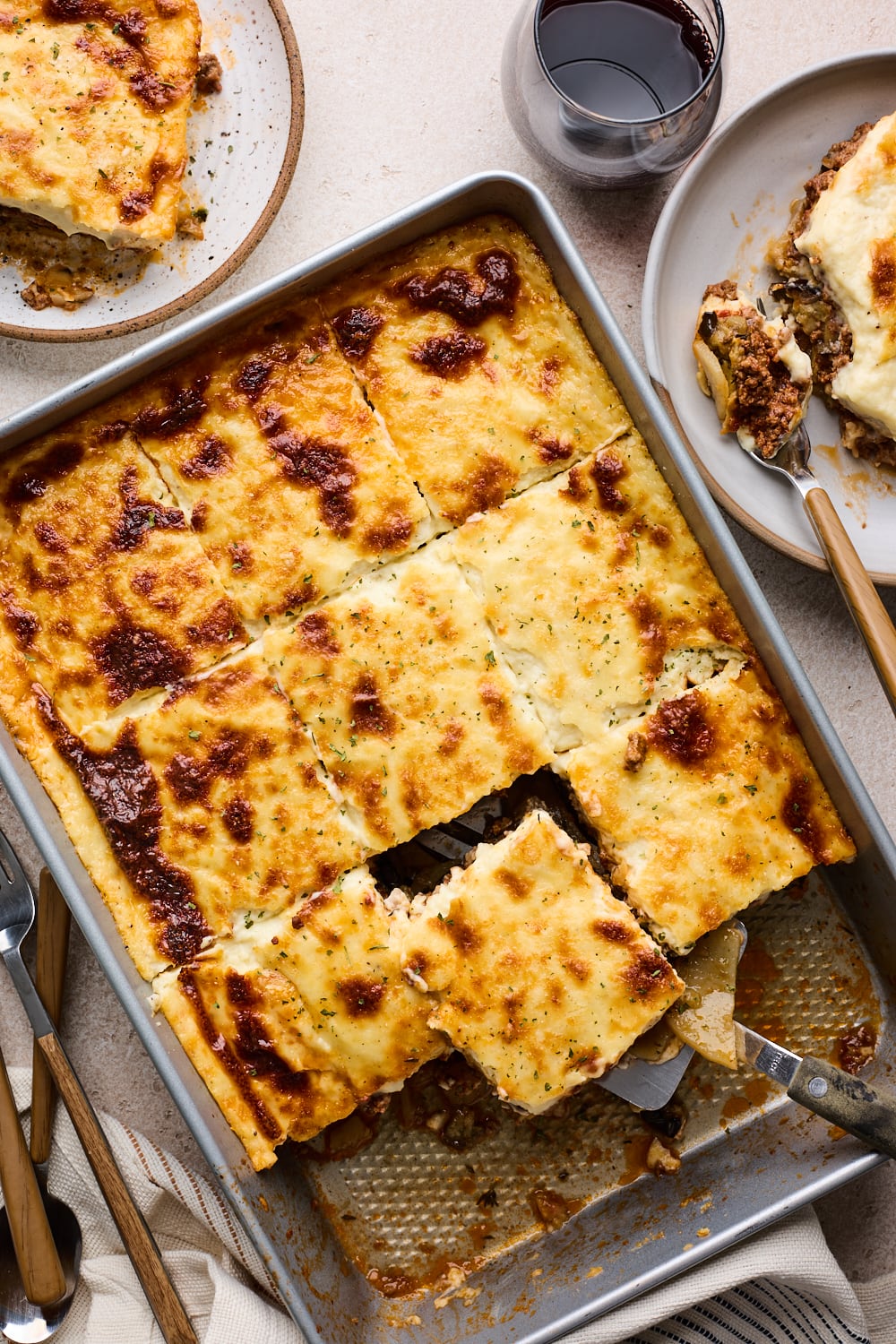
What To Serve Moussaka With
You really can serve this dish with just about anything on the side. I typically make my roasted red pepper feta dip as an appetizer with pita chips and serve the pastitsio with a huge Greek salad, my grilled vegetables and I also make Greek Baked beans with it or Gigantes. For dessert I make my Karithopita or Greek Walnut cake but here are some other great Greek style sides that would also be delicious: