(Beth Clifton collage)
The Trump budget cuts leave little new funding for “reduction, refinement, & replacement”
WASHINGTON D.C.––Have animal advocates become part of a smokescreen for $18 billion in Donald Trump administration cuts to the National Institutes of Health [NIH] budget?
The NIH budget was $48.5 billion in fiscal 2025, but is to be slashed to $27 billion in 2026, according to the Trump budget plan.
Animal advocacy group spokespersons quickly and loudly applauded on April 29, 2025, three days before the Trump budget plan was released, when National Institutes of Health director Jay Bhattacharya announced what an NIH media release described as “a new initiative to expand innovative, human-based science while reducing animal use in research.”

Jay Bhattacharya, M.D., Ph.D. (NIH photo)
It sounded good
Said Bhattacharya, “For decades, our biomedical research system has relied heavily on animal models. With this initiative, NIH is ushering in a new era of innovation.
“By integrating advances in data science and technology with our growing understanding of human biology,” Bhattacharya explained, “we can fundamentally reimagine the way research is conducted—from clinical development to real-world application.
“This human-based approach,” Bhattacharya promised, “will accelerate innovation, improve healthcare outcomes, and deliver life-changing treatments.”
Figuratively rising to cheer, and to claim credit for the perceived transition in NIH policy, were representatives from the Physicians Committee for Responsible Medicine, Animal Wellness Action, and Humane World for Animals, among others.

(Beth Clifton collage)
Sugar coating on a poison pill
But the NIH announcement was long on rhetoric that could have been cut and pasted from antivivisection literature, short on specifics, and hid an apparent poison pill beneath a sugar coating.
The sugar coating, swallowed by practically every animal advocacy commentator:
“Developing and using cutting-edge alternative non-animal research models aligns with the U.S. Food & Drug Administration’s recent initiative to reduce testing in animals.”
(See 28 years later, FDA is “replacing animal testing,” new chief Makary says.)
The poison pill: “While traditional animal models continue to be vital to advancing scientific knowledge,” meaning that animal research will continue to be done on every front where research continues at all, “using new and emerging technologies can offer unique strengths that, when utilized correctly or in combination, can expand the toolbox for researchers to answer previously difficult or unanswerable biomedical research questions.”
Note that “traditional animal models continue to be vital,” while non-animal research methods are described only as “using new and emerging technologies,” followed by a string of disclaimers.

(Beth Clifton collage)
Three news cycles came & went before the real news hit
The Bhattacharya announcement and animal advocacy group enthusiasm had three whole daily news cycles to gain momentum before the Trump administration 2026 budget outline was released late on the afternoon of Friday, May 2, 2025, meaning that little of the content would reach the public until after the weekend.
The Trump administration budget proposal makes clear that any reduction in NIH reliance on animal models is likely to result from budget cuts killing entire avenues of biomedical research inquiry, not from “reduction, refinement, and replacement” of animal models as studies advance.
The present 27 NIH centers and institutes are to be consolidated into just five. This may save some administrative expense, but will mostly mean that many avenues of research will stop dead.

(Beth Clifton collage)
Survivors
The surviving institutes will be merged into the National Institute on Body Systems Research; the National Institute on Neuroscience & Brain Research; the National Institute of General Medical Sciences; the National Institute of Disability Related Research; and the National Institute on Behavioral Health.
This short list includes by implication all of the branches of biomedical research that have traditionally used the most animals in the most controversial experiments.
While non-animal research methods may be used in projects funded by any or all of the newly formed five institutes, none of them have either an explicit or implied role in promoting non-animal research methods, while all of them will inherit existing animal laboratories and continuing animal experiments, with little budget to develop new directors.

(Beth Clifton collage)
PCRM hails formation of ORIVA
“The Bhattacharya announcement details several agency actions to better prioritize innovative human-centered research,” acknowledged Catharine E. Krebs, PhD, medical research program manager for the Physicians Committee for Responsible Medicine, “including establishment of [a new] Office of Research Innovation, Validation, and Application (ORIVA).”
Indeed, the Bhattacharya announcement expressed intent to establish ORIVA “within NIH’s Office of the Director,” Bhattacharya himself.
“The new office will coordinate NIH-wide efforts to develop, validate, and scale the use of non-animal approaches across the agency’s biomedical research portfolio and serve as a hub for interagency coordination and regulatory translation for public health protection,” the NIH media statement said.

(Beth Clifton collage)
What will ORIVA do?
“ORIVA will expand funding and training in non-animal approaches and awareness of their value in translational success,” the media statement continued. “New funding opportunities will include evaluation criteria that assess methods based on their suitability for the research question, context of use, translatability, and human relevance. Infrastructure for non-animal approaches will also be expanded to make these methods more accessible to researchers.
“In addition,” the NIH media release promised, “grant review staff will participate in mitigation training to address any possible bias towards animal studies and integrate experts on alternative methods into study sections. NIH will also publicly report on research spending annually to measure progress toward reduction of funding for animal studies and an increase in funding for human-based approaches.”

White Coat Waste Project founder Anthony Bellotti. (Facebook photo)
White Coast Waste wants ORIVA to be DOA
But all of that depends on the NIH actually being allocated enough money to do it, along with fulfilling other Congressionally mandated funding obligations.
White Coat Waste Project founder Anthony Bellotti was not impressed, pointed out in a Facebook meme that the “National Institutes of Health’s new animal testing policy, ORIVA,” includes “NO phaseout” of animal testing, “NO deadline” for achieving it, and “NO lab $ cut.
“NIH just announced it will prioritize alternatives and ‘aim’ to reduce animal tests,” Bellotti added. “Don’t believe the hype. NIH also said animal experimentation is ‘vital.’ ORIVA is just more big government bureaucracy,” Bellotti charged.

Wayne Pacelle. (Facebook photo)
“The month when everything began to turn around”
By contrast, enthused Animal Wellness Action and Center for a Humane Economy president Wayne Pacelle, after the Bhattacharya announcement, but before the Trump administration proposed 2026 budget hit, “Those of us who care about animals will long remember April 2025 as the month when everything began to turn around on the long-standing moral and scientific problems with animal testing and research.”
Pacelle praised “the agency’s bold plan to favor human-based research technologies over animal use in intramural research, NIH-funded extramural studies, and basic sciences.
“We beat on the doors of the Biden Administration and got turned away,” Pacelle recounted on Facebook. “The FDA fought us every step of the way on efforts to wind down animal testing.

(Beth Clifton collage)
Pacelle praises Trump administration
“Even if you dislike the Trump administration, “ Pacelle said, “it is a plain truth that the current president’s leaders at Health & Human Services, NIH, and FDA have very consciously charted a path to wind down animal testing in the United States. This new pathway set out by this administration has the potential to be the greatest animal welfare gain in the last century.”
But not if “this new pathway” consists only of budget cuts that in effect transfer the bulk of biomedical research to the private sector, specifically pharmaceutical and medical device manufacturers, with vastly less governmental supervision from NIH scientific review panels and, due to earlier Trump administration budget cuts, a significantly diminished Animal & Plant Health Inspection Service to enforce the Animal Welfare Act.

Humane Society of the U.S. president Kitty Block and Humane Society Legislative Fund president Sara Amundson.
(Beth Clifton collage)
Humane World for Animals also takes the bait
Offered Humane World for Animals president Kitty Block and Humane World for Animals president Sara Amundson, in a jointly signed blog, “It’s estimated that more than 50 million mice, rats, dogs, cats, monkeys, rabbits and other animals endure experiments in U.S. laboratories each year. The sheer scale of this animal suffering is hard to imagine, but thanks to new commitments to phase out animal testing and prioritize replacing animals in research, things could soon drastically change.
“Last year,” Block and Amundson recalled, “NIH launched the Complement Animal Research in Experimentation program, an ambitious and multifaceted initiative to speed the development, standardization, validation, and use of human-based non-animal methods with a dedicated budget of approximately $400 million over ten years.”
What Block and Amundson failed to note is that this project, funded with less than 1% of the total NIH budget, was initiated under the Joseph Biden administration and barely started before the Trump administration took over. It might be subsumed into ORIVA, or might be axed outright by the Trump budget outline.

(Beth Clifton collage)
“Overhead” cut will do most to reduce animal research
The major brake on animal-based research under the Trump budget plan, already put into effect by executive order, is that the “overhead” portion of funding for federal research grants is to be cut from 40% to 15%. “Overhead” is the share of each grant that is used to maintain the facilities and employ the faculty involved in doing the research.
The most expensive part of “overhead” for biomedical research is usually maintaining animal care facilities. Slashing “overhead” by default means favoring non-animal methods, if research is to be done at all.
However, since most federally funded universities already have extensive animal care facilities and animal inventories, what cuts in “overhead” mostly mean in the near future is fewer animal care technicians to look after the animals, project cancellations to enable reductions in animal inventory, and a wave of euthanasias to dispose of animals before cancelled studies are completed.
If and when any of those studies are again funded and resumed, a whole new cadre of animals will have to be acquired and used. That may not happen, but as long as the facilities exist, universities will be looking for ways to use them.

(Beth Clifton collage)
Agencies getting either the boot or the ax
Either gone or consolidated, if the Trump budget proposal is accepted by Congress, would be the National Cancer Institute; the National Eye Institute; the National Heart, Lung, & Blood Institute; the National Human Genome Research Institute; the National Institute on Aging; the National Institute on Alcohol Abuse & Alcoholism; the National Institute of Allergy & Infectious Diseases; the National Institute of Arthritis & Musculoskeletal & Skin Diseases; the National Institute of Biomedical Imaging & Bioengineering; the Eunice Shriver National Institute of Child Health & Human Development; the National Institute on Deafness & Other Communication Disorders; the National Institute of Dental & Craniofacial Research; the National Institute of Diabetes & Digestive & Kidney Diseases; the National Institute on Drug Abuse; the National Institute of Environmental Health Sciences; the National Institute of General Medical Sciences; the National Institute of Mental Health; the National Institute on Minority Health & Health Disparities; the National Institute of Neurological Disorders & Stroke; the National Institute of Nursing Research; and the National Library of Medicine.

(Beth Clifton collage)
Also on the hit list
Also gone or consolidated would be the NIH Clinical Center; the Center for Information Technology; the Center for Scientific Review; the Fogarty International Center; the National Center for Translational Sciences; the National Center for Complementary & Integrative Health; and the National Library of Medicine.

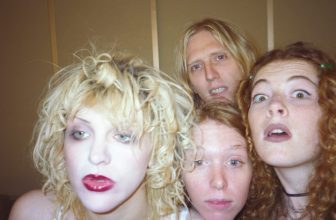
Beth & Merritt Clifton with friends.
Among these six agencies are those most involved in developing and promoting alternatives to animal research.
Please donate to support our work:
www.animals24-7.org/donate/
The post Is NIH under Trump really replacing animal testing, or just axing research? appeared first on Animals 24-7.