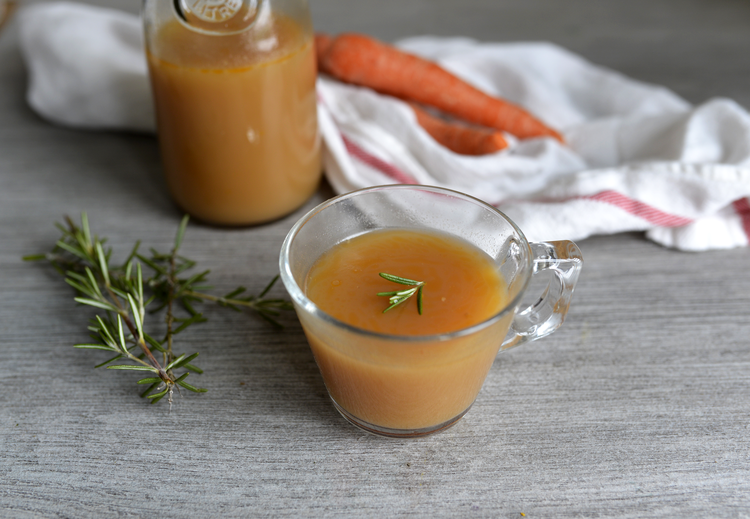
Homemade bone broth is nutrient-dense and inexpensive to make. Traditional cultures placed a special emphasis on using the whole animal, and therefore, consumed this flavorful beverage often. Unfortunately, the practice of using bones to make broth in this traditional way is no longer as popular.
Unlike store-bought broth or stock, which is cooked for only 45 minutes to 4 hours, bone broth is simmered for quite a long time. As the broth simmers, minerals and other nutrients leach from the bones into the water, leaving you with an incredibly nourishing liquid. This is a wonderful thing for anyone to consume, but it can be especially beneficial for pregnant and breastfeeding women.
Rich in minerals
These minerals are essential for your baby to build strong, healthy bones. The minerals must be obtained from your diet, otherwise they will be “borrowed” right out of your own bones and given to your baby.
I’ve held seminars on bone health in the past and have used a handheld device to test for osteoporosis. A few young, healthy, and active women I scanned showed results of osteopenia, which refers to early signs of bone loss that can become osteoporosis if not managed. They didn’t fit the typical profile, but after inquiring further, I learned that they had recently given birth. Their bone density was lowered because the minerals that make bones strong were taken from them and given to their babies in utero. This shows that consuming mineral-rich foods like bone broth isn’t just important for building your baby’s bones, but also for keeping your own stores from becoming depleted.
The body absorbs the minerals found in bone broth very easily (even more so than from supplements), and it’s a great source of dairy-free calcium. Continuing to drink bone broth while breastfeeding helps produce calcium-rich milk and replenish bone density.
Very rich in gelatin and collagen
Gelatin is most famously found in… Jello! While the sugar and artificial food coloring don’t make Jello the best choice, when gelatin is derived from a high-quality source, it actually offers us many health benefits. Gelatin contains collagen, which is often thought of as a “beauty nutrient” because it helps fingernails and hair grow long and strong. It also helps tighten loose skin (like the kind that lovely little babies leave you with).
Additionally, these nutrients play a crucial role in supporting joints and connective tissue, and they contribute to the formation of cartilage and bone.
Contains glucosamine and chondroitin
These are among two of the most important nutrients for joint care. Not only will they assist your baby’s joints in forming, but they also support your joints during pregnancy. With stiffness, soreness, or pain in the places your body bends (hips, knees, elbows, fingers, and more), joint pain is one of the most common symptoms of pregnancy.
Weight gain can put strain on your joints, and the hormone Relaxin, which your body produces during pregnancy, really loosens things up. Relaxin doesn’t just disappear once you’ve given birth. Nursing mothers create more of the hormone, so drinking bone broth post-pregnancy will help you avoid joint injury and strengthen your joints until things return to normal.
Good source of amino acids
Protein requirements in pregnancy increase by about 25 grams, and even more so for breastfeeding moms. The amino acids in bone broth perform a wide variety of functions, including: boosting the immune system, improving digestion, fighting inflammation, promoting sleep, and calming the mind. Particularly high in arginine, glycine, and proline.
Assists with nausea
When nausea hits in the earlier weeks of pregnancy, it can be hard to get and keep food down. Bone broth is soothing, nutrient-dense, very easy to digest, and often calms the stomach very quickly.