


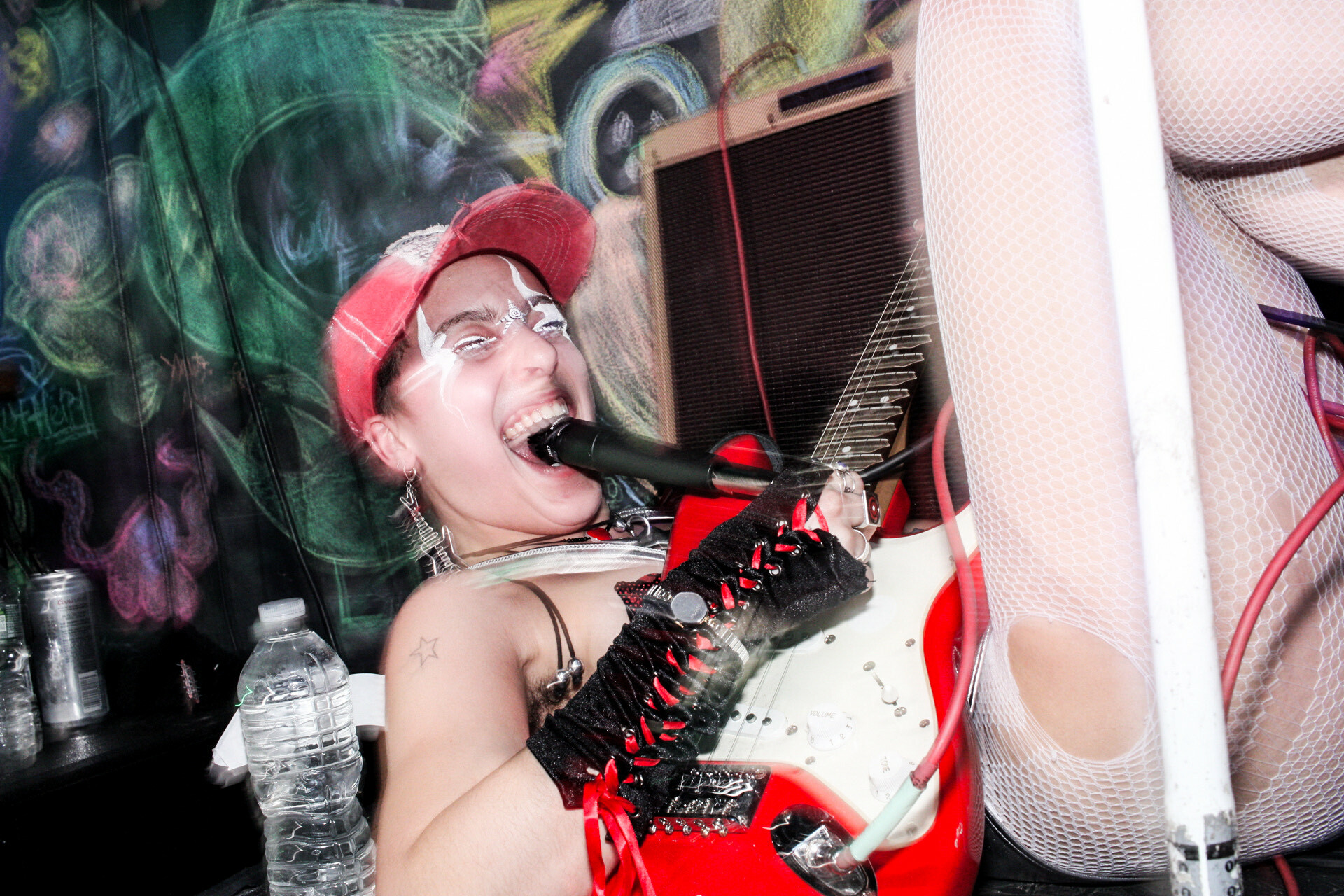
All these outside influences: rising fascism in the United States and beyond, a cost-of-living crisis, the humanitarian crisis in Palestine, and a backward trend of female autonomy and LGBTQ+ rights, make it seem as if riot grrrl is back to challenge the greying political climate. However, Barwald does not think that fits so neatly into that narrative. “People are becoming more fed up, for sure, but if politics is the sole reason for riot grrrl to come back, it would have come back in 2016.”
While it’s easy to give Trumpism the credit for the return of riot grrrl, it takes blame away from a Democratic leadership era when riot grrrl saw the fruits of its renaissance. “It was four years of hell, four years of bullshit, and now we are back here again,” Barwald says.
While the likes of t@b grrrl are providing the genre with fresh faces, it’s not only new artists riding its wave of interest. Sleater Kinney, arguably the most commercially successful band from the riot grrrl scene, originally broke up in 2006, before regrouping in 2015. They have since put out four critically acclaimed albums, including 2024’s Little Rope.
Bikini Kill played their first reunion shows in 2019, but the full reunion tour was repeatedly postponed due to the pandemic. With Kathleen Hanna’s 2024 memoir, the band finally got to finish their world tour that year. All the while, classic songs from the era, including ‘Cool Schmool’ by Bratmobile and ‘Deceptacon’, have been gaining traction on TikTok feeds – the latter alone has been used on nearly 100,000 different videos.
Allison Wolfe of Bratmobile has noticed the uptick herself. After the band reunited in 2023 to play at San Francisco’s Mosswood Meltdown festival, they reissued their discography and played shows in Brooklyn and Los Angeles in 2024.
I first connected with Barwald at Bratmobile’s show in Brooklyn last April, where we both noticed the array of ages in the crowd. “It was really heartwarming,” Barwald says. “Seeing the old punk heads, the new parents bringing their kids down to teenagers. I noticed how every type of person was there, it felt like everyone was noticing the comeback.”
Wolfe has seen how younger generations are taking to riot grrrl talking points, even if starting a movement was never part of the original plan. “I started noticing this reinterest in riot grrrl around 2010 when I moved to LA and was asked to speak to colleges. But that was something we never dreamed of – we never thought that this would ever be considered a cultural touchstone or referenced in some sort of academic way,” she explains. “We were just having fun, and it’s not like we were thinking of starting a revolution in our early 20s. But it takes time for someone else’s academic analysis to put the work into context.”
And although not all bands fit the riot grrrl genre label, its influence can be felt far beyond. Australian rock band Amyl and the Sniffers, fronted by Amy Taylor, have political songs and have called out predatory behavior by men at their shows, much like Kathleen Hanna did in old Bikini Kill shows. UK outfit Lambrini Girls’ recent album Who Let the Dogs Out featured songs entitled “Cuntology 101” and “Filthy Rich Nepo Baby”, poking fun at themes of patriarchy and capitalism and have described the record as “a party for pissed-off, gay, angry sluts”. LA punk group The Linda Lindas went viral with their song ‘Racist Sexist Boy’, which was recorded when the band members were in their early teens and are currently on a headlining world tour.


