A 10×10 vegetable garden, equipped with a drip irrigation system, revolutionizes plant care by precisely watering the roots. This comprehensive guide explores the process of designing and establishing a unique arrangement for a 100-square-foot plot, focusing on efficiency, sustainability, and originality. Growing water-wise and low-maintenance veggies like peppers, tomatoes, and lettuce is possible using drip irrigation.
Instead of watering plants superficially, as sprinklers cause water to evaporate, drip systems encourage deeper growth and better plant health by watering just the roots. This method is ideal for tiny gardens since it maximizes the use of space and materials. The modular design allows for adaptation to your plot’s plan—in-ground or raised beds—making it ideal for gardeners of all skill levels.
Steps in the process include selecting strong materials, making an efficient plan, and carefully assembling parts. For instance, one Texas gardener saw a 30% decrease in water costs and a 30% increase in tomato crops after installing a $90 drip system. Their achievements prove that a well-planned setup is beneficial.
This book lays out everything you need to know, from how to install tubing to environmentally responsible methods. By the end, you will have all the information you need to construct a sturdy, long-lasting system that enhances your garden’s yield. Let’s begin this project right away so we may have a vibrant, flourishing vegetable patch with minimal effort and maximum reward. What are we waiting for? Let’s look at DIY drip irrigation for vegetable garden in 10×10 (100 sq. ft.) plot areas.
Crafting a Precision Drip Irrigation System for a Small Vegetable Garden
Design an Efficient Drip Irrigation Layout for Your Small Vegetable Garden
To begin planning a drip irrigation system for a tiny food garden, measure and mark out your 100 square feet of land. Plan out where you want to grow beans, cucumbers, and tomatoes on a piece of graph paper. Group plants that have similar water needs together to make tubing routes more efficient. Such an arrangement ensures efficient delivery while reducing material costs.
The initial step in creating a DIY drip system for a vegetable plot is to run a mainline of ½-inch polyethylene along one side and split it into ¼-inch tubing for emitters. Herbs planted at the edges helped a California gardener cut water use in half and tubing costs in half, thanks to a severe drought. To prevent watering vegetables unevenly, it is important to consider crop needs while building a drip irrigation system.
Consider the soil type while planning drip irrigation for various food plots. The intervals between cycles should be larger in clay soils and shorter and more frequent in sandy soils. The diagram for a drip irrigation system in a vegetable garden illustrates the paths for the tubing and the spacing of the emitters. A ruler with scales depicts the water source, such as a rain barrel or spigot.
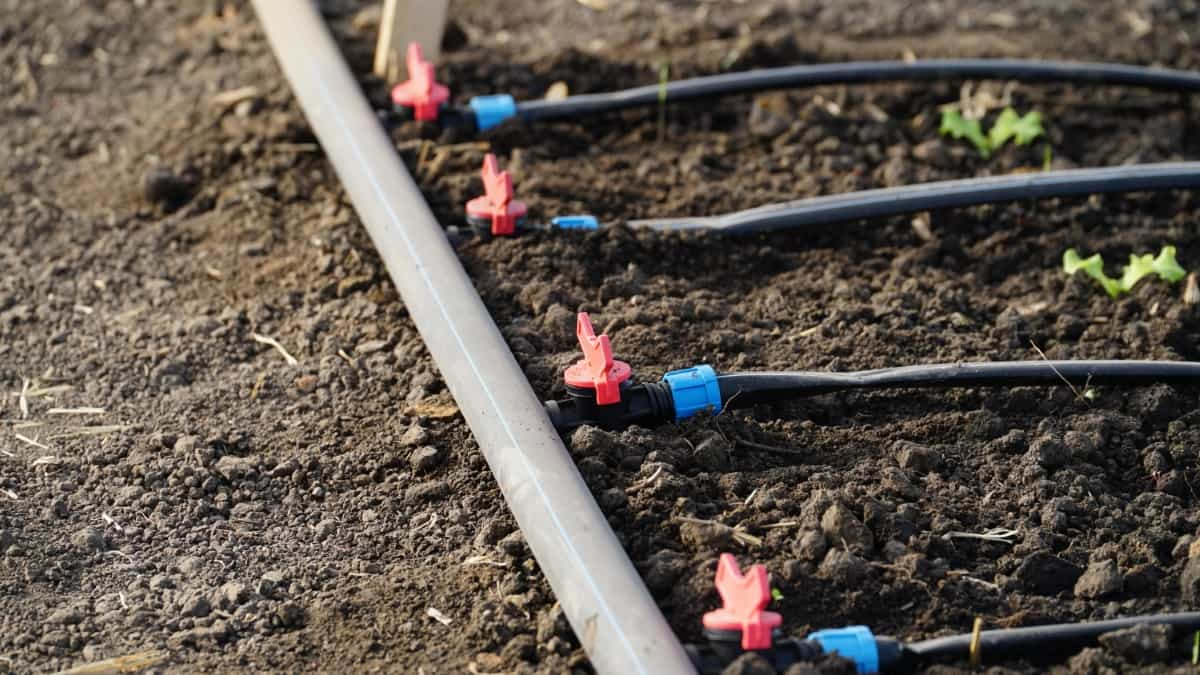
The use of mulch to slow water loss due to evaporation and 0.5 GPH drippers provides for an efficient drip irrigation system in dry Arizona’s desert regions. Emitter spacing of 18 inches prevents waterlogging in Florida’s humid climate and ensures optimal performance by adapting to the soil and environment of the area.
| Soil Types | Cycle Interval | Emitter Spacing (inches) | Dripper Rate (GPH) |
|---|---|---|---|
| Clay | Larger | 18 | 0.5 |
| Sandy | Shorter, Frequent | 18 | 0.5 |
| Arizona Desert | – | 18 | 0.5 |
| Florida Humid | – | 18 | 0.5 |
Choose the Best DIY Drip Irrigation Kit for Your Garden
Investing in a high-quality drip irrigation kit allows you to water your vegetable garden without the help of a professional. Select kits that come with a 150-mesh filter, adjustable drippers that can handle 0.5-2 GPH, a pressure regulator that can handle 15 PSI, and ½-inch UV-resistant tubing to prevent obstructions and pressure issues.
A modest drip irrigation system for a garden requires an end cap, connections, stakes, 20-30 drippers, 50 feet of mainline tubing, and 100 feet of ¼-inch tubing. You can grow more zucchini using a $60 kit than by purchasing the parts separately. For do-it-yourself projects, you can get moderately priced drip irrigation supplies at hardware stores or online bulk deals.
Choose robust plastic or brass fasteners for long-term use. By utilizing durable drip irrigation components, you can extend the time between replacements. The perfect DIY drip irrigation system for small gardens strikes a balance between affordability and quality, as demonstrated by the example of clearly labeled parts that simplify construction, and it ensures a lifespan of 5-10 years with appropriate maintenance.
Winter gardening in Minnesota is best accomplished with frost-resistant drip irrigation materials, such as polyethylene tubing, because they do not easily crack when exposed to cold temperatures. Guaranteeing your kit will perform reliably under local weather conditions, UV-stabilized components survive deterioration in Texas’s heat.
| Components | Quantity | Specifications |
|---|---|---|
| Mainline Tubing | 50 ft | ½-inch UV-resistant |
| ¼-inch Tubing | 100 ft | – |
| Drippers | 20-30 | 0.5-2 GPH, Adjustable |
| Filter | 1 | 150-mesh |
| Pressure Regulator | 1 | 15 PSI |
| Fasteners | – | Plastic or Brass |
| End Cap, Connections, Stakes | – | – |
Calculate Water Needs and Spacing for Your Drip Irrigation System
A precise assessment of water needs for irrigating vegetable gardens is essential for maximizing crop health. Carrots need one inch and cucumbers 1.5 inches every week, among other veggies. For 100 square feet, multiply 100 by 0.62 gallons per square foot per inch, which gives you a range of 62 to 124 gallons every week.
Drip irrigation systems in vegetable gardens benefit from an accurate water usage calculator, which enhances delivery. A farmer in Virginia used this method to cut water usage in half while growing 15% more peppers. To ensure even coverage, plant your vegetables 12–18 inches apart in rows that correspond to your crop beds and use drip lines.
Drip irrigation in a vegetable bed requires two drippers per plant, with an emitter spacing of eight to twelve inches. Drip irrigation for small gardens may maximize water supply while minimizing runoff; a Colorado farmer demonstrated this by doubling eggplant harvests with precise placement. Use a bucket to check the flow rate.
Using 0.5 GPH drippers in dry Colorado is one way to estimate the water requirements for drip irrigation. Oil drainage facilitates effective watering by utilizing shorter cycles and maintaining an 18-inch spacing, which prevents waterlogging in the wet conditions of Washington.
| Crops | Weekly Water Need (inches) | Gallons per 100 sq ft | Drippers per Plant | Emitter Spacing (inches) |
|---|---|---|---|---|
| Carrots | 1 | 62 | 2 | 8-12 |
| Cucumbers | 1.5 | 93 | 2 | 8-12 |
| Peppers | – | 62-124 | 2 | 12-18 |
| Eggplant | – | 62-124 | 2 | 12-18 |
Select a Sustainable Water Source for Your Drip Irrigation System
Choosing the right water supply for watering a vegetable crop affects efficiency. An eco-friendly 50-gallon rain barrel can be filled with water using a pump that runs on 10-15 PSI, while a standard spigot can produce 40-60 PSI. Maintaining a steady water supply is essential for drip irrigation systems to guarantee a constant flow.
Using a rain barrel to collect rainwater and avoid blockages, a North Carolina gardener was able to save $60 per year. To link a rain barrel with a drip irrigation system for miniature gardens, you’ll need an electric pump and an adapter that measures ¾ inch. Every two weeks, you must check the 150-mesh filter in vegetable garden drip irrigation systems to ensure the water remains pure.
Connecting DIY drip irrigation to a sustainable water supply can reduce its environmental impact. Please utilize a 20- or 30-watt pump and ensure that all hoses are free from leaks. A gardener from New York showed that organic food gardens benefit from water filtered with chlorine because it prevents soil microbes and increases lettuce growth by 10%.
Verify the calcium level of rural Idaho’s well water to prevent accumulation. By using dechlorinated municipal water, urban drip irrigation in Chicago can ensure compliance with local water supply and quality criteria.
| Water Sources | Pressure (PSI) | Filter Check Frequency | Pump Power (Watt) |
|---|---|---|---|
| Rain Barrel | 10-15 | Every 2 weeks | 20-30 |
| Spigot | 40-60 | Every 2 weeks | – |
| Well Water | – | Every 2 weeks | – |
| Municipal | – | Every 2 weeks | – |
Install Tubing for an Efficient Drip Irrigation System
Properly installed mainline tubing for vegetable gardens ensures even distribution. As you run the ½-inch polyethylene tubing along the edge of the garden, make sure to secure it with pegs every three feet. A small drip irrigation system for the garden, with few bends to maintain pressure, follows the rows of crops.
By burying the tubes two inches underground, a gardener in Georgia extended the system’s lifespan by five years. This tutorial is a detailed guide on how to install mainline tubes for drip systems, and each step involves using a utility knife to make clean cuts. To check if the mainline tubing used to irrigate vegetable gardens is leak-free, you can use soapy water to test the connections for bubbles.
Finally, secure the compression fittings to the water source. To prevent people from stumbling over drip irrigation tubing, small garden designs sometimes use stakes. For garden designs that demand long-term reliability, opt for long-lasting, UV-resistant drip irrigation tubing.
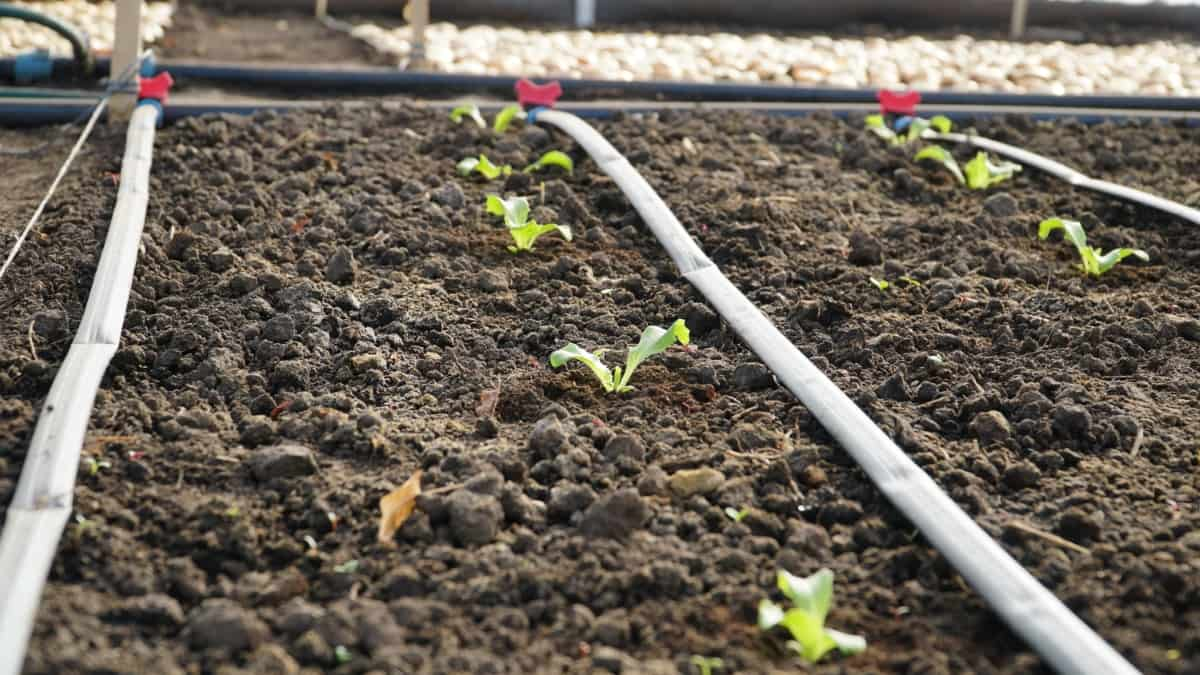
In windy areas, such as Oklahoma, drip irrigation tubing is staked every two feet with 6-inch diameters. Ensuring the safety and functionality of tubing throughout the state, corrosion-resistant fittings combat the salty air found along California’s coast.
| Regions | Staking Frequency (feet) | Tubing Depth (inches) | Fitting Types |
|---|---|---|---|
| General | 3 | 2 | Compression |
| Oklahoma | 2 | 2 | Corrosion-resistant |
| California | 3 | 2 | Corrosion-resistant |
Position Emitters for Precise Watering in Your Vegetable Garden
When used correctly, drip irrigation emitters in vegetable gardens aim to encourage root development. For tomatoes and lettuce, use two 0.5-2 GPH drippers. By evenly watering vegetables with drip irrigation emitters spaced 12 inches apart, a Florida gardener was able to boost bean yields.
To make neat holes in ¼-inch tubing, a detailed emitter installation guide for small garden drip systems recommends using a drip punch. Positioning drippers to link with plant bases allows for optimal irrigation of food gardens, as seen in a zucchini success story. Drip irrigation in vegetable beds with dense crops requires an emitter spacing of 8 inches.
Flush the drip irrigation system once a month while collecting debris in a bucket to keep the emitters from becoming clogged. To avoid pooling, drip irrigation in sandy soils in Nevada uses 1 GPH drippers, while in clay soils in Alabama it uses 0.5 GPH drippers.
By flushing the system regularly, you can prevent salt from building up in coastal locations and ensure that your garden receives water in a precise and climate-appropriate manner.
| Crops | Drippers per Plant | Emitter Spacing (inches) | Dripper Rate (GPH) | Soil Types |
|---|---|---|---|---|
| Tomatoes | 2 | 12 | 0.5-2 | – |
| Lettuce | 2 | 12 | 0.5-2 | – |
| Beans | 2 | 12 | 0.5-2 | – |
| Zucchini | 2 | 8 | 0.5-2 | Dense |
| Nevada | 2 | 12 | 1 | Sandy |
| Alabama | 2 | 12 | 0.5 | Clay |
Regulate Pressure for Consistent Drip Irrigation Performance
Reliable pressure regulators for vegetable gardens maintain a steady 10–25 PSI to prevent bursts. Spigots need regulation because they often exceed 50 PSI. For drip systems, the pressure regulator is threaded and placed in a step-by-step fashion after the water supply and before the filter.
A gardener from Michigan saved $100 and guaranteed a continuous flow by using a 15 PSI regulator. Maintaining the correct pressure extends the component life of drip irrigation in small gardens by two to three years. We recommend inspecting the regulators every six months and replacing any worn parts to prevent pressure-related damage in vegetable gardens.
Apply 8 to 10 PSI of regulator pressure to rain barrels. A strong pressure regulator for urban drip irrigation controls the water fluctuations in Chicago. When setting up a drip irrigation system for a vegetable garden, it is important to use a gauge to make sure the pressure remains constant.
Rural Montanans with low-pressure wells can benefit from a booster pump that has a 20 PSI regulator. By adjusting to local systems, drip irrigation for small gardens with regulated pressure ensures uniform performance across your landscape.
| Water Sources | Regulator Pressure (PSI) | Inspection Frequency | Booster Pump (PSI) |
|---|---|---|---|
| Spigot | 10-25 | Every 6 months | – |
| Rain Barrel | 8-10 | Every 6 months | – |
| Low-Pressure Well | 20 | Every 6 months | 20 |
Protect Your Drip System with a High-Performance Filter
If you want to water your vegetable garden without clogs, purchase a high-performance filter. Essential for rain barrels, a 150-mesh filter removes debris. A detailed filter installation guide for small garden drip systems states that the filter should be put post-regulator, utilizing threaded connectors to ensure a tight seal.
A Tennessee gardener saved ten hours a year and eighty percent of the time spent on clogs by installing a filter. For muddy water, a 200-mesh filter is ideal for drip irrigation systems used in vegetable gardens. To ensure that your drip irrigation system remains free of blockages for as long as possible, rinse the filters every two weeks and replace them annually.
One way to detect mineral buildup is to use hard water. In Arizona, drip irrigation systems utilize calcite cartridges for hard water filtering. Increased lettuce yields prove that obstructing drip irrigation in food gardens does not result in inconsistent watering.
In Louisiana, self-cleaning filters are used to deal with organic waste. Drip irrigation systems for smaller gardens can adapt to seasonal water restrictions, ensuring optimal performance all year round.
| Water Types | Filter Types | Mesh Sizes | Maintenance Frequency | Replacement |
|---|---|---|---|---|
| Rain Barrel | Standard | 150 | Every 2 weeks | Annually |
| Muddy Water | Standard | 200 | Every 2 weeks | Annually |
| Hard Water | Calcite Cartridge | – | Every 2 weeks | Annually |
| Organic Waste | Self-Cleaning | – | Every 2 weeks | Annually |
Automate Watering with the Best Timer for Your Drip System
Using the best timer for DIY drip irrigation in a small garden helps automate schedules. Choose a battery-operated timer that has four settings for daily cycles at 6 AM or 7 PM to reduce evaporation. Using a programmable timer, you can water your food plant precisely.
An early morning cycle of 20 minutes increased cabbage yields by 25% for a grower in Colorado. This guide for installing a drip irrigation system shows you how to use Teflon tape to fasten the timer after the spigot. To accommodate for rain, the drip irrigation watering schedule for a small garden stops when it starts to rain.

On sandy soils, you may cut this time to 15 to 30 minutes every day. Customizing drip irrigation timers for vegetable gardens allows for storm pauses. A drip irrigation timer that can withstand the 100°F heat of Texas is a reliable investment for summer gardening.
Overwatering can be prevented in rainy Oregon with 10-minute cycles, while in Nevada, regulated drip irrigation for backyard plants uses 25-minute sessions that adapt to local weather for efficient, hands-free watering.
| Regions | Cycle Duration (minutes) | Cycle Time | Soil Types | Temperature (°F) |
|---|---|---|---|---|
| Colorado | 20 | 6 AM/7 PM | – | – |
| Oregon | 10 | 6 AM/7 PM | – | – |
| Nevada | 25 | 6 AM/7 PM | Sandy | – |
| Texas | 15-30 | 6 AM/7 PM | – | 100 |
Test and Troubleshoot Your Drip System for Optimal Results
Before you use your drip irrigation system in your vegetable garden, be sure it works by testing it extensively. While the water is running, make sure the emitters are working and that the tubing is not leaking. This all-inclusive troubleshooting guide for small garden drip irrigation covers poor flow, blockages, and irregular watering.
A New Mexican gardener fixed unequal irrigation and changed three drippers to boost squash harvests by 20%. Drip irrigation systems can be troubleshot by checking for kinks in the tubes and applying pressure (10-25 PSI). The peppers are thriving because drip irrigation systems distribute water evenly, which prevents crop stress.
To prevent plants from wilting, adjust the sprinklers. If you’re having issues with salty water in your South Carolina drip irrigation system, cleansing the system once a month will eliminate the salt. We collect flow rates to monitor the effectiveness of drip irrigation in watering tiny vegetable gardens.
Prior to spring in Wisconsin, be sure that none of the drainage tubing or lines have frozen. One can adapt to local challenges and offer continuous crop support throughout the year by keeping drip irrigation running consistently.
| Issues | Solutions | Frequency | Regions |
|---|---|---|---|
| Unequal Irrigation | Replace Drippers (3) | As needed | New Mexico |
| Salty Water | Cleanse System | Monthly | South Carolina |
| Frozen Lines | Check Drainage | Before Spring | Wisconsin |
| Poor Flow/Blockages | Check kinks and pressure (10-25 PSI) | As needed | – |
Maintain Your Drip System for Long-Term Efficiency
If you want your drip irrigation system to last as long as possible in your vegetable garden, you should service it regularly. Flush every two months with two minutes of running water to remove debris. When watering little gardens on your own, it’s a beneficial idea to inspect the tubing for cracks or UV damage every three months.
An Ohio gardener saved $200 by draining their system before winter. The timers for the small garden irrigation system help during the small gardening to the maintenance checklist. To clean the drip irrigation components and remove mineral buildup, soak the drippers in vinegar. This treatment will help the vegetable crop endure longer.
Every year, check the fittings and grease the timer valves. A small garden in Minnesota is getting its drip irrigation system ready for winter by using compressed air to blast out pipes. Drip irrigation systems for tiny gardens can last three to five years longer if they are well-maintained.
We maintain drip irrigation in areas of Georgia that experience excessive humidity by using a bleach solution once weekly. We ensure the efficacy of the sys We ensure the efficacy of the sy We ensure the efficacy of the system throughout
| y | Regions | Solutions | |
|---|---|---|---|
| Flush System | Every 2 months | – | 2 min water |
| Inspect Tubing | Every 3 months | – | Check cracks/UV damage |
| Clean Drippers | As needed | – | Soak in vinegar |
| Winter Prep (Drain) | Before Winter | Ohio | Drain system |
| Winter Prep (Pipes) | Before Winter | Minnesota | Compressed air |
| Clean Filters | Biweekly | Nevada | – |
| Bleach Solution | Weekly | Georgia | Bleach solution |
Expand Your Drip System for Future Garden Growth
Your vegetable garden will thrive if you increase the frequency of its drip irrigation. Using T-connectors, you may extend ½-inch tubing to additional beds while keeping the pressure between 10 and 25 PSI. As per the detailed procedure for expanding drip irrigation systems, every 5×5 bed necessitates 20 feet of tubing.
A Washington gardener spent $20 and built a 5×5 herb patch with modular fittings. The updated drip irrigation system for vegetable gardens includes 10 new crop drippers. Improving drip irrigation for bigger food plants may necessitate a 20 PSI regulator.
The new water use estimate includes an additional 31 gallons per week for every 50 square feet. We are using flexible tubing to expand drip irrigation for small urban gardens in Los Angeles. To practice square foot gardening in a constrained space, emitters are arranged in 1-foot grids for DIY drip irrigation.
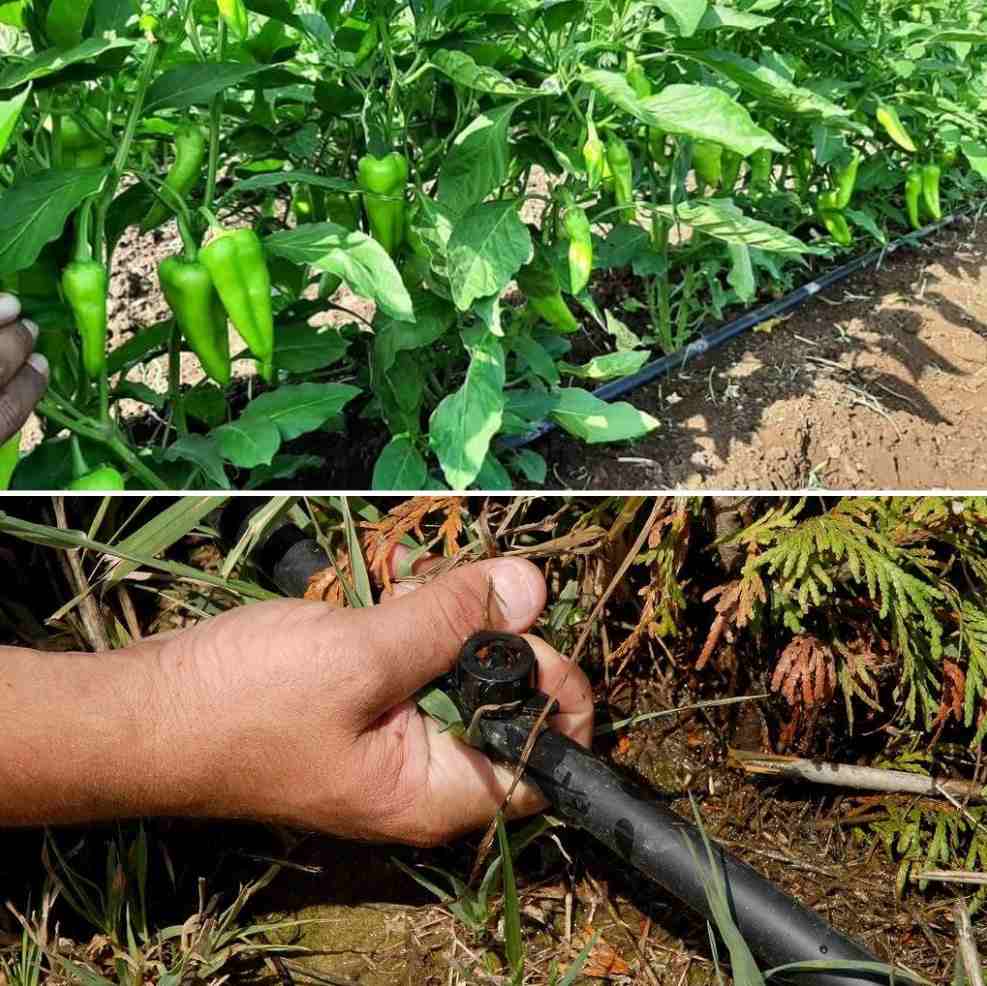
Strong components back up larger increases in Iowa’s rural areas. Scaling drip irrigation ensures uniform growth in urban and rural settings for small vegetable plants.
| Expansion Area (sq ft) | Additional Tubing (ft) | Additional Drippers | Water Use (gallons/week) | Pressure (PSI) |
|---|---|---|---|---|
| 25 (5×5 bed) | 20 | 10 | 31 | 10-25 |
| 50 | 40 | 20 | 62 | 10-25 |
Incorporate Sustainable Practices into Your Drip System
Sustainable drip irrigation methods are lessening the environmental impact of vegetable gardens. Combining a 50-gallon rain barrel with a 10-watt solar pump is an effective method. This eco-friendly drip irrigation guide for small gardens uses biodegradable anchors and recycled tubing.
A Vermont farmer increased kale yields by 100% while decreasing water usage by 30% by utilizing mulch and rain. By using drip irrigation and spreading a 2-inch layer of mulch, less water is wasted in vegetable gardens. Renewable energy can be incorporated into drip irrigation systems with the help of a $50 solar timer.
Make weekly adjustments to a $15 flow meter that you use for monitoring. Use 0.5 GPH drippers and xeriscaping to make drip irrigation eco-friendly in Utah’s dry climate. This do-it-yourself drip irrigation system uses bottles as drippers and can save you $10 for a raised bed garden.
Collecting rainwater in North Carolina cuts water use from taps by 40%. Small vegetable gardens that use sustainable drip irrigation, which has a low environmental impact, encourage local green gardening.
| Practices | Components | Cost ($) | Impact |
|---|---|---|---|
| Rain Barrel | 50-gallon | – | 40% less tap water |
| Solar Pump | 10-watt | – | Renewable energy |
| Solar Timer | – | 50 | Renewable energy |
| Flow Meter | – | 15 | Weekly adjustments |
| Mulch | 2-inch layer | – | 30% less water usage |
| Recycled Tubing | – | – | Eco-friendly |
| Biodegradable Anchors | – | – | Eco-friendly |
| Bottle Drippers | – | 10 | Cost-saving for raised beds |
Budget for a Cost-Effective Drip Irrigation System
Drip irrigation systems for vegetable gardens can cost anywhere from $50 to $150 if you’re careful with your spending. Please prioritize adding a timer ($30), 50 feet of tubing ($20), and drippers ($0.50 each) to your list. A tiny food garden may be easily and affordably watered with a $60 kit.
A Missouri gardener saved $40 (rather than $15) by purchasing a kit instead of individual fittings. A DIY drip irrigation project cost-cutting guide aims to save 20% at cooperatives. Stakes, drippers, and tubing add up to the total cost of installing a modest garden drip system.
Avoid cheap fittings that leak. Investigate sales to find competitively priced Investigate sales to irrigation systems Investigate sales to find low-cost drip irrigation systems that guarantee durability; for example, a $90 system lasted for seven years.
When planning drip irrigation in Hawaii’s upscale markets, consider purchasing used barrels to save $25. Because of the long-lasting nature of the high-quality components used in Kansas, drip irrigation for small plants is now within reach financially and practically.
| Components | Cost ($) | Quantity | Total Cost ($) |
|---|---|---|---|
| Timer | 30 | 1 | 30 |
| Tubing (50 ft) | 20 | 1 | 20 |
| Drippers | 0.50 | 20-30 | 10-15 |
| Kit | 60 | 1 | 60 |
| Used Barrel | 25 | 1 | 25 |
Conclusion
Introducing precision, efficiency, and sustainability into a 10-by-10 vegetable garden irrigation system revolutionizes the farming industry. This comprehensive book provides a methodical strategy to ensure the successful growth of your crops, covering everything from layout planning to cost control. If you adjust the system to suit your plants and weather, you could receive consistent, high-quality results.
Despite its thoroughness, the method is suitable for individuals of any skill level. Real-life examples, like the Oregon gardener who was able to save hours while increasing zucchini production, illustrate the benefits. A successful garden is the product of all of its parts, which include long-lasting tubing, eco-friendly supplies, and automated timers.
Following these steps will give you confidence in your system expansion and maintenance abilities. Nothing beats the joy of harvesting vibrant vegetables from a system you built, which also helps you feel more connected to eco-friendly practices. Both your garden’s potential and your gardening enjoyment will be improved by this endeavor.
This is your chance to plant a 10×10 garden, so don’t miss out. With proper planning, your drip irrigation system can contribute significantly to your success for years to come. In only a few short years, your little plot of land can blossom into a veritable oasis of healthy, homegrown food.