Review of “A Kids Book About Ageism”


 A Kids Book About Ageism is the first book providing tools for adults to talk about ageism with kids (AKidsCo; 2024). It comes to us as a team effort from the Connecticut Age Well Collaborative and A Kids Book About, Inc. A free Conversation Guide is also available online. Kudos to the team. The negative effects of ageism will affect every one of us fortunate to live a long life. Let’s nip them in the bud!
I like how the book’s intro references the “false ideas” that instill fears about aging.
“As a society, we often wrongly believe that being young, productive, efficient, self-reliant, and physically strong are always better than the alternatives.”
 Also, while not denying growing older can sometimes be challenging, we’re reminded of “the opportunity to celebrate new kinds of strength.” This truth is personally important—I’ve been privileged to know many survivors of stroke whose bodies were radically changed, but they taught me so much about resilience and how to be happy.
The book utilizes clear large print text—some in color, but no illustrations are included.
A Kids Book About Ageism defines aging simply, and elaborates clearly, however the definition of ageism shared may confuse young readers.

Image from A Kids Book about Ageism
“Ageism is when younger grown-ups act unfairly to older grownups because of their age. Ageism is possible when younger grownups have the power to make decisions for older grownups, such as where they live.” A Kids Book About Ageism
I believe kids need us to explain this “ism” more simply, and with concrete examples. At “A is for Aging” I’ve used a more basic definition of ageism, as in a blog post debunking grandma stereotypes.
—In simple terms, ageism is the unfair treatment of people based on their age.
–“Ageism cuts both ways” says activist & author Ashton Applewhite. The old and the young, even children, experience ageism when they’re stereotyped—perhaps as a lazy generation, “too young” for a job, irresponsible teens, and so on.

Image from A Kids Book about Ageism
(By the way, older adults are frequently ageist also. They’ve been inundated with inaccurate information the longest.)
No one appreciates being judged by someone’s perceptions of an entire cohort. And this is what leads to stereotyping and discrimination. A Kids Book About Ageism defines stereotype as “an untrue belief that everyone in a group is the same.” This is easy for kids to understand.
 Some helpful examples of stereotypes of olders are listed:
–“Frail
–Dependent
–Useless
–Forgetful
–Slow
–Cute
–Grumpy”
The Conversation Guide accompanying A Kids Book About Ageism notes ageism against youth, but defines and discusses it as “Adultism” –“the regular stereotyping and discrimination of young people by adults.” This could introduce confusion for kids and adults. Many wrestle with understanding ageism, sometimes believing it’s simply disrespect for our elders.

The harm ageism inflicts is multi-faceted, including negative impacts on our health. The negative age stereotypes begin bombarding us in childhood (see the research of Becca Levy Ph.D. , author of Breaking the Age Code) This isn’t mentioned, but A Kids Book About Ageism elaborates on additional harms:
“Ageism can stop older grownups from doing things they love because other people think it’s not OK to do certain things once you’re older.” Great concrete examples are shared including “wearing certain clothes…dancing…or being in love.”
The authors also make a very interesting point: “Now, we tend to value sources other than older grownups, turning to books or a quick internet search.”
Personally I’ve noted the movies & ads etc. promoting youth, but I’ve not thought about the fact that the experience and knowledge of older adults is not solicited as before…not valued as before.

I do wish A Kids Book About Ageism was able to include art. Illustrations are expensive and time consuming. But as an author of picture books that are paired with illustrations by talented artists, I know they provide so many ways for kids to engage with the messages shared in a book. In fact they often share a complementary story that can aid understanding on another level.

Age Positive picture books
I’d suggest pairing A Kids Book About Ageism with some recommended Age Positive picture books to amplify kids’ comprehension of its important messages.*** (See activities below.)
Check out the “Let’s Get Started” suggestions in the Conversation Guide online from Connecticut Age Well Collaborative. One helpful reminder: “Ageism can bring up big feelings for grown-ups too, so pick a time when you feel mentally and emotionally ready.”
Also, I’d encourage adults to educate themselves before discussing ageism with children. We all need to recognize the fact that we have ageist beliefs. It’s truly a constant process to root them out.
 ***Age Positive activities help children learn about aging, to recognize age stereotypes and to anticipate late life with joy
I love this quote from A Kids Book About Ageism—
“Every one of us builds a beautiful, complex, important story as we age and grow.”
Pairing A Kids Book About Ageism with some recommended Age Positive picture books would illustrate diverse stories and showcase:
- Older adults busting age stereotypes in later life stages
- The knowledge, inner strength & creativity gained over a lifetime
- Older adults living well with chronic illness or disability
- Skills and strengths gained with experience
- The values of intergenerational friendships
 Many picture books appeal to older grade schoolers too. Particularly nonfiction & bios. Kids love true stories!
Additional anti-ageism resources for kids:
—3 Stereotype-busting Picture Books about Grandmothers
—An Age Positive Way to Celebrate 100 Days of School
— Picture book review of Harry and Walter 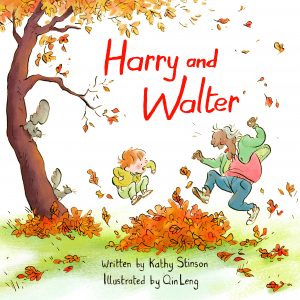
— Four New 2022 Grandparent Picture Books
—Picture book review of Northwoods Girl (“Mom wants Grandma to move to the city with us. She worries about Grandma living alone in the woods. But what would happen if we took that north woods girl away from her woods?”)
Find more Age Positive picture books here.
 How Old am I?
(Ages 4-8+) A first-ever children’s visual reference book on age…showcases the faces and life stories of 100 people ages 1-100, giving children a visual reference point with close-up portraits. (Bookshop.org).
Please note: The Connecticut Age Well Collaborative provided a review copy of A Kids Book About Ageism for my honest review at A is for Aging, B is for Books.