Introducing Fermented Foods to Babies
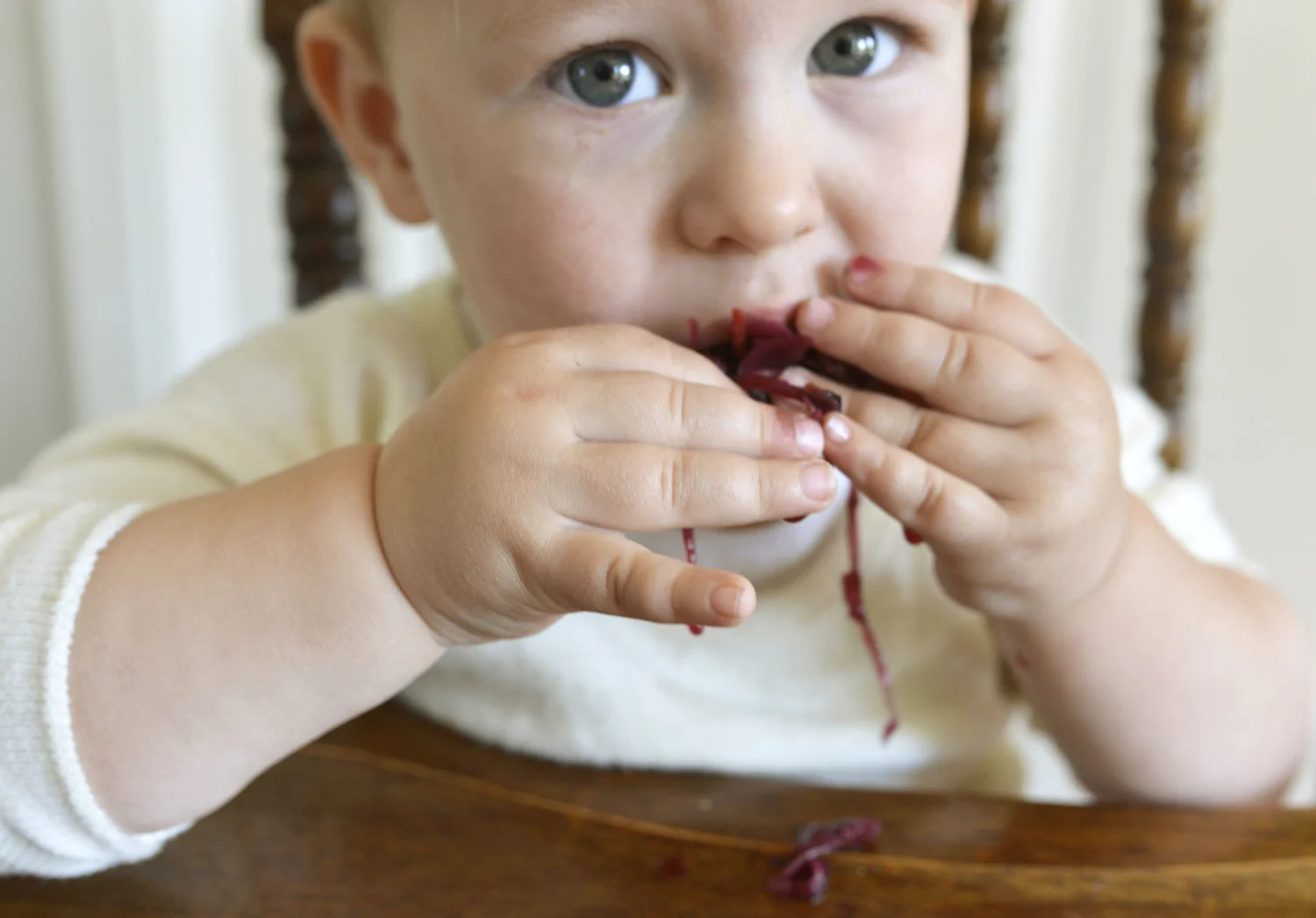
Introduce fermented foods very gradually, starting with very small amounts. Your baby may make a sour face at first, but don’t be discouraged — they may surprise you by reaching for more! Like any new flavor, it can take time to adjust. If your little one refuses it, wait a few days and try again.
Store-Bought Options
Traditionally fermented foods are found in the refrigerated section of the store. The sauerkraut or pickles that are found on store shelves and sold at room temperature are soaked in a vinegar brine and do not have the same health benefits.
Homemade Ferments
Making ferments at home is simple and rewarding! Some great ones to start with include: lacto-fermented root vegetables, sauerkraut, fermented cranberries, preserved lemons, traditional pickles, fermented relish, kombucha, and kefir. It feels good to know exactly what goes into your ferments, and gives you the opportunity to use high-quality salt.
Methods of Fermenting: Salt vs. Starter
Vegetables can be fermented using salt, a starter (like whey or brine from a previous batch), or a combination of the two.
-
Starter: This method can offer more biodiversity, but vegetables may become mushy or more prone to mold. It’s best to use a starter for quicker ferments like sweet potatoes or fruit.
-
Salt: Salt helps inhibit harmful bacteria and supports the growth of Lactobacilli. It also results in crispier textures, making it a go-to method for things like sauerkraut and pickles.