Following Animal Justice’s nationwide protests over Thanksgiving weekend that drew significant attention to Sobeys’ ongoing cage practices, the Atlantic-based grocery store chain offered a response in a piece by CTV Winnipeg. The response was telling—exposing the deceptive PR tactics behind Sobeys’ broken promise to go cage-free.
How Sobeys Is Using Big Tobacco PR Tactics to Sell Eggs from Caged Hens
When corporations reference “consumer choice” as an answer to negative publicity for questionable business practices, we know to be on high alert for manipulative marketing tactics.
“
…[W]e recognize that affordable food choices remain critically important to our customers. We believe in providing customers with choice so they can make the decisions that are right for their households…
”
—Sobeys
Companies like Sobeys use “consumer choice” talking points to walk back responsible sourcing commitments. They likely don’t realize how familiar we are with this strategy, which companies have imported from US front groups with a sordid history of defending smoking, pesticides, and processed foods.
The Role of Front Groups in Shaping PR Tactics
Front groups are organizations that intentionally appear independent and impartial but are actually funded and controlled by a specific industry, company, or political interest group to promote their agenda. Front groups form when industries fall out of favour with the public.
Starting in the 1970s, it was major tobacco corporations, their lobbyists and trade associations—later known as Big Tobacco—that first popularized the “personal choice” argument for PR purposes. For decades, as consumer awareness of the harms of smoking increased, US tobacco front groups emphasized personal responsibility and “choice” in an effort to stay unregulated and avoid responsibility for public health.
One of the more well known US front groups, the Center for Consumer Freedom—a front group originally created to boost the tobacco industry—was initially called “The Guest Choice Network.” This was an apt name for a PR and lobbying group funded by the tobacco industry to fight against smoking bans in restaurants—all under the guise of protecting “consumer choice.”
Importantly, the Big Tobacco marketing playbook spread to agricultural marketing groups in the 2000s when concerned consumers started to cast suspicion on “Big Ag” for its role in animal cruelty and environmental devastation.
Sobeys “Providing Customers With Choice” Exposed
So why did Sobeys bother to say anything about consumer choice? Is the “choice” to buy eggs from caged hens really what Canadian consumers want, or, even a choice at all?
When Sobeys told CTV that affordable food choices are critically important to customers, it followed a vague statement about the animal welfare issue at hand—that Sobeys is “increasing the availability of cage-free eggs.” This is a far cry from Sobeys’ original, globally-recognized policy “to source only cage-free eggs by the end of 2025.”
Instead of acknowledging its shortcomings and moving forward with shorter-term goals to make progress, Sobeys attempted to frame its policy backtracking as a positive for customers.
But just imagine if Sobeys said it this way, “We recognize that giving our customers the choice to buy eggs from caged hens is critically important.”
Or imagine this in the context of other responsible sourcing issues: “We recognize that giving our customers the choice to buy chocolate produced with unfair labour practices is critically important,” or “We recognize that giving our customers the choice to buy products with palm oil that destroys rainforests is critically important.”
The nonsense is obvious: promoting the “choice” to buy products that go against Canadian values is not a good look. Bringing in the concern about affordable food choices is even worse. When it comes to eggs from caged hens, Sobeys is telling Canadians that only the wealthy deserve access to higher welfare products.
Sobeys Insists Higher Welfare Eggs Are For Wealthiest Customers
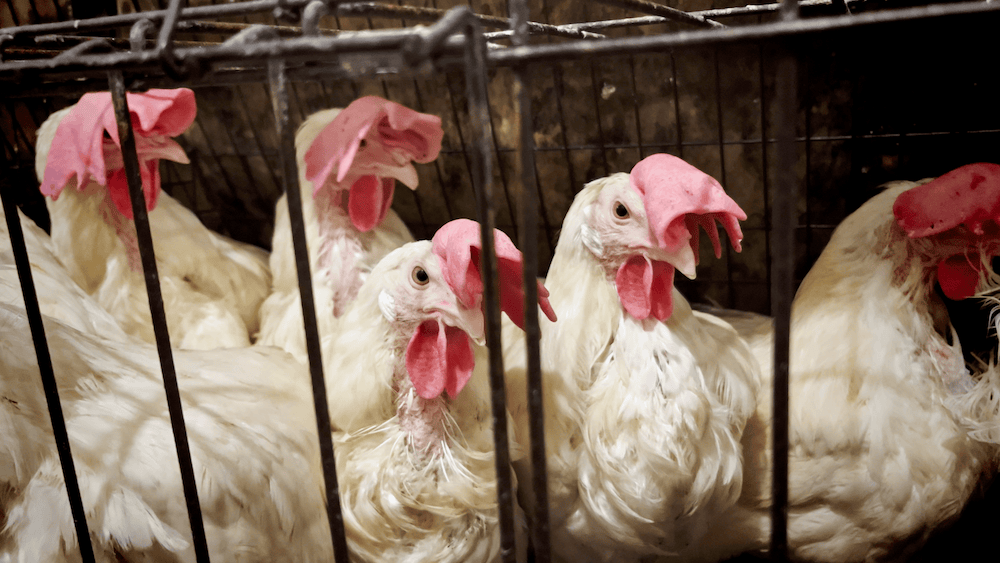
Offering the choice to buy eggs from caged hens is nonsense on its own. Sobeys makes it worse by hiding behind the affordability crisis to justify it. And while food inflation limits choice for many, even those who can afford to pay premiums for Sobeys’ “Cozy Coop” or Burnbrae’s “Nestlaid” eggs are unknowingly buying eggs from caged hens.
Pitting affordability against animal welfare is a failure to give low-income Canadians a choice.
Labeling caged eggs “Cozy Coop” or “Nestlaid” is a failure to give anyone a choice.
For the past two years, while food prices have skyrocketed, Sobeys reported over $700 million in annual profits. We would expect such a successful business to manage ethical sourcing alongside maintaining affordability. But when it comes to animal welfare, Sobeys continues to profit from cruelty and deception, now under the guise of doing their customers a favour.