(Senior Editor)
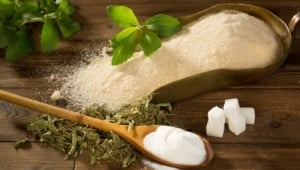
Stevia is considered a healthy alternative to conventional table sugar. But is that really true? Below, you’ll find all the important information about the plant-based sugar substitute, from its biggest pros and cons to the best alternatives to stevia.
What Stevia Actually Is

What stevia actually is
Stevia is extracted from the plant of the same name, Stevia rebaudiana. This herbaceous plant originally comes from South America.
As Stevia’s popularity and commercial use grew, the cultivation area of the plant, also known as honey herb, sweet herb, or sweet leaf, expanded.
Today, the sweetener is used worldwide. It’s not only cultivated in numerous South American countries but also in China, the USA, and Thailand.
Stevia is a concentrated extract from the natural components of the stevia plant, the so-called steviol glycosides.
This extract is available as a powder, dried, in tablet form, or as a liquid. You can buy it online or in retail stores.
Stevia in Cosmetics
Besides its use as a sugar substitute, stevia has also gained popularity in the cosmetics industry.
Due to its antioxidant properties, stevia extract is used in various skincare products to protect the skin from free radicals and promote cell renewal.
Furthermore, it is used in toothpaste and mouthwashes because, unlike sugar, it does not promote tooth decay and can also have a positive effect on the oral flora.
Thus, stevia contributes to a healthier lifestyle not only in the field of nutrition but also in personal care.
Buying Stevia
It’s already added to numerous food products during production, although the addition of stevia is only permitted for certain food groups. These groups include sweet foods like jam, muesli, candy, ice cream, fruit nectar, and yogurt.
Cocoa and chocolate products, beer, sauces, soups, and fish products also contain stevia. In addition, the plant extract is often found under the designation E960 in diet products.
Stevia and Sugar: Benefits

Stevia and Sugar: The Pros
The sweetener is already present in many everyday food items.
And for good reason, because the sugar substitute offers advantages that make it a sensible addition to your diet.
Sweetening Power
One of the biggest advantages of stevia is its immense sweetening power. This sweetness comes from the previously mentioned plant components, steviol glycosides, also known as steviosides.
Steviosides are three hundred times sweeter than the refined sugar sucrose. Therefore, even the smallest amounts of stevia are completely sufficient to replace crystalline sugar on a large scale.
For example, 20 grams of stevia are sweet enough to bake a cake that, according to the recipe, requires several hundred grams of table sugar.
Calories
Given this sweetening power, it’s not surprising that stevia is preferably used in diet products. Diet products are foods with a reduced calorie count that can help with both rapid and healthy weight loss.
Stevia actually has a relatively high calorie content: 100 grams of stevia contain about 370 kilocalories. For comparison: the same amount of crystalline sugar has about 400 calories.
At first glance, the difference between stevia and sugar in this regard isn’t that big. What’s crucial here is again the sweetening power of stevia.
Thus, just a few grams of stevia – with correspondingly few calories – give a diet product the same sweetness as large amounts of sugar, which have significantly more calories.
So, if you consciously want to avoid calories in your diet, you have a suitable alternative in this sweetener.
Healthy for Teeth

Healthy for teeth
One of the most serious effects of a sugary diet is lasting damage to the oral flora and teeth.
Sucrose and other types of sugar like glucose and fructose provide a breeding ground for bacteria, which in turn contribute to plaque and cavity formation.
The situation is completely different with the steviosides that make up stevia: the sweet plant compounds offer a much poorer basis for the spread of harmful bacteria.
They are even said to inhibit their growth due to their content of the plant pigment chlorophyll and vitamin C.
Using stevia as a sugar substitute can thus strengthen your oral flora and help you avoid tooth damage.
Stevia for Diabetes
Its sweetening power also makes stevia an alternative for diabetics, who need to avoid large amounts of sugar.
But that’s not the only reason the plant substance is relevant for the diet of diabetics. Unlike refined sugar, stevia has hardly any effect on the pancreas.
It also has a very low value on the glycemic index, which measures the effects of food on blood sugar levels.
However, a direct link between the consumption of stevia and a reduction in blood sugar levels and blood pressure has not yet been scientifically established.
Versatile Uses in the Kitchen
Stevia is interesting in the kitchen for another reason: the sweetener is very stable and therefore versatile. It changes neither its taste nor its consistency, even under high heat.
You can use stevia equally as an additive for a hot tea and a refreshing lemonade, for baking cakes, and for preparing ice-cold desserts. Plus, you don’t have to store it in any special way.
Baking with Stevia
There’s one thing you need to keep in mind when baking with stevia: the sweetener can effectively replace sugar as a flavor carrier, but not as a structural component. For example, when baking a shortcrust pastry, it’s no problem to replace refined sugar with stevia.
However, if you want to make a sponge cake, you have to skip the stevia. That’s because regular sugar not only gives the pastry its taste but also its airy consistency.
Side Effects of Stevia

A disadvantage of Stevia: The taste
Despite its advantages, there are still a few aspects you should consider when consuming stevia.
Taste
In small doses, stevia is very sweet but largely tasteless.
However, if you work with larger quantities, you will soon find that sweet herb has a characteristic aftertaste.
This should be taken into account when dosing. Many people quickly find larger amounts of stevia to be bitter and compare the taste to licorice.
Therefore, the Latin American sweetener is particularly suitable as an addition to foods and drinks that have a strong taste themselves, such as coffee.
Limited Effect
As many advantages as stevia has, in finished products, it can only have a limited effect. This is because where stevia is added during food production, it is often mixed with conventional sugar.
This means the affected food contains less sugar – and thus fewer calories – while the aftertaste of the stevia plant is also softened. Buyers should therefore pay attention to the purity of stevia products.
Furthermore, in many, especially unhealthier, foods, sugar is usually not the only problematic component. An example of this is chocolate products: although the sucrose in diet chocolate can be replaced with low-calorie stevia.
However, a large part of the calories comes from the fat content of the chocolate and can therefore not be replaced by steviosides.
Is Stevia Bad For You? The Supposed Cancer Risk

Is Stevia unhealthy? The supposed cancer risk
Due to medical studies, it was long suspected that stevia promotes the development of cancer. This suspicion has been clearly refuted by modern scientific findings.
The outdated studies recorded an increased cancer risk in animals that were fed a high-dose amount of stevia over a long period in an experiment.
To cause similar side effects in humans, you would have to consume more than half of your body weight in stevia daily. So, moderate consumption of the plant extract does not have a harmful effect on your cells.
Stevia and Cravings
Another potential side effect is currently being controversially discussed in research: Some medical professionals are of the opinion that consuming stevia could trigger an increased appetite.
They suspect that the sweeteners in stevia trick the brain into expecting a supply of calories that are barely present in the low-dose plant extract. To compensate for this discrepancy, the brain may demand more food.
This could lead to cravings. However, such a side effect has not yet been proven with certainty.
Industrial Processing
Stevia is a plant-based product. However, extracting the sweet steviosides from the honey herb is a highly chemical process. The sweeteners are extracted from the plant in several steps and then purified again.
The environmental standards during production are also questionable. Environmentally harmful aluminum salts are used in the processing, which are often not disposed of ecologically after use.
That’s why there is no organic stevia: even if the plant is grown according to ecological standards, all organic characteristics of the sugar substitute are lost during the industrial production of stevia.
Stevia and the Environment
Another aspect you should consider when choosing stevia as a sugar substitute is its environmental impact. Although stevia is derived from a natural plant, the large-scale cultivation of the stevia plant and its industrial processing are not without consequences for the environment.
Especially in growing areas like China and South America, the extensive use of pesticides and the use of large areas for monocultures lead to ecological problems.
Furthermore, the chemical extraction process used to obtain the sweeteners requires resources and can have negative environmental impacts. If sustainability is important to you, you should therefore pay attention to the origin and production methods of your stevia product.
Buying and Growing the Stevia Plant

Buying and growing the stevia plant
You can avoid some of these disadvantages by growing the plant yourself. You can buy stevia for this purpose in selected garden centers.
Growing the plant is not that difficult, as stevia is robust and easy to care for.
However, home cultivation carries some uncertainties. The original stevia plant has been cross-bred multiple times, but the exact ingredients of these different breeds have not been studied.
The composition and effect of a self-grown sweet leaf plant can therefore not be predicted. The same applies to dried leaves that you can buy online or in a health food store.
Alternatives to Stevia

Alternatives to Stevia
Stevia gives regular sugar a run for its money for many reasons.
But if you’re not yet sure whether the plant extract is really the right alternative for you, you can also resort to other options.
Below you’ll find an overview for orientation.
Natural Alternatives
Natural alternatives are sugar substitute products that, like stevia, are based on natural foods or plants and do not have to be chemically produced first.
These include plant juices, honey, coconut blossom sugar, natural plant sugars, sugar alcohols, and thaumatin.
Syrups and Concentrated Juices
From agave syrup to sugar beet syrup, there are now numerous natural sweeteners that consist of the concentrated, thickened juice of various plants. The advantage of these concentrated juices is that they are produced more gently than stevia.
Therefore, they contain many healthy minerals, trace elements, and vitamins. Maple syrup and co. are therefore often available in organic versions and are suitable for a vegan diet.
But the gentle sugar substitutes also have disadvantages: they get their sweetness from pure fructose.
Unlike stevia, fructose can damage teeth, and excessive consumption can also lead to fructose intolerance or even insulin resistance.
In addition, most plant products have a lower sweetening power than table sugar or even stevia. You therefore have to be careful not to overdose on the sweeteners.
Honey

Honey
The same applies to honey. Undoubtedly, the sweet spread has many valuable minerals and ingredients, depending on its composition.
But honey also has a much lower sweetening power than white sugar and stevia and is therefore often used in larger quantities than is healthy.
Furthermore, the sweetness of honey also comes from the fructose of the collected flowers. Thus, it can cause intolerance reactions.
In addition, there is a small risk of contamination and bacterial infestation, and the sweet bee nectar is not suitable for vegans.
Coconut Blossom Sugar
Another natural alternative to stevia is coconut blossom sugar. This sugar has a pleasant caramel taste. It also has a good value on the glycemic index and contains numerous healthy ingredients, including iron, which strengthens muscles, skin, and hair.
The zinc it contains also protects the skin and immune system, while potassium positively influences muscles.
But at least in the Western world, coconut blossom sugar is a relatively new alternative to other sweeteners, so its exact ingredients and their effects have not yet been sufficiently researched.
In addition, coconut blossom sugar is complex to produce. With a price per kilo of twenty to forty euros, it is currently still relatively expensive. It also has to travel long distances before it can be bought in European supermarkets.
If you want to watch your ecological footprint, you should therefore rather resort to other alternatives.
Date Sugar and Co.

Date sugar and co.
The natural sweetness of many fruits can be used as a sugar substitute not only through syrups and juices; you can also use the fruit itself.
For example, dates naturally contain large amounts of fructose, which makes them ideal for processing in the kitchen.
Dates and figs, in turn, can be used very well as a natural sugar substitute, both dried and fresh, especially in baking, in muesli, or in yogurt.
Overripe bananas can be processed in the same way. These fruits have the advantage that they not only have a natural sweetness but also many vitamins and minerals.
Dried dates can also be ground into a powder and used in this state as a substitute for brown sugar. However, date sugar is not water-soluble and is therefore not suitable as an additive for drinks.
Goji berries also have a natural sweetness that can make the superfood a useful part of a low-sugar diet.
However, with these foods, you also have to consider the reduced sweetening power, the respective aftertaste, the risk of a fructose overdose, and the limited application possibilities.
Sugar Alcohols: Xylitol and Erythritol

Sugar alcohols xylitol and erythritol
Xylitol is often called birch sugar. But this sugar substitute is often made from agricultural residues like corn cobs. When buying, you should therefore pay close attention to the source of the sweetener.
Xylitol has many advantages: although it is less sweet than stevia, it is almost as sweet as sugar. It has forty percent fewer calories than crystalline sugar.
Due to its nature, it can be used almost in the same way as refined sugar and, like stevia, has been shown to have a strong anti-cariogenic effect. Therefore, birch sugar is often used in dental care chewing gums.
However, xylitol can also lead to digestive problems with excessive use. Erythritol is another, so far quite unknown, sugar alcohol.
Although it has no calories, it also has a very low sweetening power. Erythritol is seventy percent less sweet than table sugar and can therefore hardly replace it or even stevia.
Thaumatin

Thaumatin
Thaumatin is a natural protein from the African katemfe fruit and is hardly known so far, although it often functions as a sweetener in food production.
Thaumatin surpasses crystalline sugar in sweetening power by 2000-3000 times and is therefore still a thousand times sweeter than stevia.
But unfortunately, it is not suitable for cooking or baking and, due to the complex extraction process, is hardly usable for private households for cost reasons.
Chemical Alternatives
Some chemical substances are also used to replace sugar and stevia, including aspartame and neohesperidin.
Both substances are used by the industry as sweeteners because, like stevia, they are sweeter than conventional sugar: aspartame has 200 times more sweetening power, and neohesperidin is even 400-600 times as sweet as cube sugar.
However, both agents are only partially suitable for private households: while the health effects of aspartame are highly controversial, neohesperidin has hardly been researched in this regard. Stevia represents a safer alternative here.
Stevia: A Sugar Substitute with Many Advantages

Stevia: a sugar substitute with many advantages
As you can see, there are numerous choices of sweeteners, and each has its pros and cons.
Stevia stands out from the other sweeteners due to its high sweetening power, its low calorie count, and its tooth-friendly effect.
If you want to reduce your consumption of table sugar, stevia is a good starting point.
Because the sugar substitute is available in many forms, is easy to process, and is suitable not only for diabetics but also for a vegan and low-calorie diet.

 (30 votes, average: 4.80 out of 5)
You need to be a registered member to rate this. Loading…