A trend sneak peek from Seoul Design Festival & Design Korea
Visiting Seoul for the first time was an experience that left a deep impression on me. I immediately fell in love with the city’s atmosphere: its colour sensibility, its design culture, and its ability to blend softness with intensity.
My visit to both the Seoul Design Festival and Design Korea added an entirely new layer to this feeling. As a trend researcher, I’m always looking for places where culture, design, and behaviour intersect in unexpected ways — and Seoul exceeded every expectation. I found thoughtful retail and spatial experiences, an impressive balance of futurism and heritage, and a level of intention in design that feels both quiet and powerful.
This trip gave me renewed energy for my work at TRENDBARK,, especially as we continue developing frameworks and tools that connect global cultural signals with actionable insights for designers, brands, and creative teams. What follows is a curated sneak peek from my visit, with five interior design trends from Seoul Design Festival I observed.
|| See more Korean designs on Instagram @trendbark here

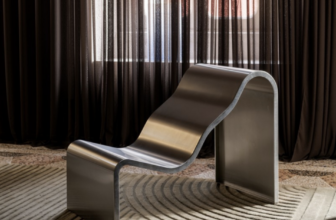
Trend 01 | Black+Metal Minimalism
Among the proposals presented by young designers, a new form of Korean minimalism clearly emerged. Sleek black details paired with brushed metal surfaces created interiors that felt both refined and quietly dramatic. Matte black structures met anodized or softly textured aluminum, all gently softened by warm, diffused lighting. The interplay between these elements formed a visual language that was minimal yet expressive, pared back yet unmistakably intentional.
Rather than appearing cold or industrial, this combination introduced a high-tech undertone wrapped in subtle elegance. It extended the feeling of clarity and precision without losing warmth: a balance of futuristic sharpness with emotional restraint. This evolution gives Korean minimalism a more distinctive, confident edge.


Trend 02 | Sensorial Design
One of the most distinctive interior design trends from Seoul this year was Sensorial Design: spaces crafted to engage not only the eye, but also smell, sound, and touch. Rather than relying solely on visual aesthetics, Korean designers used multi-sensory layering to evoke emotion and create immersive atmospheres.
This was especially visible in the rise of perfume brands and olfactory installations, where fragrance became the central design medium. Instead of treating scent simply as a product, these spaces used it to establish identity, mood, and atmosphere. Many booths showcased perfumes in creative ways, inviting visitors to test, inhale, and discover how scent could influence memory, emotion, and the overall experience of a space.


Trend 03 | Tech × Craft Hybrids
A key trend at both Seoul Design Festival and Design Korea was the fusion of traditional Korean craft with digital innovation. Instead of viewing technology as something separate or oppositional, designers used digital tools to reinterpret centuries-old materials, patterns, and forms. Laser-cut motifs appeared on natural surfaces, AI-generated textures introduced gradients and subtle depth, and classic hanok aesthetics were translated into contemporary geometric expressions.
The result is a distinct aesthetic that feels future-forward yet firmly rooted in heritage: a uniquely Korean signature that proves craft and technology can evolve together without losing cultural identity. A little bit like in the city center, where tradition and modernity goes hand-to-hand.


Trend 04 | Circular Design and Reuse
Sustainability in Korea is less about bold declarations and far more about quiet, intentional reuse. Instead of presenting circularity as a visual statement, many exhibitors embraced materials with visible imperfections, recycled fragments, and tactile traces of the past. Reclaimed metal and timber appeared with softened finishes, upcycled textiles were reimagined through careful craftsmanship, and repaired ceramics or modular furniture reflected a philosophy of care rather than replacement.
At the same time, I noticed a contrasting trend where recycling became the central message: from boldly coloured recycled plastics to innovative materials such as paper-based concrete and other experimental composites designed to showcase their second life. Together, these approaches illustrate the breadth of Korean sustainable design today.


Trend 05 | Cute-Intentional Aesthetic


Full Seoul Trend Report is inside TRENDBARK
If you’re curious to explore the full Interior Design Trends from Seoul Design Festival, I will soon release my complete analysis inside TRENDBARK Membership: including extended notes, colour takeaways, material cues, and practical insights on how these Korean trends translate into real projects.
👉 Discover more about TRENDBARK Membership – here.