
farmhouse, sour beer and the cost of identity in Italian Craft Beer – The Italian Craft Beer

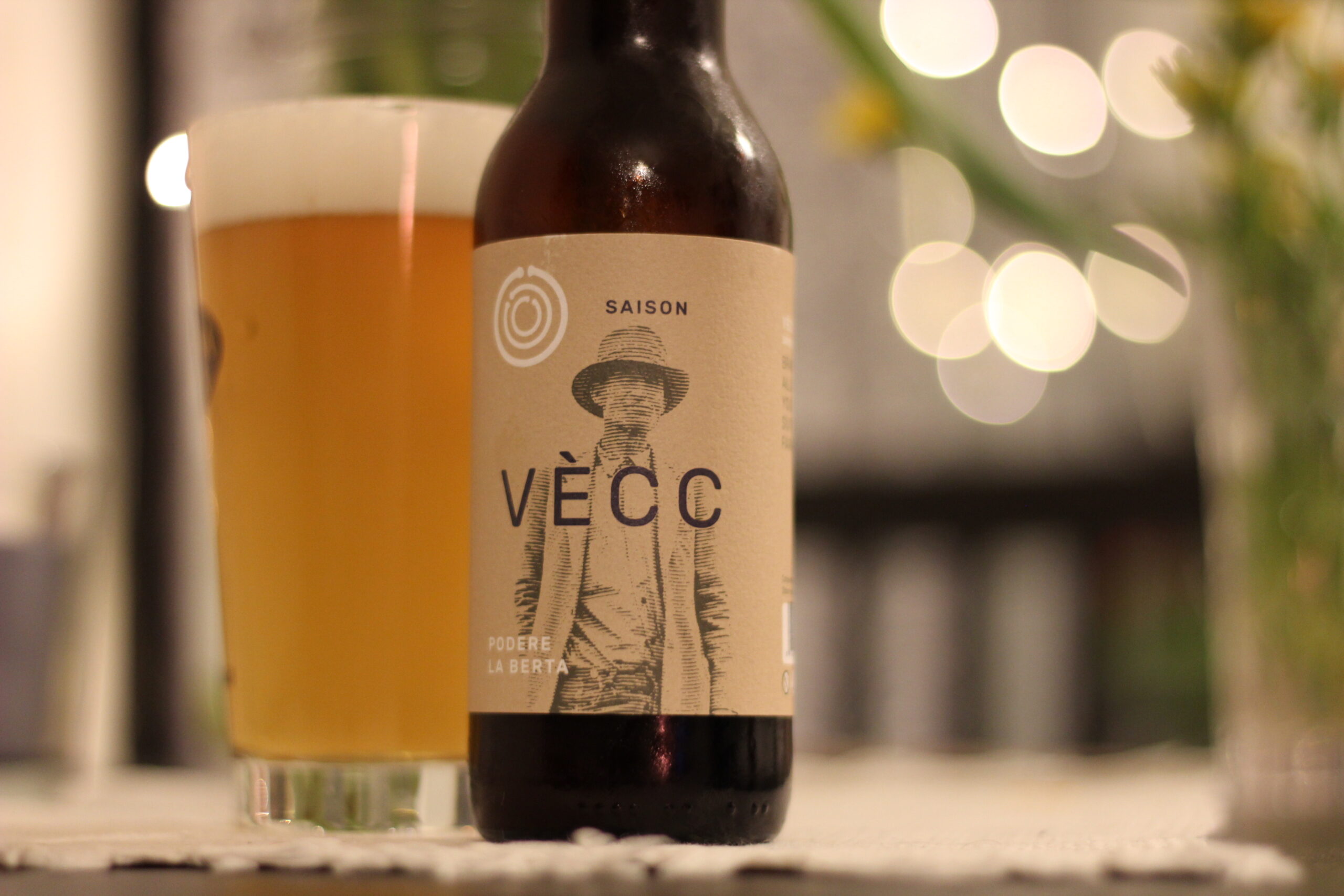
There are breweries that talk about territory, and there are breweries that are territory. COLTURE by Podere La Berta Brewery, born from the agricultural and oenological backbone of Felsina one of Chianti Classico’s most rigorous estates, belongs to the second category.
In a segment of Italian craft beer that increasingly risks flattening itself between hazy-session-IPA and Lagers (that we all love of course!), COLTURE has chosen a different kind of pressure: coherence.
Farmhouse ales built on non-standard grain bills, gentle souring protocols, slow fermentations, and a supply chain that is not a marketing claim but a structural constraint. This conversation cuts through the romanticism that too often surrounds the words “birra agricola – agricultural” and “spontaneous” in craft beer, and lands on something more uncomfortable and more interesting: the real cost of identity, what it actually takes to hold a stylistic line in a market that rewards immediacy, and where (technically and philosophically) beer ends, and something else begins.
Let’s discuss about this with the head brewer of Podere La Berta brewery, Marco Mignola.
- With COLTURE, you speak openly about agricultural beer and internal supply chain: how truly replicable is this model without losing identity? Is it a scalable path, or does it by definition need to stay “small and imperfect” to work?
I think it’s now inevitable that a brewery not rooted in a traditional area of spontaneous or farmhouse beer production must have a clean core range. So you need to be skilled at expressing your agricultural identity across two very different fields; fields that are NOT complementary and are productively difficult to combine. I therefore think that, at least in the short term, a Sour or Farmhouse project works best as a small or very small spin-off, of the highest quality, unless you want to experiment with something entirely new like Ca’ del Brado has done. But they also have the advantage of being in Bologna’s metropolitan scene, which is a cultural and generational melting pot open to new things. We have our feet in two very traditional realities, however different they may be, and we can only stay true to ourselves. Better to be small and imperfect than to leap into the void. Better a modular lineup, which the farmhouse format allows, where you can play with seasonality and raw materials.
- You come from a strongly oenological background, and it shows (and that’s a compliment from someone who drinks very little wine, so I’m not sure it can be taken as one): in your farmhouse ales and IGAs, the boundary between beer and wine is becoming increasingly blurred. Where do you draw the line beyond which it’s no longer beer but something else?
The use of grains other than barley, and carefully calibrated doses of specialty malts (depending on the style), has been the key we’ve found over the years to prevent things from crossing over. Blending grains well and letting them come through reminds you immediately that what we make is beer. If you don’t get the grain, a note of the yeast (with saisons you can’t go wrong), you risk the barrique and the must swallowing the beer whole, and you end up with a 7.5% watercolour, or a hard seltzer flavoured like grapes with funky notes, maybe some bitterness. Or worse, a Sour muddle where you can’t even tell what base beer or what grape variety was used.
- In a craft market increasingly dominated by crowd-pleasing IPAs and easy-drinking beers/lagers, you persist here with rusticity, complex fermentations, and slowness. Is this a romantic choice? A deliberate strategy to stand out within a niche? And above all, does it actually pay off today?
Giovanni Poggiali (owner of Fèlsina cellar and the brewery) always asked us to hold the identity line steady. It couldn’t have been any other way, given the history of the winery and the group as a whole. So we apply the agricultural dimension in a modern key, both on the clean side and the Sour side. I think of Acse, our landbier with unmalted spelt and rye at 4.0%, which many people told us would never work… after three years, it’s our best-selling beer. The world of slow fermentations, of gentle souring, is our way of saying we show up when things get serious and it’s one of the central pillars of our positioning among the breweries doing good work in Italy. It’s our calling card and the cornerstone of our narrative and our vision.
What emerges from this interview is not a manifesto. And that is precisely what makes it credible.
COLTURE is managing an identity, not selling one, with the pragmatism of people who understand both the vine and the mash tun. The success of Acse is the most honest data point in the conversation: the market does respond to rigour, but only if you are willing to wait it out. The model has limits geographic, cultural, and scalar. And they know it. That self-awareness is rarer than the beer itself, and arguably more valuable.
Curious? Discover more about this project in Podere La Berta brewery website.
And discover here my favourite Italian Saison.
And here are all my articles about PODERE LA BERTA.


