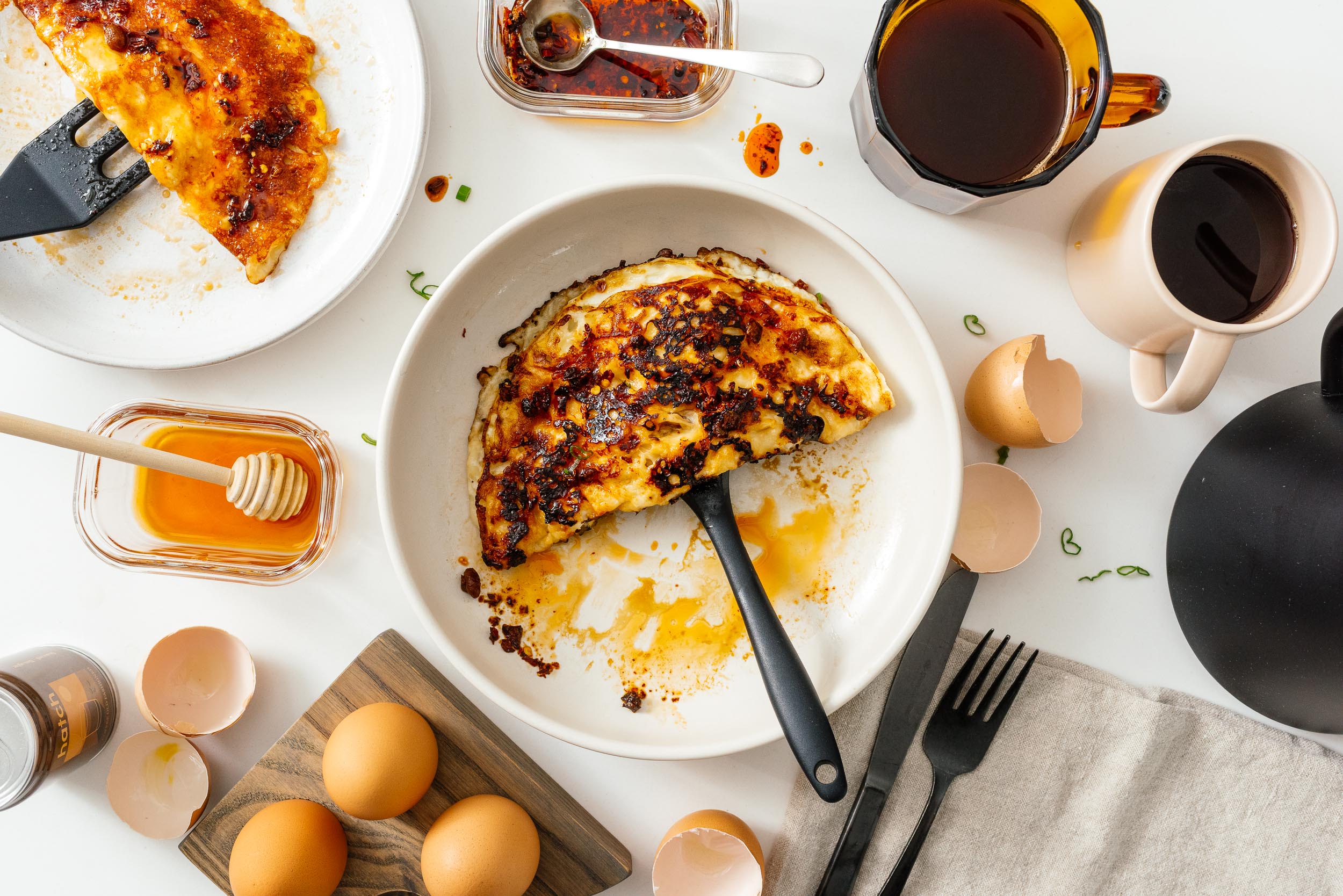
These hot honey cheese eggs are seriously so good that you’ll be making them on repeat.
If you haven’t had mozzarella that’s been melted in a frying pan, you need to, immediately. It gets melty and stretchy and caramelizes in the most perfect way that hugs your sunny side up eggs in a cheesy blanket. The subtle kick of hot honey just takes it over the top. It’s all I need for breakfast.

I ended up making this two ways. The internet’s way: honey, then cheese, then egg. And then I did it the way that makes sense for me: cheese, then honey, then egg. They taste basically the same, but because I’m all about the #aesthetic vibes, I liked the way the hot honey eggs looked when the cheese was melted first. As gen Alpha would say, cheese first mogged honey first. Cheese first or honey first, it’s up to you.

Crispy cheese eggs
I have been in love with crispy cheese eggs ever since 2015. Mike and I have been blogging so long that the trends of yesterday are coming back. Who knew that plaid shirts would be making a comeback? I didn’t. Anyway, cheese eggs are amazing: a crispy, caramelized cheese skirt on top of a perfectly cooked egg? Protein on protein? Tell me more 😍
I love eggs and new ways of making eggs always makes me eggcited. (Sorry, not sorry, I had to) Bad puns aside, eggs are a great source of protein and when paired with stretchy, melty mozzarella and sweet and spicy honey, all three ingredients turn into something that is just so much more than the parts.

What are hot honey cheese eggs
Hot honey cheese eggs are kind of like an over easy egg on a hot honey and crispy cheese bed. Specifically, hot honey is drizzled in a pan, then shredded mozzarella is added, then eggs sunny side up. Cover and cook, fold in half and finish with more hot honey or even some chili crisp.

How to make hot honey cheese eggs
- Honey. Grab a non-stick pan. Over medium heat, add some drizzles of hot honey.
- Cheese. Add a generous layer of shredded mozzarella cheese.
- Eggs. Add two eggs directly on top of the cheese and season with salt and pepper to taste.
- Cover. Cover the pan and cook the eggs until the whites are set and the cheese is starting to brown and caramelize.
- Fold. Use a spatula to loosen the cheesy bottom and fold the eggs in half. If desired, let cook a bit more for the yolks to finish to your liking.
- Enjoy. Remove from the pan and enjoy your cheesy, sweet-n-spicy eggs immediately

Hot honey cheese egg ingredients
- hot honey – hot honey is having a moment right now and I for one, am loving all the sweet-heat going on everywhere. Mike’s Hot Honey is the most well known brand of hot honey out there, but like all popular things, there’s a huge selection. Hmm…Mike and I should do a hot honey blind taste test
- cheese – shredded mozzarella cheese is ideal here. The mildness and melty-ness of mozzarella lets the hot honey shine while caramelizing to a nice crisp.
- eggs – yes please, eggs. If your budget allows, try a local free range or organic egg, the taste difference can be pretty dramatic.

Sweet and salty eggs
There’s a reason why so many addictive foods are sweet and salty. It’s because it hits two of our tastes and the play between the two makes it even more interesting to our taste buds. The sweetness of the honey with the savoriness of the cheese and eggs is complimentary in all the right ways. Add a tiny bit of spicy heat and your brain goes even more wild. These eggs are the perfect mix of sweet, salty and spicy. Plus they have the bonus of having contrasting textures too: the crisp of the caramelized cheese and the softness of the egg yolks.

My hot honey egg tips and tricks
Not too much honey – you might be tempted to coat the bottom of the pan with hot honey, but show some restraint. Too much will cause the cheese to not have enough adhesion to the pan and the cheese won’t caramelize.
The pan matters – Absolutely use a non-stick pan. I think all eggs need a dedicated egg pan that is for eggs only. Non-stick will help the cheese and eggs release easily, even without oil. Bonus if your non-stick pan has a glass lid so you can see exactly how your eggs are cooking.
If you like eggs, try these recipes
Happy hot honey egging!
xoxo steph

Hot Honey Cheese Eggs
Melty and stretchy and caramelized mozzarella that hugs your sunny side up eggs in a hot honey cheesy blanket.
Serves 1
- 1 tbsp hot honey
- 1/2 cup mozzarella cheese shredded
- 2 large eggs
Nutrition Facts
Hot Honey Cheese Eggs
Amount Per Serving
Calories 247
Calories from Fat 112
% Daily Value*
Fat 12.4g19%
Saturated Fat 4.9g31%
Cholesterol 380mg127%
Sodium 236mg10%
Potassium 145mg4%
Carbohydrates 19.1g6%
Fiber 0.01g0%
Sugar 18g20%
Protein 16.1g32%
* Percent Daily Values are based on a 2000 calorie diet.