How It Works: ChatGPT Advertising Overview
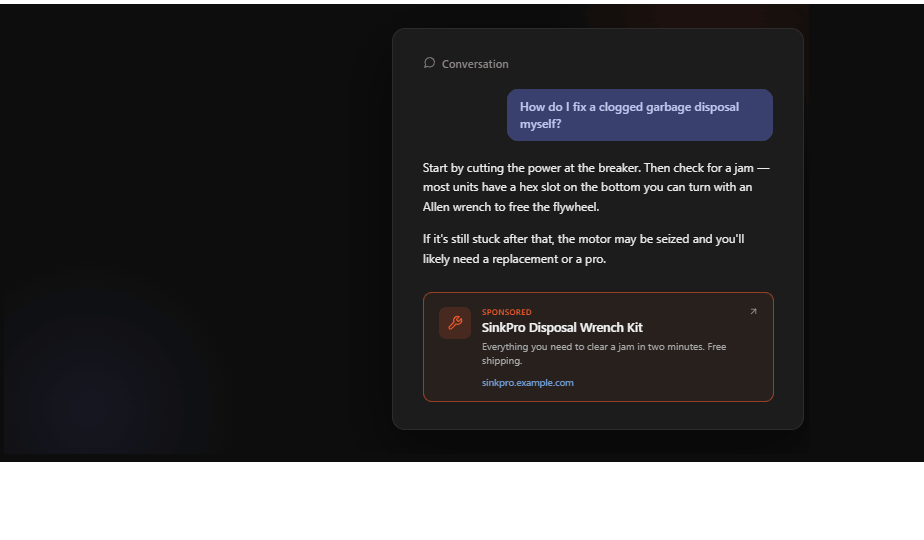
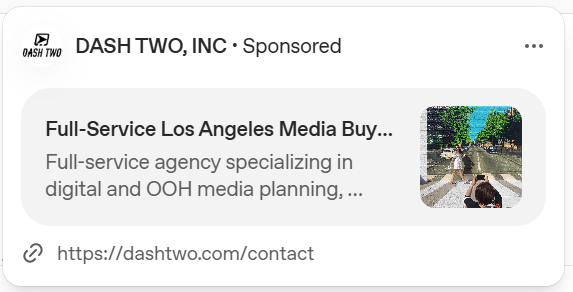
Advertising on ChatGPT serves free-tier users with native, sponsored cards. The chatbot places ads beneath its responses to protect the organic integrity (more on that below), and each ad includes a headline, description, image, and website link.
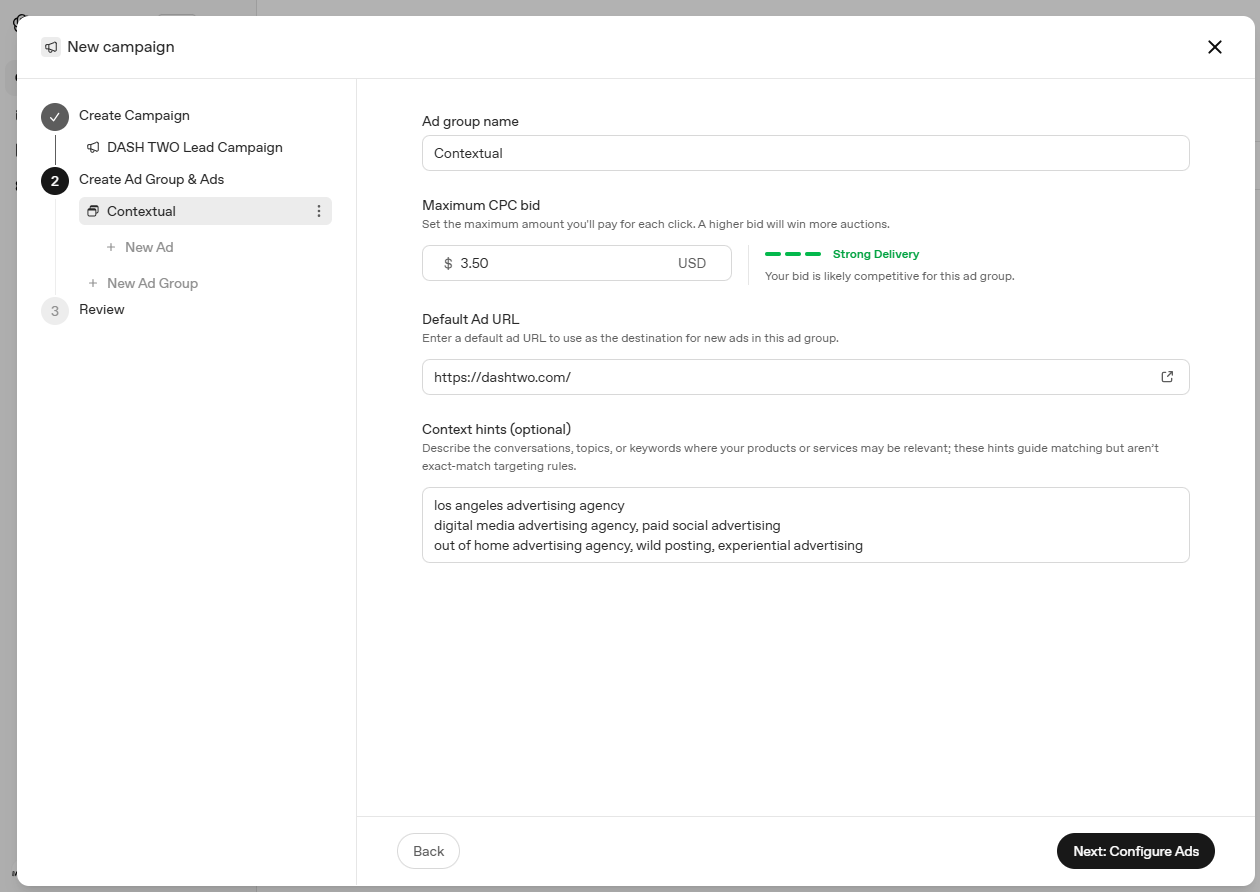
While companies like Meta employ traditional behavioral tracking and Google uses keyword matching, ChatGPT advertising is built on high-intent contextual targeting. Advertisers give broad “context hints” about topics, scenarios or products. OpenAI’s algorithm then pairs these keywords and phrases with the live conversation’s real-time intent, serving a relevant ad via a second-price auction.
Campaigns support cost-per-click (CPC) or cost-per-thousand-impressions (CPM) bidding alongside geo-targeting and custom audience matching.
Targeting Capabilities: Context Over Keywords
Let’s dive deeper into what “context hints” mean. Advertisers describe the scenarios or intents they want to be adjacent to. This format allows advertisers more precision (e.g., targeting “users comparing project management tools” rather than just the keyword “SaaS”).
ChatGPT utilizes a signal loop for targeting:
- Current Thread: What the user is asking right now.
- Historical Personalization: Previous chat history (for users who haven’t opted out).
- Engagement Feedback: Prior interactions with similar ad units.
For now, ChatGPT excludes health, finance and political topics from advertising, though this remains subject to change as advertising becomes more sophisticated and OpenAI gauges what works best. Additionally, it does not offer demographic “audience sculpting” (based on factors such as age, gender or income) like Meta does. Its advertising remains intent-first. This also could change going forward as OpenAI has more result metrics to work with.
Privacy + ChatGPT Ads
To keep users’ trust, tech giants have to respect their privacy. Acknowledging privacy concerns also helps these behemoths avoid severe legal penalties they may encounter thanks to evolving privacy regulations, protecting their brand reputation. Giving users control also prevents data misuse while developing transparent advertising relationships benefiting both sides.
Hence ChatGPT advertisers don’t receive access to private chat histories, memories or personal identifiers. ChatGPT matches ads based on the immediate topic of the conversation and past prompt context. Users also can toggle off ad personalization, which is critical for any organization hoping to build trust with customers these days.