Consider pechuga. It’s a subcategory of mezcal with close ties to celebration culture across the Mexican distilling tradition, famously made by suspending a basket of food products above an active still. This sometimes includes mole or spice blends, and it has always included raw protein, like turkey or chicken breast (the word “pechuga” means “breast” in Spanish) in the mix. Deer, quail, and rabbit sometimes show up, too, as do iguana, snake and even lobster.
Five Destillado Con Expressions to Check Out
In researching this story it was my privilege to sip my way through twenty different destilado con expressions, each one a galaxy of flavors unto themselves. For the destilado con-curious, here’s a tight selection of favorites.
Zinacantan “Destilado Con Vanilla”
A collaboration between Puebla’s Zinacantan and a vanilla farming cooperative in Veracruz, this spirit is all pie crust and white pepper, buttercream and a serious cooked agave backbone.
Salvadores “Destilado con Elote”
This spirit has mega-mellifluous properties, like the sweetest batch of creamed corn, the most beautiful bowl of Chinese corn soup or the most delicious cup of atole.
Rey Campero “Ponche de Frutas”
The gold standard for destilado con in my tasting forays, from the esteemed producer-owned mezcal brand Rey Campero in Zoquitlán, in the southern mountains of Oaxaca. A blend of guava, apples, raisins and cinnamon, the spontaneous fermented ambient yeast Espadin used in this distillate shines through in every sip. I am carefully nursing my bottle from last year, it’s just that good.
Macurichos “Destilado con Cacao”
On the savory edge of what destilado con can be, this bottling evokes campfire hot chocolate, whipped cream and Sarawak pepper. In some future Winter Wonderland I’m spiking a hot chocolate with this stuff.
Pal’alma Limpia Almas
I was handed this by a friend—it has all the hallmarks of a secret passed note in the school hallway, or a whispered conspiracy. You can’t buy it, but you can if you know where to look. It tastes like holy water: anise, Tutti Frutti Jelly Belly, sasparilla. You could sub this in for absinthe for a Death in the Afternoon or yellow Chartreuse in a Naked & Famous and not miss a trick.
Pechuga is controversial in the mezcal world. And now an emerging subcategory of the subcategory is coming on strong, growing in popularity and helping to redefine—and perhaps complicate—the wider pechuga paradigm. It goes by many names: “destilado con,” “agave spirit with natural flavors,” and even, controversially, “vegan pechuga” (more on that term in a moment). This is a manner of distilling mezcal alongside a chef’s kitchen of flavors and botanicals, fruits and nuts and spices, while omitting the protein entirely. Unless you count the horse-drawn tahona employed by some palenques, no animals were harmed in the making of this product.
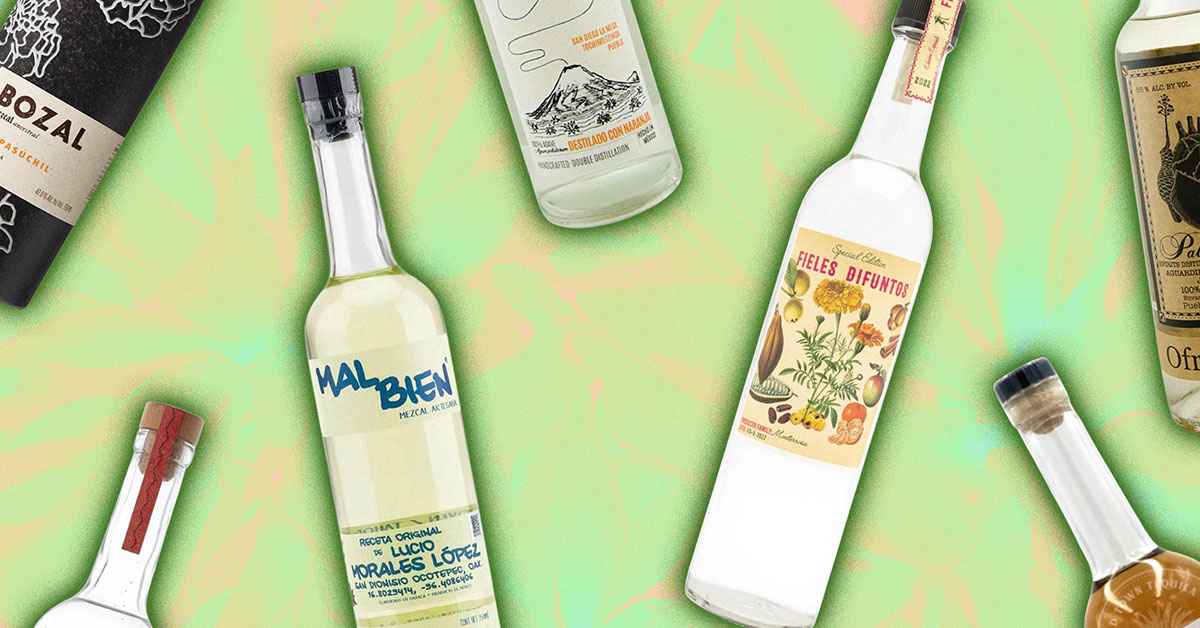
“10 years ago destilado con was unheard of in the United States,” says Fred Sanchez, who imports mezcal as Cultura Maguey and represents the brands Agua del Sol and Yuku Savi. Today there are more than 50 destilado con bottlings commercially available across the U.S. market, and it seems like all the top mezcal producers are getting into the game. There’s vanilla and Papalométl agave distilled by Fabiola Torres Monfil at Zinacantan, delicious “ponche de frutas” Christmas punch from the Parada family at Rey Campero and outstanding Espadin distilled with cactus fruit by Alejandrina & Nicolas Hernandez Aragón for Rezpiral, plus dozens more, including multiple bottles distilled with all the flowers and fragrant herbs of the Dia de Los Muertos ofrenda from Pal’alma, Cuish, Bozal and 5 Sentidos.
It was one of these Day of the Dead bottles that first jumped out and grabbed me, served neat after dinner at the (now temporary closed) Brooklyn fine dining restaurant Ilis. One sip and I was blown away: it was the precise sensation of drinking liquid incense, heavy with flower petal oils and the suspended psychotropic matter of departed souls. The bottle came from Pal’alma, the Mexico City-based mezcal label and tasting room founded by Erick Rodriguez. He’s been working on an ongoing series of annual destilado con releases in Mexico since 2012—today counting more than 30 in total—and started bringing sample bottles across the border for agave spirit events like Mexico in a Bottle shortly thereafter.
I’m hesitant to ascribe a “patient zero” status to any one purveyor of destilado con, and traditions like the medicinal infusion of Sonora mountain agave distillate (Bacanora) with the local uvalama shrub appear to go back generations. (Uvalama is technically a drupe and related genetically to coffee cherry; Bacanora Mazot has a bottling that tastes wonderful served alongside espresso.) But Rodriguez and Pal’alma undoubtedly helped popularize the practice and own considerable claim on helping launch the vogue for this style of mezcal. “I started this trend,” Rodriguez says, in no uncertain terms, “and at first people accused me of breaking tradition, but now everyone is doing it.”
Fifteen years on from Pal’alma’s first primal yawls towards creating the genre, the “destliado con” mezcal subgenre can be found from Sonora to Oaxaca, Puebla to Guerrero, as open-minded and enterprising mezcaleros and mezcaleras embrace the flavor possibilities of the style. No two producers make their juice the same way, and destilado con as a category is home to a broad cross section of techniques and interpretations. The finished products themselves range from light whisperings of flavor to bold, unmistakable expressions of fruits, herbs and culture. Some distillers suspend fruits and vegetables above the still, the same as they might hang meat for pechuga; others submerge their additions in mesh or cloth, or else add flavor components directly into the still. This total immersion style is the method Pal’alma prefers: all of their destilado con offerings, including huitlacoche, tamarindo and the extraordinary Ofrenda and Limpia Almas bottlings are made by the same mezcalero, based in Puebla, whose name Rodriguez declined to divulge.
Now, about that term: “vegan pechuga.” It’s divisive—no one in the agave space is opinionless on the topic—and arrives at the discourse with considerable baggage. I first heard it used across the counter at SF Tequila Shop, one of the best agave bottle shops in the country, in conversation with Scott Jeffrey, who helps manage the shop’s vast catalogue and busy web store alongside founder Amandip “Moose” Singh Malhi. “It’s not a perfect term, for sure,” says Jeffrey, “but I think it makes sense to a lot of people, because it makes it clear you’re omitting the ingredient that most people notice first.” It’s worth noting that Jeffrey is a practicing vegan; for him, destilado con or “vegan pechuga” or whatever you call it offers a layer of inclusion and accessibility in line with his own dietary practice. But for others it’s a major eye roll—nearly everyone I spoke to for this article expressed a level of dissatisfaction with the term. “It’s not a term the mezcaleros use,” says Rodriguez. “It means we don’t have the language yet to describe what we have.”
The importer Justin Lane Briggs, who oversees the impressive agave roster at Skurnik, takes a long-view perspective on the topic. “I certainly get people pushing back on the category as a whole, especially serious agave heads,” he says. But “when you say it’s an agave distilled with cacao, that helps for newcomers to fit their heads around it.” Skurnik brings in several extraordinary destilado con bottlings, including a wildly expressive series by the brand Salvadores, whose elote, herba santa and tamarind chile destilado con offerings are a revelation.
Briggs pointed out that spiritually, destilado con is a handful of juniper berries away from being almost a kind of mezcal gin; meanwhile Fred Sanchez called out the pulque abocado tradition as a natural precursor to today’s mezcal destilado con trend. What you arrive at in exploring the category is a kind of collision: old ideas about distilling exciting flavors directly into stuff that’s good to drink, and a newly appreciative market stateside that can’t get enough of it.
If great mezcal is like sipping a complex cocktail in spirit form, then the best destilado con bottlings argue loudly for themselves to be considered by bartenders the world over. At Pretty Decent in Louisville, Kentucky, co-owner John Douglass recently served a julep riff (“in truth a long stretch from a julep,” he says) built around the Mal Bien Zacate Limón, whose wide availability and attractive price point have helped make it one of the most popular destilado con offerings currently on the market stateside. Douglass blends green peas into the mezcal, then spins it out with a centrifuge before shaking with orgeat, lemon and a huge sprig of mint. At Obvio in Manahttan, a tamarind and mango destilado con by Salvadores is amplified with fresh mango, lemon and lime, while the Pal’alma Café De Olla release—one of their earliest destilado con products, heavy and bombastic with flavors of clove, piloncillo and fresh coffee—meets vanilla, clementine and mole bitters. I’ve personally found that the aforementioned Rezpiral Espadin con shuega tastes incredible served tall and cool over stacked cubes with soda water and a grapefruit peel expression, and the Macurichos destilado con cacao acts as a delicious base for a White Russian, in place of vodka in this recipe. This spirit is delicious even on its own, coming on first like hot chocolate before settling into flavors of peppercorn and stone-cut oatmeal. My greatest dream is that an article like this might bloom a thousand destilado con cocktails, so that I might quaff them all.
But there’s still the matter of what to call it. “Pechuga is a turn of phrase we’ve glommed onto, for good or bad,” says Briggs of Skurnik. Some bars, like Odin in Oakland, list their destilado con offerings under the wider category heading of Pechuga. And some mezcal brands, like Tlamati, use the term “Pechuga” as a catchall, even for mezcals made without protein: it appears on the bottle label for their Milpa bottling, which uses Papalométl agave as the base and adds to it the Mezoamerican cover crop mélange of criollo corn, huitlacoche, squash and pipicha leaf. Some of the discrepancy in nomenclature owes to the relative newness of this product category, but it’s also a matter of intrigue for the importers tasked with bringing these esoteric spirits across an international border to serve growing public interest. The vagaries of TTB compliance for pechuga and destilado con would make a fine article unto itself, but for drinkers with interest in exploring the product category, this is a golden moment, and there are very real people behind the explosion in availability, navigating the import statutes in real time.
Whatever you call it—“destilado con” is accurate but a little clunky, “vegan pechuga” is effective but technically an oxymoron, and also something of a Rorschach test on one’s personal feelings towards veganism in the first place—I’m convinced this is a uniquely compelling and delicious category of agave spirits, and indicative of the wider boomtown moment for appreciating agave in which we find ourselves.