Nothing quite compares to the fresh, creamy flavor of burrata, which pairs perfectly with summer’s ripest fruit.
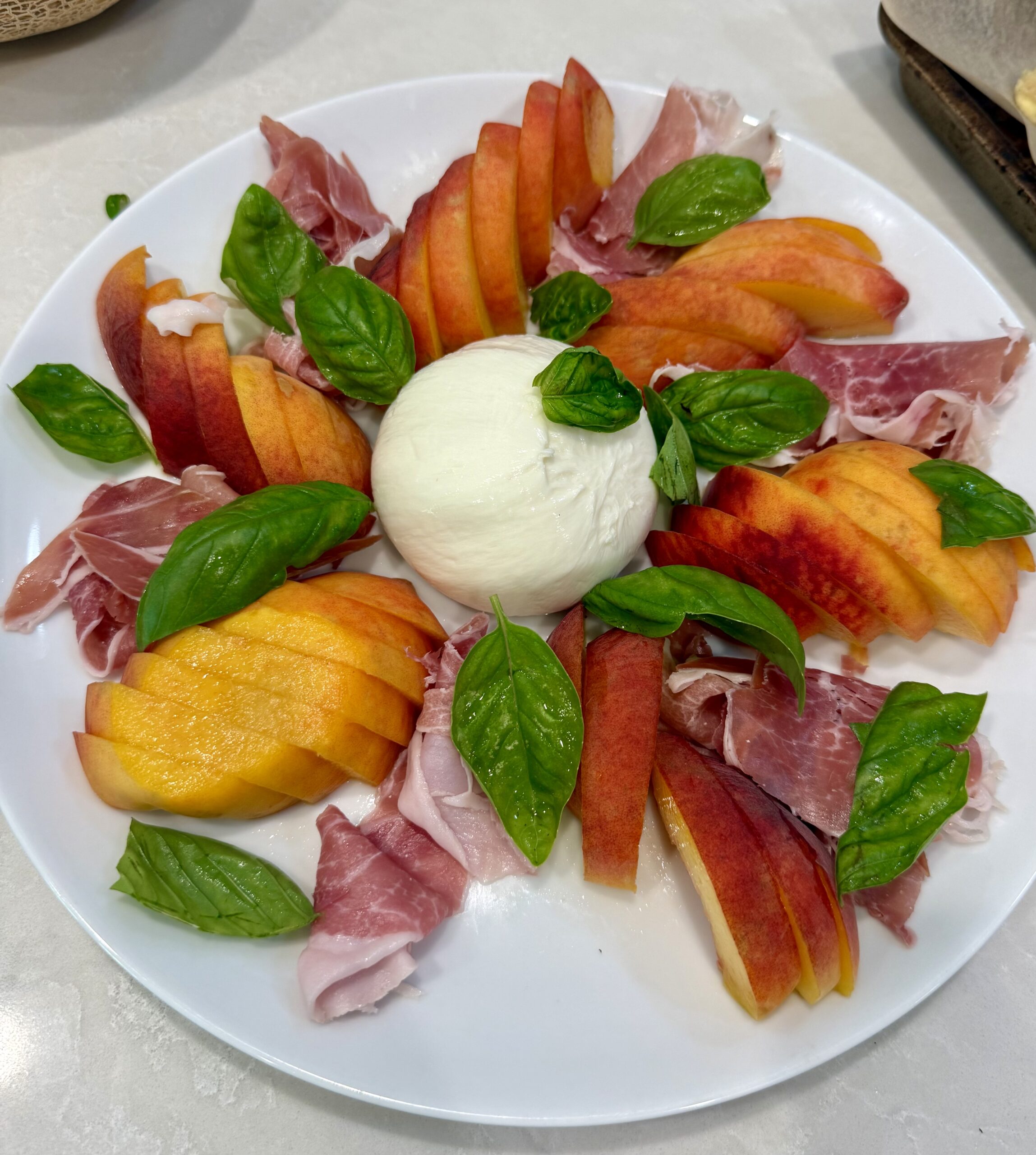
For a delicious twist on traditional caprese salad, try a Peaches and Cream (Summer Burrata). The taste of sweet peaches and creamy burrata combined with salty prosciutto and basil can’t be beat!
- Slice fresh, ripe, unpeeled peaches.
- Place a fresh burrata in the middle. No need to rinse or dry it.
- Drape with slices of thinly sliced prosciutto and fresh basil leaves.
- Allow to rest until it reaches room temperature, about 20 minutes.
- Drizzle with fresh extra virgin olive oil and a touch of balsamic vinegar before serving.
- Sprinkle with flaky sea salt and fresh cracked pepper.
What is burrata?

Burrata is a deliciously rich and creamy Italian cow’s milk cheese made from fresh mozzarella, cream, and cheese curds. A thin outer shell of fresh mozzarella is stretched by hand and filled with a mixture of cream and mozzarella curds, called stracciatella. Then the outer shell is pinched closed into a rounded pouch-like shape, encasing the soft filling.
Burrata has a more buttery, decadent flavor than fresh mozzarella due to the added cream and curds, and it has more saturated fat and calories, too. The outside layer of burrata tastes like traditional fresh mozzarella and has the same chewy texture, but the interior is creamy and spreadable.

How should I serve burrata?
Burrata is so rich and flavorful on its own that it needs only simple companions to show off its best side. You don’t want to cover up the delicate, milky flavor with anything too strong.

Some traditional summer burrata preparations include:
- olive oil, flaky sea salt, and pepper
- sliced tomatoes, basil, olive oil, sea salt
- prosciutto, basil, arugula
- paired with stone fruit, like peaches, nectarines, or plums

Should the burrata be served cold?
Burrata is best served at room temperature, which allows the curds and cream to be at their most creamy consistency.