
Indonesia Football Infrastructure Enters a New Industrial Growth Phase

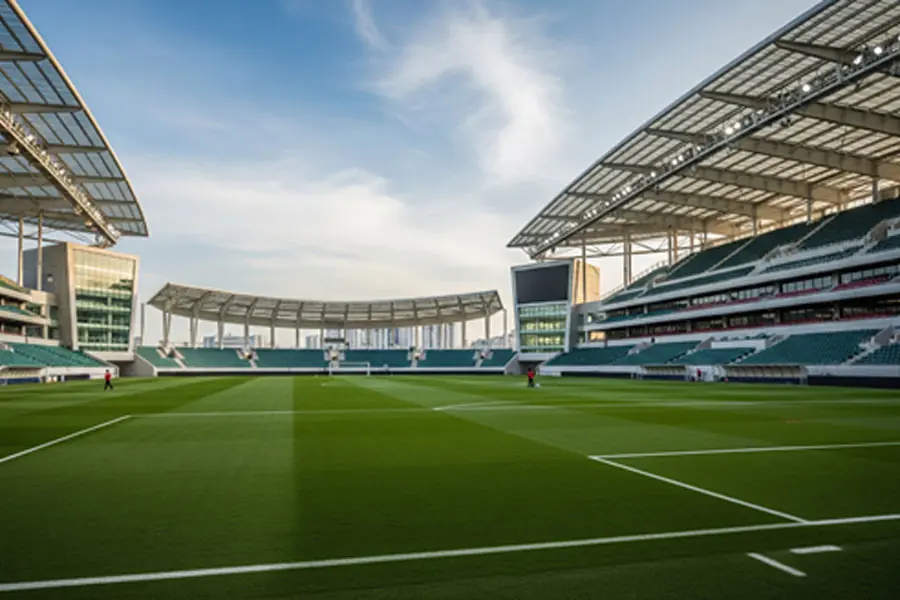
Indonesia’s football rebuild is becoming an industrial program rather than a sequence of construction announcements. Venues are being certified, a national training base is operating in Nusantara, performance departments are becoming more data-led, and clubs face pressure to turn facilities into productive assets. A modern stadium is not defined by fresh seats. It also needs safe crowd circulation, reliable pitches, medical rooms, trained operators, digital ticketing, and revenue that funds maintenance after the opening ceremony.
Seventeen stadiums, one harder question
In March 2025, Indonesia inaugurated 17 renovated or newly built stadiums after work valued at Rp1.74 trillion. FIFA later said the government had renovated 21 stadiums in total and followed the program with a safety workshop for league officials, venue managers, architects, and public agencies. The investment gives football infrastructure Indonesia a stronger physical base. Its return will depend on access control, evacuation routes, stewarding, command rooms, pitch care, and transport working as one matchday system.
The modernization drive also changes preseason analysis. Stadium certification, temporary relocations, and travel demands can alter championship futures before a ball is kicked. Readers using the 1xBet apk can compare outright prices with fixture congestion and confirmed venue information, although faster access does not remove uncertainty. A renovated ground does not automatically improve a squad. A bettor should separate an inauguration from evidence that a club will actually retain home advantage there. The useful metric is the number of competitive matches the venue can stage safely and consistently.
Nusantara becomes the production floor
The PSSI National Training Centre represents a different kind of investment. FIFA said the first phase received USD 5.4 million from FIFA Forward, funding two full-size pitches, floodlights, changing rooms, and a two-storey dormitory for up to 150 people on a 34.52-hectare site. Additional government money was intended to support further dormitories and expansion toward eight pitches, a swimming pool, physical and tactical zones, and a small stadium.
For the Indonesia national football team, the advantage is repetition. Senior and youth squads can use the same pitch specifications, medical protocols, recovery schedules, meal planning, and video workflow. Coaches can compare prospects under common testing conditions, while medical staff build longer records covering injury history, sprint exposure, asymmetry, and rehabilitation. The centre becomes a national performance archive rather than a temporary camp.
Relegation analysis exposes weak systems
Infrastructure affects the bottom of Liga 1 Indonesia as sharply as the title race. Relegation candidates often change coaches, recruit for immediate survival, and play under heavier scheduling pressure, so one favorable result can create a false signal. During that research, Daftar 1xBet forms part of account onboarding, but registration should follow a check of settlement rules and the exact relegation market. Venue moves, sanctions, and postponed fixtures can distort a table when clubs have played unequal schedules. Points per match, expected-goal direction, remaining opponents, and confirmed home grounds produce a cleaner survival forecast.
Reliable scheduling has a commercial effect too. It gives broadcasters fixed inventory, sponsors predictable exposure, and supporters time to plan travel. Late venue changes force clubs, security teams, media partners, and ticket holders to absorb costs that do not improve the product. Indonesian football needs consistent operating standards more than identical stadium designs.
Sports science must change decisions
Buying GPS vests and recovery equipment is easy. Building a department that interprets the data is slower. Useful sports science starts with specific questions: how much sprint exposure did a winger complete, how quickly did a midfielder recover, and which player produced a dangerous workload spike?
A functioning high-performance unit connects:
- External load: distance, accelerations, decelerations, and high-speed running.
- Internal load: heart-rate response, perceived exertion, sleep, and soreness.
- Medical availability: days lost, recurrence, rehabilitation, and return-to-play criteria.
- Tactical output: whether physical work supports pressing, transitions, and possession.
Data can flag a pattern, but it cannot diagnose an injury or understand every tactical demand alone. Clubs that isolate analysts from coaches and clinicians will collect information faster than they can use it.
Stadiums must earn on dark days
Matchday income is fragile because a club hosts a limited number of major fixtures. Stadium operators need year-round products: hospitality, naming rights, tours, museums, retail, conferences, carefully managed concerts, community bookings, and audited food-and-beverage agreements. Digital ticketing adds first-party data on attendance frequency, purchase timing, and demand by seating category.
Outright-title research increasingly shares the same screen with other entertainment during long match windows. Team form, fixture load, and player availability remain the relevant inputs for the football side. A reader may then enter an online casino section where RNG, RTP, volatility, and wagering terms replace sporting data as the useful mechanics. No club statistic changes a random slot result. High-volatility games create wider outcome swings and less frequent returns, making fixed session limits more practical than chasing a previous spin. Keeping those mechanics separate prevents sports analysis from being misapplied.
The operating gap decides the return
Indonesia has financed visible assets; now it must protect their productive life. Maintenance budgets need ring-fencing, pitch teams need specialist training, safety certificates need renewal, and clubs need transparent rental agreements with municipal owners. A venue cannot be international-standard in March and unavailable after heavy rain in November.
The next useful indicators are mundane: cancellation rates, pitch replacement cycles, player availability, stadium utilization, commercial revenue per event, and academy minutes. Those figures will show whether Indonesia football has built a connected production system or completed an expensive construction phase.


