North Carolina Has 718 Cyclospora Cases and Is Telling People to Stop Eating Parsley and Cilantro. It Cannot Tell Them Whose.

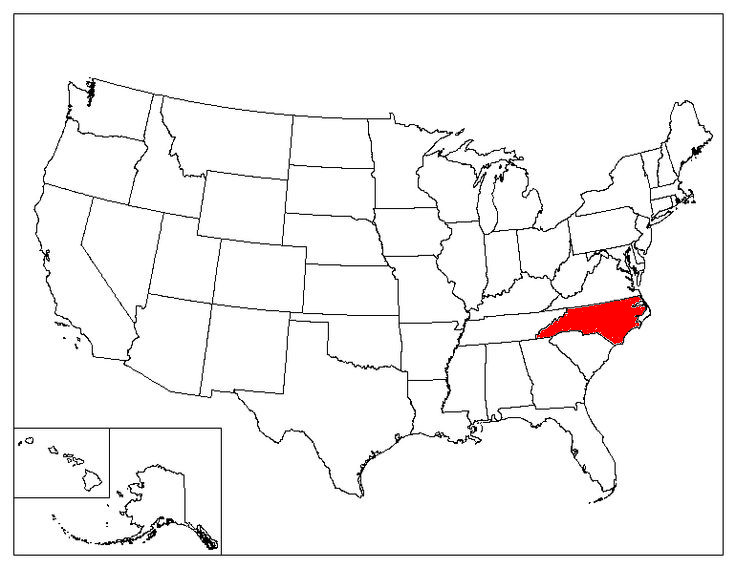
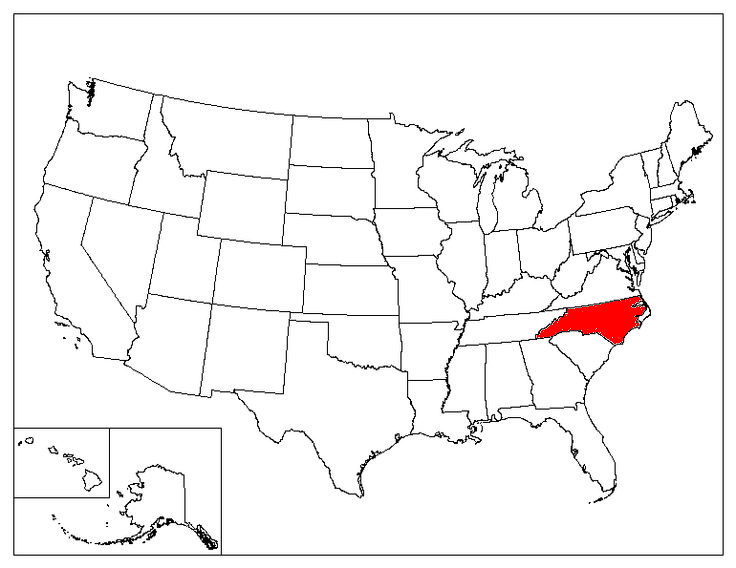
North Carolina announced on July 28 that it has 718 cyclosporiasis cases and 24 hospitalizations since May 1, and launched a public dashboard that updates every Tuesday. Start with the credit, because it is earned: most states in this outbreak have published nothing like this, and a few have published nothing at all.
Now the number. Seven hundred eighteen cases in one state is more than a third of CDC’s entire nine-state outbreak count of 1,947. Twenty-four hospitalizations in one state is a quarter of the 98 CDC reports for all nine states combined. And not one of North Carolina’s 718 appears in the federal outbreak count, because that count is defined by Taco Bell exposure and North Carolina’s cases are not Taco Bell cases.
What North Carolina did next is what makes this release worth reading twice. It named a food. Patient interviews point to parsley and cilantro. No other state in this outbreak has put forward a commodity other than iceberg lettuce. And NCDHHS was careful about it in a way that deserves saying out loud — it stated that many cases did not report eating either of those foods before getting sick, that there could be multiple sources of exposure, and that no source has been confirmed. Carl Williams of the Division of Public Health put it plainly at the July 21 briefing: it is likely, maybe probable, that there are multiple vehicles, not a single food product from a single company.
Then look at the advice the state was left with. If you are using parsley or cilantro, consider removing them, using locally grown produce, or cooking them fully. Rinsing may remove some of the parasite but does not guarantee it is gone. Cooking to 165 degrees kills it — and parsley and cilantro are garnishes, thrown on at the end, raw by definition. Nobody cooks cilantro to 165 degrees. Strip away the options that are not really options and the advice reduces to one sentence: stop eating it, indefinitely, we cannot tell you when it will be safe again.
The most revealing line in the whole release is the quietest one. If an ingredient or food product is recalled, local health departments work with establishments to make sure it is no longer used. Read that as the conditional it is. Everything the state can actually make a restaurant do waits on a recall. There is no recall for parsley or cilantro, because no grower, no packer and no distributor has been identified. The enforcement half of a health department’s job is parked, and the only lever left is asking a few million residents to change their grocery lists.
Compare New Hampshire, which has 33 cases to North Carolina’s 718. New Hampshire published a street address — Cheshire Medical Center, 580 Court Street, Keene — told anyone who ate lettuce there between early June and July 20 to get tested, and committed to posting additional exposure locations as it identifies them. New Hampshire can do that because somebody else’s recall gave it a product name to hold on to. North Carolina has twenty-two times the cases and can publish the name of an herb.
The herb has a file, and it is thick. In 2013, Texas cases clustered at Mexican-style restaurants and a grocery store and were traced to cilantro from Puebla — while Iowa and Nebraska’s cases that same season traced to Taylor Farms salad mix from Guanajuato. Two vehicles, two supply chains, one summer, which should sound familiar. Then in July 2015, FDA issued Import Alert 24-23 on Puebla cilantro after it and Mexico’s SENASICA and COFEPRIS inspected farms and packing houses there. What they found: human feces and toilet paper in growing fields and around packing houses, toilet and handwashing facilities with no soap, no toilet paper, no running water and no paper towels — or none at all — visibly dirty food-contact surfaces, and wash water vulnerable to contamination from sewage.
And here is the sentence in that alert that ought to be read into the record in 2026. FDA concluded that no single supplier, distributor, farm or packing house could explain all the illnesses, and that contaminated cilantro was attributable to multiple farms and packing houses. That is Carl Williams’s finding, eleven years early, from a federal agency, about this exact commodity. North Carolina has not stumbled onto a mystery. It has rediscovered the documented behavior of this parasite in this crop. The difference is that in 2015 the finding produced an import alert, and in 2026 it produces a suggestion that consumers buy local.
It can still be done the other way. In 2023 the Alabama Department of Public Health took five cases sharing one Mexican-style restaurant, worked the restaurant’s delivery contact list until it had 47, ran a case-control study that put cilantro at an odds ratio of 40.9, and traced the product back to a Texas firm with no identified food manufacturing license that was sourcing from Mexico. That is what following an herb to the end looks like. It took a state health department willing to name what it found.
North Carolina has done the honest half. It published the count, the dashboard, the uncertainty, and the caveat that cuts against its own finding. That is more than most states in this outbreak have managed. But an honest health department with no named firm to act on ends up in the same place as a silent one — telling its residents to change what they eat, and telling no company to change what it ships.