
Anne Schiller, Professor of Anthropology,
George Mason University
Fostering classroom community is a goal to which most instructors aspire, although building trust and camaraderie in high enrollment lecture-based courses is challenging. My introductory cultural anthropology courses, for example, are heavily populated by mostly first year students from diverse backgrounds with different interests, knowledge, and expectations. I cannot even assume that shared interest in anthropology is a given; many enroll to satisfy a general education requirement. Active learning exercises nurture enthusiasm and build connections but usually bring together only student pairs or small teams. Some standard ones are difficult to implement in lecture halls with fixed seating or in asynchronous online classes.
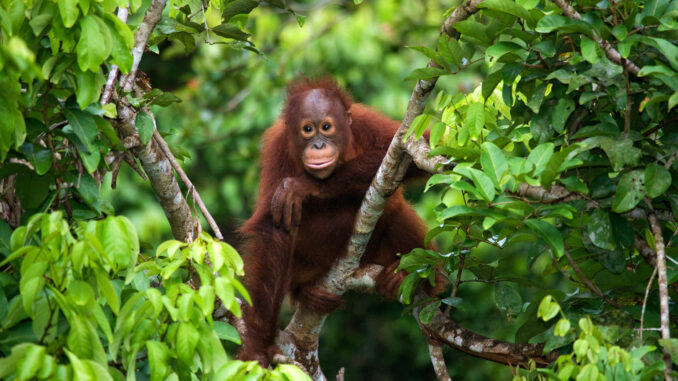
To spark curiosity and heighten collective engagement, I create a convergence of interest. It happens that, early in the course, I briefly discuss other subfields in order to acquaint students with the discipline’s breadth. During our overview of biological anthropology, I introduce a focal point inspired by an area within that subfield. I present basic information regarding humans’ genetic closeness to other great apes, and propose that we figuratively add another great ape to the class roster by symbolically fostering a primate through an anthropologist-founded or -inspired conservation organization or one that partners with anthropologists. I discuss pioneering studies conducted by anthropologists including Jane Goodall, Dian Fossey, and Birute Galdikas, and point to more recent work including in the emerging area of ethnoprimatology. I give students an opportunity to vote, by show of hand or via an integrated polling tool in our online learning platform, on whether we should foster a chimpanzee, a gorilla, or an orangutan.
After students have selected a species, I direct them to an appropriate website and request they vote once more, online and within 24 hours, on which featured individual to foster. Some are drawn to a particular name, others to a particular backstory, but nearly every student casts a vote although doing so is not required. I register the class as the ‘named foster’ and pay the sponsorship fee (generally ten to one hundred and fifty dollars depending on the organization and length of sponsorship). In my case I utilise the (small) royalty from one of my own assigned publications toward sponsorship, a gesture that students appreciate. Some universities offer microgrants for course enhancement projects that could be used instead. I share the online foster certificate and backstory document – which arrive almost instantaneously – and encourage students to download copies for themselves.
Based upon her research among chimpanzees, Jane Goodall remarked that there was “no sharp line” between humans and the animal kingdom. “Blurry” lines that distinguish human societies from one another are discussed at length in my course. I have found, however, that bringing attention to some similarities and differences with our closest nonhuman relatives, even briefly, generates interest, extends learning, and spurs many to enroll in biological anthropology the very next semester. Our shared foster experience is a point of reference I call upon in various ways to enhance focus and reinforce cohesiveness in our learning community. I circle back to it, for example, during short active learning exercises about dilemmas that may arise in fieldwork or on differences between primate and human communication systems. I incorporate anthropological findings on the global illegal wildlife trade in prompts for discussion boards on cultural relativism and ethics. I integrate articles concerning human and animal coexistence into modules on work, environment, tourism, and some other topics. I also point to our shared experience of symbolic fostering itself in exploring how community is developed and maintained. Foster updates from the conservation organization are met with enthusiasm. Long after the semester ends, some students continue to ask for further updates and report back on ways they personally have continued to engage with anthropology.
Some Great Ape Conservation Online Foster Opportunities
Borneo Orangutan Survival Foundation: https://www.orangutan.or.id/
Dian Fossey Gorilla Fund: https://gorillafund.org/adopt/
Jane Goodall Institute: https://janegoodall.ca/ways-to-give/chimp-guardian/
Orangutan Foundation International: https://orangutan.org/product-category/foster-parent-kits/