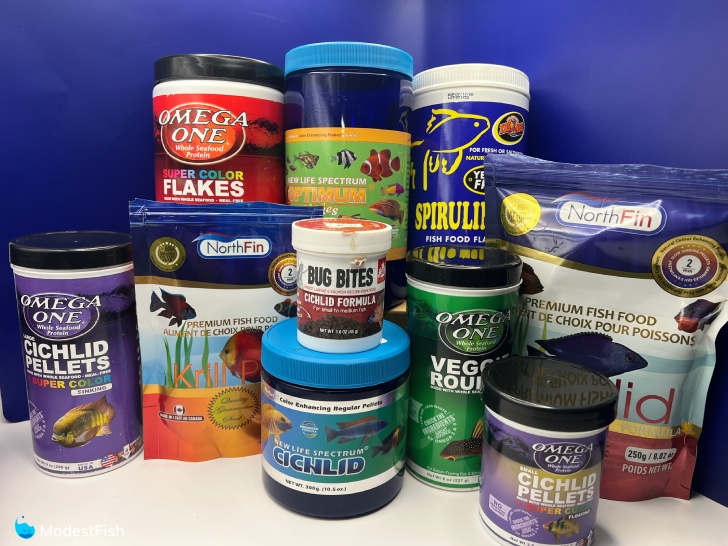
If you’ve been keeping fish for more than about six months, you know what I’m talking about. There’s a drawer, or maybe it’s a shelf, or a dedicated cabinet — that slowly fills up with tubs, packets, and containers of fish food. Some are half-empty. A few you forgot you even bought. One has a label that’s basically unreadable because it fell in the sump that one time.
I’ve been keeping fish for years, and my fish food collection has grown accordingly. But here’s the thing: I’m not a hoarder. Every single thing in that drawer earns its spot. I’ve tried a lot of fish food over the years, and I’ve thrown out plenty of it after flipping it over and reading the ingredients. If the first thing on the list is “fish meal” – the vague, unspecified kind – it goes in the bin. Life is too short to feed your fish garbage.
So today I’m pulling open the drawer and walking you through exactly what’s in there and why.
The Golden Rule Before We Start
Before I get into the actual products, I want to hammer this home one more time: ignore the front of the package. The front is marketing. The back is the truth.
Any fish food brand can slap a picture of a gorgeous, neon-colored fish on the packaging and write “ENHANCED COLOR FORMULA” in big letters. What matters is what’s actually in the food. You want to see whole fish, krill, shrimp, spirulina, algae meal: real, high-quality ingredients near the top of the list. What you don’t want is vague “fish meal” or terrestrial fillers like corn and soy dominating the first few ingredients.
OK. Drawer open. Let’s go.
1. Omega One Super Color Flakes
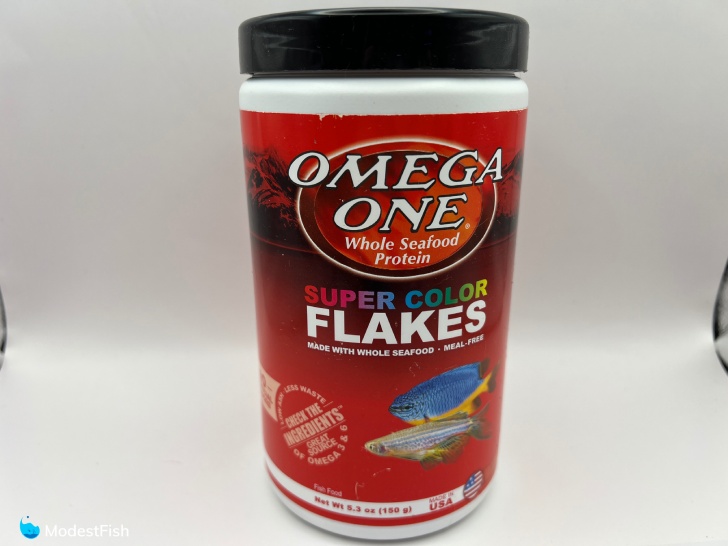
This one is basically a permanent resident of my drawer. It’s been in there for years and it’s not going anywhere.
Omega One Super Color Flakes are built on a genuinely solid foundation: salmon and whole herring as the top two ingredients, followed by whole shrimp. Right away, you’re looking at three high-quality, easily digestible protein sources. These aren’t mystery proteins scraped off the floor of a fish processing plant, these are whole ingredients that actually nourish your fish.
What really makes these flakes stand out is the color-enhancing lineup packed into the formula. Marigold extract, astaxanthin, and canthaxanthin are all present, and they work. I’ve fed these flakes to community tanks and watched the reds, oranges, and yellows on fish just pop over time. It’s not an overnight transformation, but it’s real and it’s consistent.
The flakes themselves float well at the surface before slowly sinking, making them perfect for mid and top-water feeders. Even my pickier fish, and I have a few drama queens in my tanks, eat these without hesitation.
There is some wheat flour and wheat gluten in the ingredient list, which is the one knock against them. Fish can’t really digest terrestrial grains well, and they’ll just pass through as waste. But those ingredients are far enough down the list that they make up a small percentage of the overall formula. It’s not a dealbreaker.
Best for: Community fish, color-conscious aquarists, pretty much any tropical fish
2. Fluval Bug Bites Tropical Formula
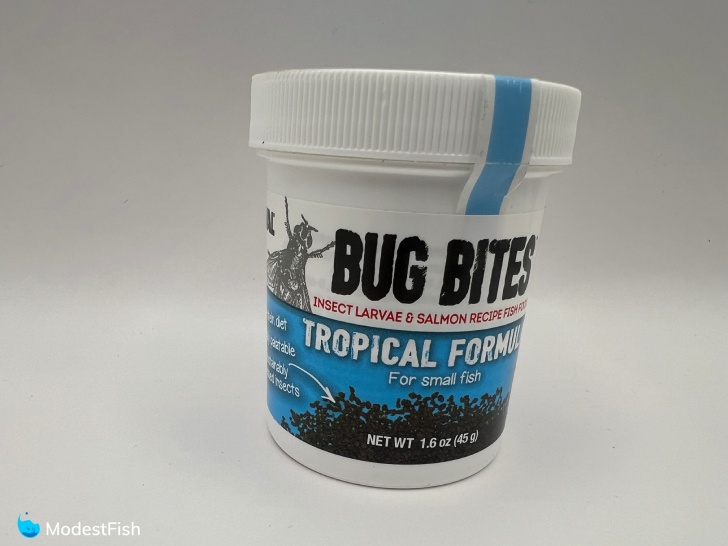
This one caused a bit of a stir when it first came out, and rightly so. Black soldier fly larvae as the primary ingredient was a bold move, and it paid off.
The science behind it is solid. Insects are a natural part of the diet of most freshwater fish. In the wild, a tetra or a rasbora isn’t turning down a bug that lands on the water’s surface. Black soldier fly larvae, specifically, are almost pure protein because they don’t have an exoskeleton to contend with. The result is a highly digestible, protein-dense food that closely mimics what fish would encounter in nature.
My cichlids go absolutely berserk for Bug Bites. I mean that literally, when the container comes out, they’re already pressing against the glass. It’s borderline embarrassing how excited they get.
The pellet size works well for small to medium fish. The formula also includes salmon as a secondary ingredient, which gives it a nice nutritional boost. There are no terrestrial grains in this one either, which is a genuine rarity in this hobby.
Best for: Tropical community fish, carnivorous and omnivorous species, fish that need high protein
3. Zoo Med Spirulina 20 Flakes
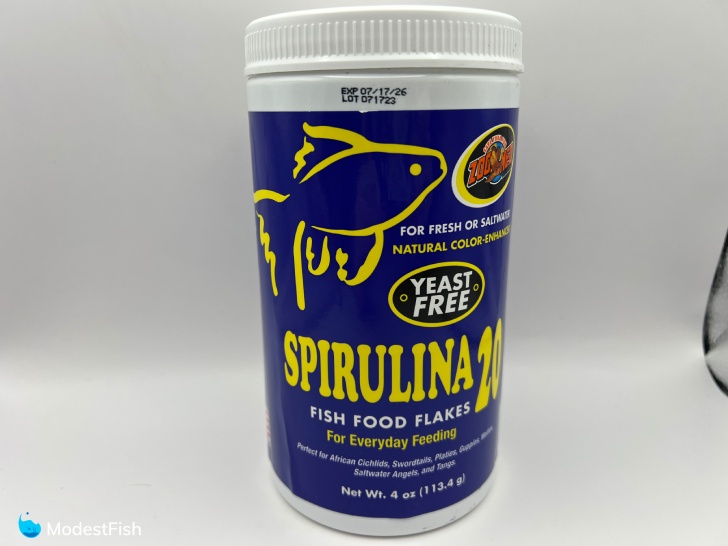
These big green flakes have been in my rotation for a long time. They look a bit alarming at first, they’re huge and very green, but your fish will work out what to do with them pretty quickly.
Spirulina is one of those ingredients that’s worth its weight in gold for fish. It’s a blue-green algae (technically a cyanobacteria, for the pedants among us) that is absolutely loaded with vitamins, minerals, and easily digestible protein. It’s particularly good for enhancing blue and green coloration, which makes these flakes a great pairing with the Omega One Super Color Flakes if you want to cover the full spectrum.
Beyond the spirulina, these flakes contain dried krill and shrimp meal, which gives them solid animal protein sources, along with plankton meal. The protein sources listed are salmon fish meal rather than generic fish meal, which is a meaningful upgrade in quality.
The one downside is that soy flour appears fairly prominently on the ingredient list, which isn’t ideal. But the quality of the other ingredients more than compensates, and the spirulina content is genuinely impressive. I’ve had consistent growth and good coloration from fish fed on this food.
Large flakes can be crushed between your fingers for smaller fish, which makes them versatile across different tank sizes.
Best for: Herbivorous and omnivorous fish, enhancing blues and greens, larger community fish
4. Repashy Super Green Gel Food

Every fish keeper eventually discovers gel food, and when they do, they usually have the same reaction: why didn’t I start using this sooner?
Repashy Super Green comes as a powder that you mix with boiling water. It sets up firm (think a very stiff Jello), and you can drop chunks into the tank, coat a piece of driftwood with it, or press it onto a flat rock for grazing fish to work through at their own pace. Fish that have never shown any interest in flakes or pellets will absolutely demolish gel food.
Super Green is specifically formulated for herbivorous fish, and the ingredients are outstanding. Spirulina algae sits right at the top of the list, followed by chlorella algae and several other plant-based ingredients. There are no terrestrial grains, no mystery fillers, and no generic fish meal.
I keep this in the drawer specifically for my plecos and any herbivorous fish that need more plant matter than flakes can reliably provide. It’s also excellent if you ever need to medicate a sick fish, you can mix medication directly into the gel before it sets, which means your fish gets their treatment without you having to play games trying to get them to eat medicated food.
The only “downside” is that you have to make it yourself, which takes about two minutes. If that’s too much effort, I don’t know what to tell you.
Best for: Plecos, herbivorous cichlids, any fish that grazes, sick fish needing medication
5. Omega One Freeze Dried Krill
The treat in the drawer. Every drawer needs one.
This is exactly what it sounds like: a container full of freeze-dried krill, whole. Nothing else. No fillers, no terrestrial grains, no vague ingredients, just krill.
Fish go crazy for these. It’s a high-protein supplement that makes a fantastic addition to any varied feeding routine. Krill also contains carotenoids in abundance, which means feeding them regularly will help bring out the reds, pinks, and oranges in your fish’s coloration. Combined with the color enhancers in the Omega One Super Color Flakes, you’ve got a genuinely effective color-boosting feeding strategy.
The krill can be on the larger side for smaller fish, but you can easily crumble them up between your fingers before adding them to the tank. Bigger fish can eat them whole, or just tear off pieces.
I don’t use these as a staple diet, freeze-dried foods work best as a supplement or treat a few times a week. But as a high-quality, single-ingredient treat with real nutritional value, these are hard to beat.
Best for: Medium to large fish, boosting red and pink coloration, high-protein supplementation
The Bottom Line
A good fish food drawer doesn’t need to be complicated. You want a solid flake or pellet as your staple, something plant-based for your herbivores, a gel food for variety and medication purposes, and a quality treat to round things out.
What you don’t need is a shelf full of brightly-packaged foods with corn and soy at the top of the ingredient list. Read the back of the package. Every time. It takes ten seconds and it makes a real difference to the long-term health and color of your fish.
Your fish can’t tell you what they need. That’s your job. Fortunately, it’s not that hard once you know what to look for.