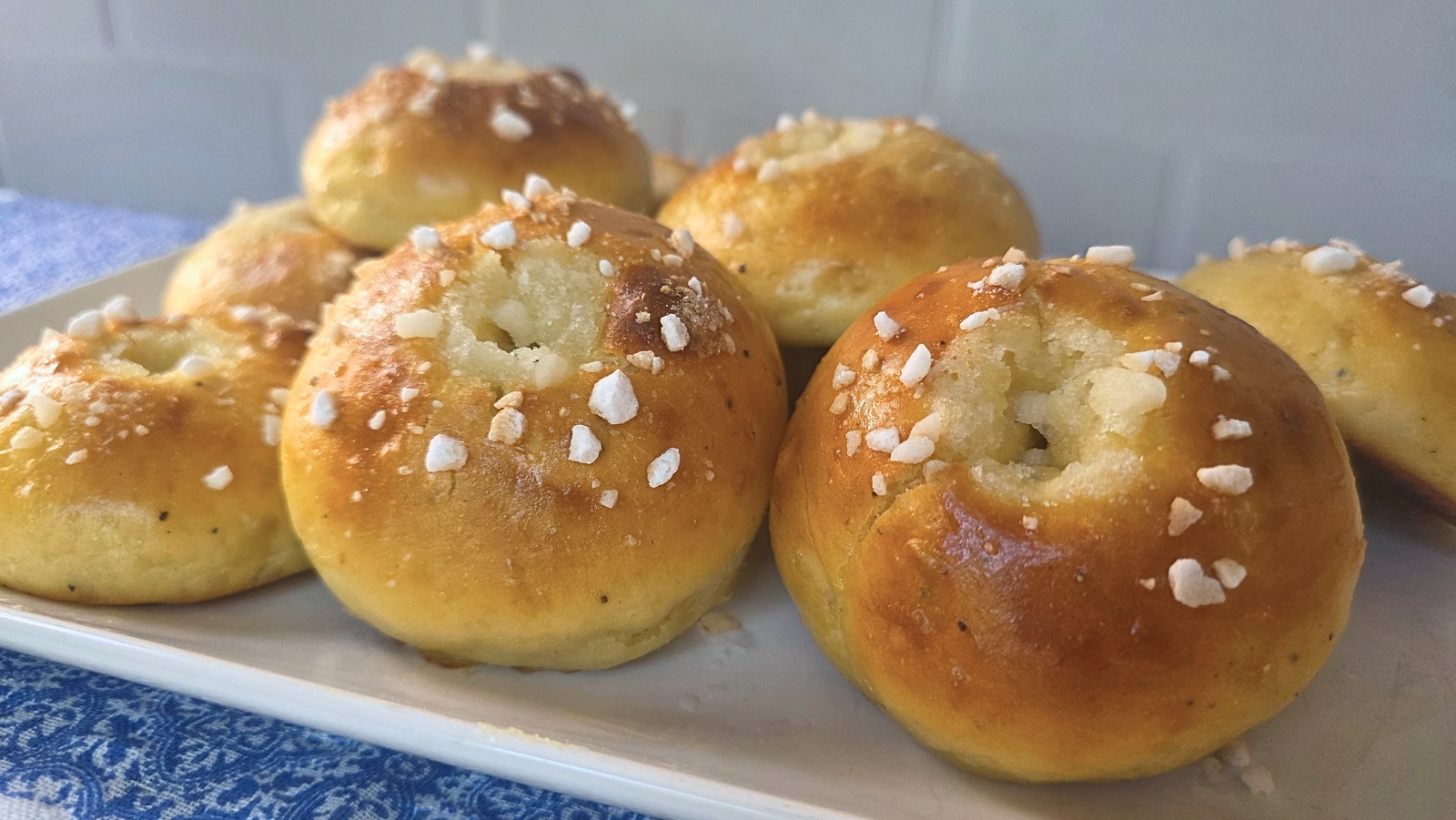
Finnish butter eye buns exemplify the saying: “The whole is greater than the sum of its parts.” A fluffy cardamom-spiced dough with a little volcano of butter and sugar that bubbles and caramelizes while baking tallies up to a kind of divine flavor experience. When my first batch came out of the oven, I took a bite of one and before I knew it, I had eaten four in the span of 10 minutes. The butter-eye cardamom pairing is truly magical. Many thanks to the relative of a friend who was wow’ed by these buns while visiting Finland and made sure I learned about their existence.
Finland has the highest per capita coffee consumption in the world with an average of four cups per day. The traditional coffee break (kahvitauko) is an important part of the culture and typically includes a sweet baked treat like a cinnamon roll or a butter eye bun. ~ Finnish Coffee Culture Explained
I started exploring these buns by following the recipe of Sisu Homemaker, which uses yeast, all purpose flour, and crushed cardamom seeds. This original recipe yields butter eye buns that are flavorful, aromatic, soft, and chewy.

All purpose flour, instant yeast
Next I made a batch that was the same as the first but with white kamut flour and a little more milk to accommodate the different flour. These buns were more tender and cakey as opposed to chewy, and they had a beautiful gold color.

White Kamut flour, instant yeast
Finally, I made a batch with all purpose flour, sourdough starter, a mix of ground cardamom and crushed cardamom seeds, and oil instead of butter in the dough—butter in the eye still, of course. These buns were soft and chewy with a little more more cardamom flavor and some fermentation complexity but minimal sourness. They seem a little less sweet even though the amount of sugar that went into the dough was the same as the yeast variation, and they browned less during baking, indicating the dough was relatively acidic.
-

- All purpose flour, sourdough starter

-

- Ground and crushed cardamoom

Watch this short video on how to make the butter eye at the end of the final proof, and check out the photo gallery of each test bake with step-by-step pics after the recipe.
Voisilmäpulla | Finnish Butter Eye Buns


Finnish butter eye buns are captivating with their caramelized butter-sugar center and cardamom infused sweet bread. Try our variations with white Kamut flour for a gold colored bun or sourdough leavening for complex fermentation flavors.
Ingredients
YEAST
- 3 grams instant yeast (1 tsp)
- 40 grams warm water (2 1/2 Tbsp)
- 160-180 grams warm milk (2/3-3/4 cup) *
- 1 egg
- 360 grams all purpose flour OR white Kamut flour (2 3/4 – 2 5/6 cups)
- 65 grams sugar (1/3 cup)
- 3 grams salt (1/2 tsp)
- 2 grams ground/crushed cardamom (heaping 1/2 tsp)
- 43 grams unsalted butter, room temp (3 Tbsp) OR 36 grams light oil (scant 2 1/2 Tbsp) **
SOURDOUGH
Stiff Levain
- 52 grams flour
- 20 grams water
- 15 grams sugar
- 15 grams starter
Final Dough
- All of the Stiff Levain
- 160-180 grams warm milk (2/3-3/4 cup) *
- 1 egg
- 300 grams all purpose flour OR white Kamut flour (2 1/3 cups)
- 50 grams sugar (1/4 cup)
- 3 grams salt (1/2 tsp)
- 2 grams ground/crushed cardamom (heaping 1/2 tsp)
- 43 grams unsalted butter, room temp (3 Tbsp) OR 36 grams light oil (scant 2 1/2 Tbsp) **
BUTTER EYE TOPPING
- 1 egg beaten
- 4 Tbsp salted butter, cut into 12 cubes
- 6-12 tsp sugar
- 1/4 cup pearl sugar
Instructions
- YEAST VARIATION has three rises: two in the bowl/dough bucket and one final proof after shaping, totalling 2-3 hours in a warm kitchen ~78°F. This broke down into 1 hour to double, 30-45 minutes to almost double again after being punched down, and another 30-45 minutes for the final proof.
- SOURDOUGH VARIATION has a stiff levain that ripens over 8-12 hours; and the final dough rises and proofs in 6-8 hours total in a warm kitchen ~78°F. This broke down into 5-6 hours for the dough to double after mixing (I accidentally let it go farther/longer) and 75 minutes for the final proof.
- Mix the yeast in the warm water to dissolve it for a few minutes — or — for sourdough, the night before, knead together the stiff levain ingredients and press the dough ball into a jar with space for tripling. Cover loosely and let rise 8-12 hours.
- Combine all of the ingredients except the butter (or oil) in the bowl of stand mixer with the dough hook attachment. Mix on low-med speed for 3-4 minutes, scraping down the sides of the bowl. Add the butter or oil and continue mixing for 3-4 minutes on med-high speed. The dough should be on the wet side but still scoopable and able to be folded into a dough rising bucket if available.
- Cover and let the dough rise. For the yeast version, let it double, punch it down by folding it to de-gas, and let rise a second time until it has almost doubled again. For the sourdough variation, let the dough double once and then proceed to dividing and shaping. ***
- Lightly grease or line a baking sheet with parchment paper.
- Divide the dough 12 pieces and roll each piece into a ball. (I did 9 pieces for the sourdough batch and baked 1 minute extra.) Place on the baking sheet with at least an inch in between.
- Cover and let rise until puffy. (See the photo galleries).
- Preheat your oven to 400°F and set up your egg wash, cubed butter, sugar, and pearl sugar.
- Brush the buns with beaten egg. Press a cube of butter into the center of each bun and pour 1/2-to-1 tsp sugar in the hole. Sprinkle with pearl sugar.
- Place in the oven on the middle rack and bake for 12 minutes. Note the sourdough version may not brown a lot but if the internal temp is over 190°F, the buns are ready.
- Enjoy the buns while they’re warm if possible. Heating them for 5-10 seconds in the microwave on subsequent days will make them like fresh.
Notes
* Different flours have different absorbency. Use the lower end of the range of milk and only add more as needed.
** Finnish pulla or sweet bread dough is made with butter, but for fun I tested one batch of this dough with light olive oil and found it worked well and tasted delicious still. The butter in the “eye” of the bread still dominated flavorwise.
*** A yeast dough gains gluten strength from rising, being de-gased, and rising again before shaping. In a sourdough dough, the added gluten strength from the extra handling of de-gassing and the time to rise again is often overpowered by the loss of gluten strength from the dough getting more acidic. This is why the sourdough dough isn’t punched down for a second rise before shaping.