

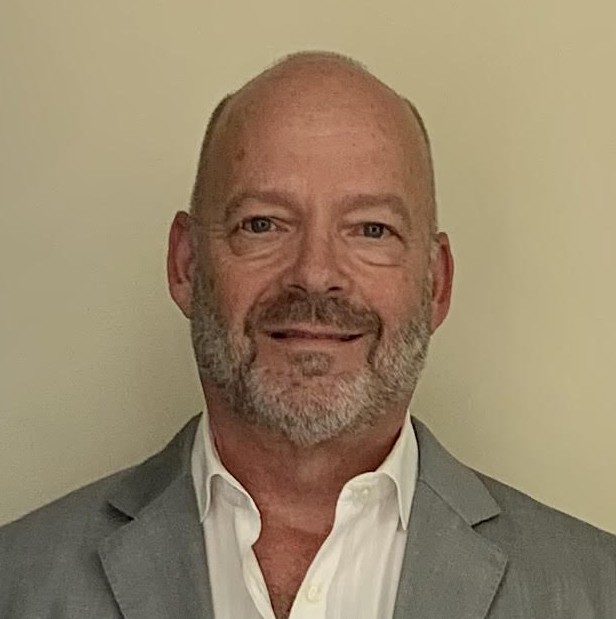

By Mark Whiteside
I will never forget the sound of that door closing behind me.
It wasn’t dramatic. No alarms went off. Nobody yelled. But for one moment, I felt what it might be like to know you couldn’t leave — and I could leave anytime I wanted.
I had walked into an Alabama prison as a visitor, with an escort, with an exit waiting for me whenever I was ready to take it. And still, something about being inside that building, surrounded by concrete and steel and too many men in too little space, lodged itself in me and never quite let go.
I have looked into the eyes of inmates who had given up hope of anything changing. I have talked with correctional officers who are exhausted, underpaid, and afraid of what might happen on their next shift. I have seen overcrowding that defies description — bodies stacked into spaces never designed to hold them, mental illness left to fester untreated, despair so thick you could feel it in the air.
What I witnessed wasn’t an abstraction in a court filing. It was human beings, living in conditions no civilized society should allow.
The Courts Keep Saying the Same Thing
For decades, Alabama has been told the same thing by court after court: our prisons are unconstitutional. They are overcrowded. They are violent. They fail to provide adequate mental health care and basic human dignity. Yet instead of treating these rulings as an opportunity to fix what is broken, our state continues to spend millions of taxpayer dollars fighting them.
The latest decision from the Eleventh Circuit is simply another chapter in a long story. Judges are not implementing policy preferences. They are applying the Constitution. Whether we agree with every aspect of their decisions or not, they have consistently concluded that Alabama has failed to meet the minimum standards required under the Eighth Amendment of the U. S. Constitution.
How many times do we have to lose before we stop asking the same question?
An Expensive Refusal to Confront Reality
There comes a point when continuing to litigate is no longer a defense of principle. It becomes an expensive refusal to confront reality. Every dollar spent trying to defend unconstitutional conditions is a dollar not spent making our prisons safer, improving mental health treatment, protecting correctional officers, reducing violence, or preparing inmates to return to society as productive citizens.
The question should no longer be, “Can we win the next lawsuit?” The question should be, “What is the right thing to do?”
No one suggests that prison should be comfortable. It is punishment. But our Constitution does not permit cruelty. A sentence to prison is not a sentence to neglect, untreated mental illness, fear, or inhumane conditions.
A Challenge to Those Defending the Status Quo
As someone who has been inside these facilities, I have a simple challenge for those who continue defending the status quo. Let the commissioners, wardens, and attorneys representing the Alabama Department of Corrections spend one week inside one of these prisons, not as honored visitors escorted through selected areas, but dressed as an ordinary inmate, sleeping where inmates sleep, eating what inmates eat, standing where inmates stand, and living under the same conditions.
I suspect their perspective would change dramatically.
What Our Faith Demands of Us
Many of Alabama’s elected officials proudly speak about their Christian faith. Our state is filled with churches, Bible studies, and public professions of belief. If those beliefs are to mean anything, they must influence how we treat even those who have broken the law.
Jesus left little room for ambiguity. Matt 25:35-36 “For I was hungry and you gave me something to eat, I was thirsty and you gave me something to drink, I was a stranger and you invited me in, I needed clothes and you clothed me, I was sick and you looked after me, I was in prison and you visited me.”
Some will argue that inmates made bad choices. Many did. Some committed terrible crimes. They deserve punishment. Our justice system exists for precisely that reason.
But humanity is measured not by how we treat the best among us, but by how we treat those who have fallen the farthest. Constitutional rights do not disappear at the prison gate. Neither does human dignity.
This Is Also About Public Safety
Improving prison conditions is not about being soft on crime. It is about being faithful to the Constitution we claim to defend and the moral values we claim to embrace.
It is also about public safety. More than 90 percent of prisoners will one day return to our communities. If they leave prison more mentally ill, more traumatized, more violent, and more hopeless than when they entered, Alabama becomes less safe, not more.
Time to Build Something Worthy
We should stop asking whether we can continue fighting these lawsuits.
We should ask why we continue losing them.
The courts have spoken repeatedly. The Constitution is clear. Our faith calls us higher.
It is time to stop spending taxpayer money defending the indefensible and start building a prison system that is constitutional, humane, and worthy of the people of Alabama.
Mark Whiteside is a lifelong resident of Alabama, currently living in Homewood. He has spent his career in the financial services industry, building strong relationships throughout Alabama while remaining deeply committed to his community. Mark attended schools in Alabama and takes pride in the people, values, and traditions that make the state home.
David Sher is the founder and publisher of ComebackTown. He’s past Chairman of the Birmingham Regional Chamber of Commerce (BBA), Operation New Birmingham (REV Birmingham), and the City Action Partnership (CAP).
Care about Birmingham, sign up for ComebackTown newsletter
Invite David to speak for free to your group about how we can have a more prosperous metro Birmingham. [email protected]
(Visited 1,055 times, 2 visits today)


