
The True Ugly Duckling: How Hans Christian Andersen Became a Swan

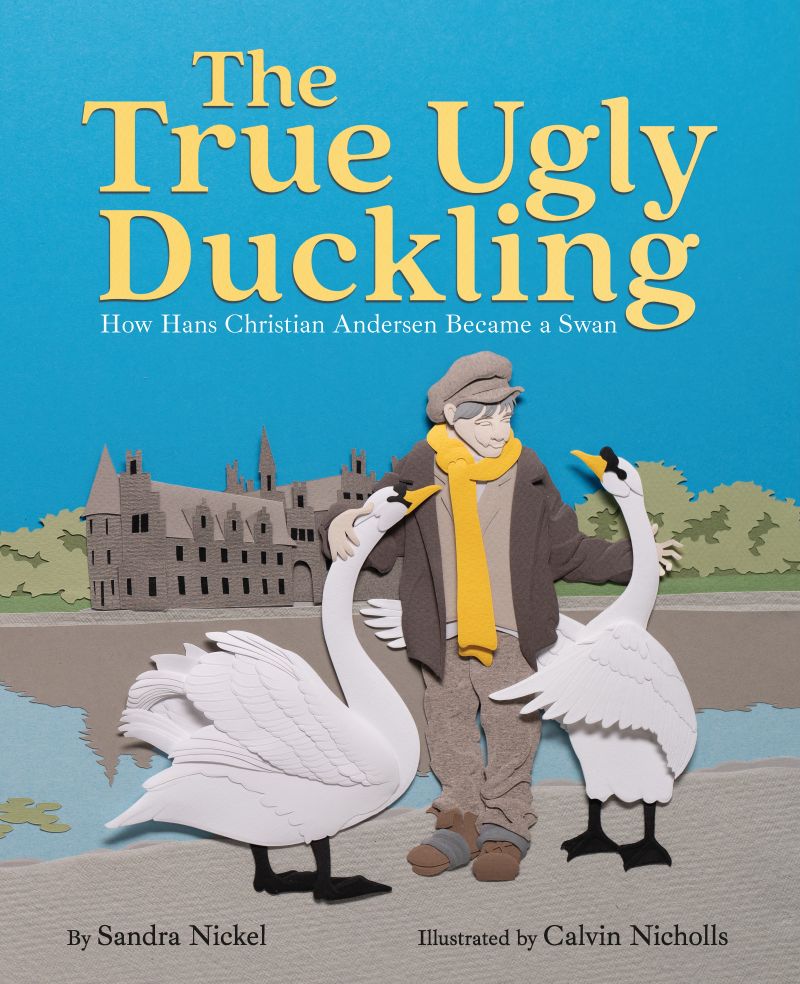
It is my pleasure to introduce you to Sandra and Calvin to learn about their collaboration on this fascinating biography of Hans Christian Andersen. Of the many picture book biographies sent to me for review, this one instantly stood out. Written in the stye of a fairy tale, it engages young readers through expertly crafted text and remarkable illustrations. Moreover, the story of Andersen’s life offers a thread of hope and a sense of what inner strength looks like amid trial and tribulation. Sandra and Calvin’s enthusiasm and thoughtfulness in answering my questions is appreciated; it was my pleasure working with them both on this post, and I feel certain you will enjoy getting to know these creators and their biography of Hans Christian Andersen.
Judy Bradbury: Tell us about this project: What seeded its creation? How did you land on the lens through which you tell the tale of the life of the “strange child” Hans Christian Andersen?
Sandra Nickel: When my daughter and I found out we were autistic, I did a lot of research to learn what that meant. As I was doing this, I discovered that experts believe Hans Christian Andersen was on the autism spectrum. I also found out that Andersen considered himself the original ugly duckling.
Those two discoveries in combination really struck me! I think almost all neurodivergent children struggle with feeling like outsiders. I know I did, and so did my daughter.
And so, I decided to write about Andersen as he wrote about others who were different—in fairytale form. My hope is that this will help children understand him as he really was. I hope it helps them see him as a boy who struggled because he was different, but who also used his originality to find his place in the world.
JB: Calvin, this is your first picture book project, though you created fifteen sculptures to illustrate Rafe Martin’s The World Before This One. Tell us about how you came to illustrate The True Ugly Duckling and how you approached the creation of the art for Sandra’s biography of Hans Christian Andersen.
Calvin Nicholls: First, a request from Arthur Levine gets my full attention. He provided that amazing opportunity with Rafe Martin’s book The World Before This One which was a career highlight. So, Arthur’s belief that I was right for The True Ugly Duckling was an opportunity to be taken very seriously.
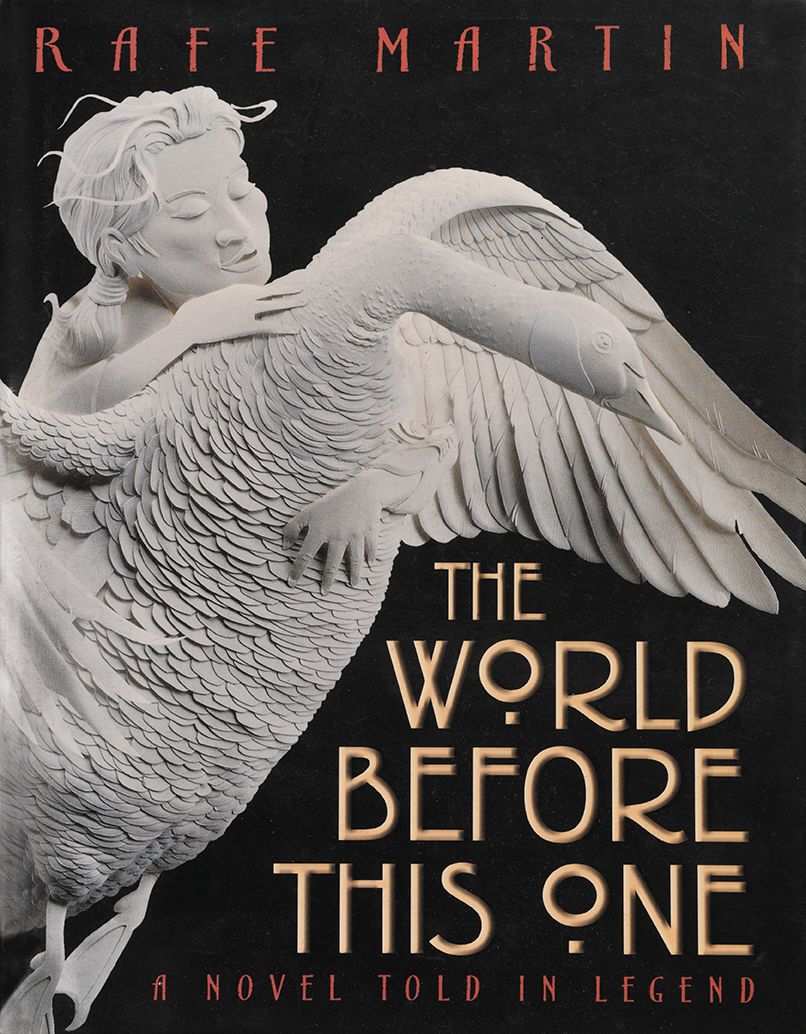
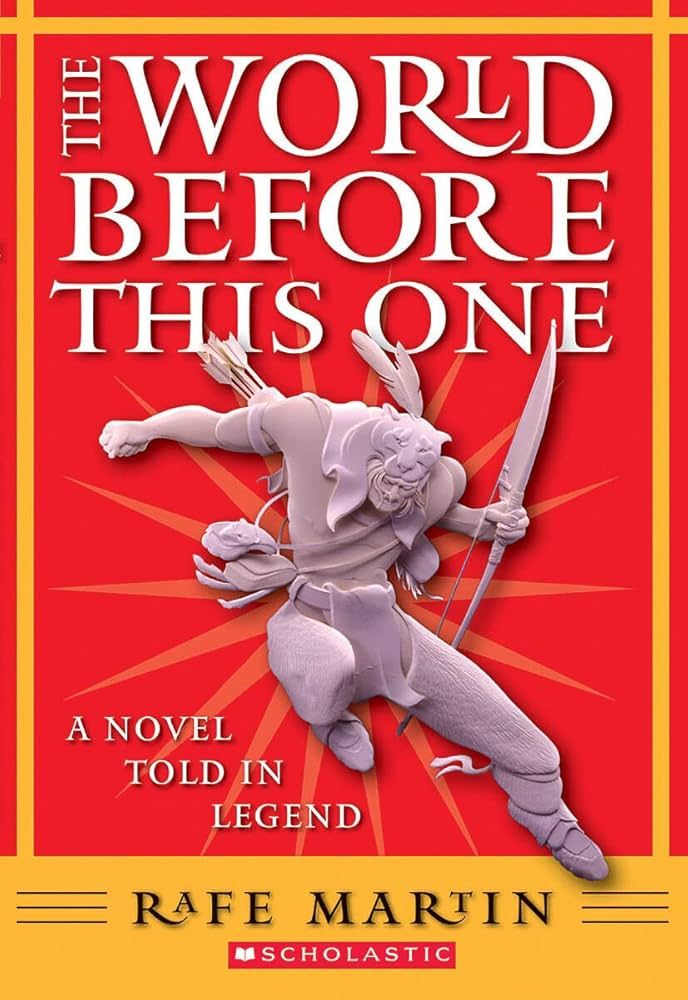
As for my approach, my first step was to appreciate the audience who would read the book. My second step was to become familiar with 1860 Denmark and the imagery that would be appropriate. It was easy to become immersed in Andersen’s life and struggles. Exasperation, humiliation, and rejection seemed like stepping stones to him. He never gave up acting on inspiration. It is unbelievable, really.
So, I was fired up. The challenge was bringing this all together with a character who grew from a little boy to an adult by the end of the story.
And to do this in colour! Much of my work has focused on form and light and shadow in subtle whites and contrasting backgrounds. But to fully tell Andersen’s story, it needed colour. So, I established a colour palette after an exhaustive search internationally for a soft spectrum of colour in weights that I could control given the infinite size of components required for the book’s sculptures.
Slowly, very slowly, my thinking and Arthur Levine’s reactions gelled and a direction page by page was approved. I colourised the sketches digitally to approximate the effect achieved in paper and the first sculpture was completed as a test. It was the harbour scene. Such a critical image for me, where that fourteen-year-old boy leaves home and arrives in the land of promise. He perches at the end of the bowsprit straining to process the sights, sounds and scents. This was my entry point for the project, and it propelled me through every other page. It all emanates from that little boy on the bowsprit.
JB: Sandra, tell us about a challenge you faced in the writing of The True Ugly Duckling.
SN: The world has always been an incredibly vibrant and overwhelming place for me. To hide how hard everything was, I masked and pretended that I felt none of that, that I experienced the world as “normal” people do.
When I first learned about Andersen likely being on the spectrum, I was struck by how he drew on his innate differences to write about outsiders. The little matchgirl. A mermaid who gave up her voice to be like others. But when I started writing Andersen’s story, it was incredibly hard for me to portray the traumatic events he lived through. I caught myself trying to soften his story. I was, as it turns out, masking for him—and for my readers too. I was trying to protect them. That’s when I realized the best way to tell his story was as a fairytale. These types of tales have villains doing villainous things. But they also offer us hope and understanding in a deep and meaningful way.
JB: What is your favorite illustration in the book? Why?
SN: My very favorite spread is the one Calvin just mentioned, where the shoemaker’s son sails into Copenhagen. The way Calvin conceived it is just incredible. It is imbued with a heart full of hope and expectation. It’s a stunning moment of beauty before the reader turns the page and begins to learn that Copenhagen was just as difficult for the shoemaker’s son as the village he had left behind.
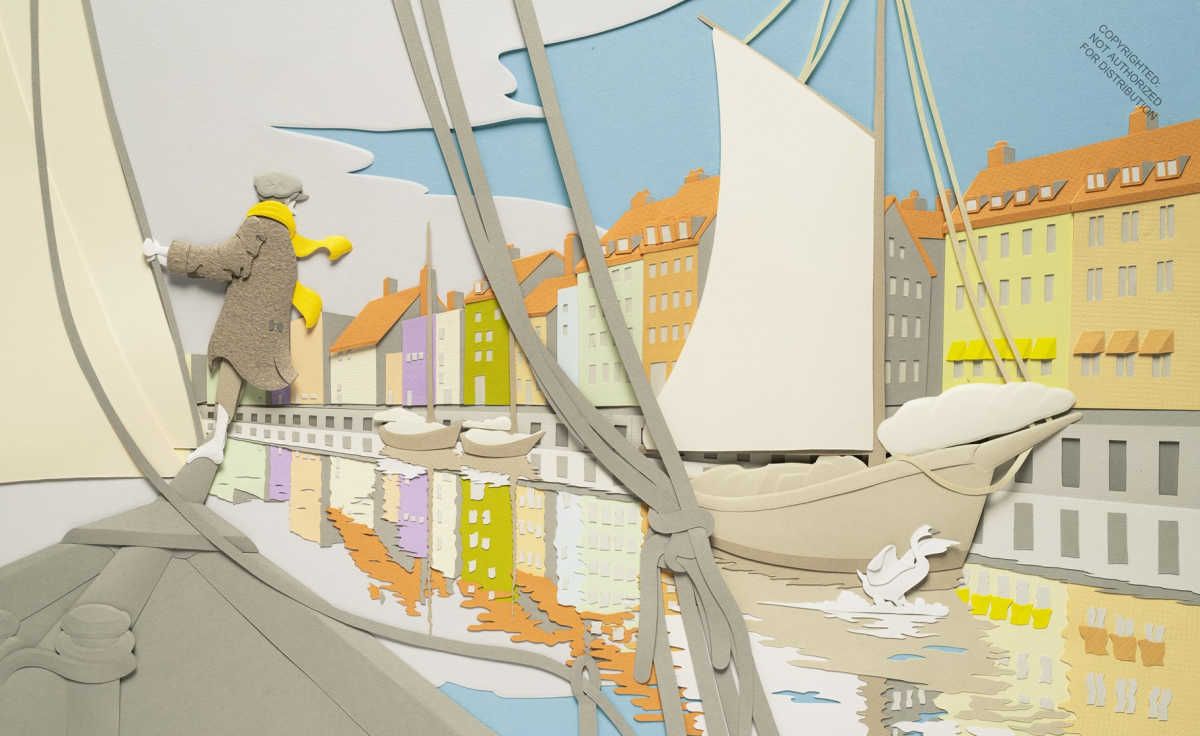
Illustration © Calvin Nicholls
JB: What is one unexpected joy that came from the creation of The True Ugly Duckling?
CN: When Arthur Levine first asked me to be the illustrator, I knew immediately how complex making a picture book would be. I would have to stretch way beyond my comfort zone. But then I learned about the paper-cutting connection between Andersen and myself and that infused the entire project with pure joy.
SN: For me the unexpected joy came from the closeness my daughter and I felt with Andersen. I had gone to Yale to be with her after Yale Health diagnosed her as autistic. We curled up on a bed together and as she studied, I researched Andersen and shared my discoveries about the trials he faced growing up. She and I had also struggled with feeling like outsiders during our growing up years and the connection with Andersen, and with the knowledge of who we were discovering ourselves to be, was truly wonderful and reassuring.
JB: Sandra, what would surprise readers to learn about the writing of The True Ugly Duckling?
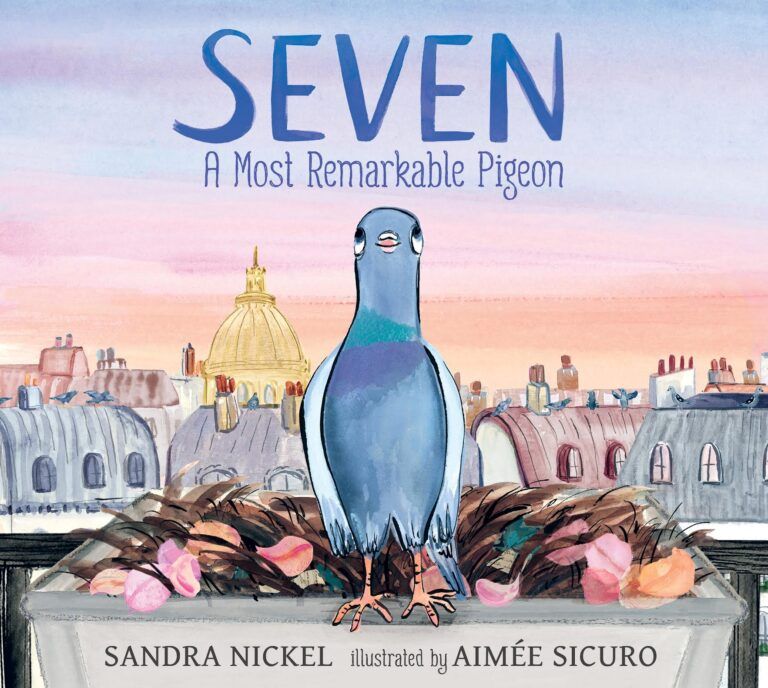
SN: As my daughter and I were curled up on that bed, a second story came to me. So, as I was writing Andersen’s story, I was also writing about a young pigeon who shows that the ways in which we are different can also be the ways in which we become heroes. It is very much an homage to my daughter. In fact, it is dedicated to her. Seven, A Most Remarkable Pigeon (Candlewick 2025), illustrated by Aimée Sicuro.
JB: Calvin, what would surprise readers to learn about you or the illustrating of The True Ugly Duckling?
CN: The hard work that went into making this book. Honestly, there is no other project that tested me so thoroughly considering: storytelling, character development, emotion, moment, design, variety of angles, architectural and supporting prop authenticity, sadness and laughter (the toad shadow) and an homage to Andersen. The list was enormous and intimidating. But I could identify with this boy. I became that boy as the images started to flow.
As an artist and parent with artist children, I know the hurdles and challenges of being a creator. Adding to that the reality of Andersen’s neurodivergence, the book was incredibly important and meaningful to me. That initial idea of having a picture book in my career was quickly dwarfed by the actual prize. Helping to bring Sandra’s words to life, to cause readers to pause, was profound.
JB: How do you see The True Ugly Duckling connecting to curriculum or being used in learning settings?
SN: There are so many ways The True Ugly Duckling can be used, ranging from social-emotional learning to the use of plot diagrams. Parents, teachers, and librarians can find a classroom guide on my website that includes discussion questions about the book, suggested activities, as well as three downloadable activity sheets.
JB: Who do you perceive your target audience to be for this book and why?
SN: I know it might sound surprising, but I view everyone as the target audience. As I mentioned above, I chose to write The True Ugly Duckling in fairytale form because of how fairytales resonate so deeply with us. They go straight to our hearts. Our yearning for acceptance. Our longing for love. Our search for who we really are. It’s not just the duckling and Andersen who had these desires and longings. We all share them, whether we are five or ninety-five.
JB: What do you hope young listeners / readers will take away from The True Ugly Duckling / What need(s) does this picture book biography satisfy?
SN: I think there are a lot of kids who feel they don’t fit in for whatever reason. They may be bullied or they may be ignored or they may mask heavily, as I did. I hope The True Ugly Duckling finds its way to whoever needs it. I hope it offers connection and reassurance, and most of all, that it gives children confidence to stick with the song their heart is singing. For Andersen that was story-making. He stuck with it through bullying and poverty and slammed doors. I hope children will be encouraged by this unwavering desire to follow his heart and that they become their own versions of the swans they are meant to be.
JB: If you could ask your young audience one question, what would it be?
CN: Do you understand the idea of acting on inspiration? Do you know someone who you love or who loves you that likes to play with ideas? And who is famous for that ability? Seek them out. Learn their secrets. Learn to act on inspiration. That’s how the world gets bigger and brighter.
SN: As you know, I believe fairytales offer deep connection. Hans Christian Andersen said The Ugly Duckling was the story of his life. So, I would ask my young readers, Which fairytale is the story of your life? If they say they don’t know, I would encourage them to write their own.
JB: What project(s) do you currently have on your desk?
CN: Art collectors are a common source of joy for me. Our collaborations for new artwork inspire me as I not only rely on my own energy but that of the partners in these projects. It’s so much fun. I’m working on a backyard bird series and even a little elephant for a friend who has many of my sculptures. At this stage of my career, I also love reflecting on my favourite subjects and wildlife encounters. A large piece is in the drawing and research stages currently that will record one such moment.
SN: I am currently working on a project with my daughter. It’s hush-hush right now. But I can’t wait to tell you more once the news is out.
JB: What is one question you wish I had asked, and what is your answer?
CN: How does the artwork get transformed from glued bits of paper to images in a book?
Answer: I often describe my process as “sketch to sculpture” but there is another phase that I actually find the most rewarding. Once the artwork is complete and every solution and inspiration has been acted on, it’s time to position the sculpture (in low relief) under sophisticated studio lights to find the best type of light and direction to bring it to life. I love it when light breathes life into my work. Soft light or hard light is tested to consider the shadows and how “hot” the highlights are.
With photos complete and the illusion captured, final images are further edited in subtle ways to soften a hue here or there. The artwork is now transformed and ready to become a book. The artwork itself is also suitable for framing. It was created with that in mind as well. The relief, or depth, is rarely greater than an inch even in the sculptures I created for the book, which were completed at a working size of about 24” x 16”.


