Another Blow to Women’s Equality at Work: The Trump Administration Is Trying to Weaken a Key Workplace Discrimination Protection

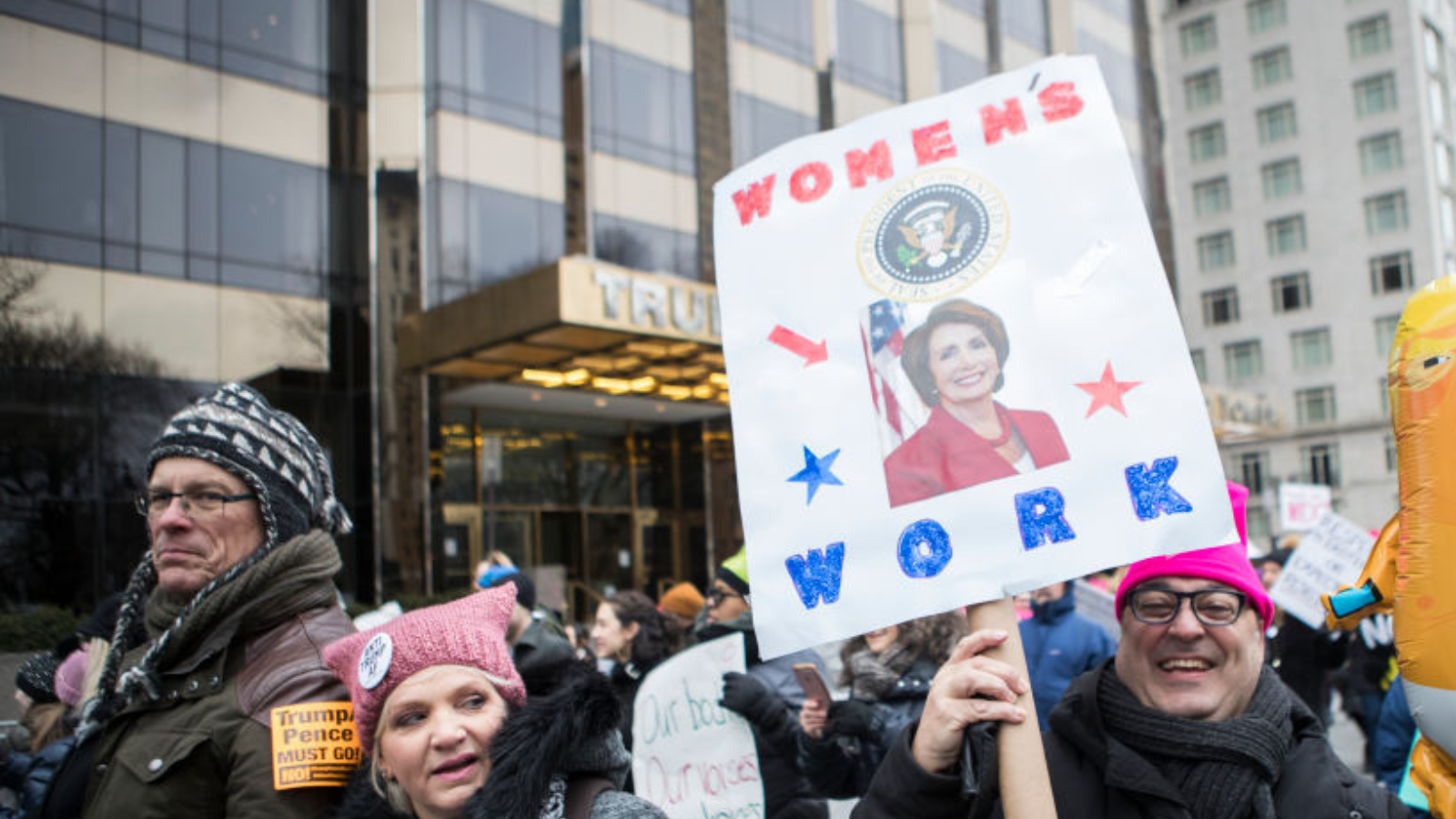
A new Justice Department legal opinion misstates decades of employment discrimination law and could discourage employers from complying with longstanding protections under Title VII of the Civil Rights Act.
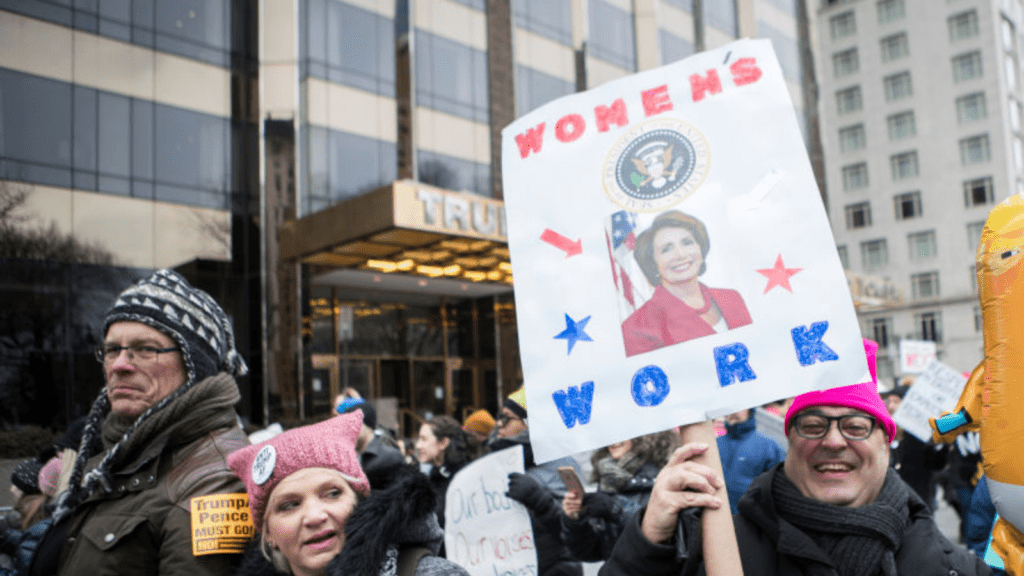
Editor’s note: The Trump administration is attempting to weaken one of the nation’s most important workplace discrimination protections—a legal standard that has, for decades, allowed workers to challenge hiring and promotion policies that unfairly exclude qualified people, even when those policies appear neutral on their face.
A new opinion from the Justice Department’s Office of Legal Counsel (OLC), issued in June, argues these longstanding interpretations of Title VII’s “disparate-impact” standard are unconstitutional, and contends certain Equal Employment Opportunity Commission guidance improperly allows employers to be held liable based on discriminatory effects rather than intent. The opinion is meant to guide executive branch enforcement.
Civil rights advocates are pushing back, arguing the new OLC opinion misstates decades of Supreme Court precedent and congressional action.
The OLC opinion is wrong on the facts and wrong on the law.
Below is a joint explainer—issued by the National Women’s Law Center (NWLC), Democracy Forward, the Legal Defense Fund (LDF), the American Civil Liberties Union (ACLU), Asian Americans Advancing Justice (AAJC), Equal Rights Advocates, and LatinoJustice PRLDEF—originally published as “The Office of Legal Counsel’s Opinion on the ‘Constitutionality of Disparate-Impact Liability Under Title VII’: What You Need to Know.”
The organizations argue that the opinion does not change federal law. Instead, they emphasize that only Congress can amend Title VII and that courts—not the executive branch—determine how the law is interpreted. Employers, they say, remain legally obligated to comply with existing anti-discrimination protections.
Across America, workers are struggling to find living-wage jobs to support themselves and their families. Too often, qualified workers are blocked from getting hired and promoted due to employer policies that screen out applicants based on factors unrelated to whether the applicant could do the job, from unnecessary college degree requirements and credit checks to commute-radius limitations and AI resume reviews.
The Trump-Vance administration is making this problem worse.
For decades, under Supreme Court precedent, Title VII of the Civil Rights Act of 1964 (Title VII), and other legal authority, workers have been able to challenge exclusionary policies like these using a legal tool known as “disparate-impact liability.”
That tool has resulted in employers adopting more thoughtful, rigorous standards in evaluating their own selection criteria and advancing their business objectives.
The administration is now attacking this tool, encouraging employers to ignore the harms caused by their own policies while denying workers the ability to question whether those policies are justified and fair.
In its latest move, the Trump-Vance administration’s Department of Justice Office of Legal Counsel (OLC) released an opinion claiming that longstanding U.S. Equal Employment Opportunity Commission (EEOC) guidance on disparate-impact liability under Title VII is unconstitutional.
The OLC opinion is wrong on the facts and wrong on the law. Only Congress and the courts have authority to change the law or its impact. Here’s what you need to know:
Disparate-impact liability prohibits employers’ unjustified policies and practices, not statistical disparities alone.
Title VII and other civil rights statutes forbid employers from relying on policies or practices that appear neutral but unfairly bar qualified workers based on race, gender, national origin or other characteristics and are not justified by the employer’s legitimate business needs.
To bring a successful legal challenge against such a policy or practice, workers must first show that it causes some workers to lose out on opportunities more often than others and that those differences are significant and connected to the policy.
Then, to justify the policy or practice, the employer must show that it is job-related and consistent with business necessity, e.g., that it predicts who will perform well in the job.
Finally, if the employer can make that showing, then the worker can succeed by showing there is a different policy or practice that would meet the employer’s needs without causing the same unjustified disparate harm to particular groups of workers.
This legal standard ensures that employers rely on job-related criteria when deciding whom to hire, fire, or promote, or award other benefits and the policy is as fair as possible to all workers.
For decades, disparate-impact liability has helped workers challenge unfair barriers that exclude people based on race, gender, and other protected characteristics.
More than 50 years ago, the Supreme Court recognized that Title VII prohibits disparate-impact discrimination in a case called Griggs v. Duke Power Company, 401 U.S. 424 (1971). Congress wrote these protections explicitly into Title VII in 1991. Employers are familiar with this legal standard and have been required to follow it for decades.
Everyone benefits when employers remove unfair barriers.
Disparate-impact liability protects workers of every race, sex, gender, national origin, and more. While many unfair barriers disproportionately harm people of color, women, and other historically excluded groups, removing unjustified policies benefits every worker affected by those policies.
To name just one example, refusing to hire workers based on credit history can deny people job opportunities if they have ever been delinquent on a student loan—even if they are capable of doing the job, and even if the job has nothing to do with their credit history. While a policy mandating credit checks can disproportionately harm people of color and women, all workers who were unfairly excluded by the policy benefit from its removal.
Employers also benefit when they are able to hire from a wider pool based on who can actually do the job rather than screening out qualified workers based on irrelevant criteria.
Disparate-impact liability is different from diversity, equity, inclusion, and accessibility initiatives and affirmative action.
Disparate-impact liability is a way of proving illegal discrimination and challenging unfair workplace policies and practices. In contrast, diversity, equity, inclusion, and accessibility initiatives are a range of practices designed to advance equal opportunity and do not involve making individual hiring or other employment-related decisions based on race or other characteristics.
Affirmative action is a specific approach to remedying discrimination affecting a workplace by taking race or gender into account in employment decisions for a limited period of time.
In appropriate circumstances, both affirmative action and diversity, equity, inclusion, and accessibility initiatives can be lawful, and both are governed by different legal principles than disparateimpact liability. While the OLC memo tries to conflate them, DOJ’s erroneous, non-binding commentary does not change the legality of employers’ ability to utilize voluntary measures to improve equal opportunity.
The OLC opinion does not, and cannot, make new law or alter existing law upholding disparate-impact liability.
Contradicting decades of court opinions and Title VII itself, OLC suggests that unfair disparate impacts are useful only as a means of evaluating whether there was intentional discrimination. OLC suggests three changes to the existing standards imposed by courts that would make it harder to show an employer has engaged in unlawful discrimination based on unfair disparate impacts. These “corrections” would make it easier for employers to exclude capable workers from employment opportunities. OLC’s analysis ignores over 50 years of settled civil rights law in this area and the intent of Congress when it amended Title VII in 1991.
An opinion from the Office of Legal Counsel does not change duly enacted federal statutes like Title VII. Only Congress can change the law itself. The OLC opinion also does not alter case law interpreting the availability of disparate-impact liability to enforce other civil rights statutes. Agency interpretations — especially new or changed ones — cannot substitute for, or supersede, judicial interpretations of federal statutes. The OLC opinion impacts only the actions of the Executive Branch agencies with enforcement authority under the relevant statutes. While the Trump-Vance administration may have its own flawed view of what the law should be, courts are bound to apply existing law recognizing disparate-impact liability under Title VII and related anti-discrimination statutes. Employers will still be held liable for unfair disparate impacts based on that standard.
Bottom line: Federal law continues to outlaw employment practices that have an unfair disparate impact on workers. An OLC opinion full of omissions and misrepresentations about statutes, regulations, and precedent does not alter employers’ existing legal obligations. Employers who follow the OLC opinion do so at their own risk.
The Trump-Vance administration’s divisive agenda will harm workers and the nation. Employers should consult with counsel and continue to follow the law as properly interpreted—not the administration’s unfounded and inaccurate views.
For more information, please see the following resources:
*
A note from Ms. editors: We want to hear from you for The Majority, a new campaign collecting stories about how reproductive freedom has enabled readers to build the lives they want and need. Poll after poll shows a majority of Americans support reproductive healthcare access. Yet public debate overlooks the lives shaped by abortion access, contraception, IVF, miscarriage care, maternal healthcare or comprehensive sex education—countless women who chose to pursue an education, have children, not have children, protect their health and chart their own future. Add your voice and complete the sentence: “Access to reproductive choices gave me the freedom to….” Together, these stories will help show not only why reproductive freedom remains a majority value, but also what it makes possible.