Reducing water stress in agriculture
Water stress is spreading across Asia and Africa, where groundwater was once abundant and Direct Seeded Rice (DSR) is emerging as a practical way to grow rice with far less of it. Agriculture now consumes about 70% of global freshwater, and in irrigated farming systems, the cost of extraction is rising as wells run deeper and rainfall patterns become less reliable. When water becomes scarce, yields flatline, production costs increase, and farm competitiveness declines, turning water from a seasonal to a year-round concern.
Rice lies at the heart of the water challenge. Traditional flooded rice systems consume several thousand litres of water for each kilogram of rice produced, depleting aquifers faster than they can recharge. In parts of India and Southeast Asia, wells now run dry before planting, and farmers depend on costly pumping just to stay in production. If this trend continues, millions of hectares of otherwise productive land may become uneconomic to farm, putting pressure on food security in some of the world’s most populous regions.
How Direct Seeded Rice cut India’s rice water use
In India’s Punjab and Haryana states, rice production has been the mainstay of the rural economy for decades, but it has also driven a deepening water crisis. Traditional puddled rice requires flooding fields before transplanting seedlings, consuming 3,000–5,000 litres of water for every kilogram of rice produced. As groundwater tables fell, farmers are forced to drill deeper and pump longer, raising production costs and eroding margins.
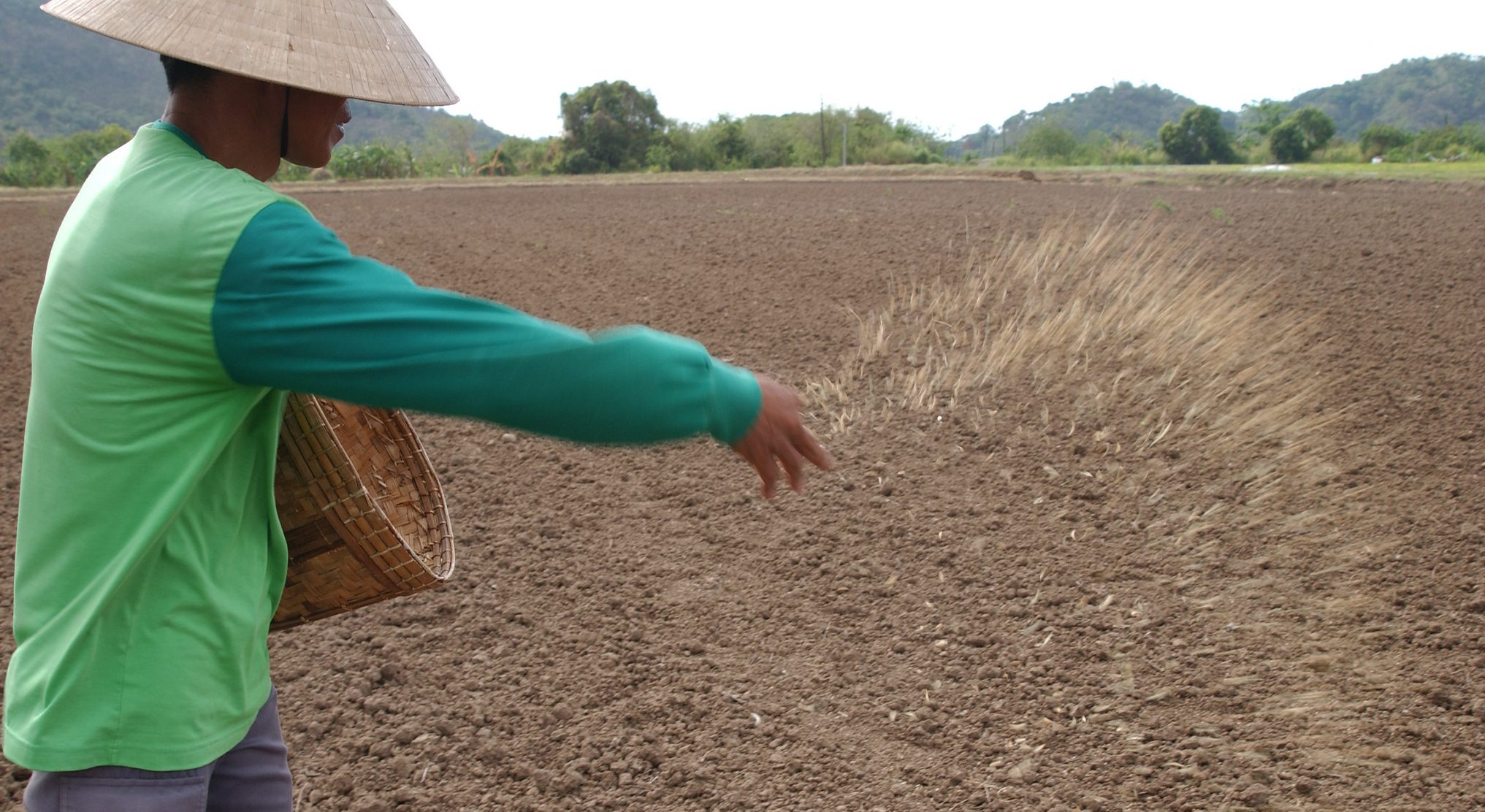
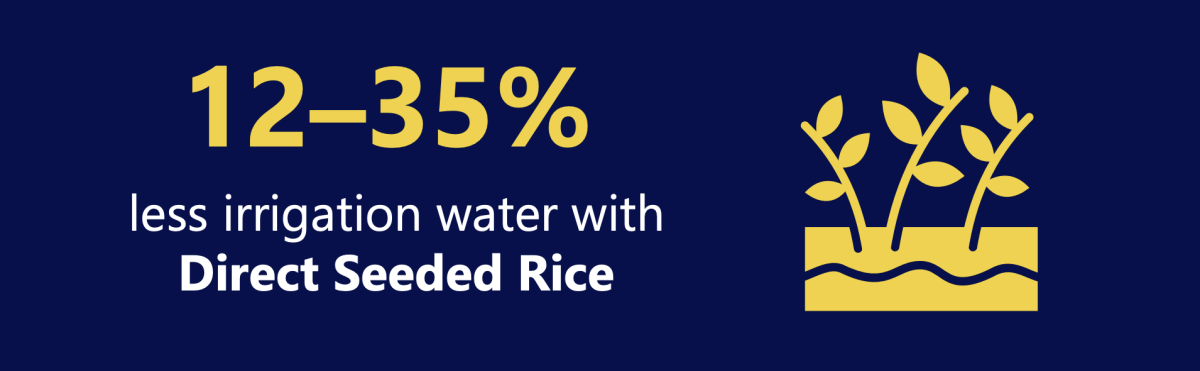
To reduce irrigation demand, farmers and state agencies began introducing Direct Seeded Rice (DSR), a method that eliminates puddling and transplanting by sowing seed directly into moist soil. Field trials in Punjab and Haryana show that DSR can reduce irrigation water use by between 12–35% while maintaining comparable yields. Early adopters also report lower labour costs, reduced fuel use from less pumping, and earlier field turnaround, allowing timely planting of the following wheat crop.
Adoption has not been automatic. DSR requires good land leveling and timely weed control, and many farmers struggled initially. But where training and access to laser levelling and seed drills were available, adoption of DSR rose quickly. Not because anyone promoted it heavily, but because it saved farmers time, diesel and water while keeping yields stable.
DSR shows that water efficiency scales fastest when it improves farm economics, rather than when it serves as a conservation message.
“By adopting DSR on my 100-acre farm, I no longer face the same pressure of water and labor shortages. DSR saves me time and cost, keeps the soil healthier, and gives me extra days to prepare for the wheat season. With DSR, I use 15–40% less water, which is a real advantage in times of scarcity. For farmers like me, it is a practical solution that improves productivity while conserving water. “
— Pritam Singh, Farmer
Panipat District, Haryana, India
Water efficiency scales when technology and incentives work together
The experience across India and Southeast Asia confirms that farmers can reduce agricultural water use without sacrificing yield, but only when they build efficiency into the production system rather than treating it as a conservation campaign.
- Making water efficiency practical accelerates adoption – Technologies like Direct Seeded Rice (DSR) reduce water use by design, and adoption accelerates when farmers see yields remain stable and field operations become easier
- Linking performance to rewards increases uptake – Incentive models such as Paani Bachao, Paisa Kamao tied farmer payments to verified water and electricity savings, making efficiency financially meaningful
- Strengthening delivery at farm level enables real adoption – Mechanisation services, agronomy support, and access to finance helped smallholders adopt DSR under real field conditions, not just in demonstration plots.
When farmers can save water, protect yields, and earn more in the process, efficiency stops being a trade-off—and starts to scale.
This case study was originally published on CropLife International. Read the full independent report ‘A Practical Guide to Sustainable Agricultural Growth’ gathering scalable solutions for productive climate action.