Audiovisual (AV) is one of the most important – and most misunderstood elements of event planning.
It’s the difference between:
“Wow, this looks professional.”
and
“Can anyone hear the speaker?”
Yet AV is often under-budgeted, undervalued, or treated as an afterthought until something fails. And when AV fails, it fails publicly.
In this guide, we’ll break down what AV actually includes, what drives the cost, and how to budget realistically so your event sounds, looks, and feels professional.
What Does “AV” Actually Include?
AV stands for Audiovisual, and it covers far more than a microphone and a screen.
Depending on your event, AV may include:
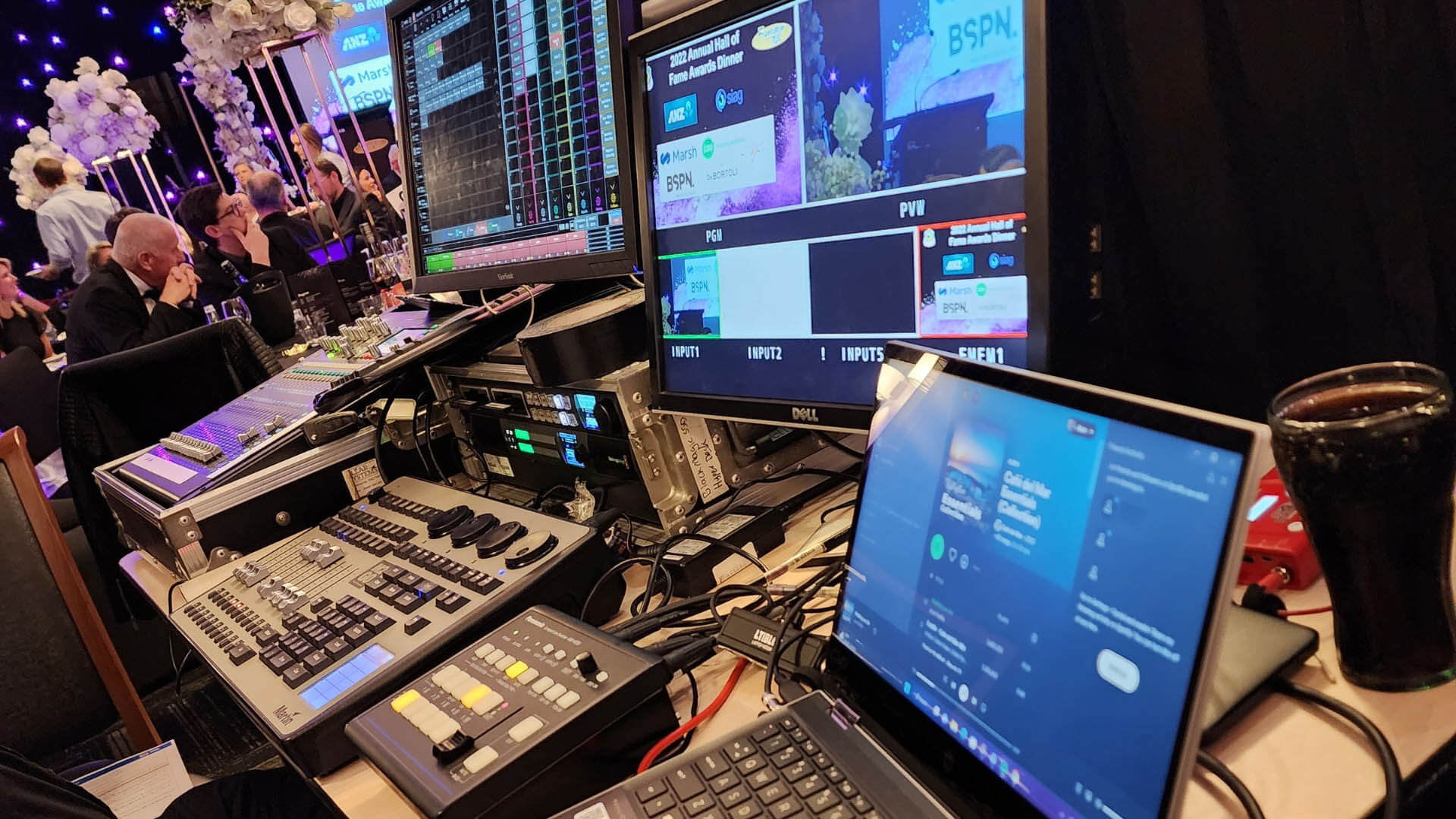
- Sound: microphones, speakers, PA systems, sound desks
- Vision: projectors, LED screens, TVs, cameras, live feeds
- Lighting: stage lighting, ambient lighting, safety lighting, uplighting
- Control equipment: switching desks, cue systems, playback laptops
- Crew: audio technicians, lighting operators, vision switchers, camera operators
Even small events require professional AV planning. Larger events require experienced production teams who can adapt under pressure.
What Actually Drives the Cost of Event AV?
AV pricing isn’t arbitrary – it’s driven by experience quality, logistics, and risk.
Here are the biggest cost drivers:
A 30-person internal update needs very different AV to a 500-guest gala or outdoor activation. As audience size increases, so do redundancy, crew requirements, and technical complexity.
Indoor venues may offer built-in AV, but it’s often basic and limited. Outdoor events require full production setups – including staging, power distribution, weather-rated equipment, and additional crew.
Longer setup times mean more crew hours. Night events require lighting plans. Multi-day events require resets, rehearsals, and extended technical support.
Are you simply sharing information, or are you delivering a polished brand experience?
Live streaming, recording, branded visuals, and show calling all increase AV scope – and should.
Typical AV Budget Ranges (Australia-Based Events)
Internal Town Hall (basic)
Product Launch / Showcase
These are realistic ballpark figures based on live events delivered in Australia. Costs vary depending on location, timeline, and technical expectations.
Common AV Budget Mistakes We See
- Assuming venue AV is “good enough”
- Booking AV late, when suppliers are already stretched
- Budgeting for equipment but not crew
- Skipping lighting entirely
- Underestimating power needs for outdoor events
- Choosing the cheapest quote without understanding the risks
Cheap AV often means outdated gear, underqualified crew, or no contingency – and those failures are very visible on event day.
How to Budget Smarter for AV
- Start with your goal
- Do you need clarity, impact, or a premium brand experience?
- Involve AV early
- AV should be part of site planning, not added at the end.
- Request line-by-line quotes
- This allows informed decisions instead of blind cost-cutting.
- Allocate 15–25% of your total event budget to AV
- If production quality matters, AV should be funded accordingly.
- Have one partner manage AV coordination
- This avoids miscommunication between creative teams, venues, and suppliers.
How Right Angle Events Approaches AV
We’re not an AV hire company – we’re your AV strategist and coordinator.
Our role includes:
- Selecting the right AV supplier for your event
- Reviewing and challenging AV quotes
- Integrating AV into site plans and run sheets
- Coordinating bump-in with all suppliers
- Managing power, safety, and compliance requirements
- Acting as the bridge between creative vision and technical reality
Our clients don’t need to speak “tech” – they just get AV that works.
Final Thoughts
AV isn’t the place to cut corners.
When it works, nobody notices.
When it fails, everybody does.
Budgeting properly for AV isn’t about extravagance – it’s about professionalism, reliability, and protecting your event experience.
👉 Planning an event and unsure how much AV you really need?
Book a free event scoping call and we’ll help you determine the right AV approach – without overengineering or underdelivering.