Why lawmakers are worried about Polymarket betting on wildfires, explained

This story appeared in Today, Explained, a daily newsletter that helps you understand the most compelling news and stories of the day. Subscribe here.
The 2026 wildfire season on the West Coast is shaping up to be an especially bad one: In Oregon, more than 2 million acres have already burned, breaking a record set just a few years ago, in 2024. In neighboring Washington state, suburbs around the city of Spokane recently burned in an increasingly common example of fires reaching urban and suburban areas (as my colleague Caitlin Dewey covered recently). And the consequences are spreading far beyond where the fires are burning, with hazardous smoke from the Pacific Northwest drifting as far away as New England.
Much of this is a story about climate change, as increasingly dry, hot summers provide ample fuel for fires. But the crisis is also being made worse by the Trump administration: Staff cuts to the US Forest Service have left the agency stretched thin and unable to respond as effectively to fires, while a planned reorganization is also set to shutter Forest Service labs researching and tracking wildfires. EPA research into wildfires and wildfire smoke has also been slashed.
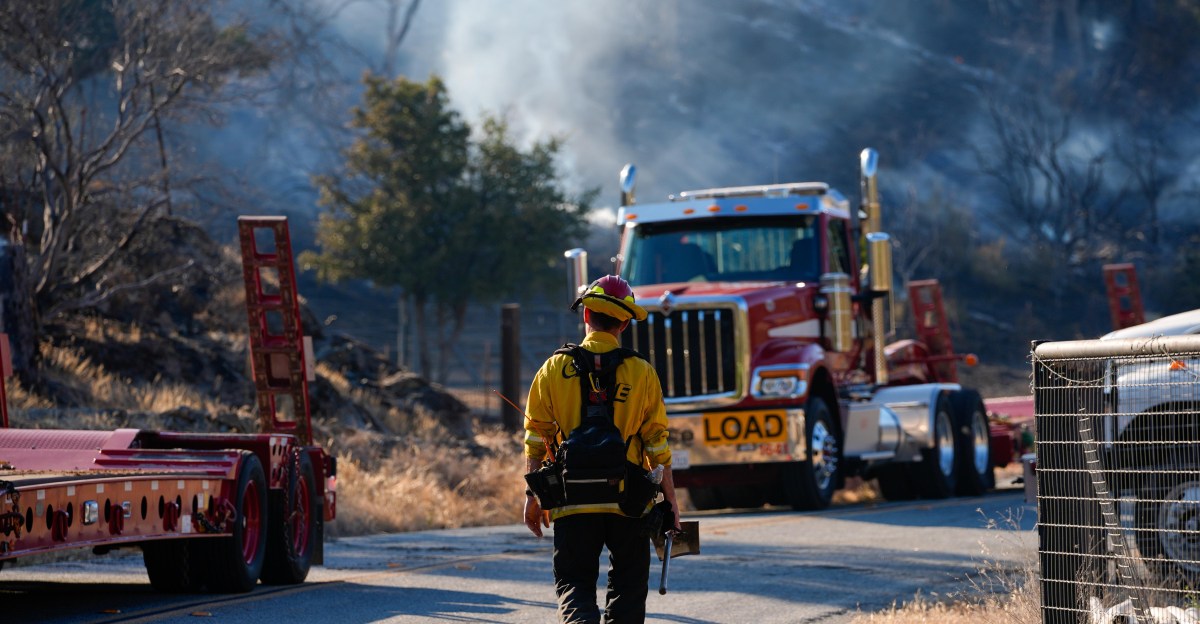
All of this — plus a Trump administration shift away from letting some fires burn themselves out, which has further increased the workload on wildland firefighters — has also resulted in a more dangerous fire season for firefighters; Reuters reported this week that firefighters are “being overrun by wildfires at the highest rate in two decades” — with months still to go until the end of the season.
As if the above weren’t enough to worry about, lawmakers are also raising a brand-new fire season concern: prediction markets. Specifically, the possibility that bettors could turn to arson in order to manipulate prediction markets — and earn themselves some money.
Polymarket, on its international platform, has offered users the chance to bet on everything from when and where a fire might spread to when it could be contained or extinguished, which resulted in more than $1 million in bets on major fires in California last year. High Country News reported in June that a new prediction market, called Wyldfyre, had launched specifically for betting on wildfires.
Legislators like Sen. Jeff Merkley (D-OR) have pointed out that, unlike most other natural disasters, fires are easily started or spread by humans, creating a real risk that people could attempt to manipulate markets.
“Offering bets on destructive wildfires threatens to minimize communities’ suffering all so the rich and powerful can profit,” Merkley and eight other Democratic senators wrote in a letter to the head of the Commodity Futures Trading Commission last week. “There’s also the heightened risk—according to state and local fire officials—that individuals could be tempted to commit arson in order to make sure their bets are successful. By offering contracts on fires, prediction market sites run the risk of encouraging people to influence fires that have already started, creating additional concerns around public safety and insider trading.
➨ Build (your attention span) back better. Beset as we are by short-form video and tweets, it can often feel like our attention spans are slipping unavoidably away. The good news, it turns out, is that decline doesn’t have to be permanent — there are ways to rebuild attention, including by simply letting your brain rest more.