Electrical enclosures are the brains of modern manufacturing. When heat builds up inside them, it triggers tripped breakers, blown fuses, and costly component failures.
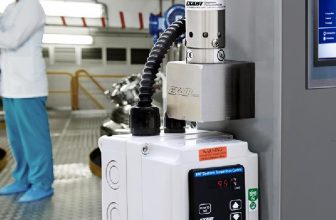
Standard air conditioners are bulky and require heavy maintenance. EXAIR Cabinet Coolers offer a low-maintenance alternative by using vortex tube technology to turn compressed air into cold air.

To protect your electronics, you must choose the right cooler size. Sizing requires calculating the total heat load of your enclosure. Here is the step-by-step process to get it right.
The Four Sources of Heat Load
To find the total heat load, you must look at how energy enters or builds up in your panel. The total heat load is determined by adding four main areas together: internal, external, fan, and solar heat loads.
1. Internal Heat Load
The internal load is the heat generated by the inefficiencies of your electrical devices inside the panel. You can calculate this by listing the wattage or volt/amp ratings of your major devices—like VFDs, power supplies, and transformers. Alternatively, you can measure the current internal and external air temperature. The difference between these two can be used to calculate the internal heat load.
2. External Heat Load
External heat enters the panel from the surrounding room or nearby high-heat equipment like ovens. To ensure your electronics stay cool on the hottest day, you must compare the highest expected external air temperature against your maximum desired internal temperature. Most electrical components are designed to operate around 95°F (35°C).
3. Panel Fans
Installing an EXAIR Cabinet Cooler requires sealing all vents and removing old panel fans to allow the system to properly purge hot, humid air. Because you are removing an active, albeit less efficient, cooling device, you must factor that fan back into your equations. You will need to account for either the fan’s flow rate or its physical diameter.
4. Solar Heat Load
Solar heat is an extra thermal load that only applies if your panel is stationed outdoors without cover and under direct sunlight. For outdoor calculations, the color of your enclosure matters significantly; lighter cabinet colors absorb much less heat than darker finishes.
All of these elements can be plugged into our Cabinet Cooler sizing guide, or our online Cabinet Cooler Systems Calculator to give you the total heat load in BTU/hr. Once you have your final BTU/hr requirement, it’s as simple as matching it to the appropriate EXAIR system. EXAIR systems range from small 275 BTU/hr units up to heavy-duty 5,600 BTU/hr systems.
You also need to select the correct NEMA rating for your environment:
- NEMA 12: For dust and oil-tight industrial environments.
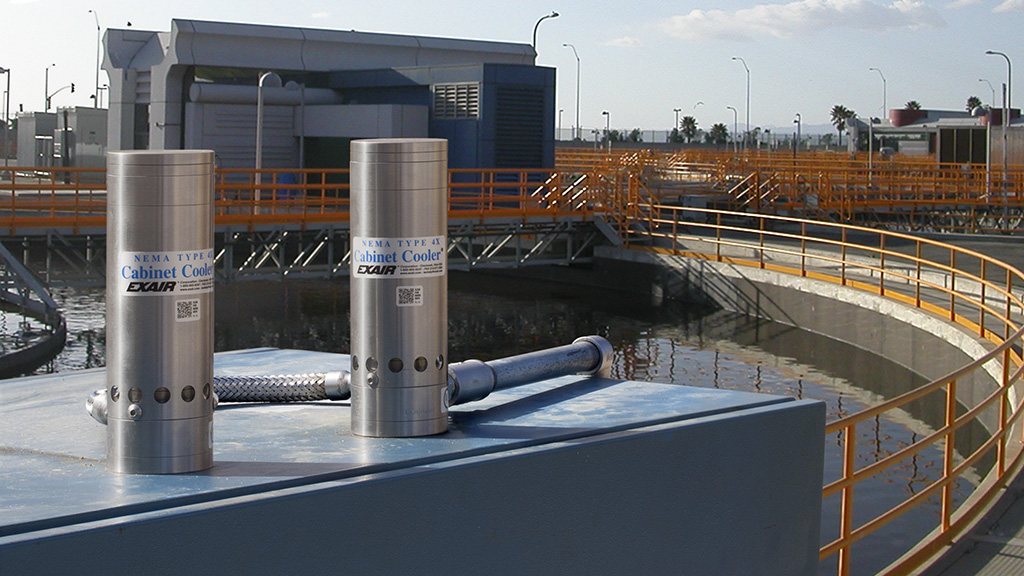
- NEMA 4: For water-resistant, outdoor, or washdown areas.
- NEMA 4X: For corrosion-resistant stainless steel environments (food processing/chemical).
By taking precise measurements and calculating your true thermal load, you ensure your control panels stay cool, production keeps running, and you never waste compressed air on an oversized unit.
Al Wooffitt
Application Engineer
Send me an Email
Find us on the Web
Like us on Facebook
Twitter: @EXAIR_AW