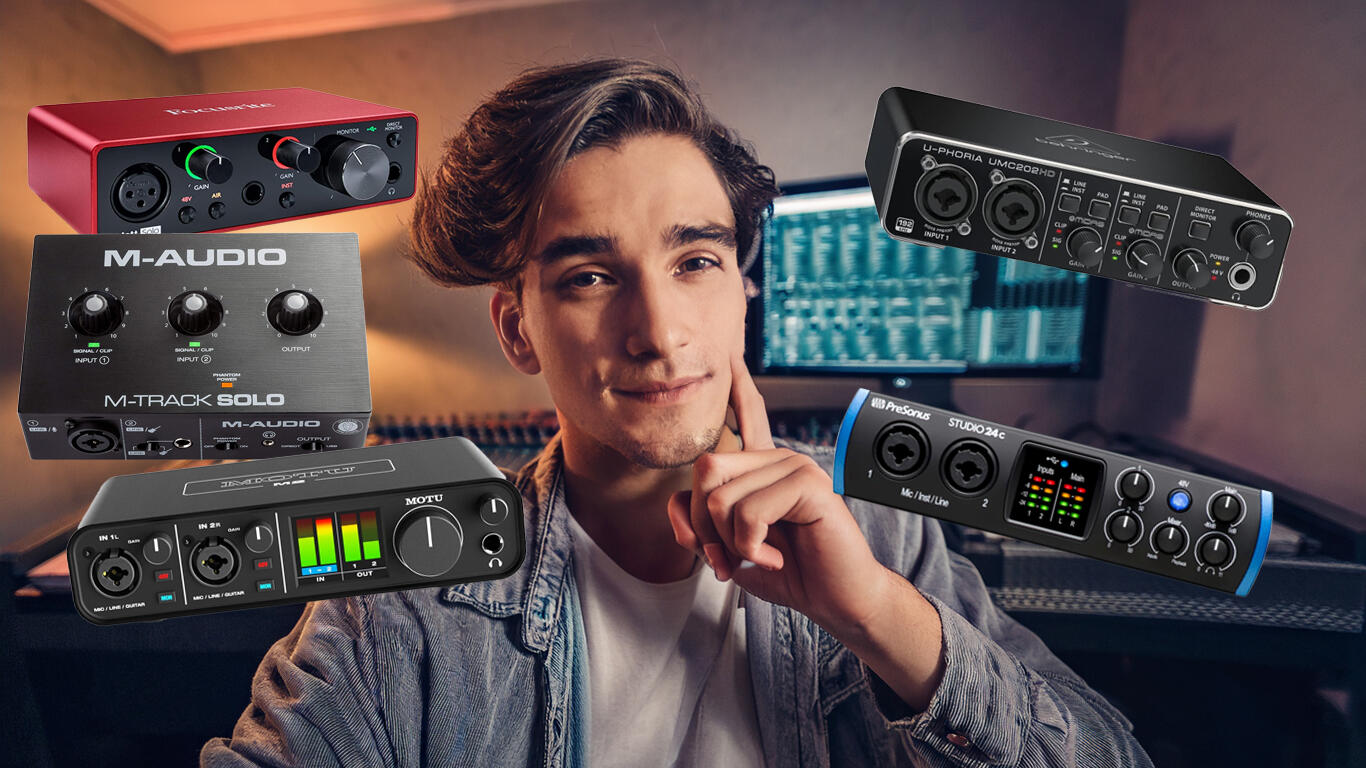
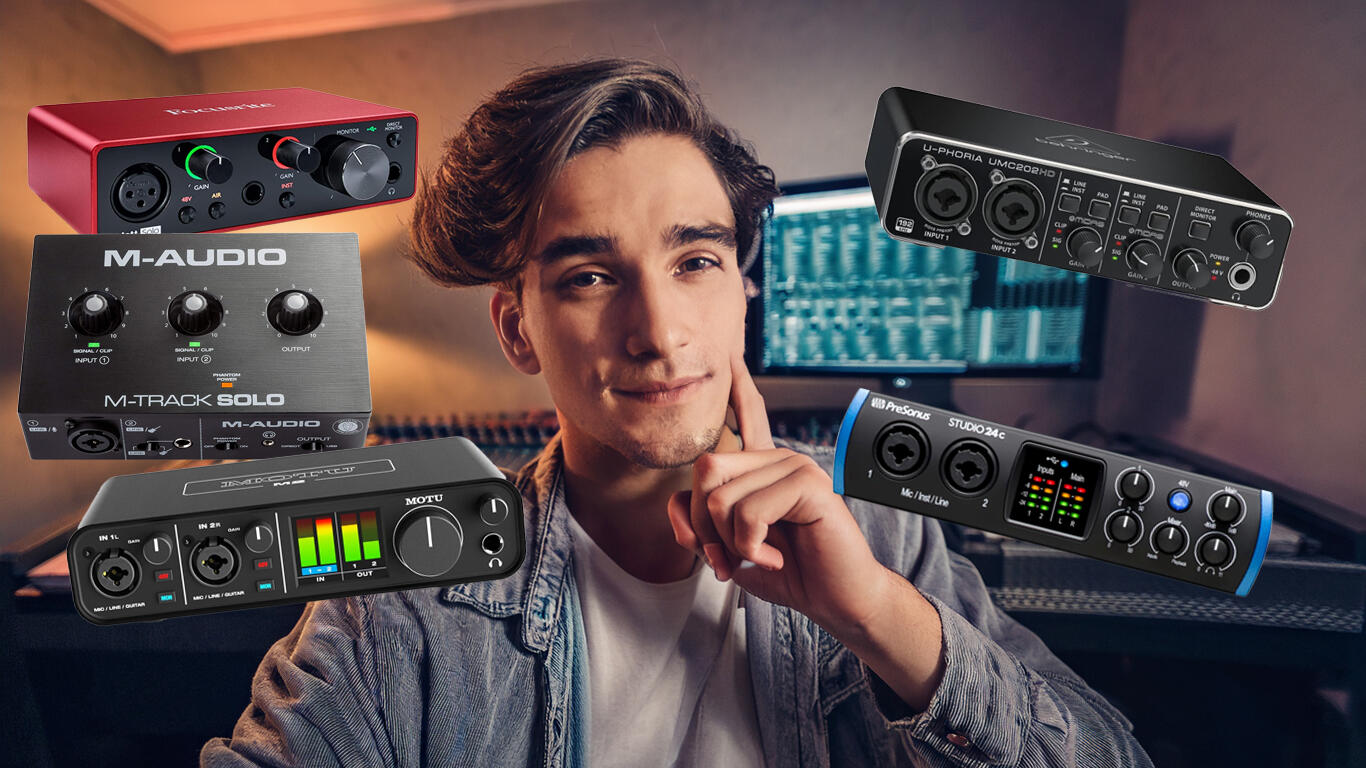
Don’t buy a digital audio interface until you read this independent guide. I’ve owned or used three of the models reviewed here and you’ll be surprised by my counter-intuitive conclusions!
In 2026, there’s an interface for every kind of creator — from singer-songwriters recording vocals and acoustic guitar, to podcasters, producers, and full bands running multi-mic setups. But with so many options it’s easy to get lost in specs and marketing hype.
- s & Conversion Quality: Good mic preamps + clean conversion = better recordings.
- & Stability: Especially if you’re playing virtual instruments or monitoring live. TBH they all do a decent job without lag
- Input/Output Count & Connectivity: How many mics/instruments you’ll record at once, plus USB/, , ADAT etc. This is a decision for you. TBH recording multiple instruments at once is better done through a mixer, so go for minimal connection. If you are a keyboardist is a must. Guitars (analog) just ‘s (or combined /XLR) inputs.
- Budget vs Future-proofing: Entry-level vs pro-studio needs. Value matters. Don’t agonise over your decision – don’t over-buy thinking you’ll grow into it. The ‘best’ might not be the best for you!
- Software & Ecosystem: Bundled software/plugins, driver ecosystem. If you haven’t already got a then you’ll maybe get the stripped down version of or bundled in – result!
With that in mind—here’s my top 10 picks (in approximate order of budget to pro) with key highlights.
🎛 Audio Interface Comparison Table (2026)
| # | Audio Interface | Preamps & Conversion Quality | Latency & Driver Stability | I/O & Connectivity | Budget vs Future-Proofing | Software & Ecosystem |
|---|---|---|---|---|---|---|
| 1️⃣ | Behringer U‑Phoria UMC22 | Decent MIDAS preamp for entry level; 48 kHz converters | Moderate latency, fine for simple setups | 1 XLR, 1 ¼″ instrument; USB 2.0 | 💰 Ultra-budget ( | Basic drivers, no bundled software |
| 2️⃣ | M‑Audio M‑Track Solo | Transparent preamp, 48 kHz/16-bit conversion | Stable drivers; low CPU overhead | 1 XLR + 1 Instrument; USB-B | 💰 Entry level, great starter | Includes MPC Beats DAW + AIR FX Bundle |
| 3️⃣ | Arturia MiniFuse 1 | Class-leading low-noise preamp; 110 dB dynamic range | Excellent latency performance | 1 XLR combo + stereo outs; USB-C | 💵 Budget-mid (~$99) | Comes with Analog Lab Intro, Ableton Live Lite |
| 4️⃣ | Focusrite Scarlett Solo 4th Gen | Updated Scarlett preamp with Air mode, 120 dB dynamic range | Rock-solid ASIO/CoreAudio drivers | 1 XLR, 1 Instrument; USB-C | 💵 Budget-friendly, long-term support | Huge plugin bundle (Hitmaker Expansion) |
| 5️⃣ | Focusrite Scarlett 2i2 4th Gen | Dual Scarlett preamps, 24-bit/192 kHz conversion | Industry-standard low-latency drivers | 2 XLR/¼″ combo; MIDI I/O (optional) | 💵💰 Home-studio sweet spot | Same Hitmaker Expansion, Focusrite Control 2 |
| 6️⃣ | MOTU M4 | ESS Sabre32 Ultra DAC; pristine A/D D/A conversion | ⚡ Excellent ( | 2 combo inputs + 4 outs + MIDI I/O + loopback | 💰💰 Semi-pro level | MOTU Performer Lite, Ableton Lite, drivers superb |
| 7️⃣ | PreSonus Studio 24c | XMAX-L preamps, 24-bit/192 kHz | Solid latency; Studio One integration | 2 combo in, 2 out, MIDI I/O | 💵 Affordable all-rounder | Studio One Artist + plug-ins bundle |
| 8️⃣ | PreSonus Studio 1824c | 8 XMAX-L preamps, 24-bit/192 kHz conversion | Stable USB-C, low latency engine | 8 combo in, 10 out, ADAT expandable | 💰💰 Serious project studio | Studio One Artist, UC Surface Control |
| 9️⃣ | Universal Audio Apollo Twin X DUO | Elite class preamps + Unison modeling; 24-bit/192 kHz | 🏆 Pro-grade Thunderbolt latency ( | 2 combo + ADAT + monitor outs | 💎 Premium/pro studio | UAD Console + Realtime Analog Classic Bundle |
| 🔟 | MOTU 828 | ESS Sabre PRO DACs; 110 dB SNR; super clean I/O | Rock-steady low-latency drivers | 28×32 I/O, ADAT, S/PDIF, , loopback | 💎💎 High-end production rig | MOTU Performer Lite, CueMix 5 software |
Top 10 Audio Interfaces
1. Behringer U‑Phoria UMC22
Why it’s a standout budget pick:
If you’re just getting started, this interface offers solid value. According to one review: “The MIDAS mic preamps are quiet… there’s nothing out there at this price point that comes near”. Yeah, take such statements with a pinch of salt but ny pal Nick swears by his!
Good for: Solo recording, podcasting, small budgets.
Considerations: Limited I/O, fewer advanced features if you scale up.
2. M‑Audio M‑Track Solo
Why it’s worth considering:
Ultra-budget entry option. Reviewers list it in “best under $50” brackets.
Good for: First-time setups, home studio beginners.
Considerations: Basic features, may need upgrade sooner as your needs grow.
I used one of these for years recording most of my original music you’ll hear on this website. Then it started going wrong. As usual no tech support so I ditched it.
3. Arturia MiniFuse 1
Why it’s interesting:
Mid-budget, with a strong brand (Arturia) and good features.
Good for: Producer setups, home recording with some upgrade headroom.
Considerations: Still limited I/O compared to pro rigs.
4. Focusrite Scarlett Solo 4th Gen
Why it stands out:
Focusrite’s Solo model hits the sweet spot for many beginners. Compact, trusted brand, strong software bundle.
Good for: Singer-songwriters, simple setups.
Considerations: One mic input, limited expansion.
5. Focusrite Scarlett 2i2 4th Gen
Why upgrade here:
Many best-of lists pick this as “best budget interface around $200”. Two good inputs, good conversion — great value.
Good for: Home studio, duet recording, semi-professional setups.
Considerations: If you need many channels or pro connectivity, you’ll need to step up.
6. MOTU M4
Why this model is getting buzz:
Strong reviews highlight “exceptional sound quality with ESS Sabre32 Ultra DAC Technology… super low latency” for its price.
Good for: Growing studios, high-quality home production.
Considerations: Higher cost than basic models; still not many I/O if full band recording.
Snazzy look with those LCD meters (you don’t need that much info, just clipping warning)
7. PreSonus Studio 1824c
Why consider it – you’ve got unlimited money!:
More I/O, more serious features — good step up.
Good for: Bands, more complex setups, project studios.
Considerations: Higher cost; maybe overkill for solo/duet setups.
8. Universal Audio Apollo Twin X DUO Gen 2 ESS
Why this is pro-tier (and $600+):
Universal Audio is a reference name. This model offers top quality conversion, DSP, etc.
Good for: Professional producers, serious home studios, those who’ll use the UAD plugin ecosystem.
Considerations: Expensive; you’re paying for premium features.
YAGNI (you ain’t gonna need it)
9. PreSonus Studio 24c
Why it’s a nice mid-option:
A reasonable mid-price interface with good features and brand trust.
Good for: Intermediate users upgrading from basic gear.
Considerations: Might lack some pro connectivity if you plan for big expansions.
There’s a pro version for this at 3X price you don’t need!
10. MOTU 828
Why this is professional I/O:
High channel count, advanced features — built for serious studios.
Good for: Full band recordings, complex routing, multi-channel work.
Considerations: Cost, size, setup complexity.
Recommendation Table
| Use Case | Recommended Interface |
|---|---|
| Just starting / solo voice or instrument | Behringer UMC22 or M-Audio M-Track Solo |
| Singer-songwriter or home producer | Arturia MiniFuse 1 or Focusrite Scarlett Solo |
| Home studio recording multiple inputs | Focusrite Scarlett 2i2 or MOTU M4 |
| Project studio / band recording | PreSonus Studio 1824c or PreSonus Studio 24c |
| Professional production / premium | Universal Audio Apollo Twin X or MOTU 828 |
Final Thoughts
- If you’re just starting, go with something affordable but reliable (budget options above).
- If you’ll grow your setup, aim for something with better I/O and quality (mid to pro options).
- Remember: software bundle & driver support matter nearly as much as hardware specs.
🏁 Conclusion — Which Audio Interface Is Right for You?
If you’re just starting out, the Behringer U‑Phoria UMC22 or M‑Audio M‑Track Solo will get you recording for less than a set of strings.
Stepping up to a Focusrite Scarlett 2i2 4th Gen or Arturia MiniFuse 1 gives you better preamps and a more future-proof setup that can handle real sessions.
For serious home producers, the MOTU M4 remains unbeatable for price-to-performance, with ultra-low latency and professional conversion.
And if you’re running a commercial studio or recording label-ready tracks, the Universal Audio Apollo Twin X DUO or MOTU 828 deliver elite-grade sound and rock-solid Thunderbolt performance.
Whatever your level, remember: the best audio interface isn’t the most expensive one — it’s the one that fits your workflow and inspires you to keep creating.