

ConantLeadership Founder, Doug Conant, originally published this post in 2017. Now, we present this piece, updated with new content, as part of our “Golden Anniversary” collection: a treasury of Doug’s thought leadership, revamped to help you meet the current moment, as we celebrate his 50 years in leadership.
If you ever run into me when I’m wearing business attire, you might notice that I’m sporting suspenders instead of a belt. Some people may think I’m trying to look more corporate or attempting to embody some type of sage ‘leadership adviser’ persona, but the truth is, suspenders wouldn’t typically be my first choice. Several years ago, I had a life-changing experience, which forced me to switch to suspenders. Now, every time I clip them on, they remind me of a harrowing experience, one that affirmed two uplifting lessons about leadership.
It took a team of doctors 18 hours to put me back together again.
It was the Friday afternoon, right before 4th of July weekend, in 2009. I was on the New Jersey Turnpike returning to my home in Madison, NJ from another full day as CEO of Campbell Soup Company in Camden, NJ. My wife, Leigh, was away in Washington, DC helping our daughter move into her first post-college apartment. It was the end of a busy week, so I was dozing in the back seat of the car (thankfully, with my seatbelt on).
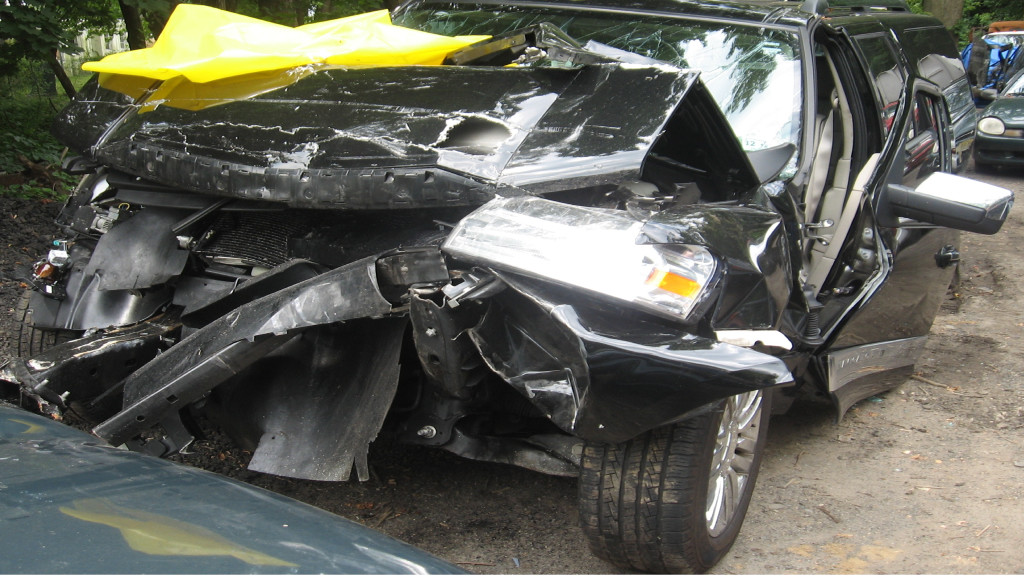
We were traveling between 70 and 80 miles per hour on the bustling highway, filled with commuters desperate to get to the beaches of the Jersey shore for the holiday weekend, when my driver had a momentary lapse in concentration. At full speed, he drove into the back of a large truck that was stopped near an exit. Fortunately, the driver’s air bag deployed and he escaped unharmed. I was not so lucky. My torso was crushed by the seatbelt, breaking 10 ribs and severely damaging several internal organs. It took a team of doctors 18 hours to put me back together again.
When I awoke in the ICU many hours later—confused, groggy, and with a mysterious pain throughout my chest and abdomen—the first thing I saw come into focus was the comforting sight of my wife by my side. She had rushed to the trauma center from D.C., panicked at the thought of me waking up alone. (For better or worse, the surgery lasted so long that she easily made it in time.). Leigh squeezed my hand and said three words that I will never forget: “I’m right here.”
The sight of my wife, and the sound of her voice, was potent medicine.
People simply need to hear from their leaders, “I’m right here.”
In the weeks that followed, having Leigh (and shortly thereafter, my daughter) by my side, supporting me through some very long and challenging days, made all the difference. All she did was show up. But the simple act of being present when I needed her most helped me immeasurably. And it steeled me for the road to recovery that lay ahead.
The experience supported a powerful observation I have had about leadership throughout my career: I have found that no matter how complicated the issue or dire the situation, sometimes people simply need to hear from their leaders, “I’m right here,” “I’m with you,” and, “We’re in this together.” Being present and available to others can energize them, renew their resolve, and give them the necessary encouragement to see things through. That was the first lesson that was affirmed for me as a result of my accident.
The second lesson from the ordeal reinforced something I had first learned 20 years earlier, when I was unexpectedly fired from my job, and it was brought to life anew in my journey to recovery.
The best professionals were the kindest professionals.
Throughout my stay in the hospital, there was an around-the-clock army of nurses, doctors, and support staff caring for me. They would check on me, ask about my pain, diligently tend to my wellness, listen to my responses, and course-correct my treatment.
What’s fascinating is that I could always tell the most adept and experienced personnel apart from the others because of one important differentiator: Every time the most engaged caretakers would visit my room, they would always approach me with an unmistakable, sleeves rolled-up spirit of, “How can I help?”
The best helpers were fully present in their interactions with me—not nervous, hesitant, or withholding. They were self-assured, compassionate, and generous with their time, attention, and knowledge. In a nutshell, I came to understand that the best professionals are often the kindest professionals.
Many people think that influence or leadership presence is earned by being imposing or austere—or by seeming busy, unavailable, or unapproachable. Some aspiring leaders worry that the vulnerability that accompanies kindness will make them appear weak. But I observed the exact opposite. What I saw during my recovery was that I could easily gauge the expertise level of the staff by how confidently and generously they offered their help. That was a powerful lesson.
Life is short. It could all be over in an instant.
Whenever I was tended to by one of these expert-level helpers, not only did I feel assured that everything was going to be okay, but I also felt uniquely motivated to stay the course. In a situation where despair and hopelessness could easily have set in, their eagerness to be helpful gave me faith in the process and inspired me to match their spirit of contribution by giving my recovery the maximum effort. Their unwavering “How can I help?” attitude had a noticeable impact on my own energy levels.
I have seen time and again that the same is true in leadership. The more we approach our work from a place of, “How can I help?,” the more effective we become. The people who depend on us must see how devoted we are to their success: that we have their backs, that we are willing and able to pitch in, and that we are working toward the same goals. It makes sense. After all, why should they care if we don’t visibly pledge to do the same? Why should they trust us if we’re not right there with them?
Yes, we must champion high standards of performance. And we’ve also got to support those high standards with a caring attitude toward the people involved. When we offer to help, we let people know that they’re in good hands, and we invigorate the overall effort by inspiring others to mirror our commitment.
After 50 years, I’ve watched this play out countless times. Showing up works. Kindness works. Helpfulness works. And too often, these approaches are overlooked or dismissed as “soft.”
Which brings me back to the suspenders. Because of the accident and the six surgeries it precipitated, I have a lengthy scar that runs up the lower half of my torso, reminding me of my near-fatal accident all those years ago. The reason I had to trade in my belts for suspenders was to avoid aggravating that scar. The sartorial swap is a constant-yet-welcome reminder of the accident and every lesson I learned along the way. The suspenders quite literally “lift up” my trousers, which, thankfully, always reminds me that we all need a little lift now and then.
The people we work with are steeped in the same complex web of challenges that we are as leaders. They get just as many emails, texts, and phone calls. They have just as many kids, cousins, parents, spouses, religious groups, book clubs, to-do lists, vendors, colleagues, babysitters, and bank statements vying for their attention and depending on them to not drop the ball. Sometimes all they need is for their leaders to show up by their side when the chips are down, letting them know that you are right there with them, and that you are willing to help them get the job done. It really does make all the difference.
Life is short. It could all be over in an instant. At the end of the day, I can’t think of a better or more successful legacy to leave than one built on kindness.
____
Follow this post up with Doug’s companion piece, More Leadership Lessons from My Life-Threatening Car Crash
Want to work with us? Drop us a line, request information about Speaking Engagements, or talk to Emma Anthony, our Director of Leadership Programs.
Ready to leave your own legacy? Start with these resources:
- LinkedIn Learning Course: Finding Your Leadership Purpose with Doug Conant
- LinkedIn Learning Course: Finding Your Leadership Vocabulary with Doug Conant
- STEPS: A Leadership Course for Administrative Professionals
- The ConantLeadership Video Library featuring conversations with top leadership luminaries like Indra Nooyi, Bill George, Brené Brown, Amy Edmondson, and many more
- The ConantLeadership blog: Find hundreds of resources on ‘Leadership That Works’
- The Leadership That Works Newsletter: A Monthly Roundup of the Best Leadership Resources from Around the Web
- Get the first chapter of The Blueprint: 6 Practical Steps to Lift Your Leadership To New Heights FREE
- Download the free companion workbook to The Blueprint
 About the Author: Doug Conant is Founder and CEO of ConantLeadership, former Chairman and Current Board Member of CECP, former CEO of Campbell Soup Company, Former President of Nabisco, former Chairman of Avon Products, and co-author of two bestselling leadership books, TouchPoints, and The Blueprint.


