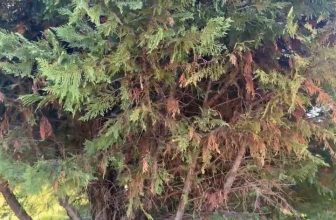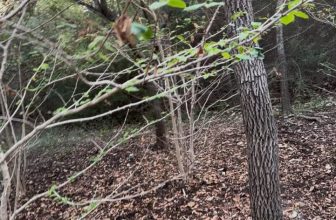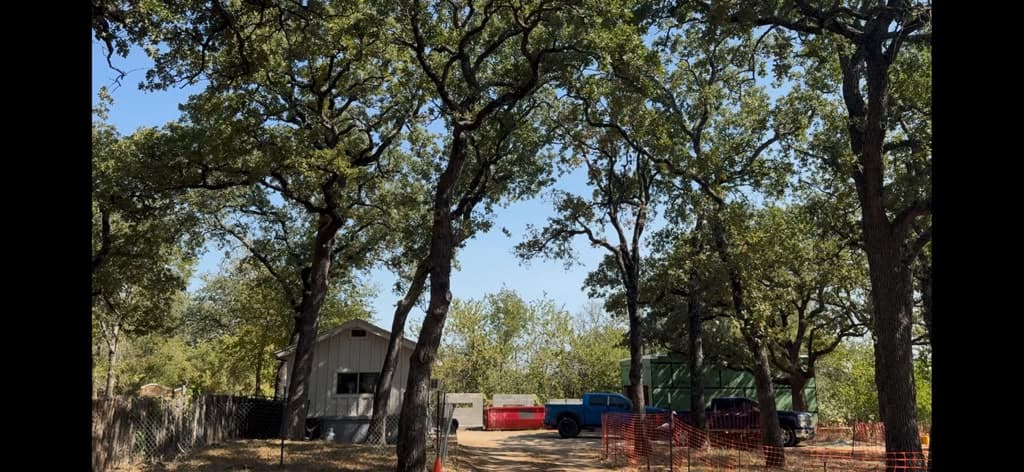
Today we’re here in Weatherford, Texas, evaluating several mature Savannah Post Oaks (Quercus stellata) that have been subjected to significant construction activity and severe soil compaction around their root systems.
The biggest concern on this property is not something growing on the bark or feeding in the canopy.
The problem is underneath our feet.
A new roadway has been constructed immediately adjacent to these mature Post Oaks. Heavy equipment, repeated vehicle traffic, soil disturbance, grading, and construction activity have dramatically altered the physical environment surrounding their roots.
Ideally, mature trees being preserved during construction should have a clearly established Tree Protection Zone, or TPZ, before the first piece of equipment enters the property.
Unfortunately, real-world construction sites are rarely perfect.
Sometimes the house footprint is already established.
Sometimes utilities have to cross portions of the property.
Sometimes the driveway must pass near existing trees.
And sometimes there simply isn’t enough available space to establish the protection zone we would ideally want around a mature Savannah Post Oak.
That appears to be what happened here.
The protection area around these trees has been extremely limited, placing construction activity within portions of the critical root zone and significantly increasing the probability of long-term environmental stress.
The important question now is:
What can we do to mitigate that damage before the trees begin showing severe canopy decline?
And this is where I want to make an important distinction.
The first response should not automatically be another systemic chemical treatment.
When the primary problem is physical soil damage, the first treatment should address the soil.
Get the soil environment right, and the tree has a much better opportunity to remain sustainable.
⸻
Savannah Post Oaks Are Extremely Sensitive to Construction Disturbance
Savannah Post Oaks are some of the most valuable native trees we work with throughout Weatherford, Southlake, Westlake, Aledo, Fort Worth, and surrounding North Texas communities.
They are also some of the least forgiving when their established root environment is dramatically altered.
These trees evolved under relatively stable soil conditions.
Their roots developed gradually over decades.
The tree adapted to:
- Existing soil density
- Existing drainage patterns
- Existing oxygen levels
- Existing grade
- Existing microbial populations
- Existing moisture cycles
Then construction arrives.
In a matter of weeks or months, an environment that remained relatively stable for decades can be completely changed.
That is a major physiological shock.
⸻
What Is a Tree Protection Zone?
A Tree Protection Zone is an area established around a tree before construction begins where disturbance should be restricted as much as reasonably possible.
The objective is protecting:
- Structural roots
- Absorbing roots
- Existing soil grade
- Soil pore space
- Root flare
- Trunk
- Lower scaffold branches
Tree protection zones are not simply fences placed around trunks.
The root system extends far beyond the trunk.
A mature Post Oak may have important roots extending throughout a large portion of the surrounding landscape.
That is why protecting only three or four feet around the trunk does very little to protect a large mature tree.
The larger the tree, the greater the amount of undisturbed soil we generally want to preserve.
⸻
Why Real Construction Sites Make TPZs Difficult
In an ideal situation, the protection zone would extend far enough away from the tree to keep equipment, grading, storage, trenching, and traffic away from a substantial portion of the root system.
But many urban construction sites simply don’t provide that amount of space.
You may have:
- A house on one side
- A roadway on another
- Utilities underneath
- A retaining wall nearby
- Drainage infrastructure
- A neighboring property line
Suddenly the theoretical protection zone conflicts with the construction footprint.
That does not mean we abandon tree preservation.
It means the tree requires a mitigation strategy.
The closer construction gets to the trunk and critical root zone, the more important it becomes to understand exactly what damage is occurring and address it early.
⸻
Soil Compaction Is One of the Biggest Construction Injuries
One of the most significant findings on this Weatherford property is severe soil compaction.
When heavy equipment drives repeatedly over soil, the mineral particles become compressed more tightly together.
The soil becomes denser.
Pore space decreases.
And that dramatically changes the underground environment.
Healthy soil is not solid.
It contains an interconnected network of pores.
Some contain water.
Others contain air.
Those pores allow roots to breathe.
⸻
Macropores Versus Micropores
This is an important piece of soil science.
Soils contain different pore sizes.
Macropores are the larger spaces that allow rapid drainage and oxygen movement.
Micropores are smaller spaces that tend to retain water.
When soil becomes heavily compacted, the larger air-filled macropores are often among the first spaces to disappear.
That means the problem isn’t that the tree needs more micropores.
It needs restored macroporosity.
We want a more open soil structure with enough larger pore spaces for oxygen diffusion, drainage, root elongation, and biological activity.
That is what people mean when they say we need the soil to “breathe.”
⸻
Roots Require Oxygen
Most homeowners understand that roots need water.
Far fewer understand that they also require oxygen.
Tree roots are living tissue.
They perform cellular respiration.
During respiration, carbohydrates produced through photosynthesis are broken down to release usable energy.
That energy powers:
- Active nutrient uptake
- Water absorption
- Root elongation
- Cell division
- Defense responses
- New root production
When oxygen availability decreases, root respiration becomes less efficient.
Eventually the root system begins functioning below its biological potential.
⸻
Compacted Soil Can Create Hypoxia
As compaction increases and pore space decreases, oxygen movement through the soil slows.
Now add rainfall or irrigation.
Water occupies the remaining pore space.
The soil can remain wet longer because drainage has been reduced.
The result may become root-zone hypoxia.
Hypoxia simply means insufficient oxygen.
The roots may literally be surrounded by moisture yet unable to function properly.
That is why a tree growing in wet compacted soil can display symptoms that resemble drought.
The soil contains water.
But the roots cannot efficiently use it.
⸻
Construction Trauma Creates a Cascade of Events
One reason construction damage can be difficult to diagnose is because one event often triggers another.
Think of the sequence.
Heavy equipment enters the property.
Soil becomes compacted.
Macropores collapse.
Oxygen decreases.
Water infiltration changes.
Root growth slows.
Fine absorbing roots begin declining.
Nutrient uptake decreases.
The canopy becomes stressed.
Photosynthesis declines.
Carbohydrate production falls.
The tree begins using stored reserves.
Then North Texas summer arrives with temperatures approaching or exceeding 100°F.
Now the compromised root system is being asked to supply enough water to support a massive canopy during extreme evaporative demand.
That is the cascade.
Construction trauma rarely remains just a construction problem.
Eventually it becomes a physiological tree-health problem.
⸻
Why Symptoms May Not Show Up Immediately
This is one of the most important lessons surrounding construction damage.
The tree may look perfectly healthy when construction is completed.
That does not mean the tree escaped injury.
Large mature trees possess significant carbohydrate reserves stored throughout their roots, trunk, and living woody tissues.
Those reserves allow the tree to compensate temporarily for root loss and environmental disruption.
For several growing seasons, the tree may continue producing foliage.
Then symptoms slowly appear.
You may begin noticing:
- Reduced canopy density
- Smaller leaves
- Shorter shoot elongation
- Dead twigs
- Premature leaf drop
- Sparse interior foliage
- Increased insect pressure
- Opportunistic fungal activity
The homeowner asks why the tree suddenly changed.
But the decline may trace directly back to construction several years earlier.
⸻
Road Construction Is Particularly Concerning
Creating a roadway beside a mature Post Oak presents several challenges simultaneously.
First, the soil must typically be compacted intentionally to support vehicles.
That is exactly the opposite soil condition we want for tree roots.
Road construction may also involve:
- Excavation
- Grade changes
- Base material
- Gravel
- Concrete or asphalt
- Repeated equipment traffic
All of those changes can eliminate rooting space.
A mature tree cannot simply relocate its entire root system when a road is installed.
The remaining roots must compensate.
⸻
Cultural Mitigation Should Come Before Systemic Treatment
This is where our approach at Arborist USA becomes very important.
If the primary problem is compacted soil, the first question should not be:
“What can we inject into the tree?”
The first question should be:
“How can we improve the root environment?”
Systemic treatments have their place.
Micronutrients have their place.
Growth regulators have their place.
Integrated Pest Management has its place.
But none of those treatments can physically recreate healthy pore space inside severely compacted soil.
The underlying cultural problem must be addressed.
⸻
Soil Aeration as a Front-Line Mitigation Strategy
One of the first mitigation strategies we should consider is soil aeration and pneumatic soil remediation.
Using compressed air equipment allows us to carefully fracture compacted soil while minimizing unnecessary damage to important roots.
The objective is not simply making holes in the soil.
The objective is improving soil architecture.
We want to restore:
- Oxygen movement
- Water infiltration
- Drainage
- Root penetration
- Biological activity
- Organic matter distribution
This creates a more favorable environment for new absorbing roots.
⸻
Why Pneumatic Soil Excavation Is Valuable
Mechanical digging around mature Post Oaks can create another round of root injury.
Pneumatic excavation uses high-velocity compressed air to separate soil particles while leaving many woody roots intact.
That allows us to work around existing root systems much more carefully.
Depending on site conditions, this type of remediation can be incorporated into:
- Radial trenching
- Root collar excavation
- Compaction mitigation
- Soil amendment incorporation
- Inspection of buried root flares
The exact treatment should be based on what we find in the soil.
⸻
Organic Matter Can Help Improve Soil Structure
Once compacted soil has been loosened, carefully selected organic amendments may help improve the soil environment.
Organic matter can support:
- Soil aggregation
- Microbial activity
- Moisture regulation
- Nutrient cycling
- Root development
The goal is not turning native soil into potting soil.
We want to improve its biological and physical structure without creating dramatic incompatibility between amended and surrounding soil.
Soil remediation should be gradual and science-based.
⸻
Mulch Is One of the Simplest Tools We Have
A proper mulch layer can provide tremendous long-term benefits after construction.
Approximately three inches of coarse organic hardwood mulch can help:
- Moderate soil temperatures
- Reduce evaporation
- Protect soil from further compaction
- Add organic matter
- Reduce turf competition
- Support microbial communities
Mulch should never be piled against the trunk.
The root flare should remain exposed.
The objective is replicating the natural forest-floor environment where organic material accumulates gradually above active roots.
⸻
Restricting Future Traffic Is Critical
There is little benefit in aerating compacted soil if vehicles immediately begin driving across the same area again.
Once remediation is performed, the root zone must be protected.
That may require:
- Permanent landscape boundaries
- Bollards
- Decorative fencing
- Large mulch beds
- Traffic redirection
- Defined parking areas
Tree preservation is a long-term management strategy.
Not a one-day treatment.
⸻
Irrigation Must Be Managed Carefully
Compacted soil changes how water behaves.
Water may infiltrate slowly.
It may remain near the surface.
It may travel laterally.
It may remain trapped in areas where drainage has been reduced.
That means irrigation schedules used before construction may no longer be appropriate afterward.
Water should be based on actual soil moisture conditions.
Not simply a timer.
Too little water creates drought stress.
Too much water in compacted soil creates hypoxia.
The objective is balance.
⸻
Where Systemic Treatments Fit Into the Program
Once we improve the physical root environment, systemic treatments may become valuable supporting tools.
Depending on the condition of the Post Oaks, we may consider:
- Micronutrient supplementation
- Seaweed kelp
- Humic substances
- Carbohydrate support
- Integrated Pest Management
- Growth regulation
But those treatments should support the cultural work.
They should not replace it.
If the soil remains compacted, oxygen deficient, and physically hostile to root development, systemic treatments can only accomplish so much.
⸻
Why Growth Regulators May Sometimes Help
In selected construction-stress situations, a tree growth regulator such as Cambistat® (paclobutrazol) may become beneficial.
Paclobutrazol reduces excessive shoot elongation.
That can help shift the tree toward a more conservative growth strategy rather than forcing large amounts of canopy growth while the root system is compromised.
However, growth regulation does not eliminate soil compaction.
Again, the soil comes first.
The treatment supports the mitigation strategy.
It does not replace it.
⸻
Avoid Aggressive High-Nitrogen Fertilization
Another common mistake following construction is attempting to force a stressed tree to “green up” with large amounts of nitrogen.
That can be counterproductive.
The tree may already have a reduced root system.
Forcing rapid shoot growth increases demand on those roots.
Our objective should be stability.
Not excessive growth.
Nutrition should be based on actual need rather than simply applying large quantities of nitrogen because the canopy appears thin.
⸻
Monitoring Is Part of Construction Mitigation
Trees affected by construction should be monitored over multiple growing seasons.
We want to evaluate:
- Canopy density
- Terminal shoot growth
- Leaf size
- Premature leaf drop
- Deadwood development
- Root flare condition
- Soil moisture
- Soil compaction
- Pest pressure
- Fungal activity
Construction damage can have a long biological timeline.
Monitoring allows us to determine whether the mitigation strategy is working or whether decline is continuing.
⸻
Why an Arborist Should Be Involved Before Construction Begins
The greatest opportunity to save a mature Post Oak exists before construction starts.
Once the roadway has been installed and soil has been severely compacted, our options become mitigation.
Before construction, we have prevention.
A tree-preservation plan can help determine:
- Where equipment should travel
- Where materials can be stored
- Where utilities should be routed
- Which grades must remain unchanged
- Where protective fencing should be installed
- Which trees are realistic candidates for preservation
That planning can prevent years of future decline.
⸻
Tree Preservation Should Be Part of Site Engineering
If a mature native tree is important enough to preserve, it should be incorporated into the construction plan just like every other major site feature.
The tree should not be something everyone attempts to work around after the plans are finished.
Its root system needs to be considered from the beginning.
Once pavement, utilities, buildings, and drainage systems have already been designed, the available tree-protection area often becomes whatever space happens to remain.
That is backwards.
The preservation strategy should begin before the final site layout is established whenever valuable mature trees are involved.
⸻
Final Thoughts
These Savannah Post Oaks in Weatherford, Texas demonstrate why construction mitigation is ultimately a soil-management problem.
The new roadway has placed severe pressure on the root environment.
The Tree Protection Zone is extremely limited.
Construction traffic has compacted soil.
Macropore space has been reduced.
Oxygen movement has declined.
The long-term effects may not become completely visible for several growing seasons.
That is why our first mitigation strategy should focus on improving the physical environment around the roots.
Restore oxygen.
Improve soil structure.
Reduce compaction.
Protect the remaining root zone.
Manage moisture carefully.
Then use systemic Plant Healthcare treatments as supporting tools when appropriate.
At Arborist USA, we believe the most sustainable tree treatment begins underground.
You can apply the best systemic products available, but if the soil remains compacted, waterlogged, oxygen deficient, and biologically dysfunctional, the tree will continue struggling.
Get the soil right first.
Give the roots oxygen, space, moisture balance, and biological activity.
Then the tree has a much better opportunity to support itself.
And whenever possible, involve an Arborist before construction begins.
Preventing root-zone damage is always more effective than trying to repair it afterward.
For general tree-care best practices, homeowners can also reference guidance from the Texas A&M Forest Service, https://tfsweb.tamu.edu/trees/, a trusted authority on Texas tree health.
Schedule a professional inspection. Early detection and scientific intervention are the difference between preservation and loss. If you’d like to speak to an arborist, please call us at 817-880-6130 or visit https://www.arboristusa.com
Today we’re in Weatherford, Texas, evaluating mature Savannah Post Oaks (Quercus stellata) that have experienced significant construction trauma after a roadway was installed immediately adjacent to their root systems.
The biggest problem we’re dealing with isn’t in the canopy.
It’s underneath our feet.
Heavy construction equipment repeatedly traveled across portions of the root zones, creating severe soil compaction. The available Tree Protection Zone, or TPZ, was also extremely limited because of the construction footprint.