
Milan can feel a little buttoned-up at first, especially if you arrive expecting the warmth and easy romance of other Italian cities. Give it some time, and the city starts to show itself in
quieter ways: a sharp jacket in a shop window, a courtyard bar behind a heavy door, a lobby with just the right amount of restraint, a neighborhood where dinner starts late, and design is simply
part of the atmosphere. For travelers who care about how a city looks, feels, and works, where you stay in Milan can shape the whole trip.
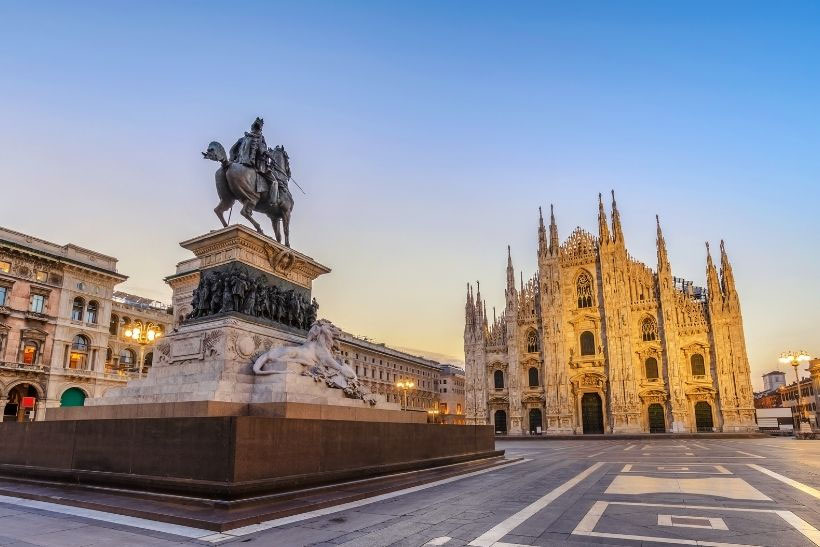
Milan shifts quickly from one neighborhood to the next. Stay near the Duomo, and the major sights are close, but so are the crowds, higher rates, and a more tourist-heavy rhythm. Brera feels
softer and more polished, with galleries, cafés, and boutiques tucked into walkable streets. Navigli brings canals, aperitivo crowds, and a looser evening mood. Porta Garibaldi and Centrale make
more sense for travelers who care about train connections, transit, and getting around with less hassle.
For a design-minded trip, the best hotel is not always the one closest to the cathedral. It’s the one that puts the right Milan outside your door, whether that means creative, elegant, practical,
lively, or quietly local.

Navigli is a strong choice for travelers who want Milan to loosen up after dark. The canal-side streets bring restaurants, bars, galleries, vintage shops, and a lively aperitivo scene, giving the
area enough character to feel like more than a place to sleep. It’s especially appealing when the hotel has the personality, scale, and sense of place that define a strong boutique hotel, since
this neighborhood rewards a stay that feels more individual than a standard business address.
This part of Milan works best if you like having your evenings close by. From a Navigli base, you can linger along the canals at night, then spend the next day in Brera, around the Duomo, or near
the fashion district without feeling tied to the busiest part of town.
Brera is one of Milan’s easiest neighborhoods to settle into, especially if you want central access without sleeping in the thick of the crowds. Its streets feel polished but not stiff, with
galleries, small shops, cafés, and restaurants that make wandering feel like part of the day rather than a pause between sights.
This is a good base for travelers who notice interiors, materials, window displays, and mood. A hotel in or near Brera keeps the Duomo, La Scala, and the fashion district within easy reach, but
the stay itself feels more neighborhood-driven. It’s a smart choice when you want Milan’s elegance with a gentler landing at the end of the day.

Staying near the fashion district gives Milan a more polished rhythm. This is where morning walks pass historic palazzi, immaculate shop windows, discreet courtyards, and well-dressed locals
moving between appointments. It’s central without feeling as monument-heavy as the Duomo area, which makes it a strong fit for travelers who want style, architecture, and convenience in the same
stay.
Milan’s
Fashion Quadrilateral is framed by Via Monte Napoleone, Via della Spiga, Via Manzoni, and Corso Venezia, where even a short walk can take in polished storefronts, quiet courtyards, and some
of the city’s most elegant streets. Hotels around this zone suit travelers who want classic Milan close at hand, especially if shopping, people-watching, and refined city texture matter as much
as the major sights.
Some travelers come to Milan for the famous storefronts, but the city’s style gets more interesting when it moves into studios, workshops, and quieter creative spaces. A well-placed hotel makes
that side of the city easier to reach, especially for guests who want galleries in Brera, canal-side evenings in Navigli, and time for Milan fashion and atelier culture without reducing the trip to a string of shopping stops.
For travelers who want to understand Milan beyond its hotel lobbies and storefronts, Fernwayer’s guided experiences bring them closer to the city’s makers, ateliers, and design- minded
neighborhoods.

Not every stylish Milan stay has to be built around a postcard neighborhood. Porta Garibaldi works well for travelers who like newer hotels, good restaurants, quick transit, and easy access to
areas such as Isola and Corso Como. It has a more contemporary feel than Brera or the fashion district, which can be a plus if you enjoy modern architecture and a busier local pace.
Centrale is more practical than atmospheric, but it has its place. A hotel near the station can make sense for short stays, early trains, late arrivals, or trips that combine Milan with Lake
Como, Turin, or other parts of northern Italy. The tradeoff is mood, so choose carefully if design and neighborhood character are part of the reason for the trip.
Milan rewards travelers who are honest about how they like to spend their days. A first-time visitor may want the Duomo and La Scala within easy reach. Someone returning to the city may be
happier in Brera, Navigli, or Porta Garibaldi, where the stay feels less centered on landmarks and more connected to daily life.
Travelers building a Milan itinerary around Fernwayer’s guided experiences may get more from a hotel base that keeps Brera, Navigli, and the city’s creative districts within easy reach, rather
than choosing a room only by star rating or distance from the cathedral. In a city this layered, location can influence the trip as much as the hotel itself.

A good Milan hotel does more than put a bed near the sights. It sets the tone for the version of the city that feels most rewarding, whether that means canal-side evenings in Navigli, gallery
walks in Brera, polished mornings near the fashion district, or a practical base with fast transit.
For a design-minded trip, the smartest choice is the hotel that makes the city feel easy to read and enjoyable to move through. Milan’s style is rarely loud, but the right neighborhood helps it
come through in the details.
More Blog Posts from Europe
Thank you for reading. If you like this article, please share!

About the Author:
Jennifer Anders is a freelance writer who has traveled extensively and enjoys exploring off-the-beaten-path locations around the world.
She loves hiking national parks, windsurfing, and photographing wildlife.
Aside from all those crazy activities, you’ll also find her eating plenty of local street food. She is absolutely fearless when it comes to trying new things.