Dolly Parton died August 25, the most famous woman in country music and one of the few very famous artists left us. After about 60 years of marriage (her husband Carl Dean died last year) and as long a career, Dolly is mourned across the nation, across the generations, across most cultural divides, and even political ones. She was born in a one-room cabin to a sharecropper and a preacher’s daughter, the fourth of twelve children. She died a celebrity remembered in digital technology and celebrated across social media.
And it’s not hard to see why. Dolly was a beautiful woman and a very shrewd businesswoman, a musician with a beautiful voice and a successful actress, a proud Tennessean, devoted to her Appalachian people, and also a very generous philanthropist. She spellbound the nation by living the American dream.
Dolly moved to Nashville as soon as she finished high school and became famous fairly quickly by singing duets on The Porter Wagoner Show (1966–74), trading banter, or singing spirituals. She also released 13 albums in that period, from Hello, I’m Dolly (1967) to Jolene (1974), including most of her most beloved songs: “Dumb Blonde,” “Joshua,” “Coat of Many Colors,” “My Tennessee Mountain Home,” “In the Good Old Days (When Times Were Bad),” “I Will Always Love You,” and “Jolene.”
Although her success became all-American, her best songs, like her origins, are distinctly Southern. Some memory of the rural way of life is part of the great attraction of country music, which could be called a sentimental turning away from modernity, based on the worry that we’re not sure who we are or what we love anymore. Love and regret, childhood and family—somehow all this sounds more honest, so that it pulls at the heartstrings, in abstraction from modern industry.
Dolly reminds us of that remarkable mid-century moment in which American culture was dominated by the Western, which is among other things a way to make the South lovable again, after the Civil War. Aside from the great Western movies of John Ford, whose long career peaked in the mid-century, the brand-new media of radio and television were also full of Westerns, and there were incredibly popular Western novelists who sold hundreds of millions of copies—and that’s just Louis L’Amour. And there was country music and rock’n’roll. All very Southern. Dolly may have been the last memory of all that.
Dolly married at 20 and stuck to it. She seems to have had a happy marriage; she certainly was proud of her marriage. In that way, too, she didn’t want to modernize. Her earnestness might seem deluded, but America’s adventure with free love and easy divorce since the 1960s has been a huge catastrophe. Probably, Dolly knew more about love than what has been fashionable in the last two or three generations.
The universal love of Dolly may also be a subtle and unrecognized indictment of modern American feminism. Dolly was certainly a strong woman, but she was not a feminist, as she herself sometimes stated (with some qualification). This may have been because she didn’t want to politicize the feelings at the core of her art, which was mostly about love and home. She defended the Southern way of life for the same reasons.
The role of music in American life in that sense was fundamentally defensive. Not only in the sense of nostalgia or a conservative attitude or a reaction to rapid changes—but in the sense of preserving some kind of division between private and public life. It takes a certain kind of daring to sing about love, although we have taken it for granted for so long. But it would neither be necessary nor possible if we didn’t fear that we’re in danger of forgetting about it or losing it because our way of life tends towards the impersonal.
Dolly comforts us and inspires us and that more such American lives will be lived, the better for all the good she has done.
The other aspect of that defense of American life, of course, is religion. Dolly recorded quite a number of hymns and spirituals even beyond the more discrete influence of church on her music, starting with The Golden Streets of Glory (1971), which she reissued as Letter to Heaven: Songs of Faith & Inspiration in 2010, with the addition of many other similar songs she’d recorded. Some of these she wrote herself—one was written by her preacher grandfather, “Book of Life.”
Dolly’s youthful success launched a career aimed at immortality, in which she sold more than 100 million records, was nominated for everything you can think of—Oscars, Golden Globes, the Tony—and won Grammys and Emmys, and who knows how many other things. She still has more than 16 million monthly listeners on Spotify. It’s fair to say she was a big part of the American soundtrack in the period when pop culture became global.
Dollywood, however, has to be her best business idea, because it is family entertainment. The park, between Knoxville and the Smoky Mountains, may be unique in America for its dedication to a daughter of the region and its attempt to preserve in a playful way, since it’s just entertainment, the memory of the way of life of the region. Dolly bought into the park in 1986; before that, it had turned from one Americana idea to another for a couple of decades, starting out as a Civil War entertainment, moving on to the Gold Rush, then the Old West, before becoming what it is now. And it is incredibly successful and beloved, visited by 3-4 million people a year (even though it doesn’t operate most of the winter), and still growing.
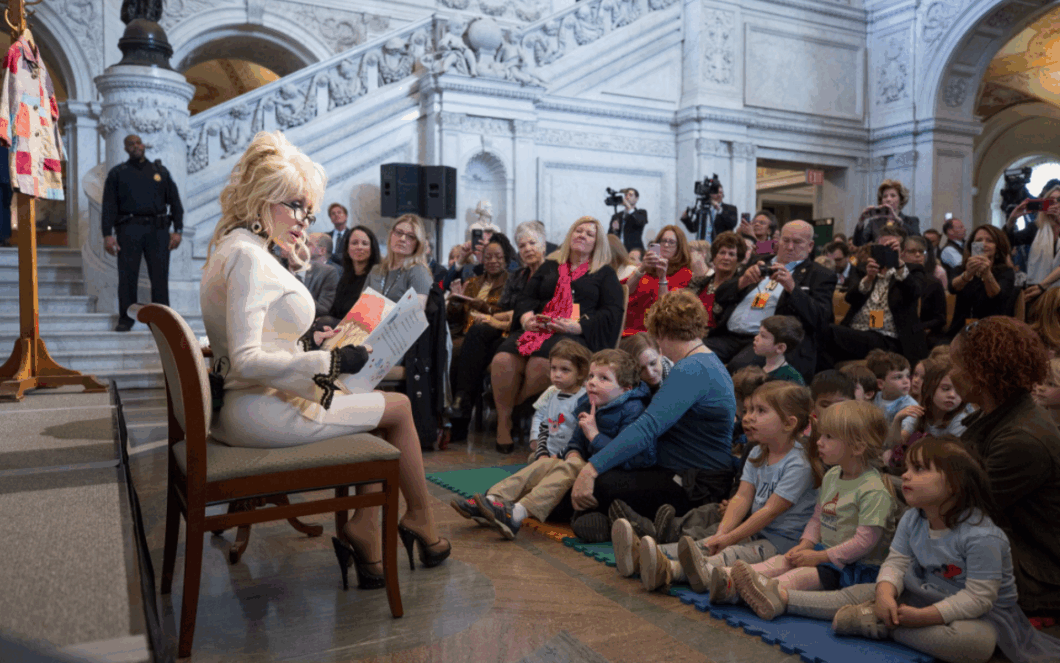
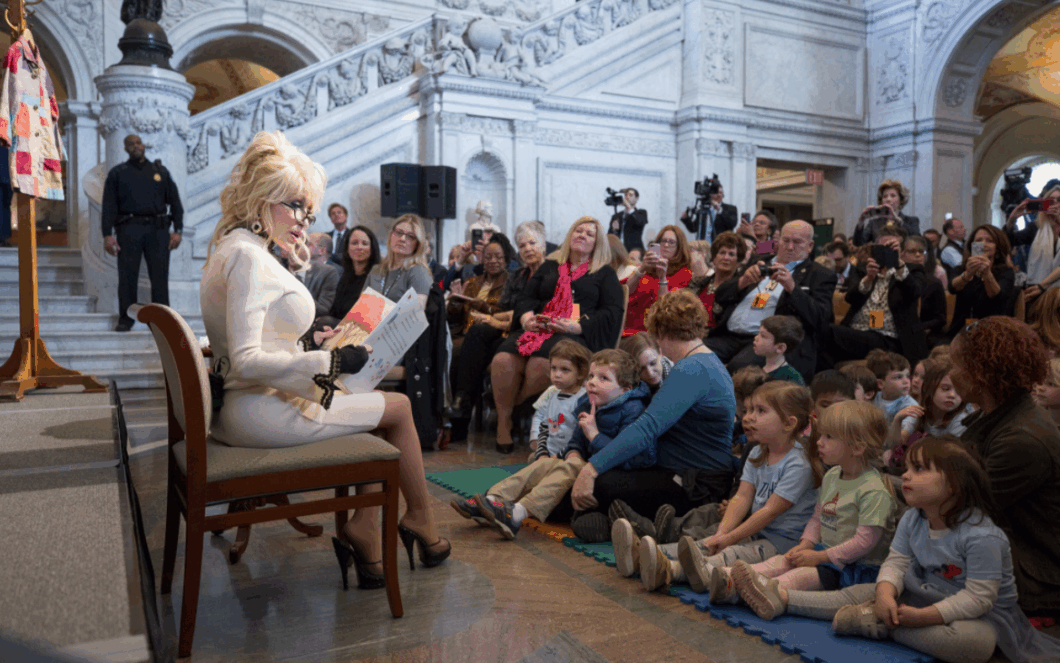
Dolly is also loved a great deal for her philanthropy, from Dolly Parton’s Imagination Library, which she started in 1995 and which has delivered something like 300 million books to kids in the Anglosphere, to the My People Fund (there’s a name!) for disaster relief after wildfires in the Smokey Mountains back in 2016 or, more recently, Hurricane Helene in 2024.
Dolly understood that human nature includes not just sweetness, but much envy and resentment besides, aimed especially, of course, at the beautiful, the wealthy, and so on among us. But her obvious love of people and loyalty to her roots, her tireless work raising money and creating jobs, in short becoming such an astonishing benefactor—that overwhelmed any resentment and made people love her even more for it.
That’s a remarkable American life. There’s very little an obit can do to sum it up or measure it, beyond recalling the most powerful moral motives and the most beautiful successes in a career; even this little cannot be done without causing ourselves the pain of grief, a loss in which we feel somehow involved. It suddenly becomes obvious that life is apart from the music that beautifies life; apart from business and philanthropy; we can be glad to pay in tears for all the sweetness, and hope that Dolly comforts us and inspires us and that more such American lives will be lived, the better for all the good she has done.