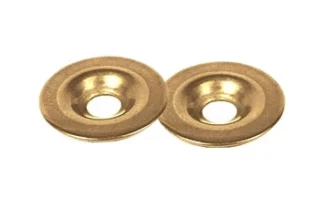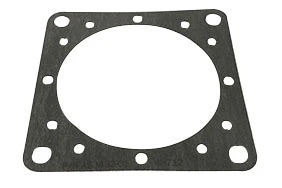

Piston engines are used extensively in the aviation industry. They power a wide range of commercial and private airplanes. Piston engines are characterized by the use of reciprocating pistons that turn a connected crankshaft. The crankshaft then turns a propeller to create thrust that propels the airplane forward. While there are different types of piston engines, however, many of them require exhaust gaskets.
Overview of Exhaust Gaskets
Exhaust gaskets are mechanical seals that create a leakproof mating surface between an engine and exhaust pipe. As they burn fuel and air, piston engines produce hot combustion gases as a byproduct. These gases must safely exit the engine, which is where exhaust gaskets come into play. They prevent exhaust gases from leaking into spaces where they shouldn’t.
Exhaust gaskets are available in different materials, some of which include:
- Stainless steel
- Spiral-would steel
- Copper
- Carbon
Why Piston Engines Need Exhaust Gaskets
Piston engines need exhaust gaskets to ensure that the hot exhaust gases leave the engine system as intended. Piston engines have joints between cylinder exhaust ports and the exhaust stack. Exhaust gases must travel through these joints to exit the system. Without exhaust gaskets, the highly pressurized gases would leak around this space.
Exhaust gaskets prolong the life of piston engines and their adjacent components. If exhaust gases leak, they may burn or degrade nearby parts. After all, the exhaust gases produced by a typical piston engine can reach up to 900 to 1,400 degrees Fahrenheit. Aside from the exhaust system, most aircraft parts aren’t designed to handle such high temperatures. Therefore, exhaust gases must be safely controlled and routed using gaskets.
How Exhaust Gaskets Work
Exhaust gaskets work by sealing the mating surface between an engine cylinder and exhaust port. All piston engines have cylinders. Cylinders are the chambers that contain pistons, which move up and down as the fuel-air mixture is burned. Exhaust gaskets create a tight seal to ensure that exhaust gases can travel from a given cylinder to the exhaust port.
Most exhaust gaskets have several holes, including a large hole and many smaller holes. The large hole is designed to fit over the exhaust port. The smaller holes are used to support to fasteners, such as mounting bolts or studs. Exhaust gaskets are installed by aligning the large hole over the exhaust port and then tightening the fasteners through the smaller holes using the manufacturer’s recommended torque.