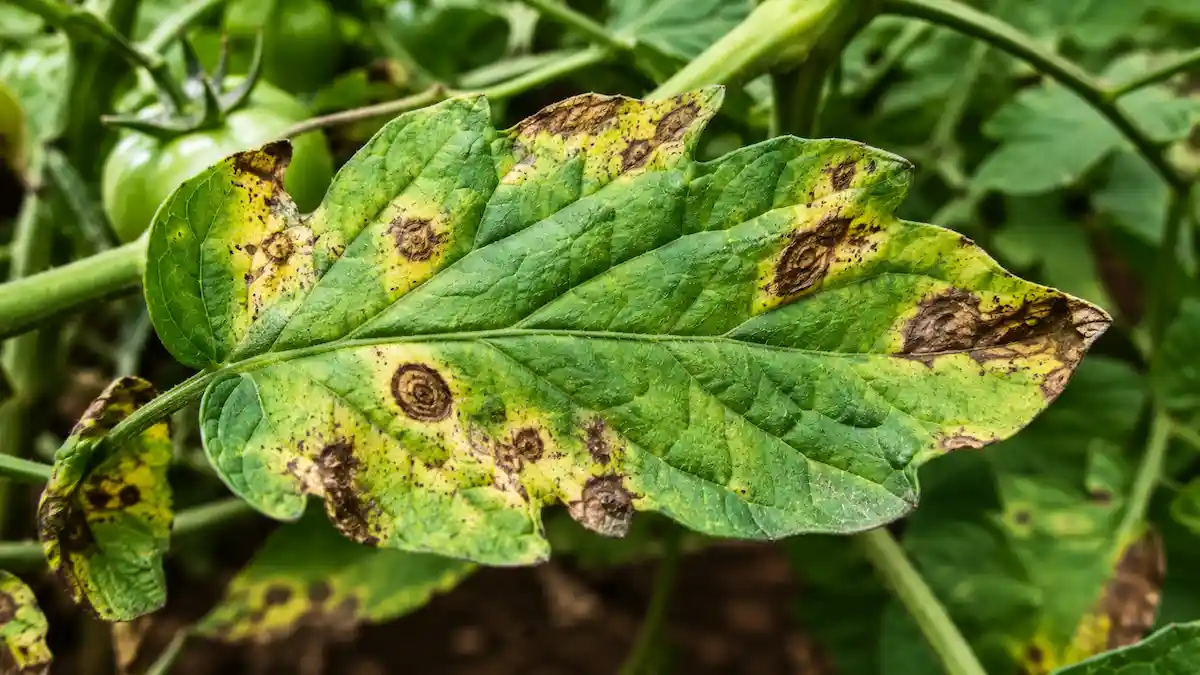
Brown spots on tomato leaves are one of the most common problems gardeners run into, and they rarely mean the same thing twice. The cause could be a fungal disease, a bacterial infection, a watering mistake, heat stress, or a pest you haven’t spotted yet.
The good news is that the shape, color, and pattern of the spots can provide useful clues about the cause. Once you know what you’re looking at, treating it and stopping it from spreading gets a lot easier.
This guide walks through what different spot patterns mean, the nine most common causes, how to confirm what’s actually going on, and the treatment and prevention steps that work for each one.
What Do the Brown Spots on Your Tomato Leaves Look Like?
Brown spots on tomato leaves can be caused by fungal diseases such as early blight and Septoria leaf spot, bacterial leaf spot, insect damage, heat stress, watering problems, or nutrient issues. The size, shape, location, and spread of the spots can help narrow down the cause.

Before treating anything, look closely at the spots. A magnifying glass or a zoomed-in phone photo helps more than you’d expect, since many tomato problems look similar from a few feet away.
Pay attention to three things: the size and shape of each spot, where on the plant they started, and whether anything else is spreading with them, like yellowing or curling.
| Spot Appearance | Likely Cause | Quick Check |
|---|---|---|
| Small brown spots, dark centers | Septoria leaf spot | Starts on lower, older leaves |
| Concentric rings, target pattern | Early blight | Yellowing around each spot |
| Large irregular brown patches | Late blight | Spreads within days, feels wet |
| Brown spots with yellow halos | Leaf disease, fungal or bacterial | Check both sides of leaf |
| Dry, brown leaf edges | Heat or water stress | No fuzzy growth or holes |
| Spots with small holes | Insects or pests | Look for bugs, eggs, webbing |

Small brown spots with black or tan centers, especially when clustered on lower leaves, can be a sign of Septoria leaf spot. It typically shows up on older growth before new leaves, which helps narrow down the cause early.
Spots with visible concentric rings, sometimes described as a bullseye or target pattern, are the calling card of early blight. The rings form because the fungus grows outward in cycles as the lesion ages.
Large, irregular patches that look almost water-soaked and spread within a day or two are a warning sign for late blight. This is the one cause on this list where speed matters more than anything else.

Are the Brown Spots Spreading Quickly From One Leaf to Another?
Fast, visible spread from one leaf to the next in a matter of days can be a warning sign of late blight or a bacterial infection, particularly during favorable weather conditions. Treat rapid spread as a signal to act the same day, not the same week.
Not Sure What’s Causing the Brown Spots?
What to Do Today if Your Tomato Leaves Have Brown Spots
These five checks can help you assess the problem before choosing a treatment, and take less than fifteen minutes for most home gardens.
Inspect the Brown Spots Closely Before Treating the Plant
Use a magnifying glass or a zoomed-in phone photo to check the spot shape, color, and whether any pests are visible on the underside of the leaf before reaching for a spray.
Check Soil Moisture Before Watering Your Tomato Plant
Push a finger into the soil near the base of the plant. Soggy or bone-dry soil rules a watering problem in or out fast, before you spend time treating for disease that may not be there.
Remove Severely Damaged Leaves if Necessary
Use clean, sharp scissors or pruning shears rather than pulling leaves by hand, which can tear healthy tissue and create new entry points for infection. Wipe the blade with alcohol between cuts.
Improve Airflow Around Crowded Tomato Plants
Space plants further apart if possible, and prune away dense, overlapping growth so air can move through and dry the foliage after rain or watering.
Check Nearby Tomato Plants for the Same Symptoms
Diseases spread between neighboring tomato plants quickly. Catching a second or third affected plant early prevents a small problem from becoming a season-wide one.
9 Common Causes of Brown Spots on Tomato Leaves
Here are nine common causes of brown spots on tomato leaves, starting with the problems home gardeners encounter most often.
1. Early Blight
Early blight, caused by the fungus Alternaria solani, shows up as dark brown spots with visible concentric rings, almost like a target. It usually starts on the oldest, lowest leaves first, since those are closest to the soil where the fungus overwinters.

Warm, humid weather speeds it up considerably. Once it appears, it can move up the plant within a couple of weeks if the leaves stay wet and nothing is done to slow it down.
A yellow halo often forms around each lesion as the tissue around the spot dies back, and heavily infected plants can lose enough foliage to expose ripening fruit to sun damage.
2. Septoria Leaf Spot
Septoria leaf spot creates many small, round spots with tan or gray centers and dark edges. Unlike early blight, the spots stay small and numerous rather than large and few.
Wet foliage and splashing rain are the main triggers, since the fungus spreads through water droplets landing on lower leaves. Left untreated, it can cause enough leaf loss to expose fruit to sunscald.
Ireland’s Teagasc also recommends good hygiene, clean water, humidity control, and removal of crop debris as important practices for managing tomato diseases.” Teagasc tomato disease guidance.
3. Late Blight
Late blight causes large, irregular brown or almost black patches that can cover a leaf within days. Cool, damp weather is what sets it off, which is why it tends to appear during extended rainy spells rather than in the middle of summer heat.
It spreads fast through an entire tomato patch and can also infect potatoes nearby. Quick action matters more here than with any other cause on this list, since a plant can collapse within a week or two of the first symptoms.
The UK government’s plant-health information also lists tomato as a host of Phytophthora infestans, the pathogen responsible for late blight. UK Plant Health Information Portal: Phytophthora infestans
It remains one of the few tomato diseases where removing the whole plant early is often the smarter call over trying to treat it in place.
4. Bacterial Leaf Spot
Bacterial leaf spot begins as small, dark spots, often with a slightly greasy or water-soaked look rather than a dry, papery one. It doesn’t respond to fungicides, since it’s caused by bacteria rather than fungus, which makes correct identification important before spending money on treatment.

Splashing water and handling wet plants both spread the bacteria from leaf to leaf, so working in the garden when foliage is dry helps limit new infections.
5. Fungal Problems From Wet Foliage
Several tomato leaf diseases share one trigger: foliage that stays wet for hours at a time. Overhead watering, heavy dew, and crowded plants with poor airflow all extend how long leaves stay damp, giving fungal spores the window they need to infect the tissue.
This is why so much tomato disease advice circles back to the same core habit: keep water off the leaves and give the plant room to dry out quickly after rain.
6. Overwatering and Poor Drainage
Soggy soil suffocates tomato roots, and stressed roots often show up as brown, wilting patches on the leaves above, even though the actual damage is happening underground. Poor drainage makes this worse, since water pools around the roots instead of draining away between waterings.
Raised beds or amended soil with more organic matter usually solve chronic drainage problems better than adjusting the watering schedule alone.
7. Underwatering and Heat Stress
Tomato leaves turning brown at the edges, especially during a hot, dry stretch, usually points to underwatering or heat stress rather than disease. The leaf tissue essentially scorches from lack of moisture reaching the leaf margins.

Containers and raised beds dry out faster than in-ground soil, so plants in pots are especially prone to this kind of browning during summer heat waves.
8. Nutrient Deficiency
A lack of potassium or magnesium often shows up as brown, crisping leaf edges on older leaves first, sometimes with a yellow band between the brown edge and the green center of the leaf.
It’s a slower, more uniform kind of browning compared to disease, without the spotting pattern. A soil test is the most reliable way to confirm a nutrient problem before adding any fertilizer.
9. Insects and Pests
Aphids, spider mites, and other pests can leave behind small brown spots, stippling, or tiny holes as they feed on leaf tissue. Damage often looks scattered rather than following a clear pattern.
Flip the leaves over before assuming disease. Pests are often visible, along with fine webbing or sticky residue, before the damage is obvious from the top of the leaf.
For a deeper look at pest identification and symptoms side by side, this guide on tomato pests and diseases is a useful reference.
What If Brown Spots Appear With Other Tomato Leaf Symptoms?
The spots rarely tell the full story on their own. What’s happening around them narrows the cause down even further.
Brown Spots and Yellow Leaves Appearing on the Same Tomato Plant
Yellowing that spreads outward from brown spots usually means a fungal or bacterial disease is actively killing surrounding tissue, not just the spot itself. Isolated yellowing without spots often points to a nutrient issue instead.
Brown Spots With Curling or Wilting Tomato Leaves

Curling combined with brown spots can signal advanced fungal disease, root stress from overwatering, or heat stress on a hot afternoon. Check soil moisture first, since it’s the fastest way to separate a watering issue from disease.
Brown Spots With Holes or Chewed Areas on the Leaves

Holes alongside brown spots can point to insect or other pest damage, although some diseases can also cause leaf tissue to break down. Look for insects, eggs, or droppings on the underside of the leaf before treating for anything else.
Brown Spots Spreading From the Lower Leaves Upward
When spotting begins on lower leaves and gradually moves upward, early blight or Septoria leaf spot are two possibilities worth checking, since both fungi live in soil and splash up onto the lowest leaves first.
Brown Spots With Yellowing Between the Leaf Veins
Yellowing that appears between the veins while the veins themselves stay green can point to a nutrient deficiency, such as low magnesium or potassium, rather than a fungal or bacterial disease. A soil test is the most reliable way to confirm this pattern.
How to Tell What Is Causing Brown Spots on Your Tomato Plant
A few minutes of close inspection usually reveals more than guessing based on the spots alone. Work through these checks in order before deciding on a treatment.
Check Whether the Spots Are on Older or Newer Leaves
Diseases like Septoria and early blight typically start on the oldest, lowest leaves. Damage that shows up on new growth first usually points toward pests or a nutrient issue instead.
Examine Both Sides of the Leaves
Pests, eggs, and fungal growth often hide on the underside of the leaf where they’re protected from sun and easy to miss during a quick glance.
Check the Soil Moisture First
Before assuming disease, push a finger into the soil near the base of the plant. Soggy or bone-dry soil can rule a watering problem in or out fast, before you spend time on fungicide.
Look for Additional Symptoms
Curling, wilting, yellowing, or leaf drop alongside the spots usually means the problem is advancing rather than staying isolated to a few leaves.
Inspect the Stems and Fruit
Lesions spreading to stems or tomatoes signal a more serious infection, and this is the point where removing affected material becomes more urgent than trying to save every leaf.
Most brown spots can be managed on a normal schedule, but a few signs mean the situation needs same-day action.
Brown Spots That Are Spreading Quickly Across Several Leaves
Rapid spread, especially during cool, wet weather, can be an important warning sign of late blight and deserves prompt attention.
Brown Spots Appearing on Tomato Stems or Fruit
Once lesions reach the stem or the fruit itself, the infection has moved past a foliage-only problem. This is usually the point where removing the affected plant material, or the whole plant, becomes the safer choice.
Several Tomato Plants Developing Brown Spots at the Same Time
Multiple plants showing symptoms within the same week points to a fast-moving disease rather than an isolated watering or pest issue, and calls for garden-wide sanitation right away.
How to Treat Brown Spots on Tomato Leaves
Treatment depends entirely on the cause identified above. Applying the wrong fix wastes time and can let the real problem keep spreading.
How to Treat Tomato Leaves Affected by Fungal Diseases
For confirmed fungal diseases such as early blight or Septoria leaf spot, remove infected leaves first using clean, sanitized shears. A fungicide labeled for tomatoes and the specific disease may help slow further infection.
Always follow the product label and check local regulations, since approved products and application rates vary by country. Reapply on the schedule listed, since a single treatment rarely finishes the job once a fungal infection has established itself on the plant.
How to Manage Brown Spots Caused by Bacterial Leaf Spot
Fungicides won’t help here, since bacteria and fungi respond to completely different chemistry. A bactericide labeled for the crop and disease may help slow bacterial spot, but sanitation, removing infected material and avoiding wet foliage, does more of the real work. Check the product label and local regulations before applying anything.
How to Treat Brown Spots Caused by Tomato Plant Pests
For confirmed pest problems, products such as insecticidal soap or neem oil may help control some soft-bodied pests like aphids and spider mites. Follow the product label for the crop, pest, application rate, and harvest restrictions.
Spray in the early morning or evening, and cover the undersides of leaves where pests tend to cluster.
Natural Ways to Help Manage Brown Spots on Tomato Leaves
Several natural practices reduce brown spots regardless of the exact cause, since they target the conditions that let disease and pests take hold in the first place.
- Removing badly affected leaves as soon as they appear
- Improving airflow through spacing and pruning
- Watering at soil level instead of overhead
- Keeping foliage dry, especially overnight
- Mulching to reduce soil splash onto lower leaves
- Cleaning up fallen leaves and plant debris
- Removing visible pests by hand or with a strong water spray
- Encouraging beneficial insects that prey on aphids and mites
- Using an appropriately labeled organic product where one is genuinely needed
Can Homemade Sprays Help With Brown Spots on Tomato Leaves?
Some homemade sprays can help with specific situations, but none of them treat every cause of brown spots. Matching the spray to the actual problem matters more than the recipe itself.
Baking soda sprays are sometimes used to help suppress certain fungal problems, though they aren’t a guaranteed cure and work best alongside sanitation, not instead of it.
Neem-based sprays are more consistently useful against pests like aphids and mites than against fungal or bacterial disease.
Soap sprays only suit certain pests and need careful dilution, since a spray that’s too strong can burn leaf tissue in hot or sunny conditions.
Milk sprays are sometimes used for powdery mildew specifically, and shouldn’t be treated as a general fix for brown spots from other causes.
Plain water, used to rinse pests off leaves, can help with light infestations but does nothing for disease once it has already infected the tissue.
Natural and homemade remedies can help with some causes of tomato leaf damage, but there is no single homemade spray that treats every cause of brown spots. Identifying the actual problem first, using the diagnosis steps above or the plant doctor tool, is more useful than picking a spray and hoping it fits.
When a Fungicide May Be Appropriate for Tomato Leaf Diseases
For a confirmed fungal disease, a fungicide labeled for tomatoes and that specific disease may help slow further spread, rather than being used as a routine preventive spray applied on a fixed schedule. A basic soil moisture meter can help confirm the spots aren’t watering-related before you spend money on a fungicide at all. Overusing fungicides can also build resistance in the fungus over time, making future outbreaks harder to control.
When Removing the Entire Tomato Plant May Be Necessary
Late blight that has taken over most of the plant, or any infection reaching the main stem, usually means the plant should be pulled and bagged rather than treated further, to protect the rest of the garden from spreading spores.
How to Prevent Brown Spots From Returning to Your Tomato Plants
Prevention comes down to a handful of habits that address nearly every cause on this list at once, which is why experienced gardeners tend to repeat the same short list of practices every season.
Give Plants Enough Space
Better spacing between plants means better airflow, which means faster-drying leaves and fewer opportunities for fungal spores to take hold after rain or watering.
Water Properly Without Wetting the Leaves
Drip irrigation or a soaker hose keeps foliage dry while still delivering consistent moisture to the roots, which is the combination most tomato diseases struggle to establish in.
Remove Diseased Leaves as Soon as You See Them
Don’t wait for symptoms to spread across the plant before acting. Early removal is far more effective than treatment after an infection has taken hold.
Rotate Tomato Crops Each Season
Avoid planting tomatoes in the same soil where disease appeared the year before. A three-year rotation with non-related crops gives soil-borne spores time to die off.
Keep Fallen Leaves and Debris Out of the Garden
Old plant material left on the ground carries fungal spores into the next season, undoing much of the benefit from good watering and spacing habits.
Timing matters as much as the habits themselves. Early-season prevention, before the first fruit sets, tends to pay off more than reacting once a plant is already covered in spots, since fungal spores multiply faster than most gardeners expect once the weather turns warm and wet.
For general watering guidance adjusted by climate and soil type, this plant watering calculator is a useful starting point, and this guide to growing tomatoes organically covers seasonal care in more depth. This overview of tomato cultivation from seed to harvest also covers spacing and soil prep that reduce disease pressure from the start.
When Are Brown Spots on Tomato Leaves Most Likely to Appear?
Why Wet and Humid Weather Can Increase Tomato Leaf Diseases
Humid, rainy regions see more fungal pressure overall, since spores need moisture on the leaf surface to germinate. Greenhouse growers face the same risk indoors, where enclosed, humid air keeps foliage wet longer than an open garden bed, favoring diseases like Septoria and leaf mold. Ventilation and spacing matter as much indoors as they do outside.
Why Hot, Dry Weather Can Cause Brown Leaf Edges
Hot, dry climates lean more toward heat stress and nutrient issues instead of disease. Leaf margins scorch brown when the plant can’t pull moisture to the edges fast enough, which is a watering and shade problem rather than an infection.
Why Container Tomatoes Can Develop Brown Leaves During Heat Waves
Pots dry out faster than garden soil, so brown, crispy leaf edges show up more often in containers than fungal spotting does. Tomatoes grown near light-colored walls or pavement can also pick up extra reflected heat, which shows up as scorched margins even when watering seems adequate. Moving pots a short distance from reflective surfaces often helps.
Can You Still Eat Tomatoes From a Plant With Brown Leaves?
Healthy Fruit Is Usually Fine Even When Leaves Are Affected
In most cases, yes, the tomatoes are still safe. Leaf diseases like early blight and Septoria rarely affect the fruit directly, especially if the problem was caught and treated early.
Check Each Fruit Carefully Before Eating
Still, check every tomato for spots, soft patches, or rot before eating it. Late blight and some bacterial infections can reach the fruit itself, not just the leaves.
When Fruit Should Be Discarded
Any tomato showing unusual spots, sunken lesions, or an off texture is safer thrown out than eaten. When in doubt, the loss of one tomato is a small price compared to the risk.
According to University of Maryland Extension, the most common tomato leaf spot diseases affect foliage without significantly reducing fruit safety, though severe defoliation can expose fruit to sunscald damage.
Brown Spots on Tomato Leaves: Quick Diagnosis Guide
| What You See | Possible Cause | What to Check |
|---|---|---|
| Concentric rings, lower leaves | Early blight | Yellow halo, age of leaf |
| Tiny spots, dark centers | Septoria leaf spot | Lower leaves, wet weather |
| Fast-spreading dark patches | Late blight | Stems, nearby plants, cool damp weather |
| Small, greasy dark spots | Bacterial leaf spot | Water-soaked look, no fungicide response |
| Dry, brown leaf edges | Heat or water stress | Soil moisture, container heat |
| Holes, stippling, bugs visible | Pests | Underside of leaves, webbing |
This table is a starting point, not a final diagnosis. When symptoms overlap or you’re still unsure, a closer inspection or the plant doctor tool above is the more reliable next step.
Frequently Asked Questions About Brown Spots on Tomato Leaves
Should I remove tomato leaves that have brown spots?
Yes, removing badly spotted leaves helps slow the spread of disease to healthy foliage. Use clean scissors, dispose of the leaves away from the garden, and avoid handling wet plants right afterward to limit further spread.
Can a tomato plant recover after developing brown spots?
Most tomato plants recover well once the cause is treated and conditions improve. Early blight and Septoria rarely kill a plant outright, though yield may drop slightly if the infection was widespread before treatment began.
How can I stop brown spots from spreading to other leaves?
Remove infected leaves promptly, water at the soil line instead of overhead, and space plants for better airflow. These three habits address most of the conditions that let brown spots spread from leaf to leaf.
Can overwatering cause brown spots on tomato leaves?
Yes. Overwatering and poor drainage stress the roots, which often shows up as brown, wilting patches on the leaves above. Allow the soil to dry somewhat between waterings rather than keeping it constantly saturated, while adjusting watering to your soil, climate, container size, and growing conditions.
Can hot weather cause tomato leaves to turn brown?
Hot, dry weather can scorch leaf edges brown, especially on plants that are underwatered during a heat wave. This shows up as dry, crisp margins rather than the spotting pattern typical of disease.
Are brown spots on tomato leaves always caused by disease?
No. Watering mistakes, heat stress, nutrient deficiency, and pests can all cause brown spots without any disease being involved. Checking the pattern, location, and surrounding symptoms is the fastest way to tell them apart.
Can brown spots on tomato leaves spread to the tomatoes?
Sometimes. Diseases like early blight and Septoria mostly stay on the foliage, while late blight and some bacterial infections can reach the fruit itself. Always check tomatoes individually rather than assuming the whole plant is affected the same way.
What is the best natural treatment for brown spots on tomato leaves?
There isn’t one natural remedy that treats every cause. Sanitation, good airflow, proper watering, and removing badly affected leaves are useful first steps. For confirmed fungal or bacterial diseases, some organically approved products may be available depending on your country and the specific disease. Always follow the product label and local regulations.
What is the best treatment for brown spots on tomato leaves?
The appropriate treatment depends on the confirmed cause. For some fungal or bacterial diseases, a properly labeled product may help, while pest problems may respond to insecticidal soap or other appropriate controls. Sanitation, removing affected leaves, proper watering, and good airflow are important parts of management.
How long does it take to treat brown spots on tomato leaves?
The time it takes to see improvement depends on the cause, weather, severity, and treatment used. Existing brown spots will not disappear from damaged leaves, even after the problem is under control. Instead, look for fewer new spots and healthier new growth.
Disclaimer: Information on this site is for educational purposes only. Results vary by climate, soil, weather, and growing conditions. For region-specific advice, consult your local USDA Cooperative Extension Service before making major gardening or soil changes.