Slow And Steady

HIGH The buildup to the mountaintop fight.
LOW Stocking up on Great Arrows only to realize the Great Bow doesn’t exist.
WTF The Dwarf that eats the player’s junk and “transmutes” it into gold.
Verho: Curse of Faces stands as a distillation of its genre. At once both dense and protracted, I experienced an uncanny sense of timelessness as I played. This is due, in part, to its clear roots in 32-bit titles such as King’s Field and Shadow Tower, but also in its blending of brevity with a grand sense of scale. Joining the recent renaissance of titles inspired by this very particular brand of first-person action RPG, Verho: Curse of Faces is perhaps too faithful in emulating its source material.
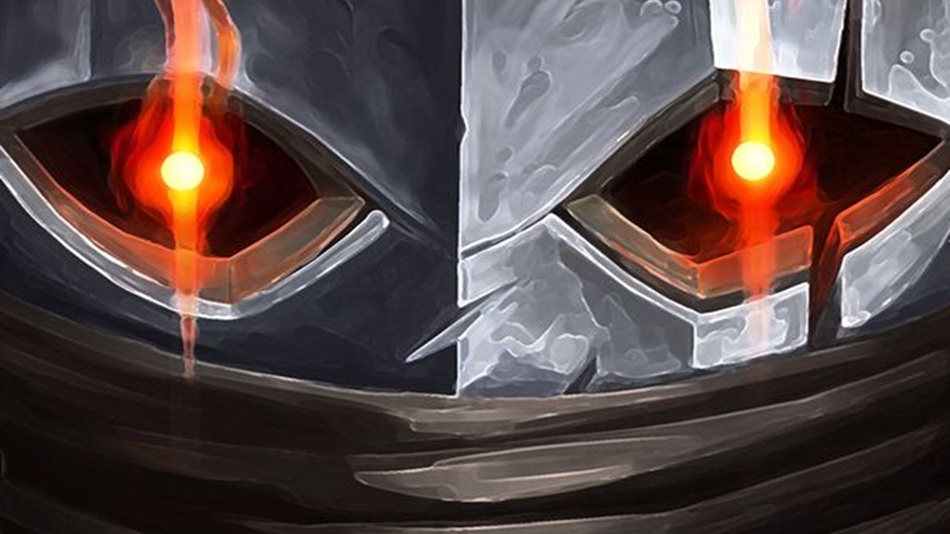
600 years have passed since the land was beset by a curse that brought death to any humans who met face to face. Though the curse’s origins remained a mystery, after a couple of hundred years of isolation, folks finally wised up and started wearing masks to protect themselves and others from their now-deadly visages. While the world of Verho: Curse of Faces has mostly adjusted to masked life, curious minds are not easily sated, and the fog-enshrouded city of Yariv reputedly holds the key to unlocking the ancient mystery – though none who enter the fog have ever returned.
Players set forth as one such adventurer, thrust maskless into the fog with hardly even a name to remember, much less their original motivation. Selecting a mask (class) from an assortment of variations on the warrior, rogue, mage archetypes sets the journey off in earnest, and players will soon find themselves in the Nameless Village – a kind of hub linking to the various pixelated burgs and dungeons surrounding Yariv.

While Verho: Curse of Faces’ central narrative is straightforward, there is a constant sense of barely-seen ephemera nibbling at the periphery – a fathomless pit harboring lost souls, a hazy shape stalking the mountain tops, a bestial cry echoing in the distance never fully heard. Lurid colors silhouette massive towers, polygonal edges just visible through the dithered draw-distance. Sound and image collide, hinting at worlds only whispered of in the text. There is tension between the dialogue-heavy NPC interactions, and this more evocative, environmental storytelling. The writing is not bad so much as it is voluminous, and as I clicked through what felt like endless walls of repetitive prose, I found myself longing for the glimmers of bewilderment and terror I found during exploration.
Furthermore, while the player will interact with numerous characters over the course of Verho: Curse of Faces, all but two (that I encountered) are men. Of the two female characters that I met, neither feature heavily in the narrative, and one is in a hidden area I missed on my first pass. This would be a failure of representation in any title, but feels particularly myopic in one thematically concerned with human connection, and the destruction wrought by its absence.
Narrative concerns aside, players will spend the majority of their time plumbing the depths of demon filled dungeons, restless graveyards, and foreboding castles in the first-person perspective. Combat is a considered affair, relying more on slow rhythms and positioning than snap reflexes. Wild swings are tantamount to death, with players needing to first “ready” their blows by holding down the attack button for several seconds until the stamina meter fills before striking. Greatswords and hammers do massive damage, but ready much more slowly than nimble rapiers and daggers.

Momentum also plays a role, particularly in the lighter weapons, offering both a forward thrust that advances the player, and a backstep for quick dodging. Favoring a fleet-footed thief build, my encounters with the razor-toothed plants and ghostly suits of armor played out as slow-motion dances as I methodically readied my attacks, carefully managing my position between strikes.
These melees, while challenging, never felt unduly difficult, and defeat was often the result of poor decision making, rather than a failure of reflex. Observing a gaggle of ghosts lazily drifting towards me, spectral swords at the ready, I have time to take stock – do I have enough health and mana potions? How long since my last checkpoint? With pacing that allows for strategy and consideration, death is rarely a surprise, and frustration all but nonexistent. There is comfort to be found in these rhythms, and while Verho: Curse of Faces doesn’t necessarily break new ground, its execution is spot on.
Exploration follows a similar tact, with large, open environments, and semi-non-linear progression in the world creating a controlled sense of discovery. There are often multiple avenues to explore and progress, but even as I came across a random treasure in an unmarked dungeon, I’d later realized I’d found an integral key to part of the main quest. In another example, I stumbled across the weapon that carried me through to the final boss leaning up against an unmarked grave in an unassuming corner of the map. This almost haphazard approach to looting only reinforced my curiosity as my organic exploration continued to bear fruit in unexpected ways.

Verho: Curse of Faces has something of a goldilocks quality to it – neither too difficult, nor too easy. Satisfyingly deep, but short enough to finish in a weekend. In many ways, its measured pace and smooth edges offer relief to an addled brain — but on the other hand, it also lacks the prickliness to step fully out from the shadow of its forebears to carve an identity of its own. While the paths I traced through Verho: Curse of Faces’ cyclopean temples contained glimpses of wonder, I couldn’t shake the feeling that I’d walked them before.
Rating: 6.5 out of 10
Buy Verho: Curse of Faces – PC – Switch – PS – XB
Disclosures: This game is developed by Kasur Games and published by CobraTekku Games It is currently available on PC, Switch, PS5, and XSX/S. This copy of the game was obtained via publisher and reviewed on the PS5. Approximately 17 hours of play were devoted to the single-player mode, and the game was completed. There are no multiplayer modes.
Parents: According to the ESRB, this game is rated T and contains Blood and Violence. The visuals in this game are presented in a low fidelity style that is not realistic. Combat consistent of the player fighting ghosts, knights, and other fantasy creatures with swords, magic, and bows and arrows. There are elements of horror in some of the enemy designs such as an iron maiden with a swinging door, showing the disfigured body of its still living occupant inside. While there is low detail blood sprays when an enemy is defeated, there is not gratuitous gore.
Colorblind Modes: There are no colorblind modes available.
Deaf & Hard of Hearing Gamers: This game offers subtitles. The subtitles cannot be resized, but there is an option for a pixel style font or a smoother text font for subtitles and menus. While playing without sound, I did experience some additional difficulty, particularly in ambushes. In certain areas there are flying enemies that are often difficult to see or initially hidden from the player with only an audio cue to give away their presence. When playing without sound these enemies frequently attacked me before I could see them, in some cases leading my character dying. I found a number of enemies throughout the game that ambush the character, often relying on a sound cue to give away their presence if the player is not looking directly at them. Because of these issues, this game is not fully accessible.

Remappable Controls: No, this game’s controls are not remappable. The only exception is the option to invert the y-axis.


Following this introduction, Ryan dove headlong into the 16 and 64-bit eras, culminating in the year 2000 with a fateful visit to the local game shop.On the recommendation of a saintly store clerk, Ryan picked up a copy of Deus Ex and, shortly thereafter, embarked on the vain quest to find a game that tops it.
This journey has led Ryan to GameCritics where he attempts to articulate why he still finds this medium so compelling.When not playing or writing about games, Ryan can be found watching competition reality television with his wife, their dog, and three cats.