As the weather warms up, we start hearing from more customers who are dealing with hot, humid plant environments. Heat is often the first concern when it comes to protecting an electrical control panel, but in many facilities, humidity is just as much of a problem. Moisture inside an enclosure can lead to corrosion, nuisance faults, and shorter component life, especially when sensitive electronics are involved.
A recent application came from a customer building a control panel for an end user in Malaysia. That location immediately stood out because Malaysia’s climate is hot and humid year-round, and the end user was in the palm oil processing industry. Palm oil is big business in Malaysia. The country is one of the world’s leading producers and exporters, and the industry supports a large network of plantations, mills, refineries, food ingredient suppliers, and downstream manufacturers.
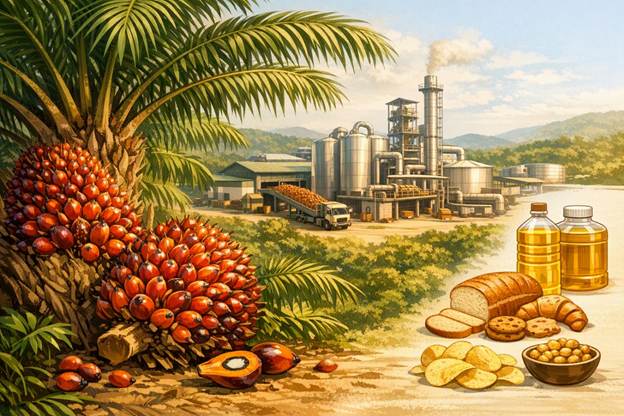
It is also an important piece of the broader food and beverage industry. Palm oil is widely used as an edible oil and as a functional ingredient in products such as baked goods, snacks, confectionery, margarine, shortenings, instant noodles, and other processed foods. For food manufacturers, it offers consistency, shelf stability, versatility, and availability at scale. So, when a palm oil processing plant has production equipment or control panels go down, the impact can reach well beyond one facility. It can affect ingredient supply, processing schedules, and the larger food production chain.
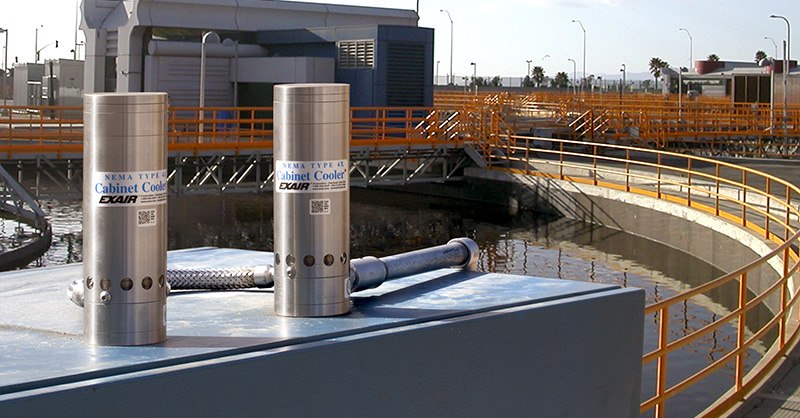
That is why uptime matters so much in this kind of application. Palm oil plants are built around continuous production, and the surrounding conditions can be tough on electrical enclosures. In this case, the customer needed a NEMA 12 Cabinet Cooler System capable of providing approximately 1000 Btu/hr. of cooling power. To provide some extra capacity and keep the system from being undersized, I recommended a 1700 Btu/hr. Cabinet Cooler System with 24 VDC thermostat control. The 24 VDC option also made sense because the customer could power the thermostat from inside the panel without having to run additional electrical circuits. The thermostat would control the temperature to within 2 degrees of its 95F setpoint. Electronics can live comfortably at a bit higher temperature than can humans. This helps save energy to cool the application without overdoing it.
Another benefit that really helped this application was the constant supply of clean, cool, dry air into the enclosure. Instead of pulling in the same hot, humid plant air that surrounded the cabinet, the Cabinet Cooler System purged the enclosure with compressed air that had already been treated at the production point and then filtered again at the panel with the included 5 micron compressed air filter/separator. That helped bring the cabinet environment down from the typical tropical humidity range of 80–90% RH to something closer to the 40–50% RH range inside the enclosure.
Before making the change, the end user had been using small DC fans to pull outside air through the panel. In a Malaysian palm oil processing environment, which meant pulling hot, humid air directly into the enclosure. The fans may have moved air, but they did not solve the heat problem, and they contributed to the moisture problem. By switching to the Cabinet Cooler System, the customer was able to address both concerns at the same time: lower internal temperature and lower humidity. Since the system has no moving parts to wear out, it also keeps maintenance simple, which is always a welcome advantage in a production environment where downtime can get expensive fast.
This was a good example of how a relatively simple enclosure cooling solution can make a big difference. In industries closely tied to food and beverage production, reliability is not just about protecting one panel. It is about keeping a process moving, protecting product flow, and helping a plant stay on schedule.
Neal Raker, Application Engineering Manager
[email protected]