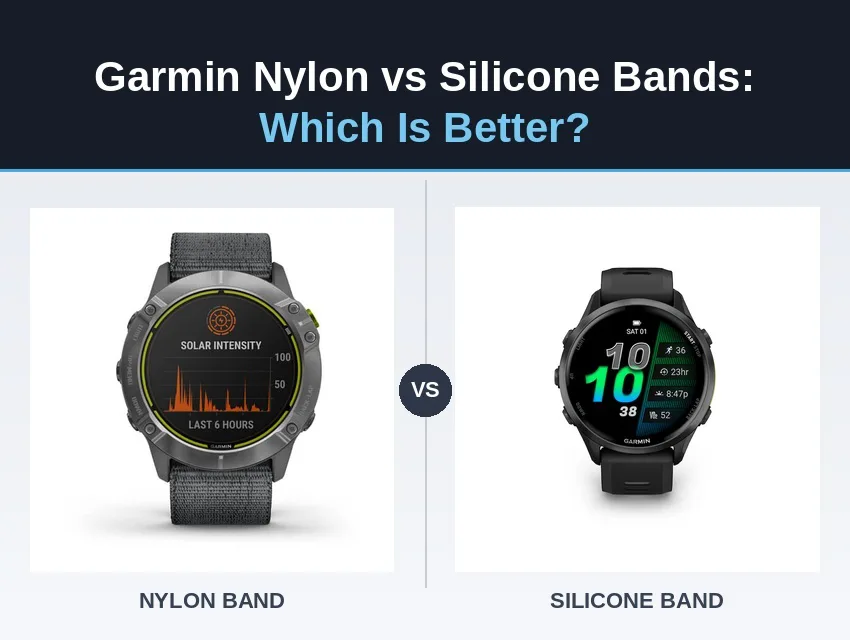
Most Garmin owners already have a silicone band. Your device probably came with it out of the box. Is it worth upgrading your strap to a new silicone band or changing materials completely for nylon?
Nylon is more breathable, and silicone is easier to wipe clean. The best watch band for your Garmin comes down to how you wear the watch. There’s no one material that is more comfortable than all others.
Key Takeaways
- Nylon straps are breathable, and hook-and-loop styles are adjustable, giving you a snug fit to hold the optical heart-rate sensor flush against your wrist better than a fixed-hole silicone band.
- Silicone watch bands are soft on the skin and easy to rinse off after long workouts.
- Silicone attracts lint and shows wear at the keeper holes after months of active use. Nylon soaks up sweat and can hold odor if it’s not cleaned regularly.
- For sweat and water-resistance for heavy workouts, silicone is the pick. For breathable, all-day comfort and a steady heart-rate read, nylon is the pick.
Nylon vs Silicone at a Glance
Here’s how the two materials compare side by side. The table below lets you spot your use case in a few seconds.
| Factor | Nylon | Silicone |
|---|---|---|
| All-day comfort | Breathable, less trapped sweat | Soft silicone, can trap sweat |
| Heart-rate sensor fit | Hook-and-loop styles tighten to any snugness for a flush hold | Fixed holes can sit loose or tight |
| Dry time after water | Slower to dry | Fast to rinse and dry |
| Wear over time | Can soak up sweat and hold odor | Attracts lint, shows wear at keeper holes |
| Best for | All-day wear, running, cycling, and sleep tracking | All-day wear, swimming, and high-intensity workouts |

Both materials have their strengths, weaknesses, and use cases. Nylon and silicone are both designed to be comfortable all day and during workouts, though they deal with moisture differently. Nylon wicks away moisture from your wrist and holds onto it until it dries, while silicone is water-resistant and can trap moisture between the strap and your wrist.
When Nylon Is the Better Garmin Band
An adjustable nylon band is beneficial for a few reasons. It tracks your heart rate more accurately than most straps, and it gives a level of comfort and breathability that isn’t offered by most rubber, metal, or leather straps.
Heart-Rate Accuracy
If your watch is doing double duty as a fitness tracker, the heart-rate read is important in order to utilize all the Garmin features. The optical sensor on the back of the case needs snug, flush contact to read your heart rate cleanly. A band that sits even a little loose lets the sensor lift off the skin and drift, which can throw off the numbers on a run.
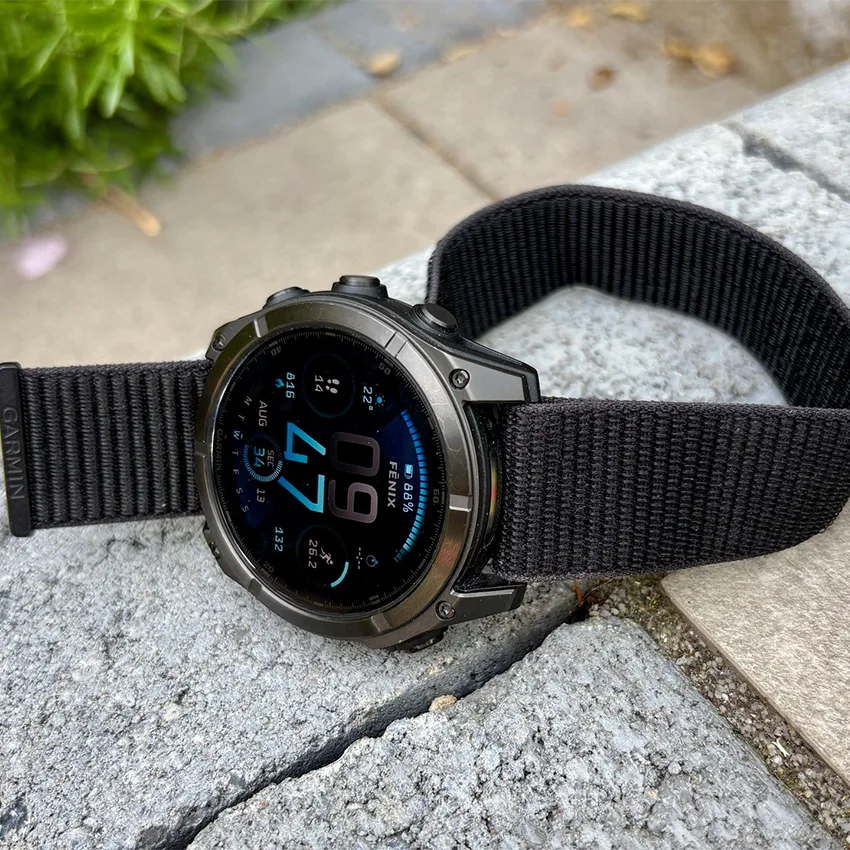
A nylon strap with an adjustable keeper fixes that because it cinches to any tightness you want. There are no fixed holes forcing you to pick between slightly loose and slightly tight, so you can set it exactly snug and keep the sensor flat against your wrist. A snug band means a steadier signal.
Comfort and Breathability
Since nylon is a fabric, it lets your skin breathe and reduces moisture buildup against the wrist. Nylon suits long sessions in the heat and stays comfortable on long runs, extended bike rides, and all-day wear. That breathability is why runners reach for it in summer. It’s also a go-to for users who prioritize sleep-tracking because it’s comfortable to wear all night long.
When Silicone Is the Better Garmin Band
Nylon isn’t the answer for everything, and silicone earns its spot the moment water is involved. It’s the low-fuss, wipe-clean material most Garmin watches ship with, and it takes wet, sweaty days in stride.
Water Resistance and a Fast Rinse
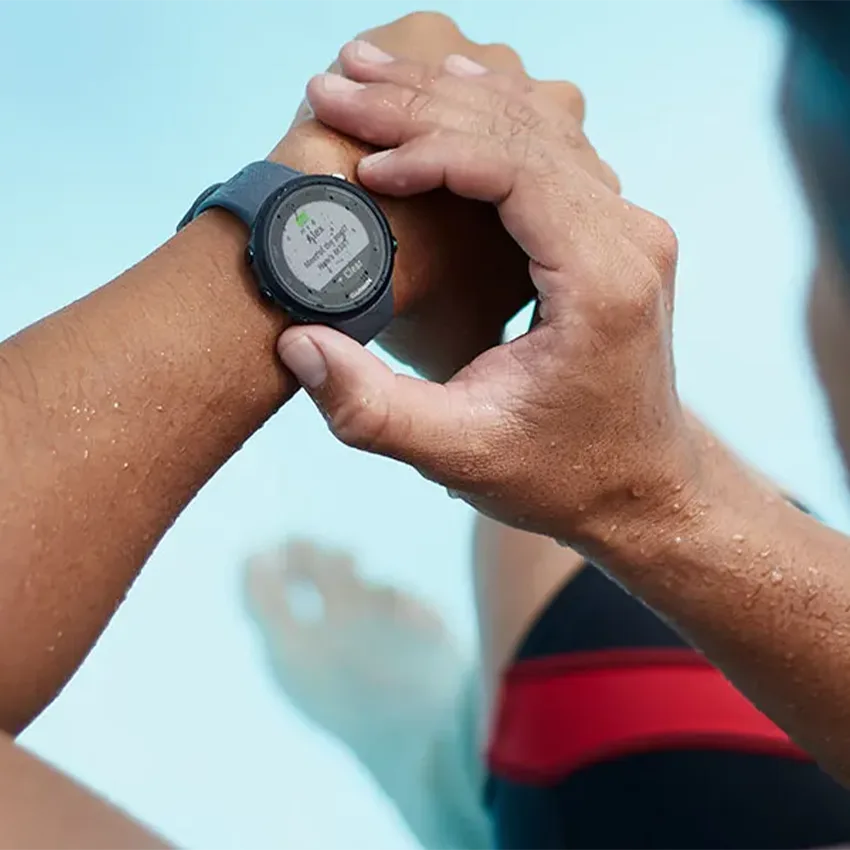
Silicone watch straps are fully water-resistant, so they shrug off swims, pool sessions, and heavy sweat without soaking through. They rinse clean in seconds and dry far faster than nylon, which holds water and stays damp for a while. For swimming, humid weather, or any day you just want to rinse it and go, silicone is the easy pick.
The DuraFlex FKM Upgrade
If you love silicone’s easy care and want it to keep that just-unboxed look, our DuraFlex FKM is an easy upgrade. The vulcanized rubber is denser than silicone, which helps it shed water more easily and withstand UV exposure, sweat, and chemicals like chlorine better than standard silicone. It’s the same wipe-clean convenience with a finish that holds up.
The Honest Trade-Offs: Odor, Lint, and Wear
No band is perfect, so here’s what actually wears out on each one. Knowing this up front saves you a surprise a few months in.
Nylon: It soaks up sweat, and if you don’t rinse it now and then, it can start to hold odor. A quick rinse after sweaty workouts keeps that from setting in.
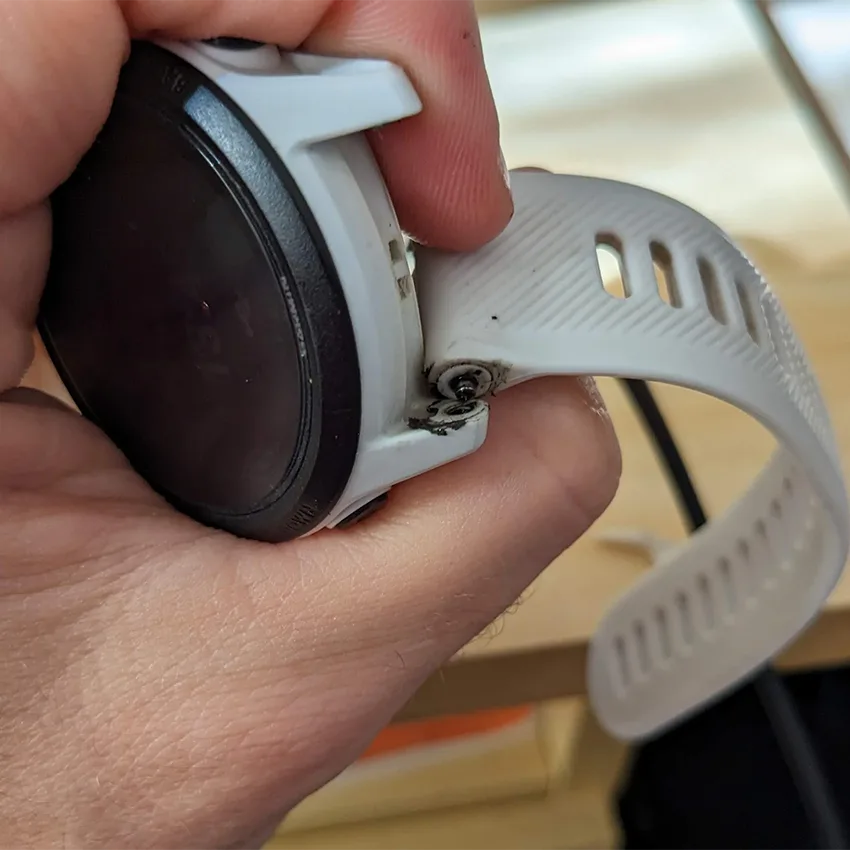
Silicone: It grabs lint and dust, so if it’s not cleaned regularly it starts looking grubby, and the keeper holes can crack or stretch with heavy active use.
How to Care for Each Material
Cleaning your watch band is the easiest way to extend its lifespan and prevent breaking. A little upkeep keeps either band comfortable and stops immediate wear. Both routines take under a minute.
Nylon:
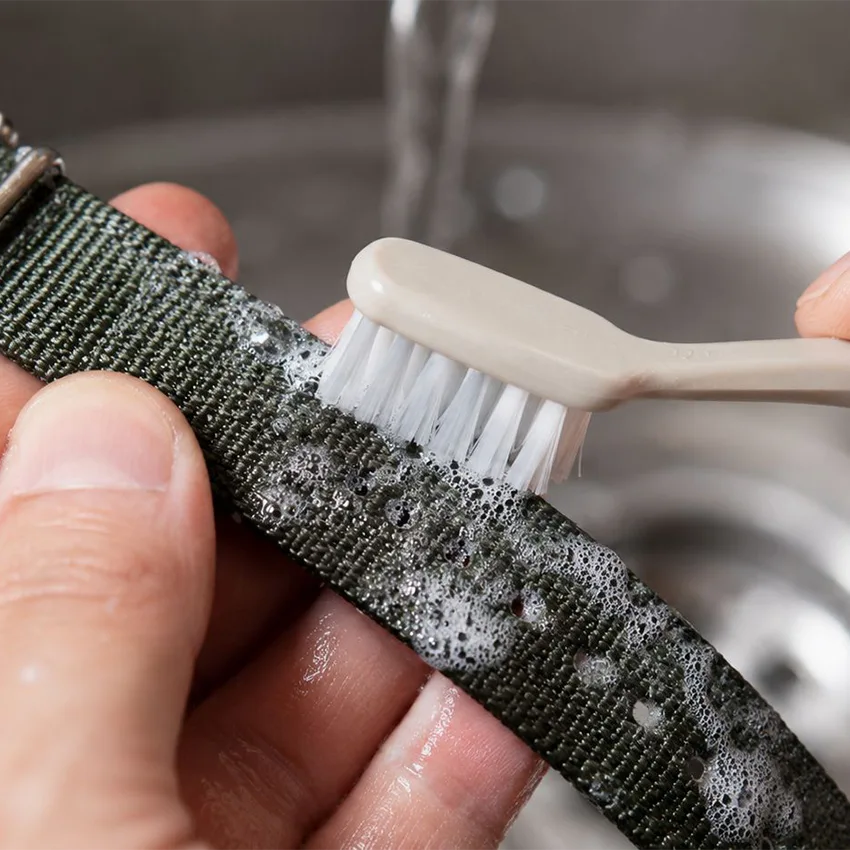
- Rinse it under cool water after sweaty workouts to keep odor from building up.
- Let it air dry fully before you put it back on.
Silicone:
- Wipe it with a damp cloth to lift off lint, dust, and sweat film.
- Dry it and check the keeper holes now and then for cracks or stretching.
We recommend removing the strap from your device before cleaning to avoid damaging your Garmin. You can reattach your QuickFit or quick-release device when the strap is fully dry.
The Verdict Comes Down to How You Wear It
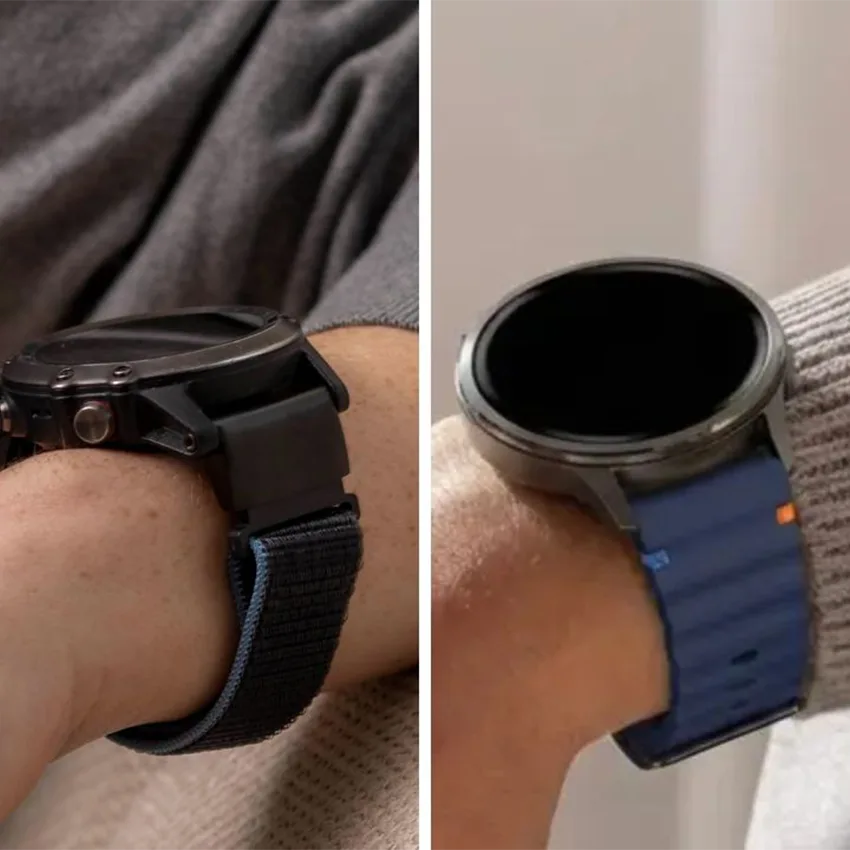
So there’s no single winner, just the right band for your wrist. Determine your strap size and then decide which material suits you best. Pick nylon for breathability and a snug heart-rate hold on long runs and all-day wear. Pick silicone for swimming, hard workouts, and easy cleaning. And if you’re looking for a more durable rubber strap, consider DuraFlex FKM. The most comfortable band for your Garmin is going to be the strap that suits your lifestyle and needs.
Frequently Asked Questions
Is a nylon or silicone band better for heart-rate accuracy on a Garmin?
Nylon usually holds a steadier read. An adjustable nylon band cinches to any tightness, so you can keep the optical sensor flush against your wrist with no gap. A silicone band on a fixed hole can sit a touch loose and let the sensor lift and drift. For running and workouts where the numbers matter, a snug nylon band is the safer pick.
Do nylon Garmin bands smell after workouts?
They can if you don’t rinse them. Nylon soaks up sweat, and left damp it starts to hold odor over time. The fix is easy: rinse the band under cool water after sweaty sessions and let it air dry fully before you wear it again. That keeps it fresh and stops any smell from setting into the weave.
Which Garmin band material lasts longer, nylon or silicone?
It depends on wear. Silicone attracts lint and can crack or stretch at the keeper holes after months of active use. Nylon holds up well but needs rinsing so it doesn’t hold odor. If you want longer life with less upkeep, DuraFlex FKM rubber resists the dust and lint that make standard silicone look worn.
Can I swap between nylon and silicone bands on the same Garmin?
Yes, as long as both bands match your watch’s connector and lug width. Many Garmin models use QuickFit or a standard quick-release fitting, and you can switch materials in seconds with no tools. Just confirm the size and connector before you buy, since the wrong width won’t seat in the lugs even if the material is right.