

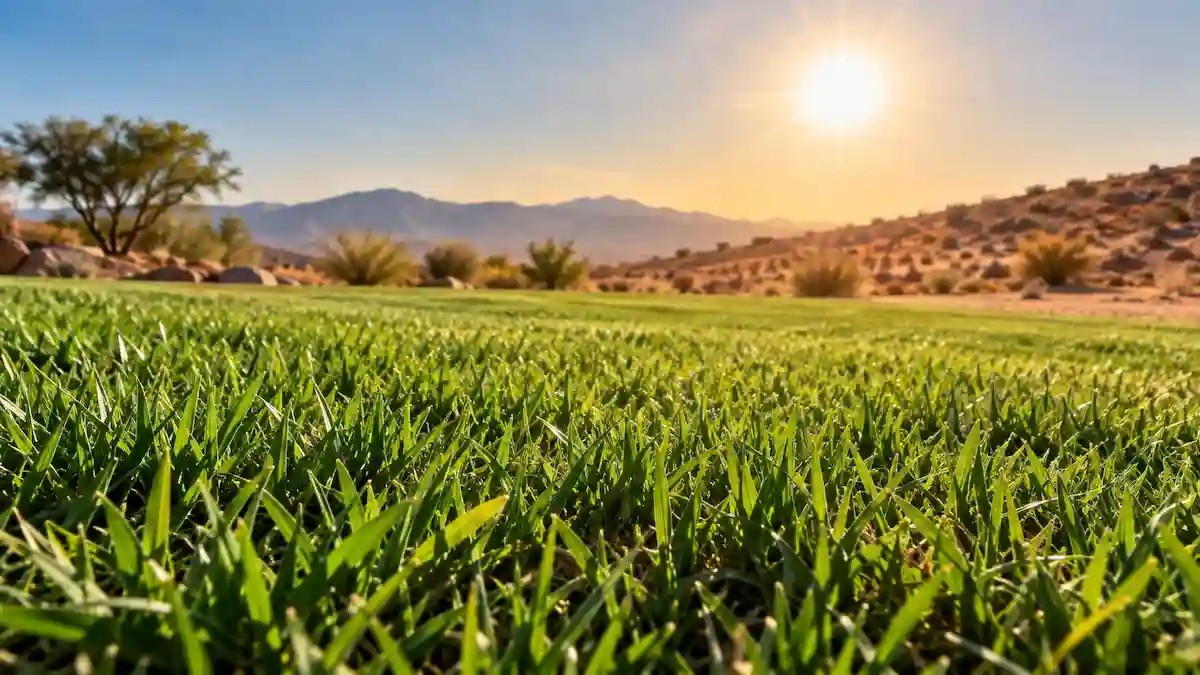
Picking the right and best drought-tolerant grass seeds depends on your climate, your soil, and how much water you’re willing to use to keep it green.
For very dry conditions, buffalograss is one of the strongest seed-grown choices. Bermuda works better for hot, sunny lawns, while zoysia is a better fit where some shade is present.
Buffalograss is one of the most drought-tolerant turfgrasses commonly grown from seed in the U.S., particularly in suitable semi-arid regions. Most others still need occasional water, just far less than a standard lawn.

This list mixes conventional lawn grasses with a handful of native and low-mow species better suited to restoration plantings or naturalized areas than a typical front yard. That’s noted for each one, since “drought-tolerant” doesn’t always mean “right for a lawn.”
One thing worth clarifying up front: drought tolerance is a trait of mature turf, not new seed. Every grass on this list needs regular watering while it germinates. The water savings show up later, once roots are established.
Quick Pick: Which Grass Fits Your Situation
| If You Need | Best Grass | Relative Water Need | Why |
| Maximum heat + drought | Bermuda | Low, once established | Deep roots built for full sun and heat |
| Drought + partial shade | Zoysia | Low | Handles shade better than Bermuda |
| Transition climate | Tall Fescue | Moderate | Cold hardy with a deep root system |
| Very dry, low rainfall | Buffalograss | Very low | Native prairie grass bred for low water |
| Low-maintenance South | Bahiagrass | Low | Tolerates poor, sandy soil and neglect |
What Makes a Grass Seed Drought-Tolerant?
Three traits separate drought-tolerant grasses from thirsty ones: how deep the roots grow, how the leaves conserve moisture, and what the grass does once water runs out.
Deep Roots and Efficient Water Use
Drought-tolerant grasses put more energy into roots than leaf growth. In loose, well-drained soil, bermudagrass roots can reach several feet down, well past where most cool-season grasses stop. Compacted clay or shallow topsoil limits root depth no matter which seed you plant.
Heat Tolerance and Water Requirements
Heat tolerance and drought tolerance overlap but aren’t identical. Tall fescue handles plenty of heat but still wants steady water. Buffalograss needs far less water but tends to go dormant sooner once temperatures spike.
Establishment Period vs. Mature Drought Tolerance
Every grass here needs consistent watering for roughly the first 4 to 8 weeks after seeding, regardless of its drought-tolerant reputation. Cutting back on water too early, before roots have developed, is the most common reason a drought-tolerant lawn fails to establish in the first place.
Drought Survival vs. Staying Green During Drought

Some grasses handle drought by going brown and dormant, then greening back up once rain returns. Others simply need less water to begin with and stay greener longer without fully shutting down. Which approach suits you depends on whether you can tolerate a brown lawn for a few weeks or want color year-round.
The 15 Best Drought-Tolerant Grass Seeds, Compared
Climate, sun exposure, and available water narrow this list fast. The first eight are the most commonly planted lawn options in the US. The remaining seven are more regional or specialized, but still solid choices depending on where you live.
1. Bermuda Grass

- Best for: hot, sunny lawns with regular foot traffic
- Drought and heat tolerance: excellent once established; it survives extended dry stretches by slowing growth or going dormant, though how long it stays green without rain varies with soil, temperature, and lawn age
- Water needs: around 1 inch per week is a common reference for maintaining active green growth, but actual needs vary with rainfall, soil, temperature, and local conditions
- Summer dormancy: rare, since summer is this warm-season grass’s peak growing period
- Main drawback: turns brown with the first frost and struggles in shade
2. Tall Fescue
- Best for: transition climates with hot summers and cold winters
- Drought tolerance: good once established; deep, well-drained soil supports a much deeper root system than compacted or shallow soil
- Heat performance: moderate; extended stretches above 95°F can thin the stand without supplemental water
- Water needs: 1 to 1.5 inches weekly during heat is a common reference point, though actual needs shift with rainfall, soil, and temperature
- Main drawback: a bunch-type grass, so it doesn’t spread on its own and bare spots need reseeding
3. Zoysia Grass

- Best for: heat plus moderate shade, more shade tolerance than Bermuda
- Drought tolerance: very good; dense, fine roots hold soil moisture well
- Water needs: low once mature; exact intervals depend heavily on soil type and local heat
- Heat performance: excellent in high heat
- Main drawback: slow to establish from seed, often a full season before it fills in
4. Buffalograss

- Best for: very dry, low-rainfall climates, especially the Great Plains where it’s native
- Drought tolerance: exceptional; once established, it can persist largely on natural rainfall in suitable semi-arid climates
- Water needs: very low once established, though exact amounts depend on regional rainfall and soil type
- Dormancy: browns in extended drought, typically recovers quickly after rain
- Main drawback: doesn’t hold up to heavy foot traffic and thins out in shade
5. Bahiagrass
- Best growing conditions: sandy, low-fertility soil, common across the Southeast
- Drought tolerance: strong, thanks to a deep taproot system
- Water needs: low; tolerates neglect better than most lawn grasses
- Main drawback: coarse texture and tall seed heads that need frequent mowing
6. Fine Fescue
- Drought tolerance: good in cooler climates, weaker in extreme or prolonged heat
- Shade tolerance: excellent, among the best shade-tolerant options here
- Water needs: low once established
- Heat limitation: struggles when temperatures stay above 90°F for long stretches
7. Kentucky Bluegrass
- Drought tolerance: moderate; newer drought-resistant cultivars perform noticeably better than older ones
- Dormancy during drought: yes, it browns without water
- Water needs: higher than most on this list; roughly 1 to 1.5 inches weekly is a common reference, though actual needs vary with rainfall, soil, and temperature
- Recovery after drought: strong, since its spreading rhizomes can regenerate thin or bare patches
8. Perennial Ryegrass
- Drought tolerance: fair on its own; performs best as part of a seed blend rather than planted alone
- Heat limitation: struggles in extended heat above 90°F
- Water needs: moderate to high
- Recovery: germinates quickly but recovers from drought stress more slowly than fescue or bluegrass
9 to 15. Regional and Specialized Drought-Tolerant Grass Seeds
The first eight are the most relevant choices for conventional residential lawns. The remaining options are included for homeowners considering native, low-mow, restoration, or regional applications, not because all seven belong on a typical front yard.
The last three in particular, sheep fescue, crested wheatgrass, and Canada wildrye, are better suited to native plantings, erosion control, or naturalized areas than a conventional mowed lawn. They’re included because they’re genuinely drought-tolerant and available as seed, not because most homeowners should plant them front-and-center.
9. St. Augustinegrass
- Best for: Humid, coastal Southern lawns
- Water need: Moderate
- Key trait: Spreads by above-ground stolons that can patch drought-damaged spots on their own
10. Centipedegrass
- Best for: Low-maintenance Southern lawns on acidic soil
- Water need: Low
- Key trait: Slow-growing, so it needs less mowing and less fertilizer to match
11. Blue Grama
- Best for: Southwest and Great Plains, native mixes
- Water need: Very low
- Key trait: Fine-textured and cold hardy; often paired with buffalograss for fuller coverage
12. Hard Fescue
- Best for: Cool climates, shaded or unmowed areas
- Water need: Low
- Key trait: One of the most shade-tolerant fescues, good for low-mow zones
13. Sheep Fescue
- Best for: Dry, rocky, poor soil (native and low-mow use)
- Water need: Very low
- Key trait: Clumping growth habit suited to slopes and erosion-prone ground, not a conventional lawn grass
14. Crested Wheatgrass
- Best for: Northern Plains, erosion control (native use)
- Water need: Very low
- Key trait: Cold and drought hardy, but coarse and better suited to pasture or restoration than a mowed lawn
15. Canada Wildrye
- Best for: Native seed mixes, naturalized areas (not a lawn grass)
- Water need: Low
- Key trait: Rarely planted as a standalone lawn grass, more common in restoration and native plantings
Side-by-Side Comparison: All 15 Grasses
“Water need” below means relative water need once established, not a fixed irrigation schedule. Actual amounts shift with soil, rainfall, and heat.

| Grass | Relative Water Need Once Established | Shade Tolerance | Summer Dormancy |
| Bermuda | Low | Poor | Rare, peaks in summer |
| Tall Fescue | Moderate | Fair | Possible in extreme heat |
| Zoysia | Low | Good | Uncommon, holds color well |
| Buffalograss | Very low | Poor | Common in prolonged drought |
| Bahiagrass | Low | Fair | Uncommon |
| Fine Fescue | Low | Excellent | Possible in extreme heat |
| Kentucky Bluegrass | Moderate to high | Fair | Common without irrigation |
| Perennial Ryegrass | Moderate to high | Fair | Common in extended heat |
| St. Augustinegrass | Moderate | Good | Uncommon |
| Centipedegrass | Low | Fair | Uncommon |
| Blue Grama | Very low | Poor | Common in prolonged drought |
| Hard Fescue | Low | Excellent | Possible in extreme heat |
| Sheep Fescue | Very low | Fair | Uncommon |
| Crested Wheatgrass | Very low | Poor | Possible during severe drought |
| Canada Wildrye | Low | Fair | Possible during severe drought |
Should You Plant a Single Grass Seed or a Blend?
Cool-Season Blends
Tall fescue is often sold blended with a small percentage of Kentucky bluegrass. The bluegrass spreads through rhizomes, which helps fill in bare patches that fescue, a bunch-type grass, can’t repair on its own.
Overseeding a Drought-Tolerant Lawn
Overseeding thin spots in fescue or bluegrass lawns works best in early fall, using the same or a compatible drought-tolerant variety. Warm-season lawns like Bermuda or zoysia rarely need overseeding since they spread and fill in on their own during the growing season.
Best Drought-Tolerant Grass Seed by U.S. Region
Climate zone narrows this list faster than any other factor. Here’s how the main US regions typically break down.
Southeast and Gulf Coast
Warm, humid summers favor Bahiagrass, centipedegrass, and St. Augustinegrass over Bermuda in areas with heavier rainfall and less full sun.
Southwest and Interior West
Low humidity and intense heat make Bermuda and buffalograss the standard choices, with buffalograss preferred where irrigation is limited or restricted.
Transition Zone
This band, roughly the Mid-Atlantic through the lower Midwest, sits between warm-season and cool-season territory. Tall fescue is the usual default because it tolerates both cold winters and hot summers reasonably well.
Northern and Upper Midwest
Cold winters rule out warm-season grasses entirely. Fine fescue and drought-tolerant Kentucky bluegrass cultivars are the more realistic options for the occasional dry summer stretch.
Full Sun vs. Partial Shade: Which Grass Handles Which
Best for Full Sun
Bermuda, buffalograss, and bahiagrass all need close to full sun. Less than 6 hours of direct light a day and these grasses thin out regardless of how much water they get.
Best for Partial Shade
Zoysia and fine fescue tolerate filtered light or a few hours of shade better than most drought-tolerant options, though even these thin out under deep, all-day shade.
What to Do About Deep Shade
No drought-tolerant grass performs well in heavy, all-day shade. In that situation, a shade-tolerant ground cover or mulch bed is usually a better fix than fighting the grass for light it can’t get.
Which Drought-Tolerant Grass Stays Green During Summer?
Grass That Stays Green With Limited Water
Zoysia can hold green color under limited irrigation better than many warm-season options, thanks to its dense root system. Buffalograss, by contrast, prioritizes drought survival over year-round color and will often go dormant sooner during prolonged dry spells.
Grass That Goes Dormant During Severe Drought
Bermuda, Kentucky bluegrass, and buffalograss all go dormant and brown under extreme drought. That’s a survival response built into the grass, not a sign it’s dying.
Is Summer Dormancy a Problem?
For most warm-season lawns, going dormant in a heat wave is normal and expected, not a defect. It only becomes a concern if the grass fails to green back up once temperatures cool and rain returns, which usually points to winterkill, disease, or a lawn that was never fully established, rather than drought itself.
Warm-Season vs. Cool-Season Grass for Drought
| Feature | Warm-Season | Cool-Season |
| Peak growth | Summer | Spring and fall |
| Drought tolerance | Generally higher | Generally lower |
| Summer water use | Generally lower | Generally higher |
| Best climates | South, Southwest | North, transition zone |
| Winter color | Goes dormant, brown | Stays green |
Which Uses Less Water?
Warm-season grasses are generally more efficient at using water during hot summer conditions, while cool-season grasses typically need more irrigation to maintain active growth through summer heat. Buffalograss is the extreme example, often needing a fraction of what a Kentucky bluegrass lawn needs over a season.
Which Recovers Better From Drought?
Warm-season grasses generally recover faster from summer drought since that’s their active growing season. That said, a well-established tall fescue lawn with deep roots can outperform a poorly established Bermuda lawn, so root depth and lawn age matter as much as the general seasonal pattern.
How to Choose the Best Drought-Tolerant Grass Seed
Consider Your Climate
Match grass type to your USDA hardiness zone and typical summer temperatures before anything else.
Consider Sunlight and Shade
Bermuda and buffalograss need close to full sun. Zoysia and fine fescue tolerate more shade, though none of these grasses thrive in heavy, all-day shade.
Check Your Soil and Drainage
Sandy soil drains fast and dries out quicker. Clay holds water longer but compacts easily, which limits root depth for any grass planted in it.
Consider Water Availability
Where irrigation is limited, buffalograss is one of the strongest choices for very dry regions, while bahiagrass can perform well with minimal water in the warmer, humid Southeast.
Decide Whether Summer Dormancy Is Acceptable
If a brown lawn during a heat wave bothers you, pick a grass that stays green on lower water, like zoysia, instead of one that simply survives by going dormant.
One more thing worth checking before you buy: a species name isn’t the whole story. “Bermuda grass” covers dozens of cultivars bred for different traits. Common Bermuda seed is more cold and drought hardy but coarser looking, while hybrid cultivars bred for finer texture and lower water use, like TifTuf, are usually sold as sod or plugs rather than seed. Check the cultivar name on the label, not just the species name.
How Much Water Does Drought-Tolerant Grass Need?
Watering New Grass Seed
New seed needs consistent moisture in the top inch of soil, often light watering once or twice a day until germination. This applies even to the most drought-tolerant varieties on this list.
Watering an Established Lawn
Once established, many drought-tolerant grasses can perform well with around 1 inch of water per week or less, although actual needs vary by grass type, climate, soil, rainfall, and temperature. Buffalograss and bahiagrass can typically go longer between waterings than that.
Deep and Infrequent Watering
Cooperative Extension guidance points to the same rule across different states: water deeply and infrequently rather than daily and shallow, since light, frequent watering trains roots to stay near the surface. Clemson Cooperative Extension’s turfgrass irrigation guidance and University of Georgia Extension’s drought guidance both recommend soaking the root zone 8 to 10 inches deep, then waiting until the lawn shows early stress before watering again.
Signs of Drought Stress
A dull blue-gray tint, blades folding lengthwise, or footprints that stay visible for more than a few minutes are early signs a lawn needs water, drought-tolerant or not.
For a more personalized watering estimate, use our Plant Watering Calculator to help determine how much water your plants need.
How to Plant Drought-Tolerant Grass Seed
Prepare the Soil
Loosen the top few inches of soil and remove debris. Good seed-to-soil contact matters more here since long-term root depth starts at planting.
Choose the Right Planting Time
Plant warm-season grasses like Bermuda and buffalograss in late spring once soil has warmed. Plant cool-season types like tall fescue in early fall, which gives roots a full season to develop before summer heat arrives.
Sow the Seed at the Correct Rate
Overseeding a new lawn wastes seed and creates competition for water among seedlings. Follow the rate on the seed label, since most drought-tolerant grasses need less seed per square foot than common cool-season blends.
Water During Germination
Keep the top inch of soil consistently moist until seedlings reach about an inch tall, even for grasses that will need very little water once mature.
Reduce Watering After Establishment
Once the grass has been mowed two or three times, start stretching the time between waterings. Once established, deeper and less frequent irrigation can encourage deeper rooting, while frequent shallow watering tends to keep moisture concentrated near the soil surface.
How to Keep a Drought-Tolerant Lawn Healthy During Summer Drought
Mow at the Right Height
Taller grass shades its own roots and soil, reducing water loss. Raise the mower a notch during hot, dry stretches.
Avoid Overwatering
More water isn’t automatically better. Overwatering encourages shallow roots and fungal disease, undoing the drought tolerance the grass already has built in.
Fertilize at the Right Time
Feed warm-season grasses in late spring and summer, and cool-season grasses in early fall. Fertilizing during active drought stress can burn an already-stressed lawn.
Improve Soil Health
Aerating compacted soil and adding organic matter helps water soak in rather than run off, which affects lawn health as much as which grass variety is planted.
Adding organic matter can improve soil structure and moisture retention; our Compost Calculator can help estimate the amount of compost needed for an area.
Frequently Asked Questions About Drought-Tolerant Grass Seed
What is the most drought-tolerant grass seed?
Buffalograss is one of the most drought-tolerant turfgrasses commonly grown from seed in the US, particularly in suitable semi-arid regions like the Great Plains. Once established, it needs far less supplemental water than Bermuda, fescue, or bluegrass, though it prioritizes survival over staying green.
What grass needs the least water?
Buffalograss and bahiagrass are among the lowest-water options for established lawns, although their performance depends heavily on climate, rainfall, soil, and temperature. Bahiagrass tends to handle humidity better, while buffalograss performs best in drier, low-rainfall climates.
What grass stays green during drought?
Zoysia tends to stay green longer on limited water than most warm-season grasses, thanks to its dense root system. Extended, severe drought will still eventually push any grass, including zoysia, into dormancy.
Is Bermuda grass drought tolerant?
Yes. Bermuda grass is one of the more drought-tolerant lawn grasses available as seed. Established plants survive extended dry periods by slowing growth or going dormant, though exactly how long it stays green without rain depends on soil, temperature, and lawn conditions.
Can drought-tolerant grass survive without water?
Most drought-tolerant grasses can survive extended periods with little or no supplemental irrigation once established, by slowing growth or going dormant, then recovering when moisture returns. None survive indefinitely without any moisture at all.
Best Drought-Tolerant Grass Seed by Situation
| Situation | Best Choice | Relative Water Need |
| Hot, full sun | Bermuda | Low |
| Hot, partial shade | Zoysia | Low |
| Transition climate | Tall Fescue | Moderate |
| Very dry conditions | Buffalograss | Very low |
| Lower-water Southern lawn | Bahiagrass | Low |
| Cooler climate with drought | Fine Fescue or drought-tolerant Kentucky Bluegrass | Low to moderate |
Climate decides most of this list before you ever compare grasses side by side. Match your region and water budget first, then let personal preference on winter color or texture settle the rest.
Disclaimer: Information on this site is for educational purposes only. Results vary by climate, soil, weather, and growing conditions. For region-specific advice, consult your local USDA Cooperative Extension Service before making major gardening or soil changes.


