On the Gilded Age Comparison
We argued that the current situation is similar to the late 19th and early 20th century US in terms of massive wealth inequality, different in terms of greater life expectancy for working people, and very much different in terms of changes in the associational life of the working class. We argued that the gains in labor law and similar legislation, while bringing important gains, also fostered a less combative labor movement, and that moving forward from here will require more of that combativeness. Another board member walked through some of the history of Iowa public sector labor law, itself a response to public employees’ struggles (I don’t know this history as well as I’d like to myself, but I can say that I’ve found Philip Rubio’s wonderful book Undelivered, on postal workers, very illuminating). In the mid 2010s Iowa public sector law was made far worse, keeping the limitations on workers and walking back a lot of the beneficial elements. This has likely facilitated the rightward turn our state has experienced in its official politics, similar to events in Wisconsin after the attack on public sector unions there starting in 2011.
On Voting “Against Interest”
We responded to the issue of how some working class people vote by discussing voter turnout in the late 19th century, which was surprisingly high compared to the present, tied to the more collective or communal character of voting and civic life in general then. We also talked about how, as Martin Glaberman argued in Punching Out and his discussions of strikes in World War Two, that working class consciousness is not only a matter of what people say or how people vote, but is really a matter of a whole host of activities that have to be taken together. In that holistic picture, context matters a great deal as well. We largely read the news on screens alone and vote alone, conditions that promote a sense of fear and isolation.
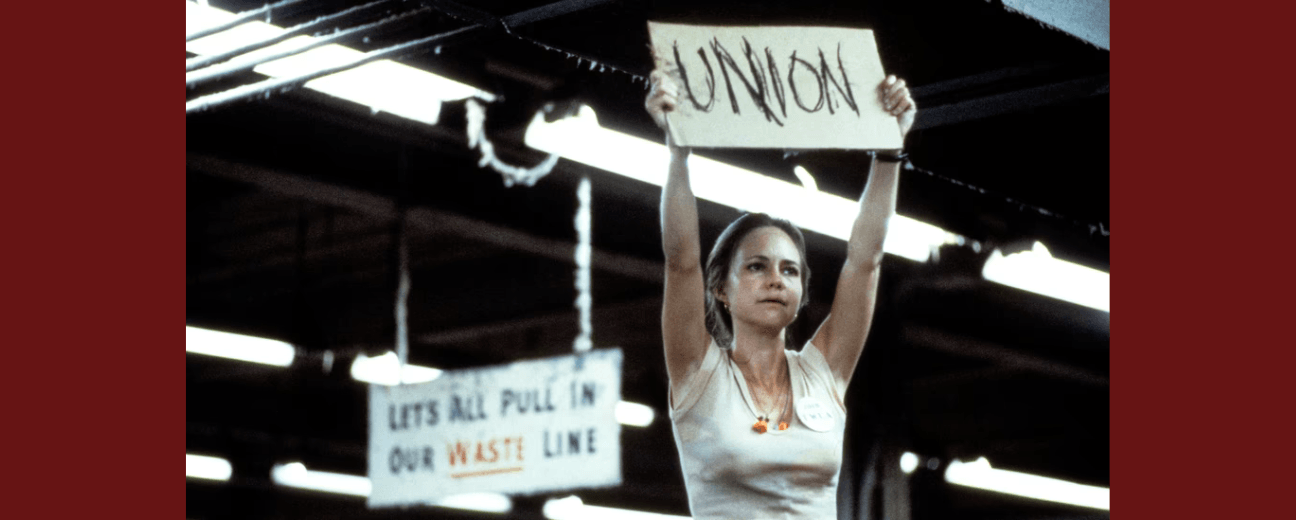
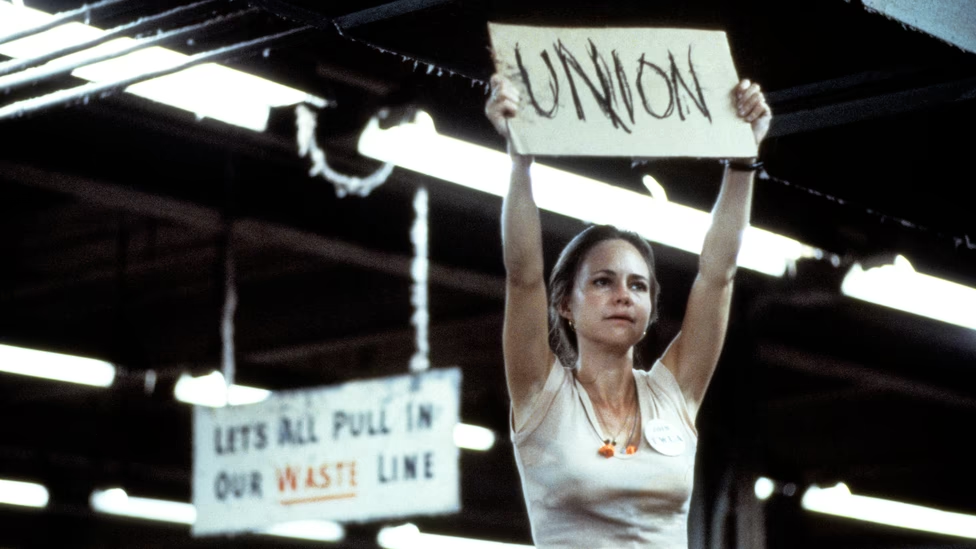
That’s different from being in a room together. Norma Rae dramatizes this repeatedly, showing how people are different – how people actively become different, often in lasting ways – when in rooms together, and especially when the activity in the room forces decisions, like in the scene when people start turning off their machines at work in response to management ganging up on Norma and calling the cops on her. Part of that scene does so well is to call attention to time and tension: people stand and watch at first, and slowly each person who acts has to decide to do so, in what is clearly each person facing the dilemma of their moral principles and their fear of retaliation. This is part of why the associational life of the labor movement and of organizing matters so much. While the matter of some working class people voting badly matters, and without meaning to let people off the hook for bad choices, it also matters to not let that sort of instance of workers at their worst be treated as representative of the full scope of possibility for workers thoughts and actions, and not let it occlude the fact that workers in collective contexts have opportunities to be their best and to transform themselves in action.
On Union-Busting, Then and Now
We responded to the question about union busting with a short history of those techniques and the development of an industry anti-union consultant. (People wanting a longer historical perspective should read Chad Pearson’s two wonderful books Reform or Repression and Capital’s Terrorists.) We also talked about capital mobility as part of economic globalization and as a matter internal to the United States. The ability of companies to close plants after they unionize and to move to where labor power is cheaper is a very difficult problem. We stressed how this makes internationalism and a commitment to anti-oppression not only principled but also pragmatic: when the floor for workers anywhere falls, that’s wrong, full stop, which is what’s most important, and also that threatens workers everywhere, at least in the long term. Thus it’s very important to advocate for internationalism and solidarity in the labor movement, building on and extending existing commitments.