
What are the Hidden Costs of Being a Landlord?


Being a landlord seems easy from the outside looking in. All you have to do is buy properties and find tenants to live in them, right? Unfortunately, no. Much more goes into it, including time, money, management skills, and more. Landlords have several expenses to consider aside from the price of buying investment properties. Today, we’ll go over some of the hidden costs of being a landlord and how to create a realistic budget.
Key Takeaways
- Rental property expenses can include mortgage payments, property taxes, insurance, maintenance, utilities, licensing, marketing, property management, and other costs that vary by property.
- Landlords should also prepare for less predictable expenses, such as major property updates, emergency repairs, vacancies, tenant-caused damage, and potential legal costs.
- Maintenance isn’t just a financial consideration. Landlords must follow applicable laws regarding repairs, habitability, and health and safety conditions.
- Maintaining a financial reserve can help landlords prepare for unexpected repairs, vacancies, and other expenses, although the appropriate amount will depend on the property and the owner’s financial situation.
- A realistic rental property budget should account for both recurring and unexpected costs and be reviewed regularly as actual income and expenses change.
]]>
Key Moments in the Video
- 00:26 – How Much Does It Cost to Be a Landlord?
- 01:08 – 10 Common Rental Property Costs
- 04:22 – How to Create a Realistic Budget
How Much Does It Cost to Be a Landlord?
The costs of being a landlord or resident manager in Northern Virginia are anything but simple. There are so many aspects to factor in. First, you have to consider the rental property’s price and all the associated expenses, like taxes, insurance, mortgage payments, and more. Then, you have to consider the operating costs of running a rental business. Some fees are more easily calculated than others.
For instance, some expenses are inevitable, like taxes and mortgage loan payments. However, some expenses may vary, like maintenance and repairs. You can plan for these expenses, but how much money they cost and how often you’ll need to pay for them depends on the situation at hand.
Before becoming a landlord, you’ll want to roughly calculate how much these expenses will cost you. Then, consider building a financial reserve to help cover several months of expenses and unexpected costs before becoming a landlord. The appropriate reserve will depend on your properties, financing, expenses, and overall financial situation.
Common Rental Property Costs
While you may set your mind on making money as a landlord, it’s crucial not to overlook the various costs you’ll endure before you get there. After all, you won’t start seeing any benefits unless you pay for operating expenses. Here are some of the top rental property costs landlords need to plan for for each property.
 Mortgage Payments
- HOA Fees
- Insurance
- Property Taxes
- Utilities
- Licensing
- Regular Maintenance
- Property Inspections
- Marketing Costs
- Property Management
Understandably, this list of expenses seems like a lot, but it doesn’t stop there. These are some of the basic, plannable expenses that landlords can count on while running a rental business. However, there are plenty of hidden costs of being a landlord that are harder to plan for but still must be accounted for.
5 Hidden Costs of Being a Landlord
If you’re an experienced landlord, you likely know that running a rental business involves several expenses. However, some are easier to plan for than others. Here are some of the hidden costs of being a landlord you don’t want to overlook.
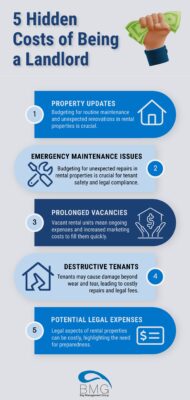
- Property Updates
- Emergency Maintenance Issues
- Prolonged Vacancies
- Tenant-Caused Property Damage
- Potential Legal Expenses
Property Updates
Regular maintenance, like painting, landscaping, or fixing minor repairs, in rental properties is a given. However, some more significant updates or renovations may be necessary over time. Sometimes, it’s hard to plan for these expenses. You may need to fix an aging roof, replace outdated appliances, or renovate a kitchen or bathroom, which can be expensive. So, planning and carefully budgeting for these expenses when they pop up is important.
Emergency Maintenance Issues
Unexpected repairs or maintenance issues can arise in any rental property. While they’re mostly standard expenses, emergencies can be harder to plan for. Plumbing leaks, electrical problems, or structural issues can happen suddenly and require immediate attention. Unfortunately, delaying necessary repairs can lead to additional property damage and potential legal consequences. Landlords must comply with applicable maintenance, habitability, and health and safety requirements, which may require certain issues to be addressed promptly.
Prolonged Vacancies
When a rental unit remains unoccupied, you still have to pay for operating expenses. Not only are you missing out on rental income, but you also need to continue paying the mortgage, taxes, and utility bills. That said, you may also spend more on marketing efforts to try and fill the property quickly and efficiently. After all, the longer your property remains vacant, the more expenses you incur without any income coming in to cover them.
Tenant-Caused Property Damage
While most tenants will respect your rental property, there’s always a risk of having tenants who cause damage beyond normal wear and tear. Repairing tenant-caused damage beyond normal wear and tear can be costly. Depending on the circumstances, landlords may be able to apply the security deposit toward qualifying damages and pursue other remedies available under the lease and applicable law.
Potential Legal Expenses
Dealing with tenant disputes, evictions, or navigating landlord-tenant laws can result in legal expenses. Whether you need to consult with a lawyer for advice, file legal documents, or represent yourself in court, these costs can add up quickly. As such, landlords must stay informed about local laws and regulations regarding rental properties to minimize the risk of legal issues. Additionally, setting aside a legal fund can provide peace of mind in case disputes arise.
How to Create a Realistic Budget to Follow
Clearly, there are several rental property costs that landlords must budget for. But how can you create a realistic budget without knowing the exact costs of everything? This is one of the hard parts of being a landlord. After all, it’s nearly impossible to budget and save for expenses perfectly down to the exact dollar.
With that, here are some strategies for creating a budget for regular expenses and the hidden costs of being a landlord.
- List Necessary Expenses
- Research All Potential Costs
- Create a Realistic Budget
- Track and Adjust Spending
List Necessary Expenses
Start by listing the essential expenses that apply to your property. These may include mortgage payments, property taxes, insurance, owner-paid utilities, routine maintenance, and property management fees. That said, these are just some of the main expenses that are crucial to running and operating a rental property business. There are plenty more hidden costs to account for and plan for.
 Research All Potential Costs
Once you’ve outlined the necessary expenses, you’ll want to find out how much they’ll cost you each month. This includes regular operating expenses along with hidden costs discussed earlier, like emergency maintenance, property updates, vacancies, and more. While it’s hard to get an exact dollar amount you’ll need for these expenses, you can look at what you’ve previously spent or get estimates from local contractors or vendors.
Create a Realistic Budget
Now that you have information about both necessary and potential emergency expenses, you can create a budget. Start by estimating your recurring monthly costs based on past expenses and market rates. Then, factor in potential hidden costs by setting aside a percentage of your rental income as an emergency fund. This helps create a buffer to cover unexpected expenses or fill income gaps due to vacancies. A good rule of thumb is to underestimate income and overestimate expenses.
Track and Adjust Spending
Once your budget is in place, you’ll want to track your actual spending against your budgeted amounts. If you have a property management team, they can help track your income and expenses. You can also use accounting software or budgeting apps to regularly monitor your money. If you’re consistently overspending in certain areas, you may need to revisit your budget and reallocate funds accordingly.
FAQ About the Costs of Being a Landlord
What expenses should landlords budget for?
Landlord expenses vary by property but may include mortgage payments, property taxes, insurance, owner-paid utilities, licensing or registration fees, routine maintenance, repairs, marketing, inspections, and property management. Owners should also budget for vacancies and unexpected expenses.
What are some hidden costs of being a landlord?
Hidden or less predictable costs may include emergency repairs, major property updates, extended vacancies, tenant-caused damage beyond normal wear and tear, and legal expenses. These costs can vary significantly from one rental property to another.
How much should a landlord keep in reserves?
There is no single reserve amount that’s appropriate for every landlord. The amount may depend on the property’s age and condition, monthly expenses, financing, insurance coverage, number of rental units, and the owner’s financial situation. Maintaining enough reserves to handle unexpected expenses and periods without rental income can help reduce financial strain.
Are landlords responsible for emergency repairs?
Landlords generally have legal responsibilities regarding the condition and habitability of rental properties, although specific requirements vary by jurisdiction. In Virginia, landlords covered by the Virginia Residential Landlord and Tenant Act have duties that include making necessary repairs and maintaining the premises in a fit and habitable condition.
Can landlords charge tenants for property damage?
Depending on the lease and applicable law, tenants may be financially responsible for certain damage they cause beyond normal wear and tear. Rules regarding security-deposit deductions, documentation, notices, and recovery of additional damages vary by jurisdiction.
Can property management help landlords control expenses?
Professional property management can help owners coordinate maintenance, market vacancies, screen applicants, collect rent, maintain records, and handle other day-to-day responsibilities. However, hiring a rental manager does not eliminate the underlying costs of owning and operating a rental property.
Get Help With Professional Management
Owning and operating rental properties is not inexpensive by any means. However, as long as you can plan and prepare for both the common and hidden costs of being a landlord, you’ll encounter fewer surprises that dig into your rental income. That said, hiring a rental property management team is one of the best ways to keep track of your rental properties and bundle several expenses into one.
Need More Advice? contact us today!
Bay Property Management Group can help with all aspects of your business, whether it’s rental marketing, tenant screening, maintenance, rent collection, eviction services, and more. Instead of handling all these tasks yourself, you can rest assured knowing your properties are well taken care of 24/7. So, contact BMG today to learn more about our services throughout Baltimore, Philadelphia, Northern Virginia, and Washington, DC.


