Where are we heading next?
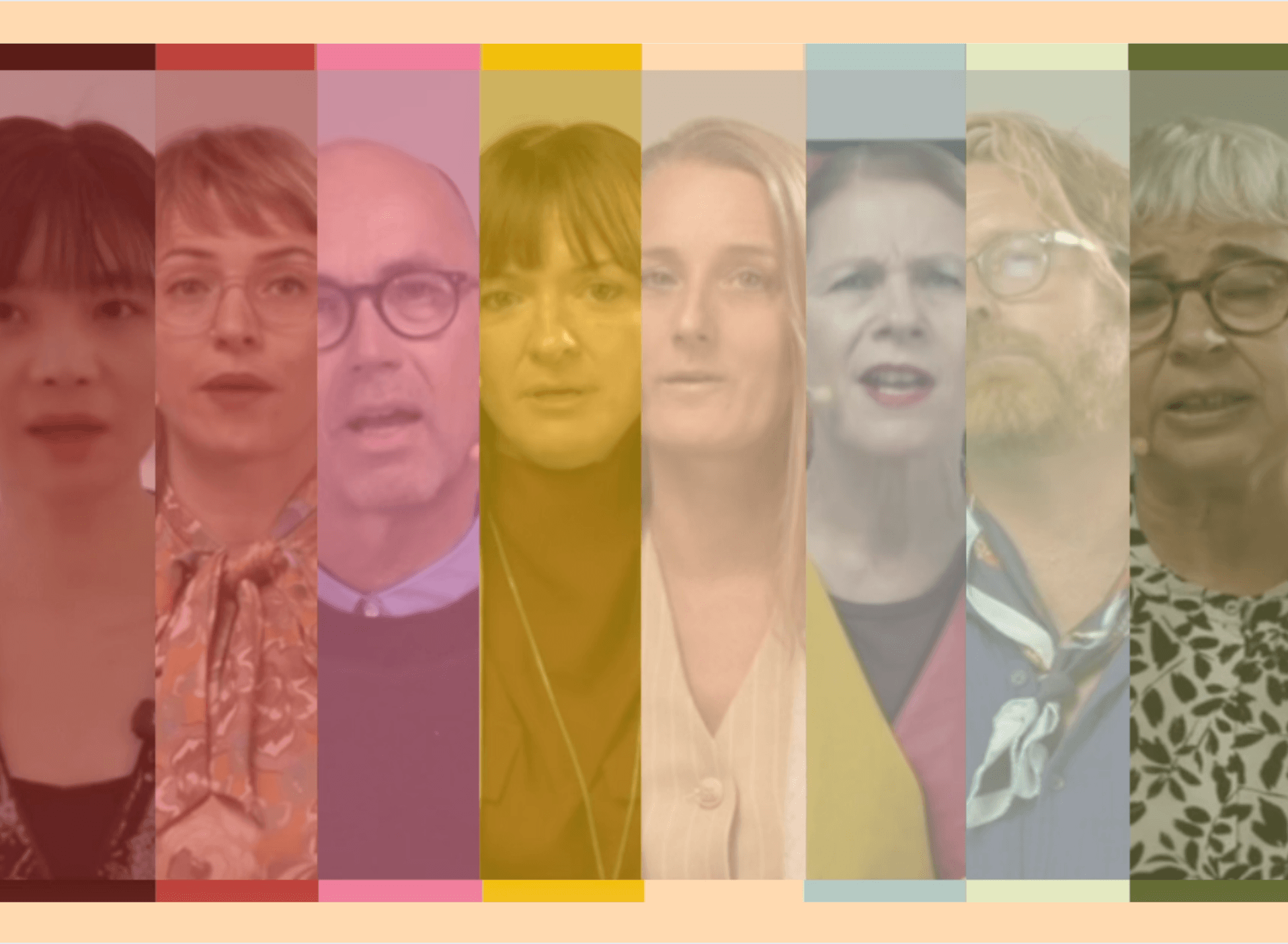
This is the question, more and more difficult, we are replying with the The Forecast Club. We are a collective of eight international trend forecasters, meeting online and in person, each from a different country and professional perspective on trend forecasting.
We open our researches yearly though our drops, and we just launched the new one. This year, the shared theme is COMMON GROUND.
We spend so much time talking about what separates people, like generations, markets, cultures, lifestyles, behaviours, while actually the strongest forces shaping what we want and how we live are often much more fundamental things, that we have in common.
Common Ground is an exploration of these deeper human needs and how they are taking different forms across design, culture, technology and consumer behaviour. And because we all work independently, from different countries and different fields, the result is not one single vision of the future, but eight very different ways of reading the same moment in time.

.
Eight perspectives on Common Ground
One of the things I love of The Forecast Club is that we are not trying to produce one unified forecast. We work independently, from different countries and different areas of expertise, and we develop our seminars independently, without knowing each others’ topics, so the interesting part comes when these different perspectives are placed next to each other. For Common Ground,
Stefan Nilsson explored the rise of the Feelconomy and how emotions, care, authenticity and community are reshaping consumerism.
Cecile Poignant looked at The Ritual Shift and the renewed importance of shared experiences, collective belonging and secular rituals.
Judith van Vliet explored Rituals of Resilience: the small and shared rituals that can ground us during uncertain times.
Susanna Björklund focused on Trust: how slowly it is built, how it shapes our worldview and how it increasingly influences our relationship with products and design.
Alina Schartner investigated Inclusive Interiors, looking at sensory needs, wellbeing, CMF and how spaces can respond to a much broader range of human experiences.
Jan Agelink, with Design Friction, explored the increasingly human side of technology and what that means for design, imagination, fashion and Gen Z.
And from China, Xiaojing Huang looked towards 2030 through technology and green design, from robotics and physical AI to new materials, modularity and lightweight design.
My own contribution approached Common Ground through something much older than any of these technologies…the sun.

.
Chasing the sun ( but not chasing the trends )
I got inspired by sunsets as one of the easiest and most simple forms of Common Grounds: one of the very few experiences that people actively know, stop, and watch, and this is regardless of nationality, age, and culture….
Chasing the Sun is a journey through our changing relationship with sunlight: through desirability and discomfort, architecture and climate, technology and vernacular knowledge, aesthetics, homes, colours, a sense of wonder, and a new more honest form of optimism. We need this so much. And after all, some of the most interesting shifts, begin exactly like this: as reactions, tensions or counter-trends to what has dominated for too long.
Maybe this is also why I am increasingly interested in trends as a way of understanding what is changing underneath the surface, rather than simply identifying what is becoming visible….and today we are surrounded by “trend” information, new aesthetics can appear everywhere within weeks, and algorithms can identify visual repetition almost instantly…
So what’s the point of trend forecasting? The more information becomes available, the more important interpretation becomes: understanding why something is appearing, what it connects to, whether it represents a meaningful direction or simply another short-lived visual cycle….
And, to be honest, working in this way has made me much less anxious about trends.
I no longer feel the need to chase every new aesthetic or prove that I have spotted something first, but am much more interested in understanding what has depth, what connects to larger cultural shifts, and why certain ideas begin to resonate at a specific moment.
And I feel this kind of work can be much more helpful and meaningful for others too, especially at a moment when everything seems to move incredibly fast, and so much of what we see can feel disconnected, confusing or simply without much sense.
Maybe forecasting today is not about adding more noise. Maybe its role is precisely the opposite: to slow things down enough to find the connections, give context to what we are seeing, and help make sense of change.

.
Watch The Forecast Club 2026 online
All eight Common Ground seminars are now available to watch online and on demand, so you can follow the complete Forecast Club perspective at your own pace.
The programme includes eight 30-minute seminars, together with PDF summaries , bringing perspectives from across Europe and China and spanning design, interiors, colour, materials, retail, technology, culture and consumer behaviour.
And this year there is something new: those joining the online programme also get access to a live Q&A session with us. I like this part particularly because forecasting becomes much more useful when it turns into a conversation rather than simply information travelling in one direction.
You can access here: The Forecast Club