


Less than a year after Peter Hujar (1934 – 1987) learned he had AIDS, the photographer passed from the disease at the age of 53. In death, Hujar reemerged as one of the great visionaries of his generation, possessed with a devotion to art that remained beyond his years on Earth. Unlike his contemporary, Robert Mapplethorpe, who used notoriety to incendiary effect, Hujar preferred the slow burn of simple truths.
In his life, Hujar would produce just one book, Portraits in Life and Death, a sequence of just 41 photographs published in 1976. Few took notice, except those who saw Hujar from their extraordinary vantage point as his subjects. Half a century later, his intimate photographs of friends and lovers at the frontlines of New York’s radical underground including William S. Burroughs, David Wojnarowicz, Susan Sontag, John Waters, and Divine have become the standard bearer of contemporary portraiture. Hujar weaves images made in the Catacombs of Palermo throughout a book, a memento mori that takes on chilling effect as many pictured would succumb to AIDS.
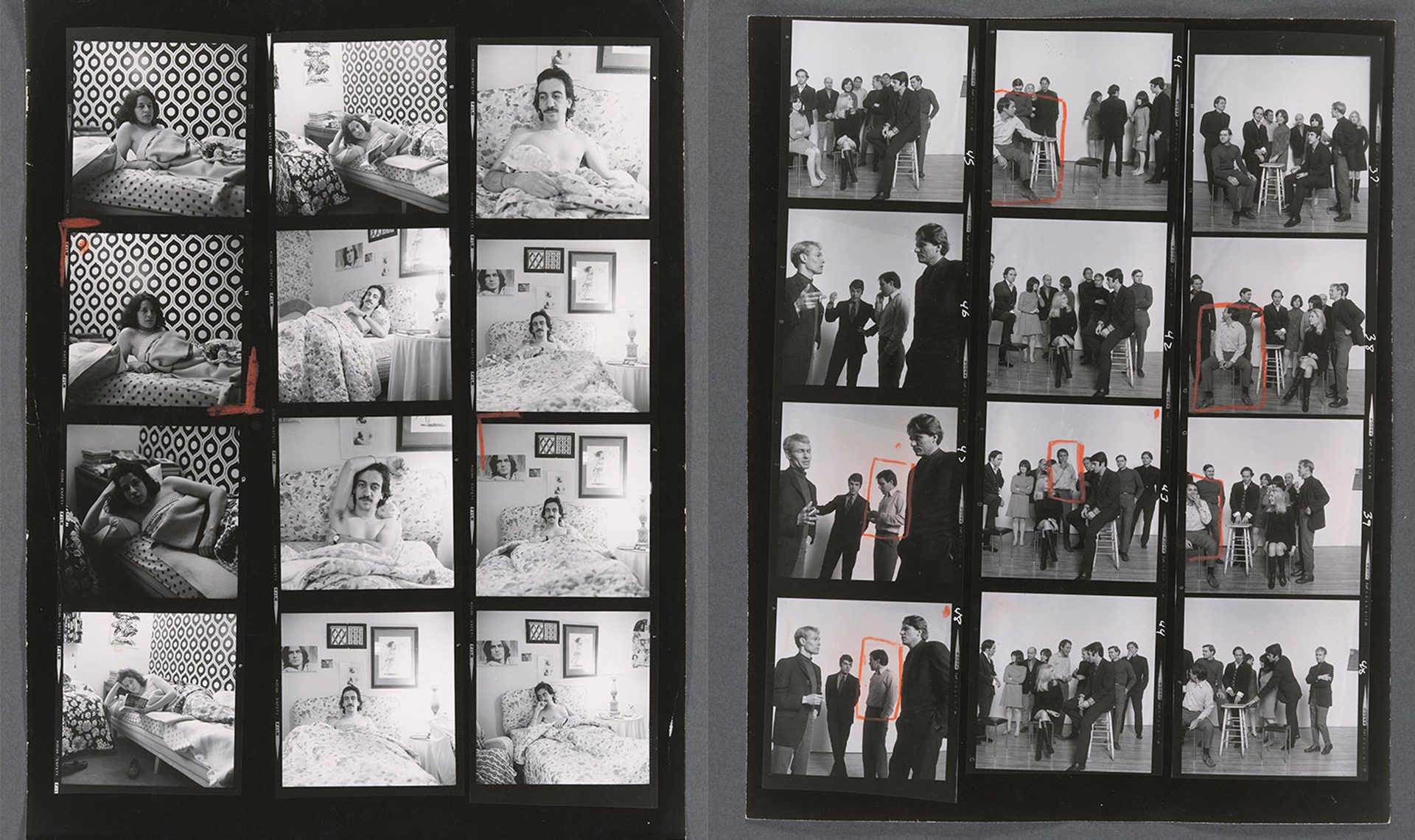
With the passage of time, the art world would discover what Hujar had always known: the camera was merely an instrument, no different than the pencil, paintbrush, or chisel. Although the hand of the artist has largely been overlooked in photography, the new exhibition and catalogue, Hujar: Contact, crafts a compelling case for the contact sheet as sketchbook, revealing the process in which the masterpiece emerges. More literally, Hujar marked the contact sheets with a red wax pencil, discreetly identifying those he wanted to print, leaving 5,783 photographs unseen until this moment.


