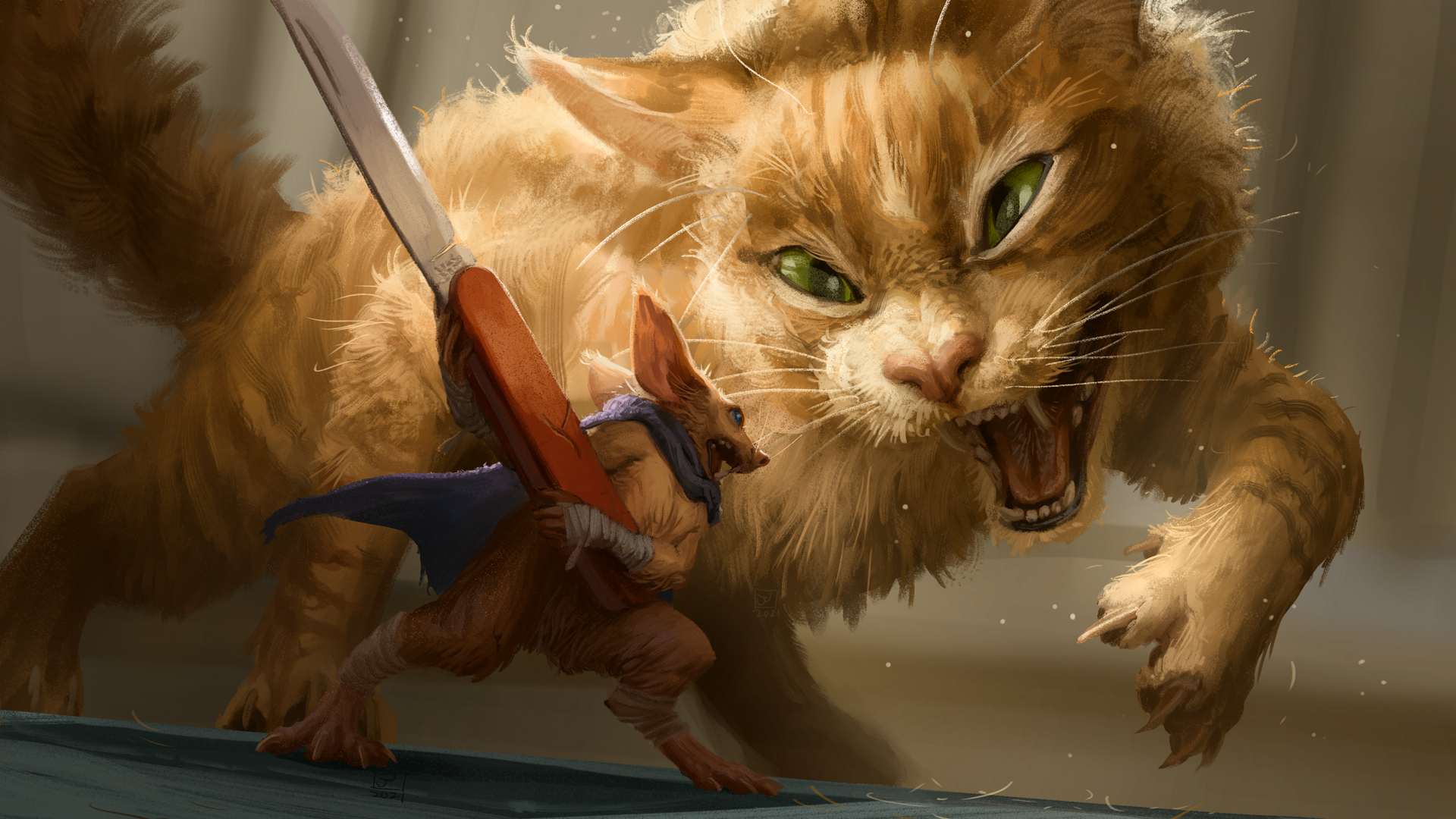
In a sea of indie games, it’s hard to stand out these days. Small Saga was a breath of fresh air on the Nintendo Switch, especially when it comes to its art style, story, and gameplay. You play as Verm, a mouse who’s out to avenge his brother’s death. The game starts out pretty chill, but things escalate quickly. I thought I was just playing a cute mouse fighting RPG, but it turns out there’s a lot more depth and seriousness to this story. A lot happens within the first 15 minutes, and it’s a really intriguing start that makes you want to keep playing.
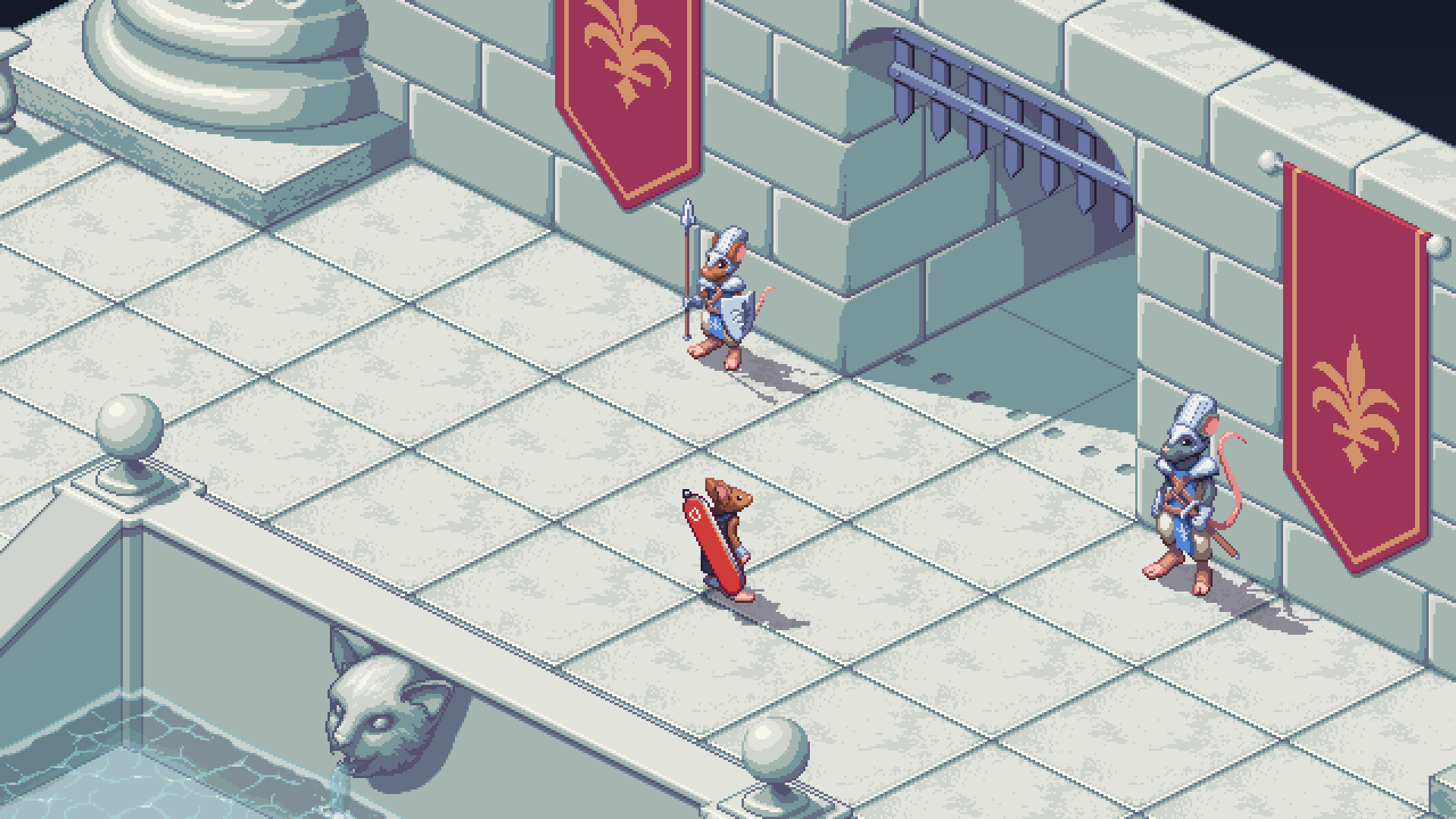
Small Saga takes place in Rodentia, a miniature, rodent filled version of London. This underground world is full of mice, rats, squirrels, moles and other small creatures living among human civilization. The rodents view the humans as Gods. Human, or “God” objects are repurposed into weapons, furniture, living quarters and just about everything else these little creatures need to survive.
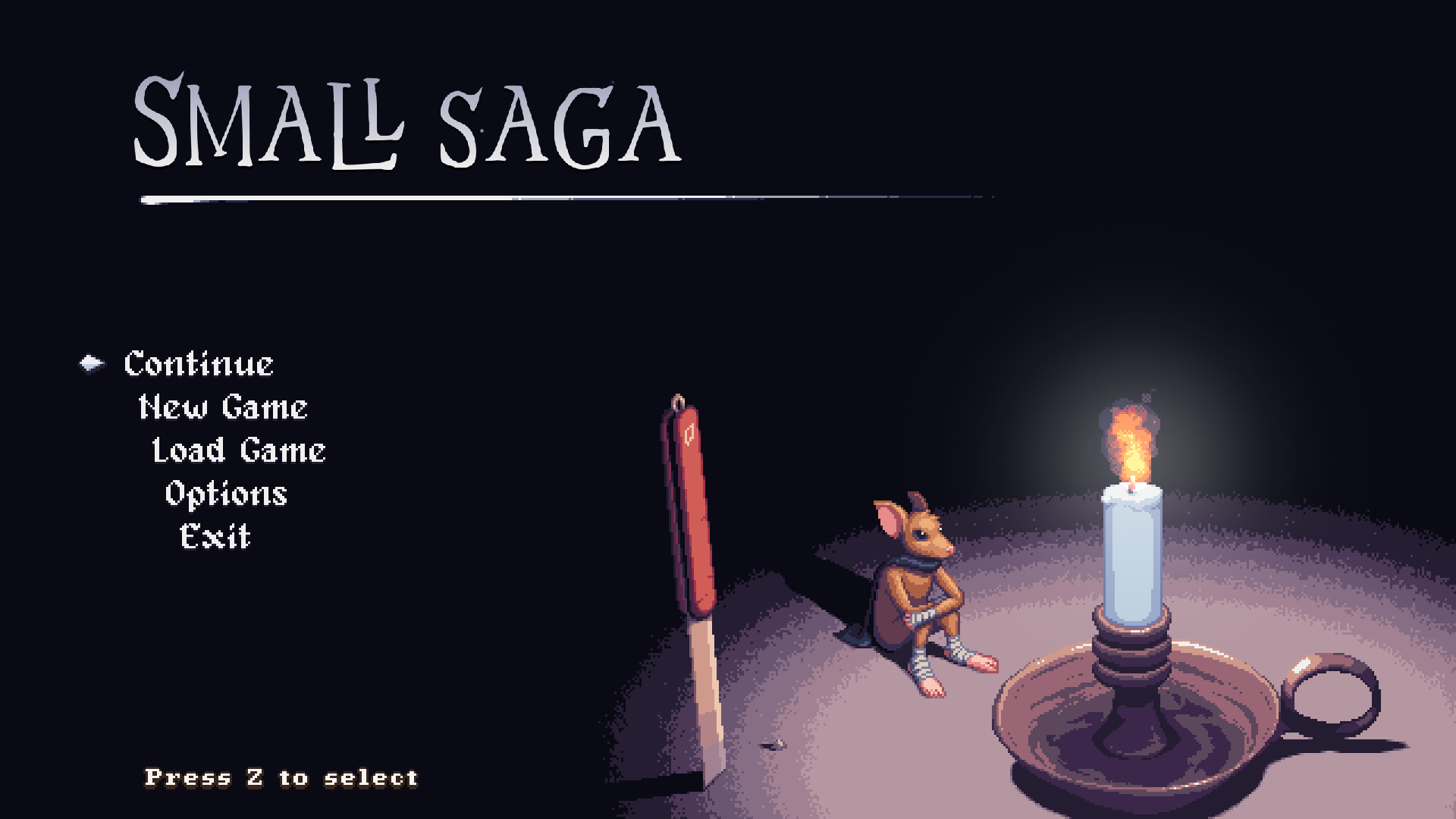
The story begins with Verm seeking revenge against the Yellow God of Death. What starts as a personal mission eventually grows into something much bigger, involving the gods, the Old Way, and the systems that keep Rodentia’s citizens in line. The Old Way is a belief that rodents should not interfere with the gods, and that idea plays a major role in the story.
I also liked how the tone changes as the game progresses. There’s plenty of dark humor, absurdity, and pop culture references, but the story doesn’t stay lighthearted. Some of the subject matter becomes surprisingly serious, and the contrast between the cute characters and the darker themes works really well.
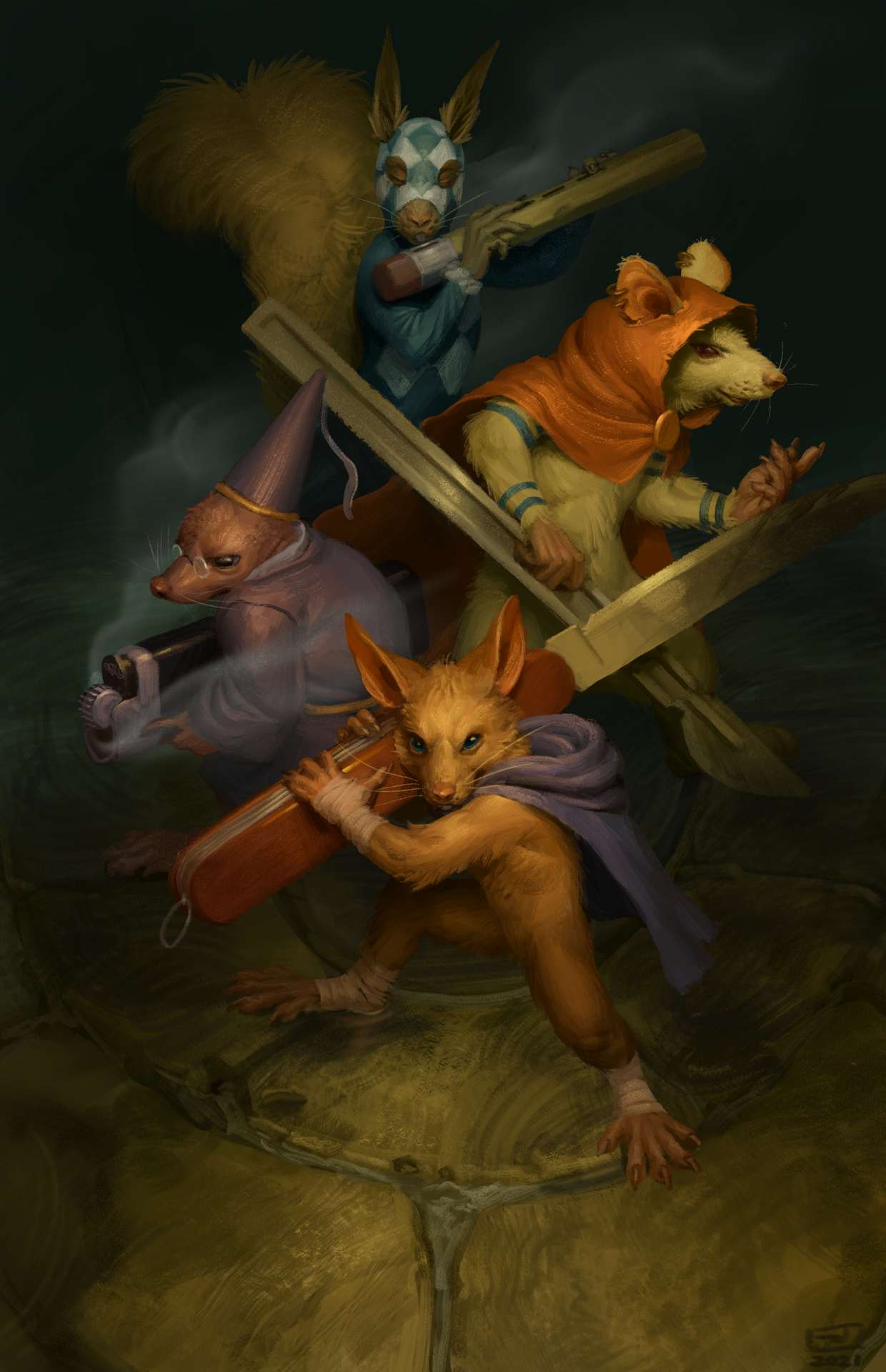
Verm starts out this adventure solo, but he doesn’t stay alone for long. He eventually assembles a party of other rodents, each with their own personalities, abilities, and stories. The main cast receives a good amount of character development, and some of the optional content gives you even more to learn about them.
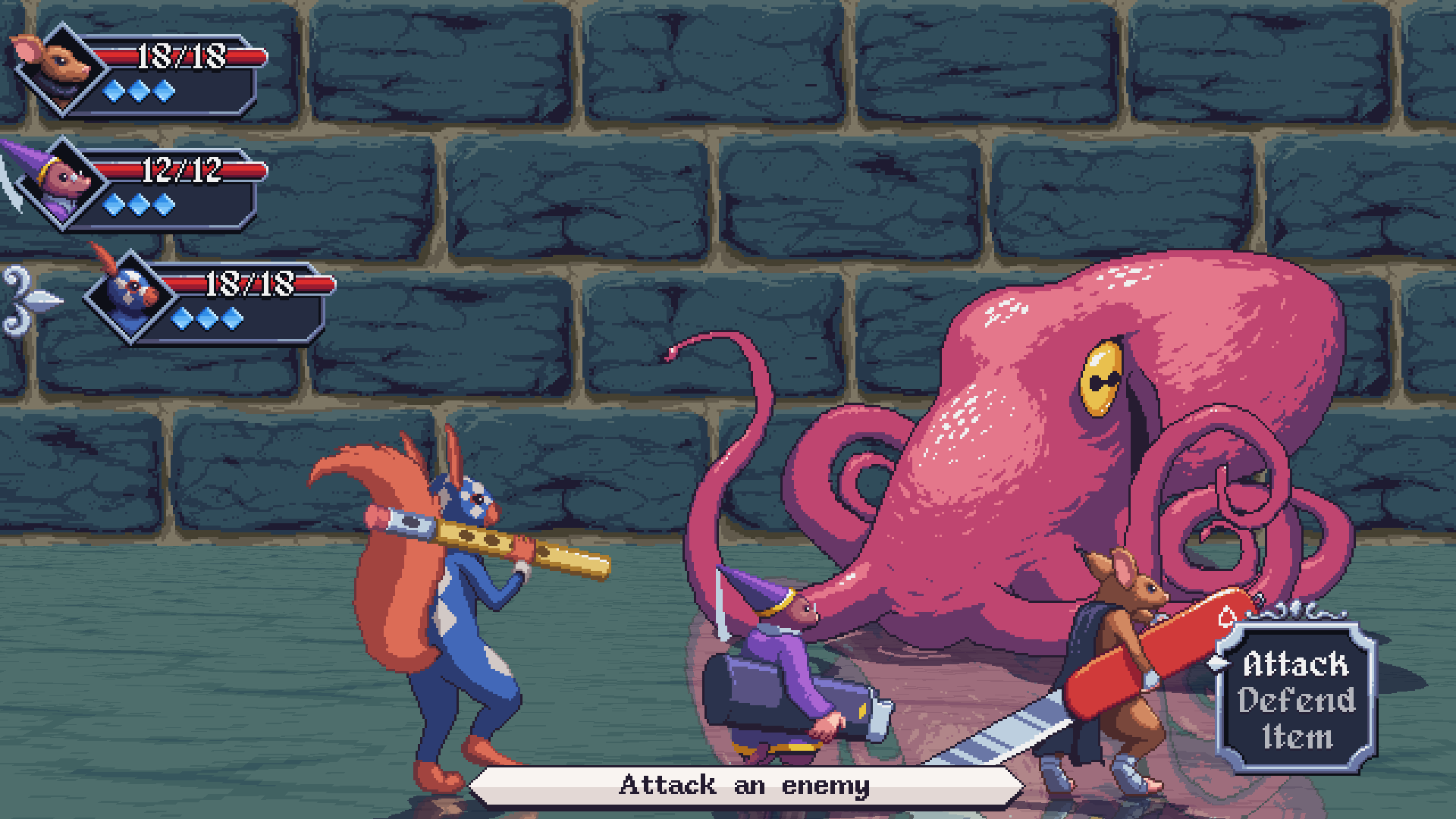
Small Saga is a turn based RPG, but it doesn’t rely on traditional experience point leveling or random encounters. Instead, combat focuses on managing energy, choosing abilities, and making use of each character’s strengths. I appreciated that approach, because it keeps the battles focused on the story and what’s going on instead of having to stop and fight every few seconds/minutes. So it’s a little more story driven, then other games that have you constantly grinding for more exp.
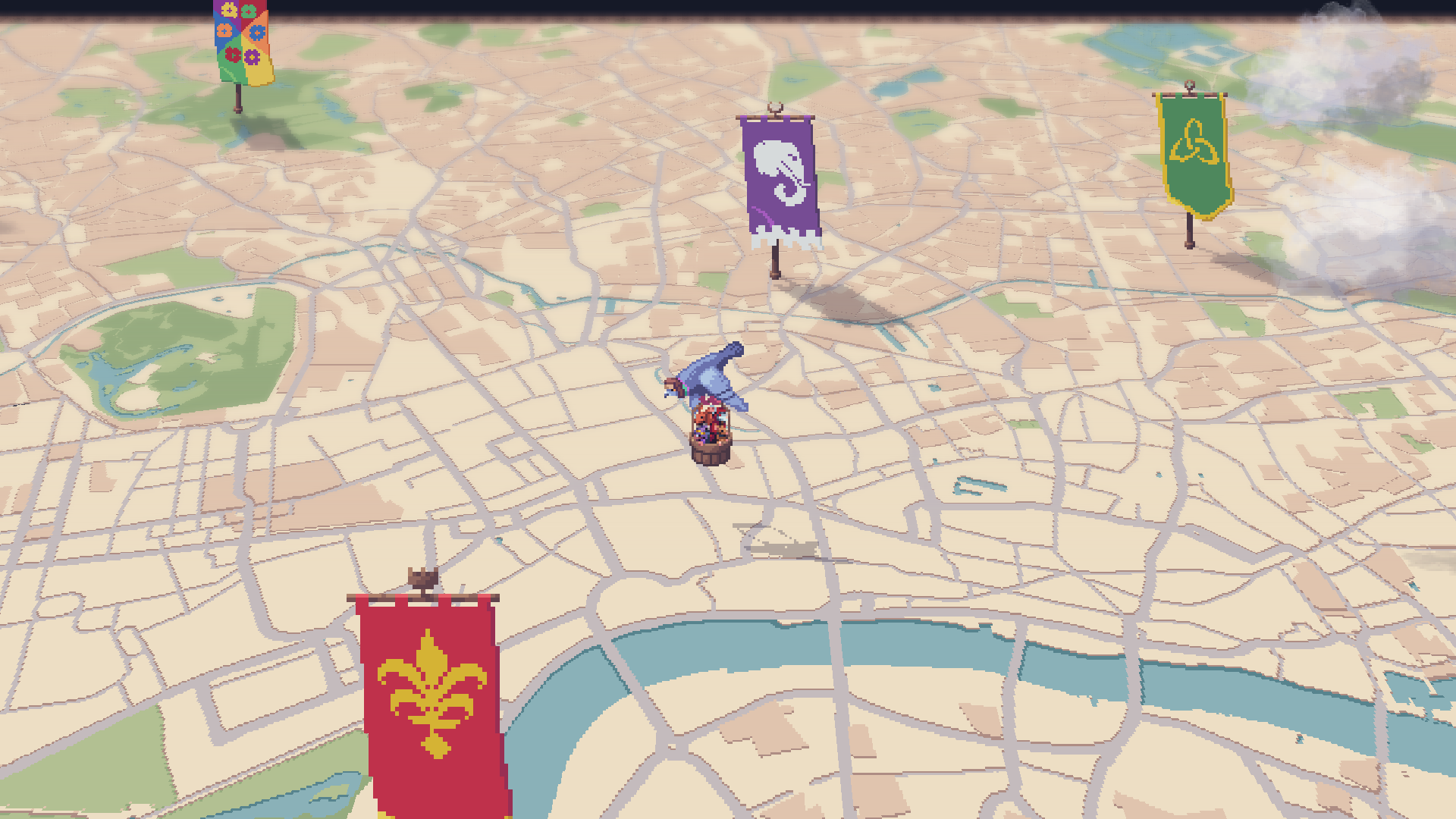
Rodentia is a pretty neat place to explore, and your transportation is pretty cool too. Early on in the game you encounter a pigeon in need of your help. After you save him he will fly you to different areas of Rodentia in a little bucket. The over world looks like a map and you can guide the pigeon to whoever you want to go. He will drop you off and wait for you to return. He’s a pretty fun character and one of my favorites.
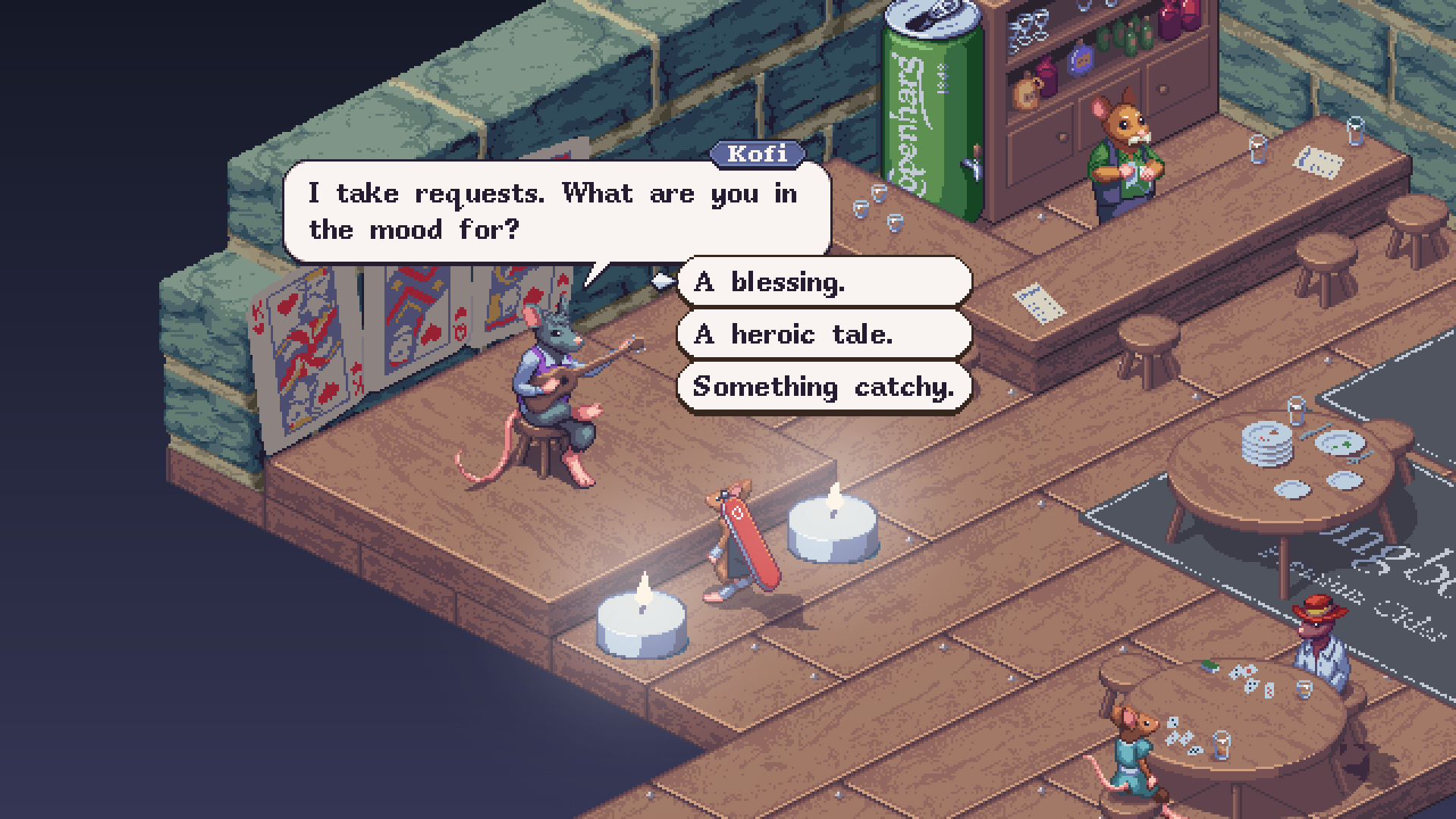
You can have up to four characters in your party, and each one has a distinct combat role and skill tree. Verm uses a switchblade God tool and specializes in offense. Siobhan uses a cigarette lighter God tool, and can charge up strong attacks through her Overclock mechanic. Bruce is a support focused squirrel bard, who uses music to heal and empower the party. While Gwen is another offense focused teammate, a (kinda crazy) rat, with crazy fighting skills. Her nickname in the clink was the Dragon, if that tells you anything.
Skill points are earned through story progression and spent on branching upgrades. You can also change your skill choices, which gives you some room to experiment with different builds. Optional quests can unlock powerful weapons and ultimate abilities, so there’s a reason to explore beyond the main story.
Food items can be used during battles to replenish health and other resources, and they also replenish between fights. It’s a small detail, but it makes the system feel a little different from the usual RPG setup.
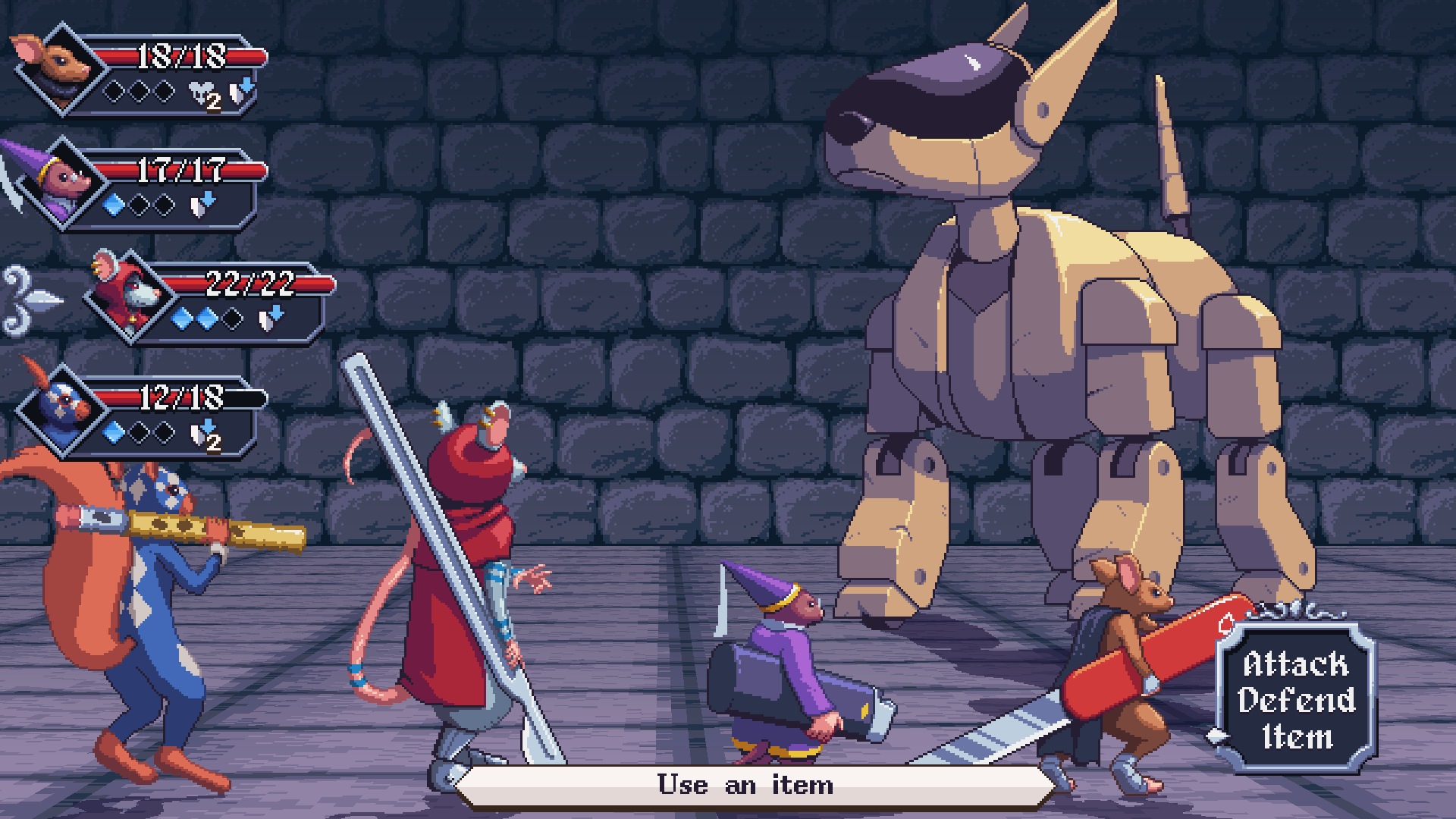
The Switch version also includes Titan Reaper Mode, which provides a harder challenge with stronger enemies and altered attack patterns. The original release was generally considered fairly easy, so this is a welcome option for anyone looking for something more demanding. Rogue Leagues add additional late game combat challenges as well.
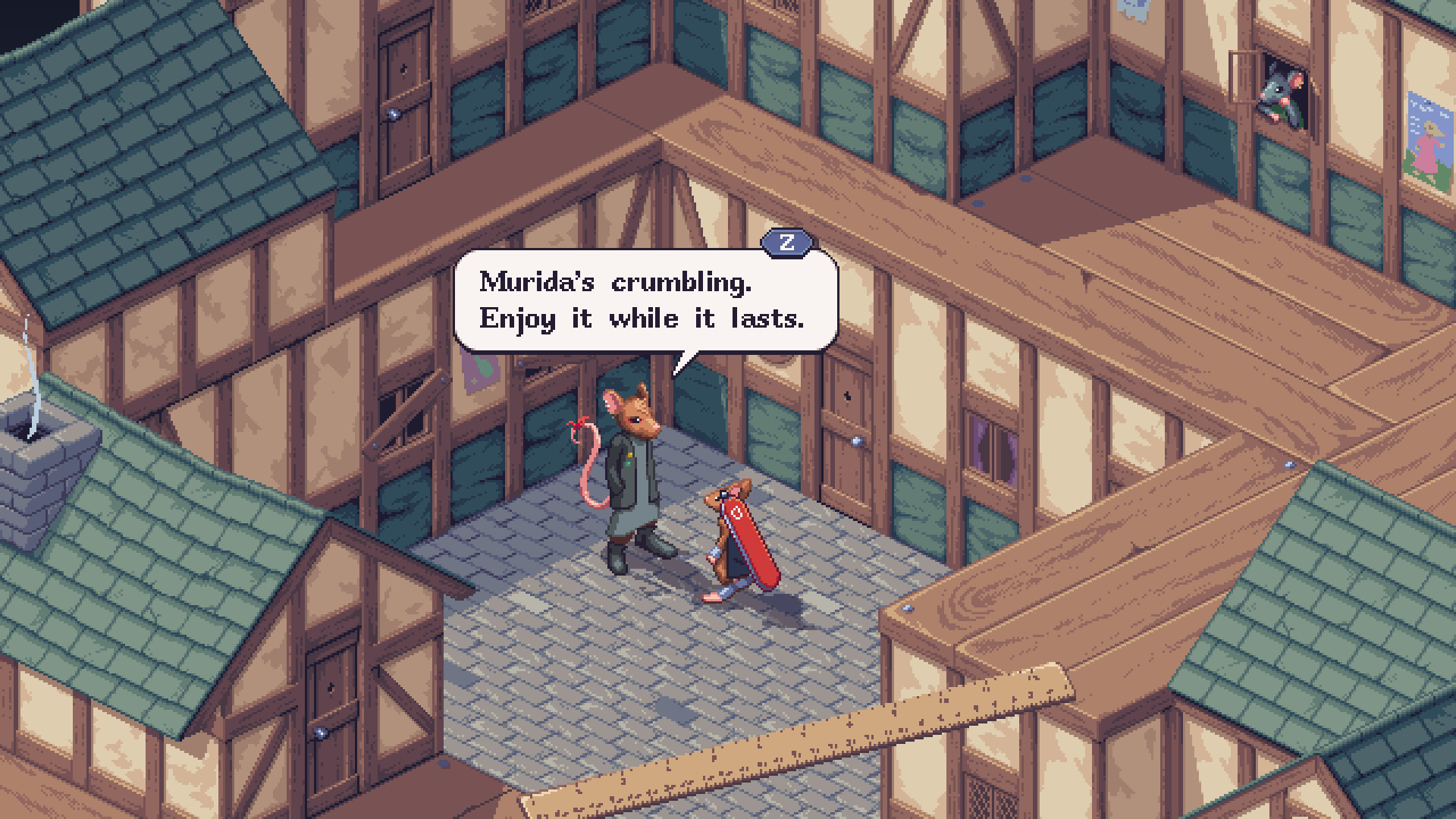
The pixel art is one of Small Saga’s biggest strengths. The perspective gives the environments a miniature diorama feel, and the scale difference between the rodents and the human world is used really well. A simple human object can become an entire building or a massive piece of scenery, and the game does a great job of making the world feel alive. I loved encountering a new type of enemy, or exploring a new area and trying to spot all of the little details and real world easter eggs in the background. For example, in the beginning, in the background there’s a can of what is clearly supposed to be Campbell’s soup. But instead the label reads “Warhols”. If you know, you know. And I love little things like that.
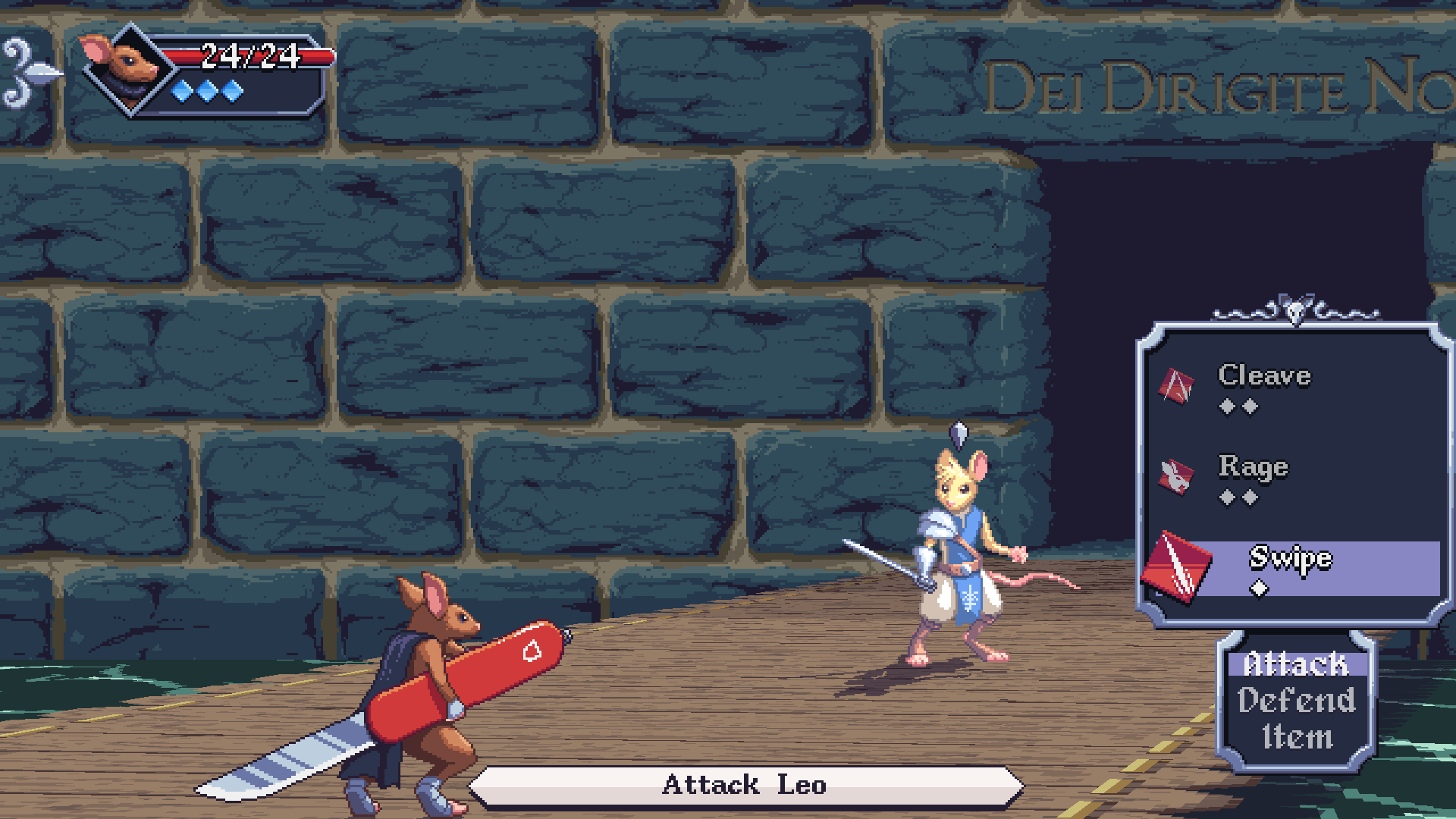
The battles also have a really cool presentation, with your party in the foreground and enemies in the background. Battle animations almost look 3D because of the angle. Another fun fact, the developer for Small Saga created all of the artwork for the game themself. In a post I read on Reddit, the creator states that you can see their art style get better over the course of the games development. I can say that this is true. While the difference is subtle, there is a sort of visual evolution as the story continues. I personally loved the way this game looks and I appreciate the effort that went into it.
The music is another highlight. Small Saga has an pretty good soundtrack that mixes fantasy and rock elements. Kind of like punk rock Renaissance style. The Switch version includes a jukebox, so you can listen to the soundtrack outside of the main adventure. It’s a nice extra, especially if you find yourself enjoying the music as much as I did.
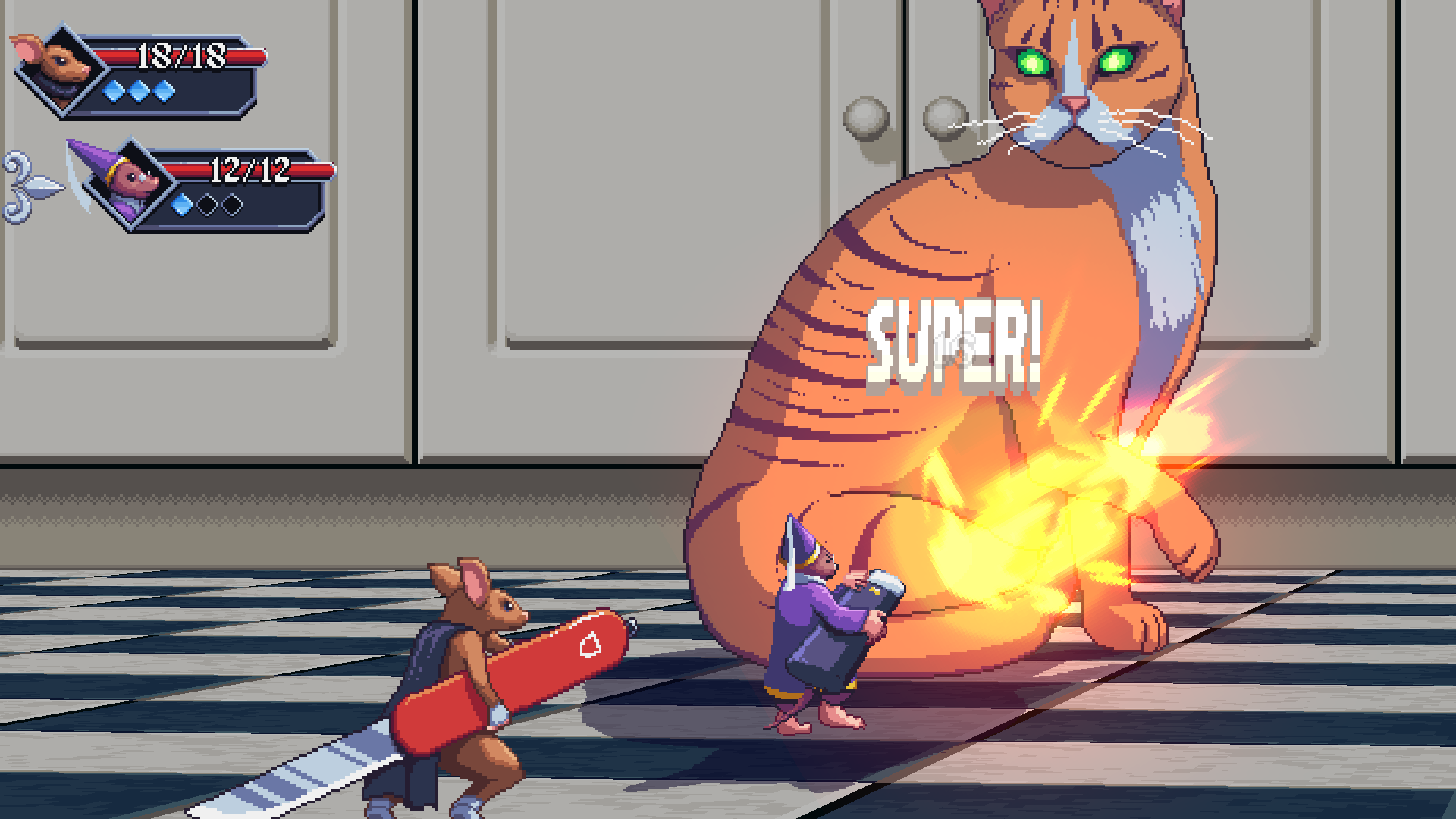
There are optional quests with multi objectives, additional areas, and extra encounters. Some of these can provide equipment, character specific upgrades, ultimate abilities, and powerful weapons. The Switch version also includes Knife Darts, a new minigame, along with a developer interview, and travel guide in the extras menu.
Small Saga is designed to be a fairly compact RPG rather than a lengthy adventure. The main story generally takes around 7-10 hours, depending on your playstyle and how much optional content you complete. Side quests and challenge content can add more time, but this isn’t a game that’s trying to take over your entire month.
The Switch port incorporates various quality of life improvements, bug fixes, and additional content. It’s a nice package that includes the original PC adventure alongside the newer challenge modes and extras. I will note that one time during my whole playthrough, the first time I went to the extras menu and tried to mess around with the jukebox, the game froze and I had to restart. But that’s the one and only time.
Small Saga is a game that caught me off guard in a good way. I went in expecting a cute, miniature world RPG, and while it definitely has that charm, there’s a much more interesting story underneath it. The setting is creative, the characters have personality and in depth back stories, and the combat gives you enough to think about without becoming overly complicated. The focus stays on the story and exploration. And the optional content gives you reasons to keep exploring after you’ve gotten comfortable with the main adventure.
If you’re looking for a shorter RPG with a unique setting, memorable characters, and a really good story, Small Saga is definitely worth checking out on the Nintendo Switch.