
Nael Sadi, a man in his late twenties, runs a pet supply store in the Sheikh Radwan area of Gaza City. Before the Israeli genocide, he operated two branches—one in northern Gaza, and another further south in Deir al-Balah. Both were destroyed by Israeli airstrikes.
Today, Nael lives with his family in a partially destroyed house in Gaza City, adapting to the damage left by the war while trying to rebuild his livelihood. For Nael, the business is also deeply personal. Running animal supply shops is a family tradition that has continued across generations.
When I visited Nael and asked to photograph his business, he declined. He agreed, however, to talk about his work and the people who come through his doors. What he describes is a business shaped by an economy in which people have less and less money to spend.
“For me, the biggest problem is that people don’t have purchasing power anymore,” he says. “Even if you have a business and you have something to sell, you still need people who can afford to buy it.”
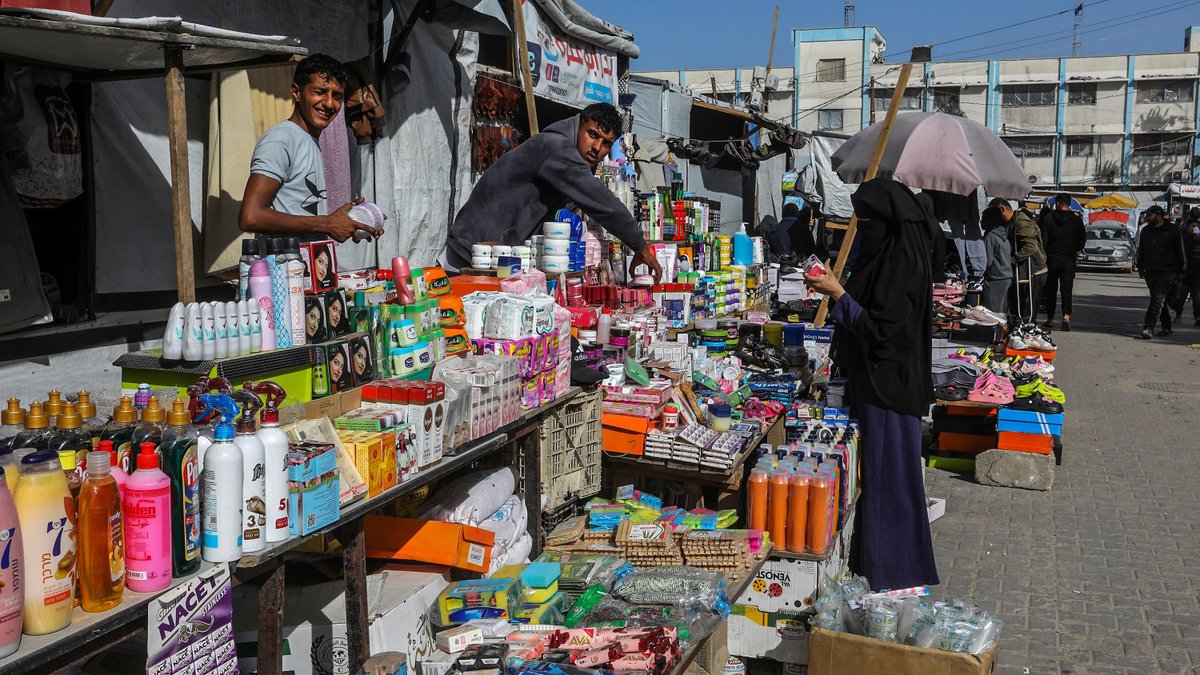
Across Gaza, reopening a business does not necessarily mean recovering a livelihood. A shop may have doors, goods, and a place to operate, but it still depends on customers who can afford to spend.
Before the war, people would regularly come into the shops and buy pet food, medication, and toys. Now, he says, customers will maybe purchase one small item, while others look at the prices and leave without buying anything. To Nael, the decline in spending reflects the choices families in Gaza are forced to make as they struggle to afford food, water, medicine, and other basic necessities.
For now, Nael is trying to keep his family’s business alive in an economy where even small purchases have become difficult decisions.
“People are not staying away because they don’t want to come,” he says. “Many simply cannot afford to spend money on things that are not essential . . . . Now, everyone is struggling.”
The destruction of businesses, homes, and sources of income across Gaza has coincided with restrictions on the movement of goods and people, further constraining an economy already under severe pressure. For businesses like Nael’s, fewer people with disposable income means fewer customers and lower sales.
The people who walk through the doors have changed, too. People used to come to the shops to enjoy themselves, he says; now, many people come with worried looks etched onto their faces. Some customers he hasn’t seen since before the war.
“You can tell when someone is struggling,” he says. “Sometimes they stand there looking at the prices for a long time. You know they want something, but they are thinking about whether they can afford it.”
He adds, “I don’t blame them. If someone has only a little money, he will think carefully before spending even one shekel.”
The family’s home is a reminder of that same economic and physical devastation. His family lives in a building that was damaged during the war, but they have remained there because they need somewhere to live.
For Nael, the damaged house and destroyed businesses are part of the same struggle. His experience of trying to keep a family business alive while living in a damaged home and watching his customers struggle provides a snapshot of what it means to rebuild in Gaza after war and devastation.
“My house was damaged, my businesses were destroyed, and we still have to find a way to continue,” he says. “Sometimes I ask myself how we are supposed to rebuild everything. But then you wake up the next morning and you have to work.”
“This business is part of our family,” he adds. “We couldn’t just forget about it. We had to try to start again.”