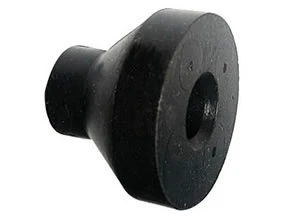

Engine mount bushings are limited to the automotive industry. Many airplanes use them as well. Aircraft engines, of course, produce vibrations. Piston engines, for instance, burn a mixture of fuel and air to create high-pressure gas, which moves a set of rod-like pistons. This process creates vibrations that can spread throughout the airplane. Fortunately, engine mount bushings are available.
What Are Engine Mount Bushings?
Engine mount bushings are vibration-isolating components designed for use with engines. They sit between the engine and the mounting structure.
Engines typically can’t be fastened directly to the airframe. Due to their fast rotational speeds, they produce strong vibrations. Fastening an engine directly to the airframe will result in these vibrations traveling throughout the airplane’s body. Over time, exposure to these vibrations can cause fatigue and damage. Engine mount bushings prevent this from happening by separating the engine from the airframe while simultaneously absorbing vibrations.
How Engine Mount Bushings Work
They may sound complex, but engine mount bushings are relatively small and simple components. They work by absorbing vibrations via compression and flexing.
Most engine mount bushings are made of rubber or a similar elastomeric material. When exposed to a running engine, the soft material from which they are made will compress and flex. At the same time, the engine mount bushings will absorb some of the engine’s vibrations. Known as vibration isolation, this process minimizes the amount of vibrations that make it past the engine and into the airframe.
Where Engine Mount Bushings Are Located
The exact location of engine mount bushings varies depending on how the airplane was designed. Piston-powered airplanes, however, typically feature them at specific mounting points. These mounting points are designed to distribute the engine’s loads.
In addition to engine mount bushings, the mounting points often contain fasteners like washers and bolts. Fasteners are used to secure the engine in place. Engine mount bushings, on the other hand, are used to absorb vibrations so that they don’t damage the airframe or nearby components.
What Causes Engine Mount Bushings to Wear Out?
Engine mount bushings don’t last forever. Due to the extreme forces to which they are exposed, they can wear out over time.
In addition to vibrations, engine mount bushings are exposed to heat. Repeated cycles of heating and then cooling can degrade them, potentially causing them to crack or lose some of their flexibility.
Engine mount bushings may also be exposed to chemicals like fuel and oil. Depending on the specific material from which they are made, exposure to these chemicals may cause them to swell and degrade.