Originally published August 2025. Updated August 2026.
Child-resistant cannabis packaging should be evaluated as a complete packaging system, not as a general product category or as a characteristic of a single component.
A jar may require a particular lid. A flexible pouch may be available with a child-resistant zipper, a standard zipper, or no zipper. A tube or multipack may have an integrated child-resistant closure, while another package with a similar appearance may not.
The material used to make a package does not determine whether it is child-resistant. Recycled content, plant-based material, glass, metal, or a metallic film layer may affect other parts of the packaging decision, but child resistance depends on the package’s exact construction, closure, configuration, and supporting documentation.
This guide explains how to evaluate child-resistant cannabis packaging, distinguish child resistance from tamper evidence, review documentation, test the proposed configuration, and manage changes before commercial production.
Define Child Resistance Accurately
Child-resistant packaging should not be described as child-proof.
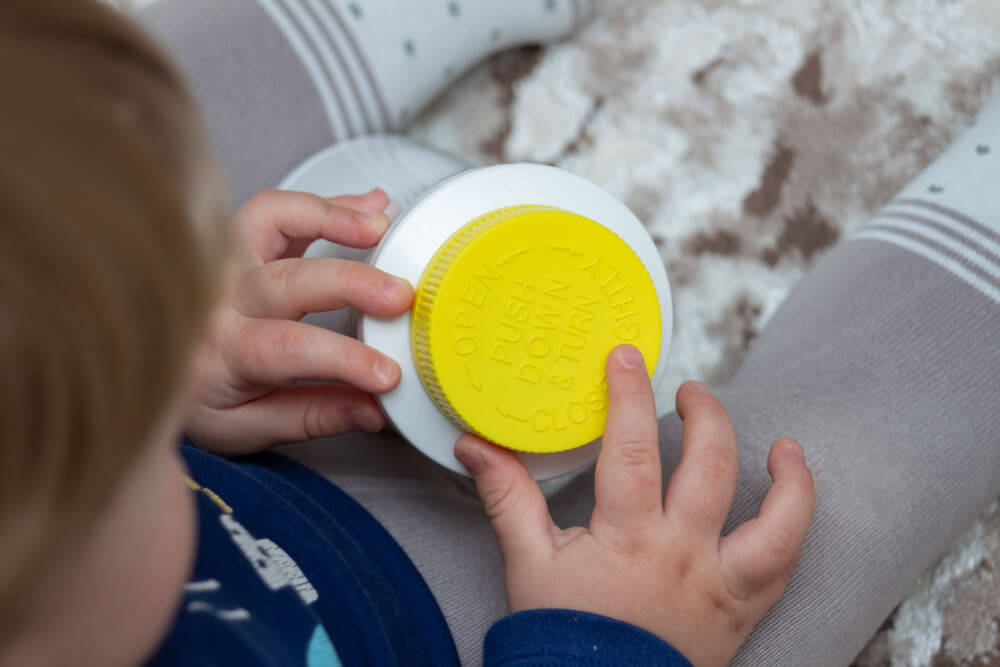
The U.S. Consumer Product Safety Commission describes special packaging, commonly called child-resistant packaging, as packaging designed or constructed to be significantly difficult for children under five years of age to open within a reasonable time while remaining usable by adults.
The applicable test protocol uses both child and adult panels. It is designed to measure resistance to opening by young children while confirming that adults can use the package properly. Additional information is available in the CPSC Special Packaging FAQ.
Child resistance does not mean that no child can ever open a package. It also does not replace responsible storage, customer education, or other precautions required for the product.
The CPSC does not approve, certify, or endorse individual packages, manufacturers, or testing firms. Documentation supporting a child-resistant claim may come from the package manufacturer or an independent testing organization and should identify the configuration that was evaluated. The CPSC Guide to Special Packaging provides more information on special packaging types and testing.
Avoid phrases such as:
- CPSC-approved packaging.
- CPSC-certified packaging.
- Completely child-proof.
- Guaranteed to prevent access.
- Compliant in every state or market.
More precise language should identify the package, closure, test documentation, and intended market.
Start with the Requirements of the Intended Market
Cannabis packaging requirements can vary by jurisdiction, product type, and intended use.
A package that is appropriate for one market should not automatically be assumed to satisfy the requirements of another. Requirements can also change, so an earlier order or previous regulatory review may not establish what applies to a new project.
Before selecting packaging, confirm:
- Every state, province, territory, or other jurisdiction where the product will be sold.
- The type of cannabis product entering the package.
- Whether the requirement applies to the immediate package, an outer package, or another level of the packaging system.
- Whether the package must remain child-resistant after opening.
- Whether a single-use or reclosable format is appropriate.
- Whether separate tamper-evident features are required.
- What opening instructions, warnings, symbols, and product information must appear on the package.
- What documentation must be retained or supplied.
- Whether the package will be filled, sealed, labeled, or assembled in more than one location.
State-specific requirements should be reviewed separately from the general package-selection process. A broad statement that packaging is “compliant” does not establish that it is appropriate for every product or jurisdiction.
The brand or finished-product manufacturer remains responsible for confirming the requirements that apply to the packaged product. Packaging suppliers can provide product information and available documentation, but those materials do not replace a current regulatory review.
Evaluate the Complete Package
Child resistance can depend on several components working together.
The complete configuration may include:
- A container, jar, bottle, tube, pouch, multipack, or other package.
- A lid, zipper, pop-top, slide-tab, pinch-and-slide feature, or another closure.
- A liner or seal.
- A label or printed design.
- A tamper-evident band, label, or sealed section.
- An insert or inner package.
- Opening and reclosing instructions.
The evaluation should identify which components were included in the documented child-resistant configuration.
For example, a glass or plastic jar body may be compatible with a child-resistant closure without being child-resistant on its own. The jar, lid, neck finish, liner, and other relevant components should be reviewed as a system.
Likewise, a flexible pouch should not be described as child-resistant only because another pouch made from the same film uses a child-resistant zipper. The exact dimensions, format, film structure, zipper, seals, and opening method matter.
An integrated package, such as a pop-top bottle, tube, clamshell multipack, or pinch-and-slide container, may include the child-resistant mechanism in the package itself. The documentation should still correspond to the exact package being ordered.
A product’s appearance does not establish its child-resistant status. Two packages may look similar even when they use different closures, dimensions, or opening actions.
Distinguish Certified Packages, Compatible Components, and Optional Configurations
Packaging descriptions should clearly distinguish between three different situations.
Documented Child-Resistant Packages
Some packages are offered as complete child-resistant configurations. Examples can include certain pre-roll tubes, pop-top bottles, multipacks, containers, and matched container-and-closure systems.
The applicable documentation should identify the package model, closure, dimensions, opening method, and other relevant details.
Child-Resistant-Compatible Components
A container may be designed to work with an appropriate child-resistant closure but may not be child-resistant on its own.
Many jars fall into this category. The jar body, neck finish, lid, liner, and closure system must be compatible. A general statement that a jar “works with child-resistant lids” is not the same as documentation for the completed configuration.
Packages with Child-Resistant Options
Some packaging can be produced with different closure configurations.
Sana Packaging’s flexible pouches, for example, can be configured with:
- A child-resistant zipper.
- A standard zipper.
- No zipper.
Only the configuration using the documented child-resistant zipper should be described as child-resistant. The film structure, recycled content, printing, or pouch format does not independently create child resistance.
These distinctions should remain clear in product descriptions, quotations, artwork, purchase orders, and internal approval records.
Review the Documentation for the Exact Configuration
A general certificate, test summary, or product-family description may not provide enough information to approve a packaging order.
Before relying on child-resistant documentation, confirm:
- The manufacturer and package model.
- The package dimensions and capacity.
- The applicable closure or opening mechanism.
- The container and lid or closure part numbers.
- The neck finish for jars or bottles.
- The liner, seal, zipper, or other component included in the evaluated configuration.
- The standard or testing protocol referenced.
- Whether the package is reclosable or non-reclosable.
- Any application, sealing, assembly, or operating instructions.
- The materials or product types covered by the documentation.
- Any limitations or conditions stated in the report.
- Whether the documentation corresponds to the version currently being ordered.
The CPSC guide explains that ASTM D3475 classifies special packaging by closure and opening action. Testing procedures for child-resistant and adult-friendly performance are addressed separately under 16 CFR § 1700.20.
Avoid treating an ASTM package classification as regulatory approval or as proof that every package in the same category has passed the same evaluation.
A test report for one size, lid, zipper, or package version should not be applied automatically to another. If the quoted configuration differs from the documented configuration, request clarification before approving the order.
Separate Child Resistance from Tamper Evidence
Child resistance and tamper evidence serve different functions.
A child-resistant feature is intended to make a package significantly difficult for young children to open while allowing adults to use it properly.
A tamper-evident feature is intended to provide visible evidence that the package has been opened or altered.
Depending on the package, tamper evidence may be provided by:
- A perforated band or label.
- A heat-sealed pouch section.
- A liner or induction seal.
- A shrink band.
- A breakaway feature.
- Another documented component.
A tamper band does not make a package child-resistant. A heat seal does not make a pouch child-resistant unless the complete package has appropriate child-resistant documentation. Likewise, a child-resistant closure does not automatically provide visible evidence that the package has been opened.
Both functions may be required, but they should be selected, documented, and evaluated separately.
Match the Package to the Product
Child resistance is one requirement within a larger packaging decision.
The package must also accommodate the product, work with the filling process, provide the required space for labels and instructions, and remain usable throughout distribution and customer use.
The evaluation should account for:
- Product type and fill amount.
- Product dimensions, shape, and density.
- Required headspace.
- Moisture, odor, oxygen, and light-management requirements.
- Expected storage period.
- Transportation and retail conditions.
- Filling and sealing equipment.
- Labeling and decoration.
- Customer needs for opening, reclosing, storage, and product removal.
Cannabis flower, pre-rolls, concentrates, edibles, topicals, vape cartridges, and vape pens can have different packaging requirements.
A closure that works well for one product may interfere with another. Flower can become caught near a zipper or liner. A pre-roll may be too long for a tube. An edible may require a different liner or sealing process. A label may cover required opening instructions or interfere with the intended opening action.
The actual product should be tested in the complete proposed configuration before a commercial order is approved.
Test Production and Customer Use
An empty packaging sample can help narrow the options, but testing should reflect the intended commercial process.
The production evaluation should include:
- Filling the package with the actual product.
- Installing, closing, or sealing the package according to the documented process.
- Applying labels and tamper-evident components.
- Confirming that required opening instructions remain visible.
- Inspecting closure alignment and operation.
- Packing completed units into their intended shipping cases.
- Simulating normal storage, transportation, and handling.
- Opening and reclosing the package as an adult customer would.
- Inspecting the package and product after testing.
- Recording the results and any identified problems.
This operational review does not replace formal child-resistant testing. It helps confirm that the documented package works with the actual product and production process.
The filling team should participate in the evaluation. Operators may identify closure, sealing, label-placement, inspection, or case-packing problems that are not visible during an office review.
If the opening process is not obvious, the artwork may need instructions. Those instructions should match the documented opening action and remain legible on the completed package.
Avoid Unrelated Packaging Claims
Child resistance should not be inferred from other product characteristics.
A package is not necessarily child-resistant because it is:
- Made from recycled material.
- Made from plant-based material.
- Made from glass, metal, or plastic.
- Food-grade or FDA-compliant.
- Odor-resistant or moisture-resistant.
- Resealable.
- Heat-sealable.
- Tamper-evident.
- Recyclable where accepted.
- Biodegradable or compostable.
These terms describe different aspects of a package. Each claim should be supported separately for the exact configuration.
Similarly, child resistance does not establish that a package will protect product quality for a specific length of time. Barrier properties, closure consistency, product condition, storage, transportation, and repeated opening can all affect performance.
Control Changes After Approval
A packaging configuration should be reviewed again when an important component or process changes.
Changes that may require renewed review include:
- A different container or package size.
- A different lid, zipper, or closure.
- A new neck finish.
- A different liner or seal.
- A change in material or film structure.
- A different supplier or manufacturing location.
- Changes to package dimensions or tolerances.
- A new label, tamper-evident feature, or outer package.
- A different filling or sealing process.
- A new product or fill amount.
- Entry into an additional market.
- Updated regulatory requirements.
A similar package is not necessarily the same documented configuration.
Before approving a reorder, confirm that the packaging specifications and supporting documentation still match the product being purchased. Retain the current documents with the quotation, purchase order, artwork, proof, production records, and receiving-inspection materials.
Child-Resistant Cannabis Packaging Checklist
Before approving a child-resistant packaging configuration, confirm:
- The requirements for every intended market have been reviewed.
- The product and package level requiring child resistance have been identified.
- The complete container-and-closure configuration has been defined.
- The exact package has supporting child-resistant documentation.
- The documentation identifies the relevant model, dimensions, closure, and components.
- The package is described as child-resistant rather than child-proof.
- No claim suggests that CPSC approves or certifies individual packages.
- Certified packages, compatible components, and optional child-resistant configurations are distinguished clearly.
- Child resistance and tamper evidence have been evaluated separately.
- The actual product has been tested in the complete package.
- The filling, closing, sealing, labeling, and inspection teams have reviewed the configuration.
- Opening and reclosing instructions are accurate and visible.
- Storage, transportation, retail handling, and customer use have been considered.
- Material, barrier, and end-of-life claims are supported separately.
- The approved configuration and documents have been retained.
- The package will be reviewed again if a component, process, product, or market changes.
Compare Child-Resistant Packaging Options with Sana Packaging
Sana Packaging offers several types of cannabis packaging with documented child-resistant configurations or compatible child-resistant closures.
Current options include selected:
- Pre-roll tubes and multipacks.
- Pop-top bottles.
- Rigid containers.
- Jars paired with compatible child-resistant lids.
- Flexible pouches configured with child-resistant zippers.
The exact child-resistant status depends on the package and configuration. Jars should be evaluated with the intended lid and liner. Flexible pouches should be evaluated with the selected zipper and seals. Product-specific documentation should be reviewed before an order is approved.
Brands evaluating packaging for cannabis flower can explore the Cannabis Flower Packaging collection. Rigid container-and-closure options are available in the Cannabis Jars & Lids collection, and current pouch configurations are listed on the Flexible PCR Pouches product page.
Contact the Sana Packaging team to request samples, review available documentation, and discuss your product, intended markets, packaging format, closure requirements, quantities, customization, and production schedule.